Book review: Writers pay their respect to their champion editor David Marcus
In this compendium we get a true sense of the man and the editor, who though understated and shy, was a giant in the world of Irish literature
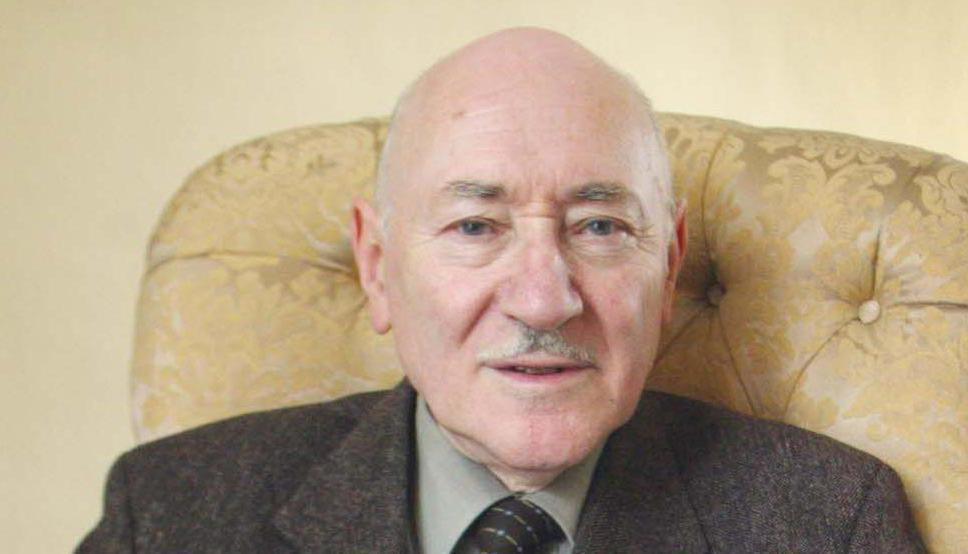
David Marcus was a giant in the world of Irish literature and unusually for an editor, a champion of writers. File picture: Billy Higgins

David Marcus was a giant in the world of Irish literature and unusually for an editor, a champion of writers. File picture: Billy Higgins

  • David Marcus: Editing Ireland 
  • Edited by Paul Delaney and Deirdre Madden
  • Stinging Fly Press, €20.00 – €40.00

“In a land of writers, Marcus was a rarer miracle — a fine editor who would champion them.” 

So writes Dermot Bolger in the introductory overview of David Marcus’ life in David Marcus: Editing Ireland

Bolger is one of countless writers Marcus championed. He recalls the excitement he felt when a poem he wrote as a schoolboy was published in New Irish Writing in 1976, and how 30 years laters, receiving Marcus’ edits to one of his short stories “felt as satisfying as any of [my] publishing deals”.

Touchingly, Bolger reveals how in Marcus’ later years, when he was experiencing memory loss, he came across an envelope with several handwritten poems. Marcus had no idea who the author was but “the poems moved him deeply”. 

After reading all the poems, he went on to discover that the author was in fact himself. “Having discovered so many other writers, he could now discover himself,” writes Bolger.

Marcus’ undeniable impact on Irish writing and culture is put into perspective by the many writers he championed for decades and who have contributed a piece to this miscellany. It’s a regular who’s who of the Irish literature scene.

We hear from Eiléan Ní Chuilleanáin and Mary O’Malley, Frank McGuinness and Neil Jordan, Sebastian Barry and Eoin McNamee. 

We reminisce with Marcus’ brother Louis and his wife Ita Daly, Anthony Glavin, and William Wall.

We learn of his upbringing in a Jewish family in Cork, his keen interest in literature at an early age, his determination to shine a spotlight on the work of Irish writers, his need to leave Ireland temporarily for the UK, and his return, which signalled the resurgence of his role as nurturer of Irish writing.

And we hear from Marcus himself via excerpts of his own work over the years. 

In Oughtobiography he recalls a visit to west Cork to ask Edith Sommerville to contribute to the inaugural issue of Irish Writing. 

Marcus brings us back to 1946 as he makes the four-hour train journey to Skibbereen where he first meets Sommerville’s nephew Sir Neville Coghill, an Oxford don.

The young editor (Marcus was just 22 at the time) describes his nerves and anxiety at stepping into this world and into a ‘big house’. Afraid of offending his host, Marcus, who had never had a drink in his life, accepted a whiskey from his host and polished off the glass in one go, almost knocking himself out.

The following morning he met Sommerville and secured a contribution from her, an achievement he relished. 

The excerpt highlights both Marcus’ naivete and his determination beautifully, and retrospectively showcases his immense achievement.

The second section of this packed miscellany follows the evolution of Irish Writing as a standalone publication, as it went on to become New Irish Writing and its home moved from one national newspaper to another for decades. 

As Mary Morrissy writes in her reflective piece: “This was the genius of the New Irish Writing page, it brought literature to the heart of public life”.

Morrissy too affirms Marcus’ reputation as a thoughtful editor, one who had mastered the art of rejection. 

“He recognised that all rejection was personal for the writer, so he made his side of the correspondence personal too.

“His notes read as one writer responding to another, because, he too, was a writer. This meant that he was conferring status and respect on you, even as he was saying no.”

In this compendium of stories, reflections, poems and interviews from those who knew Marcus well and who experienced him on a professional level, we get a true sense of the man and the editor, who though understated and shy, was a giant in the world of Irish literature.

BOOKS & MORE

Check out our Books Hub where you will find the latest news, reviews, features, opinions and analysis on all things books from the Irish Examiner's team of specialist writers, columnists and contributors.


More in this section

Scene & Heard

Newsletter

From music and film to books and visual art, explore the best of culture in Munster and beyond. Selected by our Arts Editor and delivered weekly.

Cookie Policy Privacy Policy Brand Safety FAQ Help Contact Us Terms and Conditions

© Examiner Echo Group Limited