Fionnuala Jones: 'When I started I was taking the mick out of influencers — now I am one'
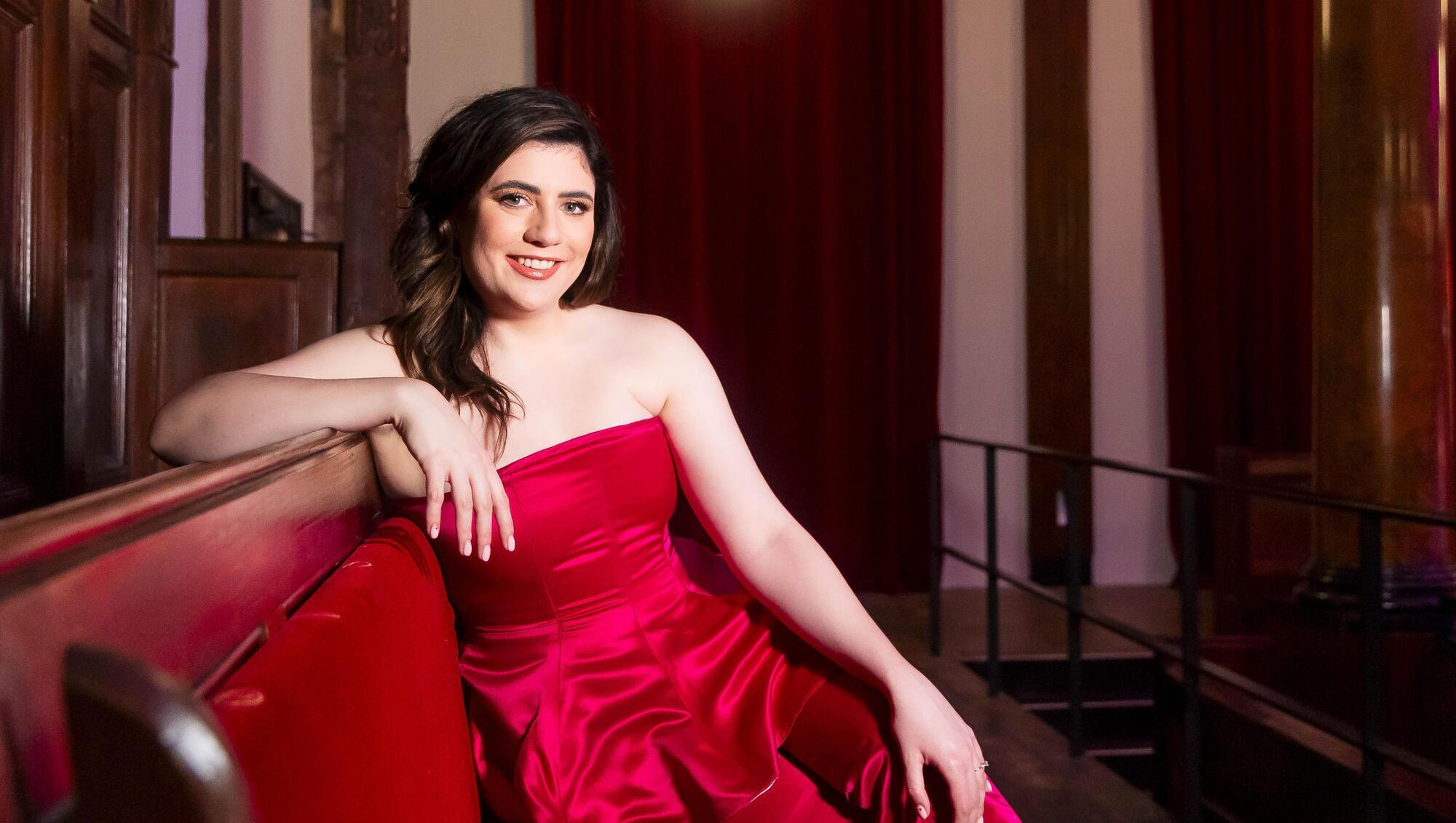
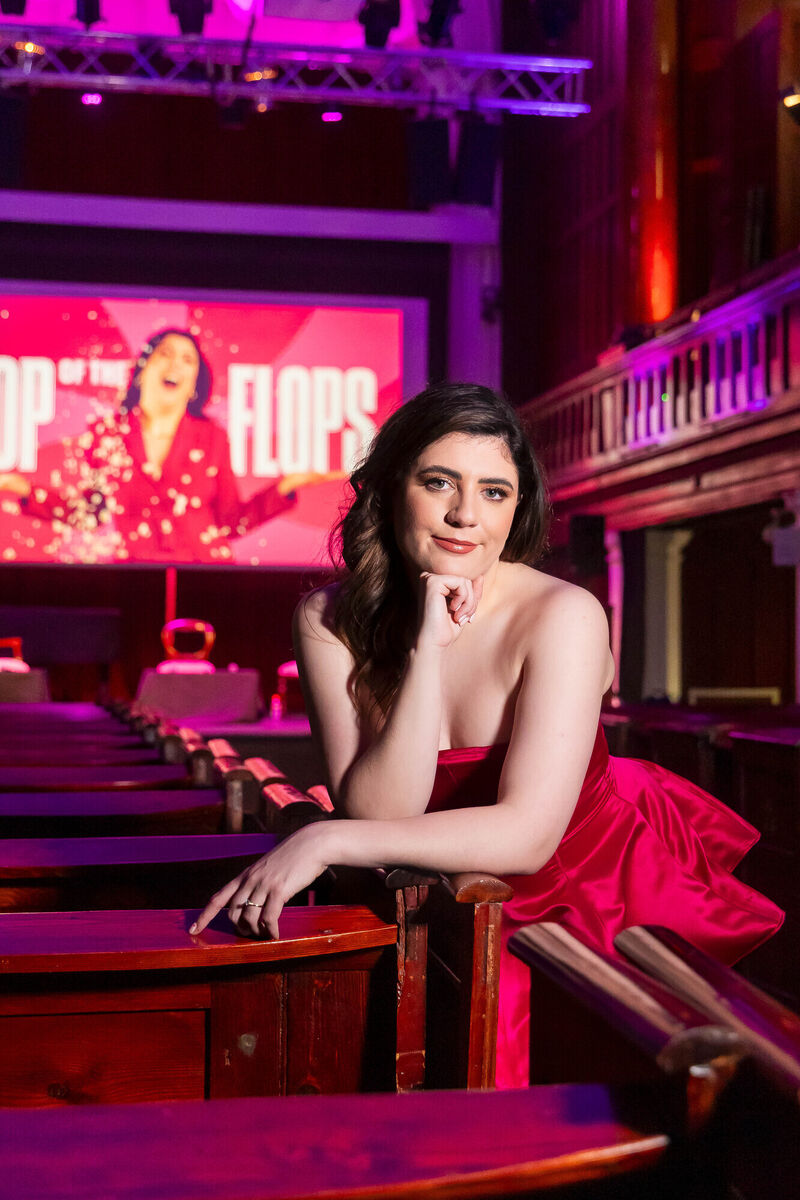
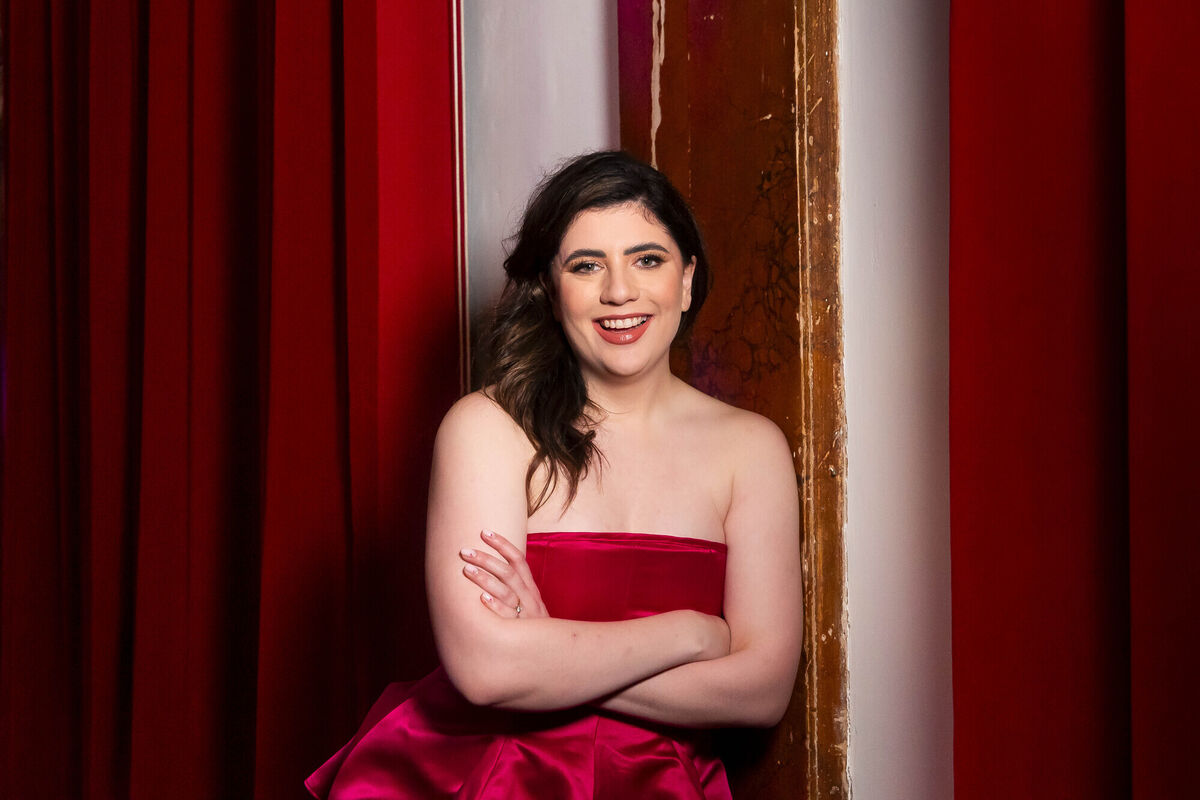
Fionnuala Jones pictured at The Triskel Arts Centre, Cork. Picture: Alison Miles /OSM PHOTO
When Cobh native Fionnuala Jones was growing up, she had her eye on many exciting future careers. Maybe she’d be an artist, or a guide dog trainer, or a pop star, or a writer.
“I wrote a book in third class, and was so confident that it was going to be adapted into a film that I wrote a song to go on the soundtrack to it,” she laughs as she chats to the from her living room in Dublin. “Everyone needs to have that confidence.”
But deep down, she always wanted to be on TV.
“I love making people laugh, and I think that's what’s led me to this.”
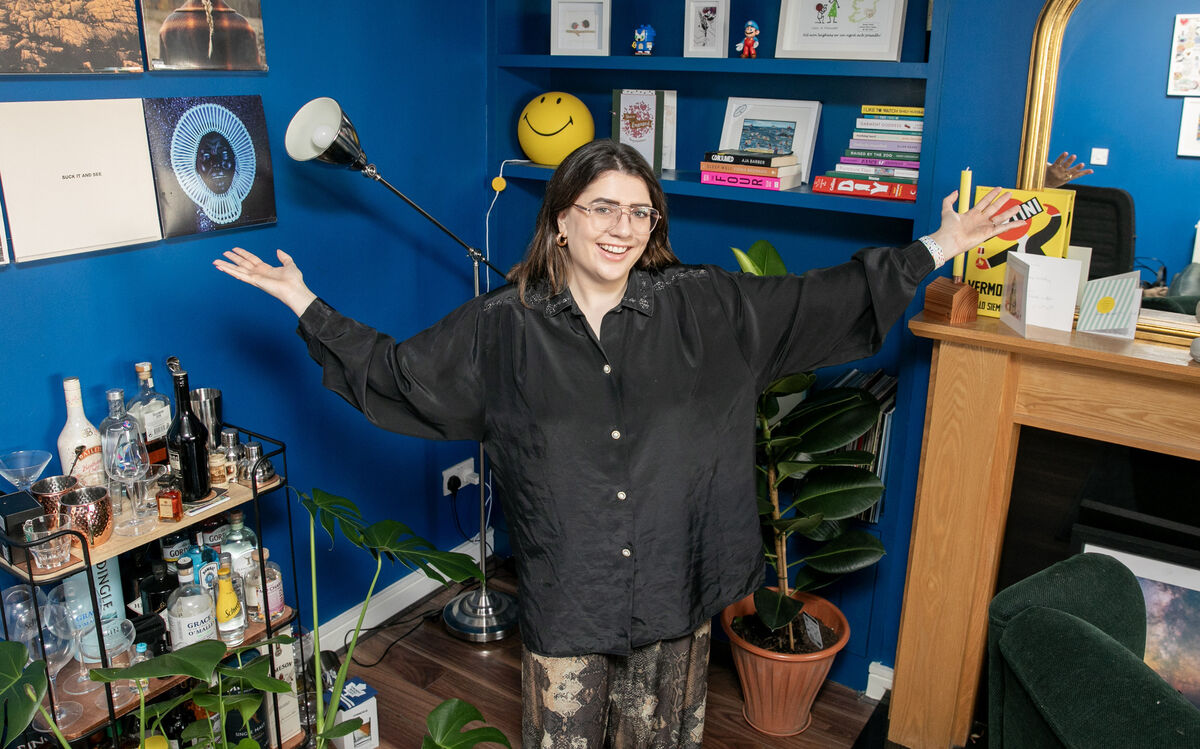
‘This’ is Jones’ (known as Fionnuala Jay to her 64,000 followers on Instagram and 31,000 on TikTok) very modern portfolio career of podcast host, contributor to on Virgin Media One, influencer and writer. The Cork funny woman has the sort of personality and dry wit that translates well online - not to mention her stunning Cobh accent.
Now based in Dublin, where she lives with her fiancé (the pair are planning a 2025 wedding, of which more later), she was back in Cork recently for a live show of her podcast Flop Culture at the Triskel. The podcast explores films, TV shows and albums that were considered flops in their time but deserve reassessment. Jones has always been good at capturing the pop culture zeitgeist, and made her name initially through her Instagram recaps of episodes. She and her friend Bríd Browne also co-presented the podcast (now on hiatus), which helped people get up to speed with pop culture obsessions.
The youngest of three, Jones grew up with an older brother and older sister 15 minutes from Cobh. Living in the countryside was the “best thing ever”, she says, as it meant “a lot of time outside, a lot of time with my dad on walks, running through fields”. Her parents encouraged her to try whatever hobbies she was interested in.
“My mam always took me seriously when I talked about wanting to be a journalist, or wanting to be a writer,” says Jones.
“I did a journalism summer course in DCU [Dublin City University] just after my Junior Cert, and I did a radio course in UCC 98.3FM shortly after that as well.”
While in DCU, the young Jones made new friends and found an “affinity” with the capital. So when it came to college, it wasn’t a tough decision: she would study journalism at DCU.
“I was like, right: I need to go back to this city. I'm obsessed with it. This is where I need to be.”
While she has always loved Cobh, she felt Dublin gave her the chance of a fresh start.
“So for me, that was my desire to just leave - and then anything else that happened after that was a bonus, in a way.”
As a teen, she was obsessed with “mad makeup” (think dark lipstick and huge eyeliner flicks) and YouTube beauty accounts, and says that if she wasn’t in her current career she’d likely be working with makeup or food.
After college and an internship at a celebrity magazine, she got a job as a digital journalist with Newstalk.
She knew that her skills lay in entertainment rather than current affairs, and her next job was at the Daily Edge, the entertainment offshoot of the news website The Journal, in the mid 2010s.
Here, she became fully immersed in the pop culture world. (It’s also where Jones and I first crossed paths, and her sparky humour was evident from the get-go.)
“You were able to be funny, but you'd a broad enough scope, especially towards the end when we were covering women's interests,” she says of the Daily Edge.
“I did a running segment interviewing people about what they had in their makeup bags and [I got] to try different trends. We had such craic. And getting to cover things like the Toy Show… a dream job.”
During this period, Jones was helping to build an Instagram presence for the Daily Edge, which led to her promoting her own work on the social media platform.
Naturally funny, she started sharing comedic sketches with a distinctly Irish - though not stereotypically Irish - slant. Yet though she is drawn to public-facing jobs, Jones is like anyone else when it comes to putting herself out there.
“I still care deeply about what people think about me, which I think is what holds a lot of people back.
"Because I'd been laughed at previously growing up, it was a thing of like, okay, so that's the worst thing that's happened to you. People are just gonna laugh again. So what? So that's what led me to starting the sketches online.”
In addition to the sketches, Jones’ humorous videos helped her grow a solid following and enabled her to make money from her content.
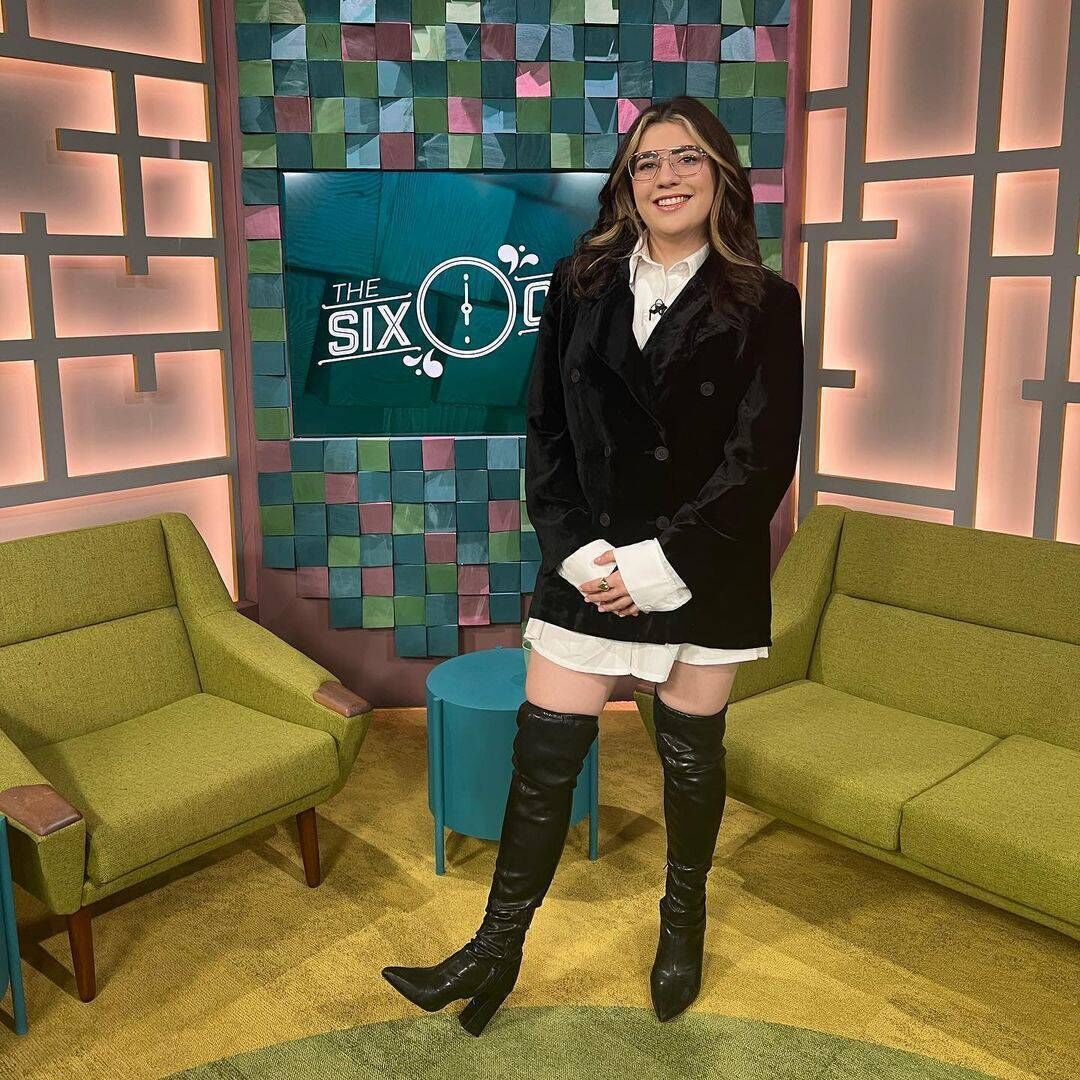
She then went into social media management, working for Bauer Media, while also appearing on and . She has since become a regular face on the latter, with a weekly pop culture slot and covering for the main presenters.
Podcasting with Flop Culture is a big part of Jones’ work, but she cautions that it’s no guaranteed money maker.
“I feel like everyone starts a podcast thinking they're going to make money off it, and I'm like - oh, sweet summer child. Not everyone is Joanne [McNally] and Vogue [Williams of My Therapist Ghosted Me],” she says.
Looking back, she says Bandwagons had “a bit of divine timing” and a very engaged audience. That engagement has followed her to Flop Culture, and 424 fans pay through the site Patreon to support her work and access bonus content.
Things were going well for Jones, but by 2022 she found herself stretched working 12-hour days between her burgeoning influencing career, her TV work and her day job - all while trying to buy a house. “Something had to give, where it wasn't really fair on the job, it wasn't really fair on me. I wasn't doing any of them to 100%,” says Jones. So once the house was bought, she decided to work for herself.
“I said, ‘I'll do it for a year, and I'll see’. And the rest is history. It's just been busier and busier ever since, which is great, but it's been nuts to say the least.
So much of Jones’ work hinges on her personality and presence. Why does she think people connect with her?
“I really don’t know. I think initially there was a thing of - and this isn't lost on me - when I started creating content I was taking the mick out of influencers, and I am now aware that I became an influencer,” she says.
When she first emerged on social media, it was a time when people on Instagram were calling out influencers for perceived inauthenticity, not declaring ads or over-using filters.
“I came on with an ‘I don't care’ attitude. I rarely wear makeup. I'll wear makeup when going to work. But if I'm on [Instagram] stories, I don't feel a need to put on makeup, or dress up for Instagram. I think that helps, because sometimes there can be such a wall between you and your followers.
As her career has developed, Jones has gotten more picky about the paid partnerships she does. Some are related to sustainability and fast fashion.
“The sustainability wasn't me being like, ‘oh, this is another way I can make money’, or ‘this is a way that I can differentiate myself’. For me, it was just a passion around how bad fast fashion is,” says Jones.
She often gets messages from followers telling her this sustainability content made them change how they shop.
“That's honestly what gives me the biggest satisfaction. Obviously, I love when people think the skits are funny, or they think I look nice, but for anyone to be like ‘you made me think differently’... then the job is worth it.”
While Jones feels lucky to have the career she does, she’s well aware of content creation’s challenges and downsides.
“On one hand, it's great. Smartphones and the internet and social media have democratised content creation. Anyone could be a content creator tomorrow morning... But that also means that anyone could be a content creator, and it could be people who have the wrong ideas about the industry who just want to sell things.”
Social media platforms can change quickly - like Twitter/X and its transformation under Elon Musk. By having a diverse career, Jones isn’t so reliant on one particular platform.
“At the very least I have writing, TV, radio experience. To be honest, there is also the thing of, I don't know if I want to do this forever. Being public facing and being ‘on’ all the time is really hard.”
But still, she repeatedly calls herself “lucky” for having the career she has.
“I do really love it. It's given so much to my life.”
Also occupying Jones is planning her 2025 wedding. Being an influencer means her followers are invested in what she ends up doing, particularly from a sustainability angle.
The pair will have two ceremonies, a legal one in Dublin and a bigger event in Cork afterwards.
“I've actually found it fine. I thought I would find it much worse. What a thing to say about your own wedding!” laughs Jones.
“But I am not a very organised person, and I get stressed very easily. And all anyone ever wants to tell you is you need to be really organised, and it's really stressful.”
She adds: “I wouldn't say I'm having a fully sustainable wedding. I'm trying as much as possible, especially with regards to clothes and stuff. But it is so easy to fall into the trap of, ‘let's get 6,000 bridal robes, and they have to have your initials on them’.”
At just 29, Jones has many years of her career ahead of her. And though she is laid back, she is clear about her ambitions.
“I'd love a more full-time TV gig, and I've made no bones about saying that publicly. But for me as well, alongside the whole thing of realising this isn't forever, I've realised that I've also had to build my own castle, as opposed to relying on traditional media.”
So what are her hopes for 2025?
“I would love to keep growing Flop Culture. I'm sure we'll have more live shows next year. I'd love to do another festival next year. And then otherwise, personally, professionally? Just stay alive,” she says in her trademark deadpan style.
“Stay alive and get married. And just have such a laugh. Every year, I'm like, What's your goal? To have a big fat laugh, really.”