Rachel Allen on the gut-punchingly evocative power of food in film
From Rocky’s five raw-egg breakfast to Paulie’s meticulous prison dinner in Goodfellas, Rachel Allen discusses the evocative power of food in film with Gemma Fullam
Rachel Allen on the gut-punchingly evocative power of food in film

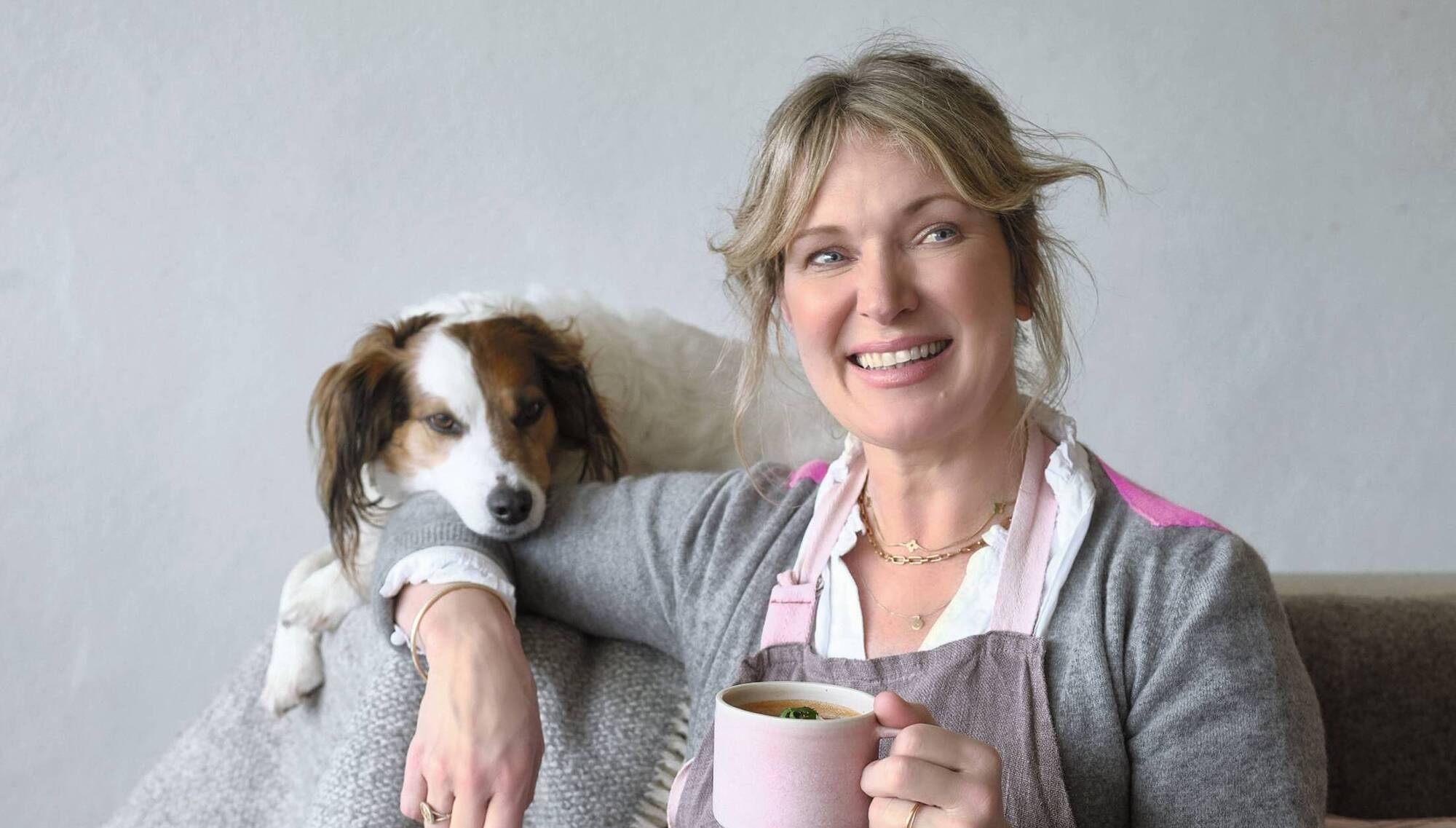
Rachel Allen is the ambassador for the Culinary Cinema strand at Cork International Film Festival. Picture: Joanne Murphy

The late, great chef and food writer, Anthony Bourdain, had a favourite film about food. “I think it’s quite simply the best food movie ever made,” he told Entertainment Weekly in 2011. The movie? A cartoon about a rodent chef. 

The acerbic New Yorker felt Ratatouille perfectly captured “a passionate love of food” on film, noting the cinema audience’s “audible surprise, delight, awe, and even a measure of enlightenment” on viewing the scene in which restaurant critic Anton Ego, upon tasting Remy the rat’s ratatouille, is transported back to boyhood and the comforting deliciousness of his mother’s cooking.


“Literally breathtaking,” was Bourdain’s description of the sequence.

Ah, the gut-punchingly evocative power of food in film. Bourdain got it. Rachel Allen gets it too. The celebrated Ballymaloe-based chef, food writer and teacher is the ambassador for the Culinary Cinema strand at Cork International Film Festival (CIFF). 

Our conversation about movies and food has segued from the fantasyland of Willy Wonka and the Chocolate Factory — “the first foodie film that I ever watched,” Allen says. “I loved it. When I was little, I used to make sweets and peppermint creams and lollipops to play around with” — to the mountains of Honshu in Japan.

Nakae Yûji’s The Zen Diary, one of four films in CIFF’s Culinary Cinema strand, follows a year in the life of Tsutomu, as he writes, gardens, forages and cooks meals from recipes he learned in childhood as a novice Buddhist monk. It’s very Cork, I say. Foraging. Food close to nature. That appreciation of ingredients and the land. Allen laughs. “It is very Cork, yes.”

A still from Nakae Yûji’s The Zen Diary

Our talk of Japan and its food has sparked a memory for her. “One of the most amazing performances I’ve ever seen was at a food event in Copenhagen as part of René Redzepi’s MAD Symposium in 2014. Tatsuru Rai and his wife Midori got up and silently made noodles [in front of an] audience of people on the cutting edge of food, from restaurants all over the world, people who really knew their stuff. It was mesmerising, watching Tatsuru and Midori silently mix dough and make noodles. I remember thinking, ‘I just want to go home and make noodles’.”

Noodle master Tatsuru Rai is a shokunin, an artisan dedicated to his craft. Artisans are not unique to Japan — considering the Rebel County’s wealth of cheesemakers, growers, distillers and organic farmers, artisanship is, too, ‘very Cork’ — but the Zen-like lifelong focus on striving for perfection the shokunin way is singularly Japanese. 

David Gelb’s 2011 documentary, Jiro Dreams of Sushi, famously celebrated shokunin sushi chef Jiro Ono. Ono’s discipline, patience, and absolute devotion to his craft resonated with audiences globally and resulted in his lessons (“You have to fall in love with your work”) being quoted in everything from self-help books to business blogs, and an omakase (sushi served by a master) boom in the US.

“They do everything in the most considered way. There’s always a respectful interaction,” Allen says of Japan, which she visited in 2016 to film the documentary The Story of Rice. “I found it so incredible.”

Incredible too, is Sally Barnes, the subject of The Keep, one of two documentaries featured in the Culinary Cinema strand. “The Keep is a must-watch,” Allen says of Federico Conti’s film, which focuses on Barnes, the last woman in Ireland to exclusively smoke wild fish, a craft she’s practised at Woodcock Smokery in West Cork since 1981. 

“Sally Barnes is one of my favourite people. It’s right a documentary has been made about her because she really is incredible. What she does for sustainability, for preserving stocks of fish…” I’ve accompanied my husband fly-fishing for salmon, I tell Allen, and found it sad to witness their magnificent journey being ended. It taught me how much respect a wild fish deserves.

“Exactly,” Allen says, emphatically. “That’s exactly it. And to respect the fish and savour every bit and not waste anything, that’s so Sally. She’s so pioneering. She doesn’t compromise on what she’s saying, and practices what she preaches.”

Meryl Streep as Julia Child in a scene from Julie & Julia

It’s perhaps no surprise that one of Allen’s favourite foodie movies is Julie & Julia, in which food blogger Julie Powell spends a year meticulously cooking all 524 recipes from Julia Child’s classic Mastering the Art of French Cooking. The movie goes deep into classic French techniques, and along with the titular Julie, we learn how to properly poach an egg, make a quiche nine ways, debone a duck, stuff it, then prepare it en croute. Oh, and this gem: ‘If you don’t dry meat, it won’t brown’.

“I just loved reading Julia Child when I was starting cooking. I just loved her. Jane Grigson, Julia Child, Elizabeth David. In the very early ’90s, I got really into reading about all these amazing pioneering women who were wonderful cooks. Madhur Jaffrey, Marcella Hazan. I still have all their books.”

What was it about Julia Child that you liked? “The descriptions of the recipes; they were written just so differently to how they are now. You could almost hear her talking. I thought Meryl Streep did the most amazing job portraying her. [She even got] her voice, because actually apparently that was how she spoke. I just loved it and it was exactly as I thought she would be — Darina [Allen] had met Julia Child and said [of Streep’s portrayal], ‘yes, that is her’.

Julie & Julia, Allen points out, “was made at the very beginning of when people were blogging”. Food blogging’s origins actually stretch back to 1997, but Powell’s original Julie/Julia Project blog began in 2002, a time when most were unaware what the word blog meant, and hers is considered the original ‘cook through’ blog. The late Powell — she died of cardiac arrest, aged 49, in 2022 — found fame through amateur cookery.

Amateurs emulating or competing against professional chefs is now a well-trodden path and the fourth film in the Culinary Cinema strand, Eglė Vertelytè’s Tasty, explores the world of TV cookery competitions through the experiences of besties Ona and Saule. Such shows are “addictive” Allen says.

We’ve never had more cookery shows – but are they encouraging people to cook more?

“I don’t know,” she says. “Are they just sitting down and loving the escapism of Bake Off or MasterChef?”

Could it be that food in film inspires in a way that food on TV never could? In film, food has the ability to illustrate a character (Pulp Fiction hitmen Vince and Jules coolly discussing a ‘Royale with cheese’ while on the way to commit murder); signify status (Molly Ringwald’s sushi lunch in The Breakfast Club versus Ally Sheedy’s ham sandwich); symbolise corruption, rituals, rules, family and heritage (Paulie in prison slicing razor-thin slivers of garlic for a lavish dinner in Goodfellas); determination (Rocky’s five raw-egg breakfast) and hard truths (Meg Ryan’s fake orgasm over turkey on white to Billy Crystal’s pastrami on rye in When Harry met Sally).

“Fantastic,” Allen says of the ‘I’ll have what she’s having’ scene in Nora Ephron’s classic flick. But really, she just wants to go home and make noodles.

More in this section

Scene & Heard

Newsletter

From music and film to books and visual art, explore the best of culture in Munster and beyond. Selected by our Arts Editor and delivered weekly.

Cookie Policy Privacy Policy Brand Safety FAQ Help Contact Us Terms and Conditions

© Examiner Echo Group Limited