Book review: From shell-shocked to thinking ‘War is easy’

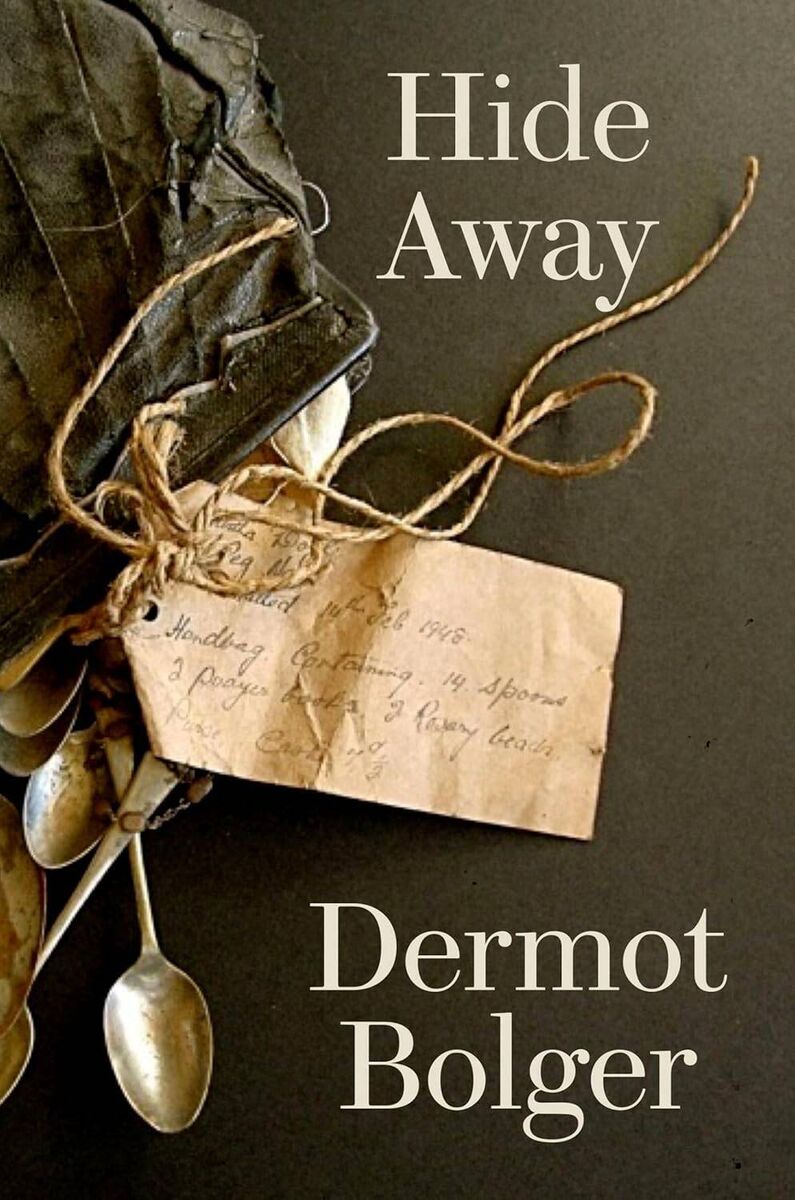
'Hide Away' is Dermot Bolger's 16th novel and is franked with flourishes from the author’s experience across genres.
- Hide Away
- Dermot Bolger
- New Island Books, €16.95
“People only want to hear about good wars with bold deeds to sing of. You and I had bad wars. Bad wars are best kept quiet. I serve my country by staying put behind these walls where no one need witness the aftershock.”
Jimmy Nolan speaks these words in Dermot Bolger’s . During the Irish Civil War, Nolan participated in a notorious atrocity: The murder of three anti-Treaty youths whose bodies were dumped at the Red Cow the morning after their arrest.
The novel is set in Grangegorman Mental Hospital, where Nolan has spent almost 20 years as a psychiatric patient because of his involvement in that brutal killing.
The “aftershock” he refers to is the book’s cornerstone and has two essential aspects.
The first is the personal repercussions, that went largely unspoken, for the combatants who inflicted violence during the War of Independence and Civil War.
The second is the fledgling country’s public trauma, suppressed by sacrificing a tangled, complicated history for a simplistic, sanitised narrative.
“War is easy,” a character suggests. “It’s peace that’s hard work.”
The central relationship in is between Doctor Fairfax, an English psychiatrist (but “a psychoanalyst by vocation”) who specialises in war trauma, and Francis Dillon, a former intelligence officer for Michael Collins who is now an asylum patient.
The institution has a poignant resonance. When Charles was a member of the Black and Tans, he witnessed British soldiers who had fought in the First World War receiving treatment for shell-shock in Grangegorman.
Charles once told Fairfax that he would be too soft to work there. Determined to prove Charles wrong, the psychiatrist gets a job in the asylum (“this maelstrom of misery and mania”).
On Bloody Sunday, Dillon oversaw the assassination of two British officers. Underlining Bolger’s vivid prose, Dillon is haunted by the “gurgling” sound of blood in their throats.
Alleged to have taken part in the deaths of the anti-Treaty youths, Dillon suffered paranoia. Believing snipers were trying to shoot him through a window in his home, Dillon was committed to Grangegorman.
The novel’s high point is the tension between Fairfax’s attempts to excavate Dillon’s violent past and the patient’s fluctuating resistance. This strain is emphasised by presenting the clash as cultural and professional.
In everyday conversation, the doctor feels Irish people exclude him “by an invisible shield”.
Nolan’s opposition to Fairfax is especially pronounced. Recognising that the secrets he shares with Dillon from Bloody Sunday are the nucleus of their bond, Nolan disparages psychoanalysis as “a posh word for informing”.
In 1977, Bolger, an 18-year-old factory worker, founded Raven Arts Press, which published early works by Patrick McCabe, Colm Tóibín, and Sebastian Barry.
Initially a poet, the Finglas native has written more than 20 plays.
is his 16th novel and is franked with flourishes from the author’s experience across genres.
The poet’s precision of language is evident throughout: The way Fairfax found “sanctuary” in Charles prefigures the doctor’s arrival in Grangegorman.
The prominence of nimble, convincing dialogue attests to Bolger’s skill as a playwright.
Narrated from multiple characters’ points of view, is an astute character study concerned with guilt, betrayal (personal and public), and the secret lives of those we love.
Locating the action almost exclusively within the walls of Grangegorman conjures an appropriately oppressive atmosphere, but this is often leavened by Bolger’s trademark wry humour.
“Generally,” suggests an attendant explaining the Irish to Fairfax, “we say everything that needs to be said by saying nothing.”


BOOKS & MORE
Check out our Books Hub where you will find the latest news, reviews, features, opinions and analysis on all things books from the Irish Examiner's team of specialist writers, columnists and contributors.