Liliane Tomasko: 'A painted surface has a kind of magic that a sculpture can't have'
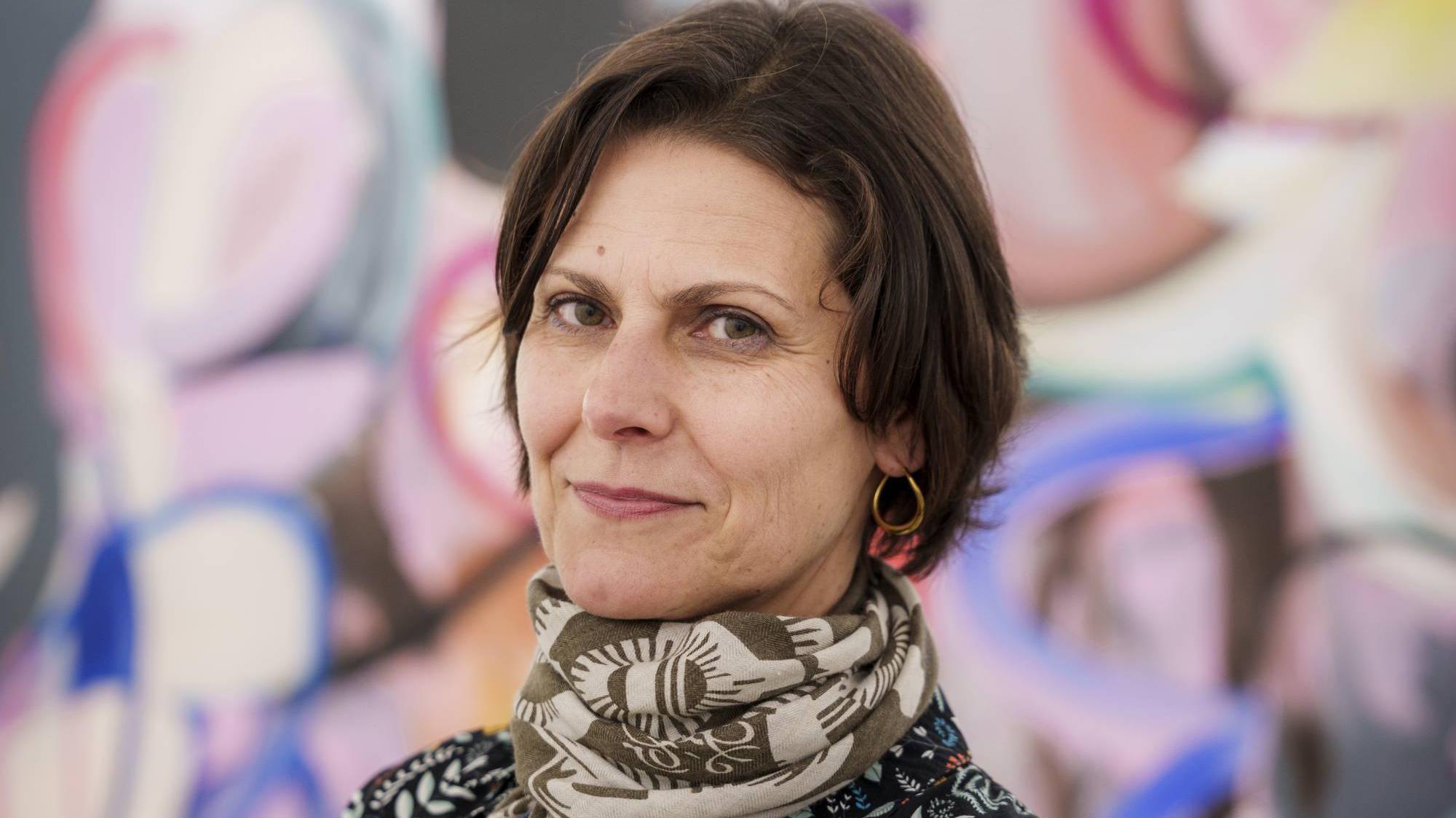
Liliane Tomasko's Twofold at the Kerlin is her 42nd solo exhibition. Picture: Tristan Hutchinson
It is raining in London, where Liliane Tomasko is at work in her studio. The Swiss-born artist has a long association with the city, having studied at Camberwell College of Arts, the Chelsea College of Art and Design and the Royal Academy of Arts in the 1990s.
Last year, after many years living in New York, Tomasko and her family moved back there, settling in Hampstead in North London. The move was a reaction to the rise of gun violence and right-wing politics in America; Tomasko and her husband, the artist Seán Scully, were determined to rear their son Óisín in a safer environment. Scully had grown up in London, and it seemed a better option than New York. Already, however, they are having second thoughts.
“Óisín is 15, and we've seen that he's not really been very happy,” says Tomasko. “He’s missing his friends very much. He plays football here, but it's been difficult for him to have a social life because he has so little time. He has school all day. Then he comes home, and spends hours doing homework.
“I don’t know. We’ve been here a year, but we’re really not that settled. We’ll see.”
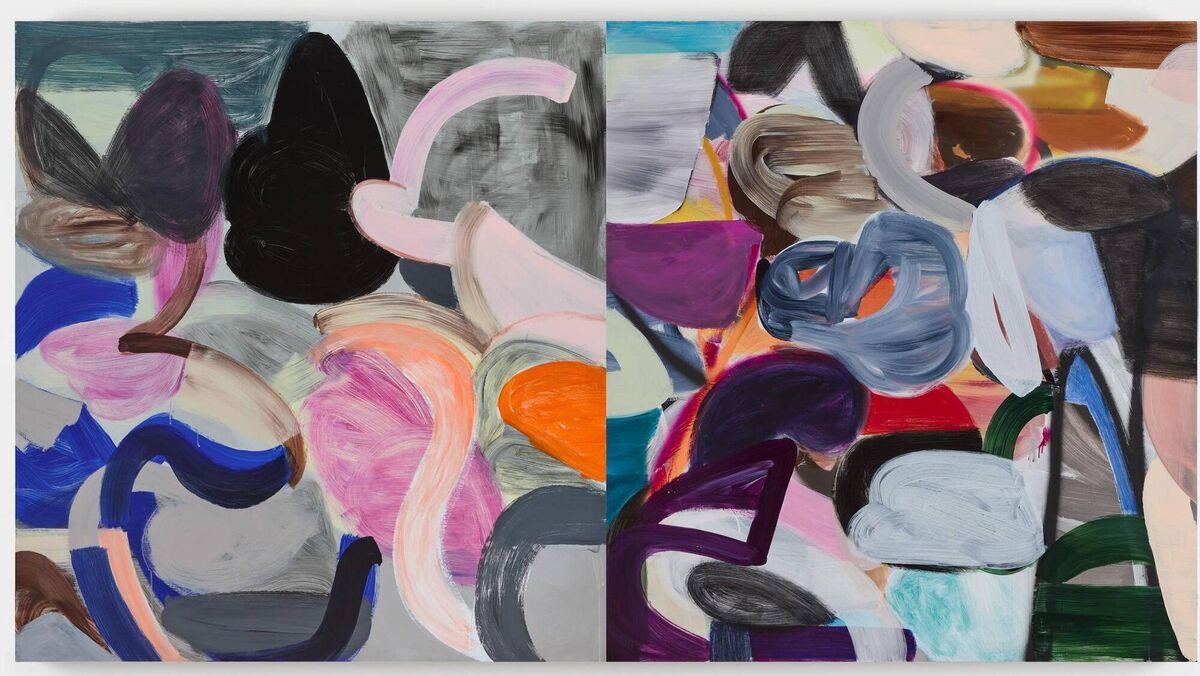
Tomasko has kept busy in London, working on her new exhibition of abstract paintings at the Kerlin Gallery in Dublin, among other projects. The Kerlin exhibition is called Twofold, and features five large diptychs and four works on paper. All were completed in 2024.
In the past, Tomasko took great pains in preparing her paintings. “There was a whole sort of procedure,” she says. “I would take photographs of unmade beds. Then I would make black and white drawings of the photographs. And then the drawings would go on the canvas. So there would be several steps of getting away from the subject matter, and the actual painting would be a sort of freeing of the initial structure. But I’m not really doing that anymore. Unless it’s there as a memory, perhaps.”
One positive aspect of Tomasko’s life in Hampstead is that she spends more time outdoors. “We don’t have a car, which is good,” she says. “I walk Óisín to school, and we have a dog, so there's a lot of movement, which is funny because I think that's mirrored in these new paintings, particularly in the diptychs. You know, there's a lot of movement in them.”
It may also be a consequence of the time Tomasko spends in nature that the new paintings are so colourful. She likes to work in acrylics, as they dry faster than oils, “especially here, where it’s so moist,” she says.
She tends to complete the paintings in a matter of weeks. “What's interesting is, I work on the different panels at the same time, and they start communicating with each other. And then, when I put them together, they often make something new.”
Many of the paintings have long, exotic titles, the most memorable of which is probably To shift a Shape, to shape a Shift, across a Line and causing no Rift.
“The titles always have three elements,” says Tomasko. “It’s this idea, that the paintings are diptychs but they make a third thing. The titles are little poems, really, but they have something playful about them too, and they’re a bit funny.”
Twofold is Tomasko’s 42nd solo exhibition in a little over 20 years. Her productivity may be explained in part by a determination to establish herself in a career that was not readily available to her growing up in Zurich. Much as she would have liked to study fine art, the only options available were in applied arts or design.
“So I started an apprenticeship as a window dresser when I was 16,” she says. “That was supposed to take four years, but I stopped after one year, and I went to work for an art gallery. I was getting closer to my interest. I did an apprenticeship there that was basically a BA in business. I was working in the gallery and one day a week I would go to school. That took three years, and then I applied for art school in London.
“Once I got into Camberwell, I was ecstatic. It was just the most incredible thing for me to make art.”
As a student, Tomasko mostly worked in sculpture. “On my foundation course, I made objects. This was in the early 1990s, and we were discouraged from making paintings. But it was also a question of money. Buying paints as a student is difficult, so I worked with a lot of found objects and stuff that was lying around.
“After Camberwell, I did three years in Chelsea and three years at the Royal Academy, and all I worked at was sculpture. But what's really interesting is that when I was sculpting I was mostly looking at paintings. That was always my love, you know. That was my interest. So I made sculptures, but they were sort of constructed paintings. And then I finished with the sculpture, and I started painting. I think sculpture for me will never again be a primary thing. It's too actual, you know. A painted surface has a kind of magic that I think a sculpture can't have because it's already a thing in the real world.”
Tomasko’s next project will be at the Sheffield Museum in November, where she will create a response to a painting called Jean and Table Top by the founder of Kitchen Sink Realism, John Bratby. “It’s a portrait of his wife, sitting at this table that comes at you at this really aggressive angle. There are all these things scattered on the surface of the table. Cups and stuff. I want to make a drawing on the wall that may be like an extension of Bratby’s portrait, and then I'll have my own paintings as well.
“The diptychs should be quite good in relationship to his work, because there's a lot of stuff in them, and there's a lot of stuff in his painting as well.”
Bratby was a troubled character, who died of a heart attack in 1992. “He was really a fantastic painter,” says Tomasko, “but he’s not estimated very much in Britain, or anywhere really. There’s always a finely balanced equilibrium, I think, between being crazy outspoken and being accepted by society and the art world.”
Tomasko seems to have found that balance herself. Whatever her reservations about living in London, she has none whatsoever about becoming an artist. “If you can make it work, it's a fantastic life,” she says. “I mean, there's nothing like it. I can't think of anything better, really.”
- Liliane Tomasko: Twofold runs at the Kerlin Gallery, Dublin until October 19.
- kerlingallery.com
- lilianetomasko.com