Author interview: A moment when the world tips over into something else
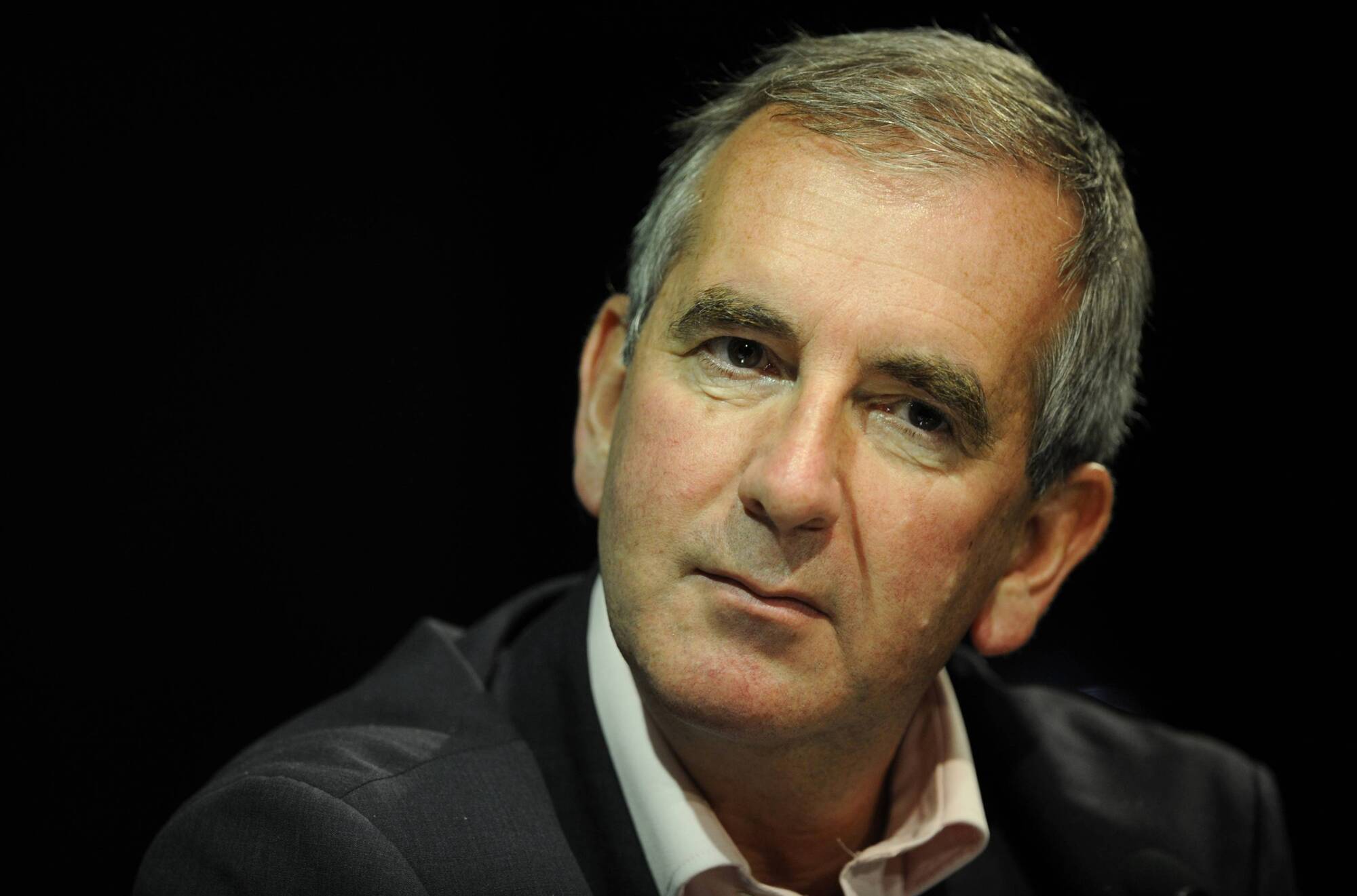
In 'Precipice' Robert Harris sees 1914 — the year of the outbreak of the First World War — as the great watershed in Western history
Author interview: A moment when the world tips over into something else

Robert Harris: They had promised Home Rule and they simply had to deliver it. And equally the Tory party under Bonar Law and with Carson was adamant that they would not allow a fully united Ireland. Picture: Getty Images

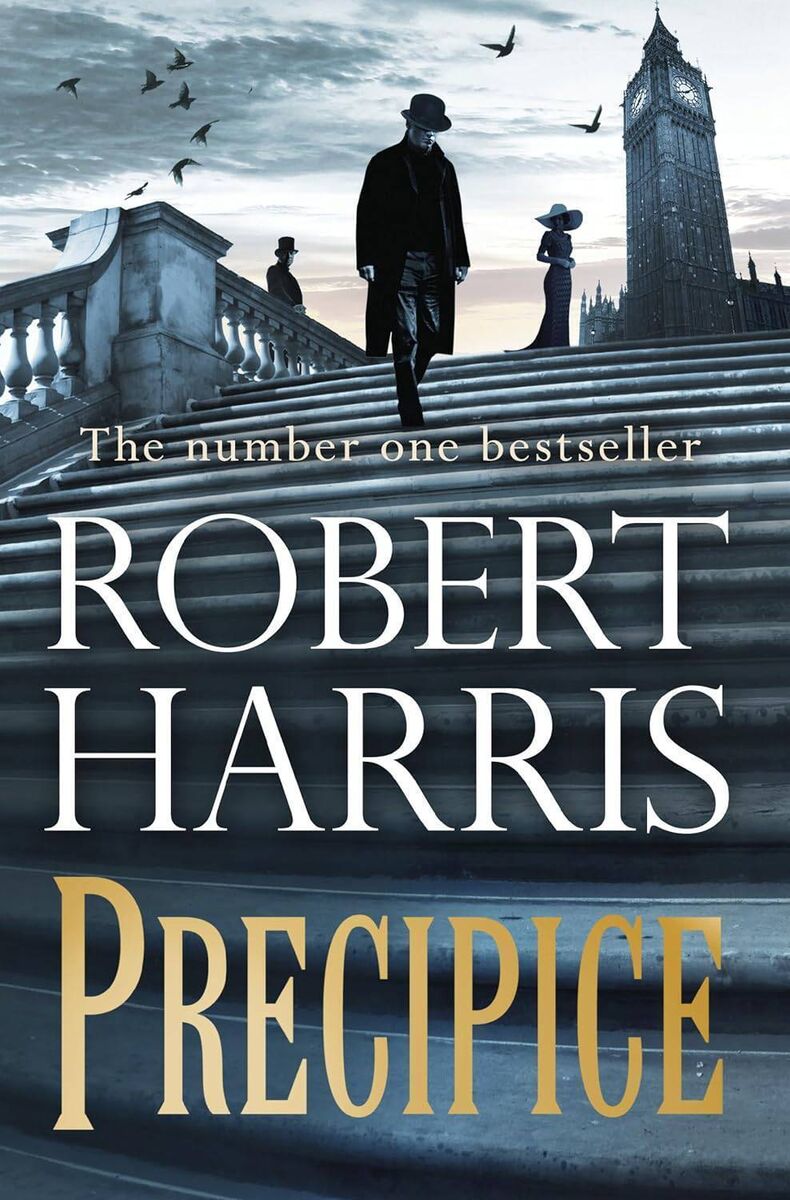
  • Precipice 
  • Robert Harris ‎ 
  • Hutchinson Heinemann, €16.99

At the outset of Precipice, the new novel by Robert Harris, the characters — without their knowing — are ensnared in a bitter historical irony. 

It is July 1914 and the implementation of the Home Rule Act has Herbert Asquith, the Liberal prime minister of Great Britain and Ireland, and those around him, staring into the abyss of civil war.

In reality, however, there is not one precipice looming, but two. 

At the same time as the British establishment turns out in force for a Downing Street garden party, the ambassador of the Austro-Hungarian Empire is at the Serbian Foreign Ministry in Belgrade to deliver his government’s ultimatum following the assassination of Archduke Franz Ferdinand. 

The chain of events leading to the outbreak of the First World War gathers what proves to be unstoppable momentum.

“The whole thing was a castle of air really,” Robert Harris tells me over Zoom, puffing on a morning cigar in an opulent-looking study that is not so much book-lined as book-infested.

“There had been this very long period of peace. The ruling classes had this vast amount of wealth and leisure time.”

I wanted to open a book conveying this, really; where we know what’s about to happen to them and they … simply don’t.

One of the things which people forget about the summer of 1914, Harris says, is how obsessed British politicians were with Ireland: 

“They had promised Home Rule and they simply had to deliver it. And equally the Tory party under Bonar Law and with Carson was adamant that they would not allow a fully united Ireland, that Ulster would fight and Ulster would be right. 

“They’re endlessly poring over maps, down to village level, trying to work out which is a majority Protestant or Catholic population.”

Politics was split and so was the military: “After the Curragh Mutiny, [Asquith] took control of the army, as well as being prime minister, to try and sort that out. 

“Because there was no guarantee that the British army, elements of it, would fight against Ulstermen. 

“And famously the Irish Guards were on duty outside Buckingham Palace when they had the conference... and the Guards cheered Redmond and the Irish nationalist delegation when they arrived.”
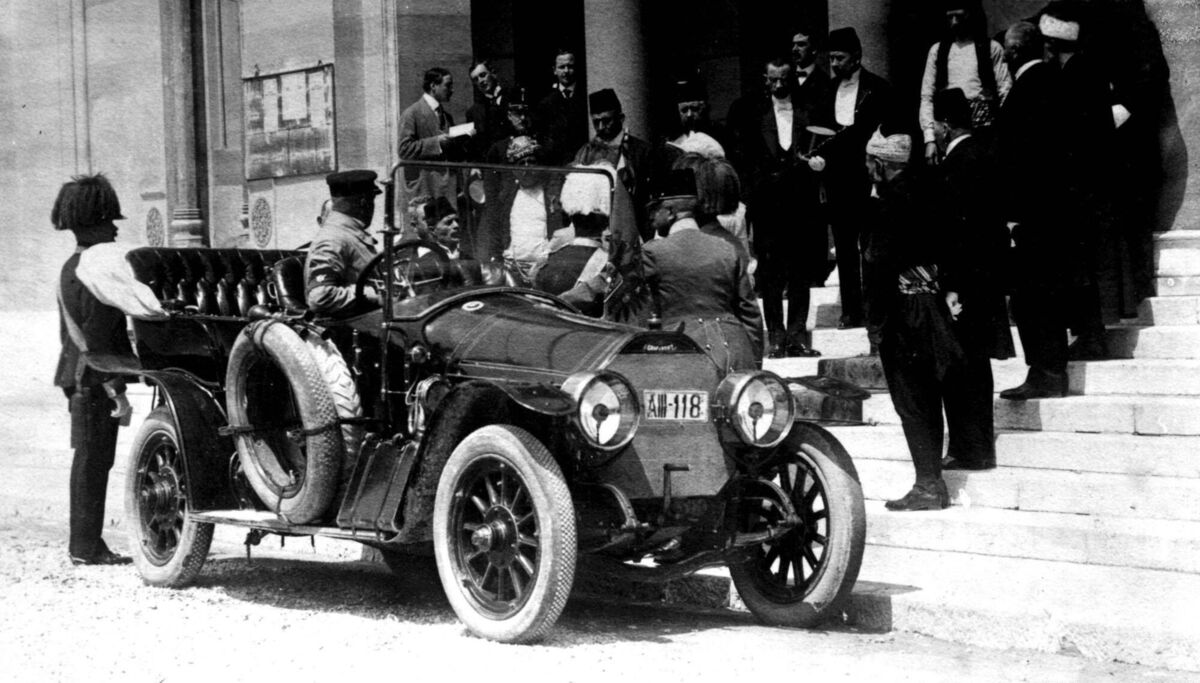
Nobody was looking at Serbia. And then “it loomed massively and Ireland suddenly shrank, and Bonar Law and Carson said ‘Let’s put it to one side until we’ve sorted this out’. Redmond accepted that and destroyed his career as a result, really.”

The Archduke Franz Ferdinand and The Duchess of Hohenburgh (both obscured) leaving the Town Hall of Sarajevo two minutes before they were assassinated, an act which led directly to the outbreak of the First World War. File picture:: PA Wire

In the opening chapters of Precipice, we also read about the Coterie, a loose assembly of young and fashionable aristocrats and intellectuals, bright young things who seem to oscillate between a feeling that life and people were either frightfully amusing or a crashing bore, displaying a certain excitability at one moment and a kind of lassitude at the next. 

Among their number is Venetia Stanley, a 26-year-old with whom Asquith, then in his sixties, was madly in love.

Stanley in some ways is a perfect embodiment of the strange mood beginning to circulate within the upper classes. 

In the book, she goes up in an airplane for the first time in 1914 (courtesy of Winston Churchill) just for “the ecstasy of escaping the dull earth”.

Stanley was Asquith’s companion on long drives in the countryside near London in his official car, and someone to whom he wrote letters several times a day. 

These letters, quoted throughout Precipice, still exist, filling eight boxes at the Bodleian Library in Oxford. (Asquith destroyed all of Stanley’s letters to him, so Harris imagines what they said.)

The prime minister’s letters are soppy in the extreme, though rarely lascivious; and, in both the letters and car journeys, Asquith was extraordinarily indiscreet. Telegrams containing state secrets are discovered scattered around fields near Maidenhead and elsewhere.

The subsequent leak inquiry that drives the plot forward in Precipice is led by Paul Deemer, a fictional character, although the man who gives Deemer his first job in the special branch was certainly real: Superintendent Patrick Quinn from Co Mayo who was knighted in 1919.

This was a time when, Harris says, “a prime minister could pass unrecognised. Indeed, he (Asquith) describes it in the letters, the shock of being recognised in the street for the first time. ”

And that did obviously make it easier to have an affair. He could travel on the train on his own without a bodyguard or a secretary. It was quite extraordinary.

It is an amazing scenario and a gift-horse that Harris was not prepared to look at in the mouth. 

There is a scene in the book where, as the disaster is unfolding, Asquith leaves Downing Street to spend more than an hour in an Oxford Street bookshop choosing birthday gifts for his lover. 

The assistant who serves him doesn’t recognise the prime minister.

The era, Harris tells me, allowed him to explore what he calls “the obsessive nature of people who get to the top” in a way that would be denied to writers of fiction concentrating on the present. 

As one of the most successful writers of historical fiction of our day, his words carry weight. 

“Stories can develop at a pace which nowadays wouldn’t be possible with the instant recognition, the security, the ease of communications.

“There wouldn’t have been all of these letters because they would have just WhatsApped constantly to one another.”
In Precipice, we learn that Asquith’s charm was “to treat the gravest matters of state as if they were nothing of any consequence, whereas the lightest of trivialities — dresses, card games, word puzzles, golf, poetry, popular novels — he discussed with the utmost seriousness”.


On the morning after the Downing Street garden party and the developments in Belgrade, “in the smoothly functioning filing system of his lawyer’s brain, the European crisis moved up a drawer from low priority to high”. 

Politics was “merely a process of replacing one problem with another”.

But this was different. “The whole thing fills me with sadness,” Asquith wrote. “We are on the eve of horrible things.” 

Millions would die, with Asquith’s son, Raymond, among them, killed leading an attack at the Battle of Flers-Courcelette.

Harris sees 1914 as the great watershed in Western history. He itemises some of the transformations: the ushering in of technology that enabled mass slaughter; through conscription, the real beginnings of a powerful state that would impinge on people’s lives; the Russian Revolution; the grand families losing their power and wealth.

“This is a moment when the world tips over into something else. And it came out of nowhere.”

They had all of these defensive alliances which would dampen down war, but, actually, they turned out to be an accelerant.

And what next for Robert Harris?

Conclave, the film based on his novel about a papal election, starring Ralph Fiennes and Isabella Rossellini, comes out in November. 

He is in the middle of some time off from writing, though looking forward to getting down to work on a new book soon enough: 

“I have no other hobbies, so there’s nothing else,” he half-chuckles.

“I’ve got to do another one. It’s all I do.”

More in this section

Scene & Heard

Newsletter

Music, film art, culture, books and more from Munster and beyond.......curated weekly by the Irish Examiner Arts Editor.

Cookie Policy Privacy Policy Brand Safety FAQ Help Contact Us Terms and Conditions

© Examiner Echo Group Limited