Book review: Bob’s big heart shines through in 'Tell me Everything'

Elizabeth Strout’s latest dispatch from Maine is another life-enhancing read and a beautiful testament to the power of love and friendship
Book review: Bob’s big heart shines through in 'Tell me Everything'

Devoted readers of Elizabeth Strout will be relieved to hear that the author has previously said that she cannot see Olive dying on her watch. 

  • Tell me Everything 
  • Elizabeth Strout 
  • Viking, £16.99

For those who have never had the pleasure of reading the novels of Elizabeth Strout, it is hard to comprehend the excitement and anticipation among her fans when it was revealed that this book would be the one where (alleluia!) Olive Kitteridge and Lucy Barton meet. 

Olive and Lucy are the most prominent characters of the Strout Novelistic Universe, which features a recurring and sometimes interacting cast, whose lives play out in the author’s home state of Maine.
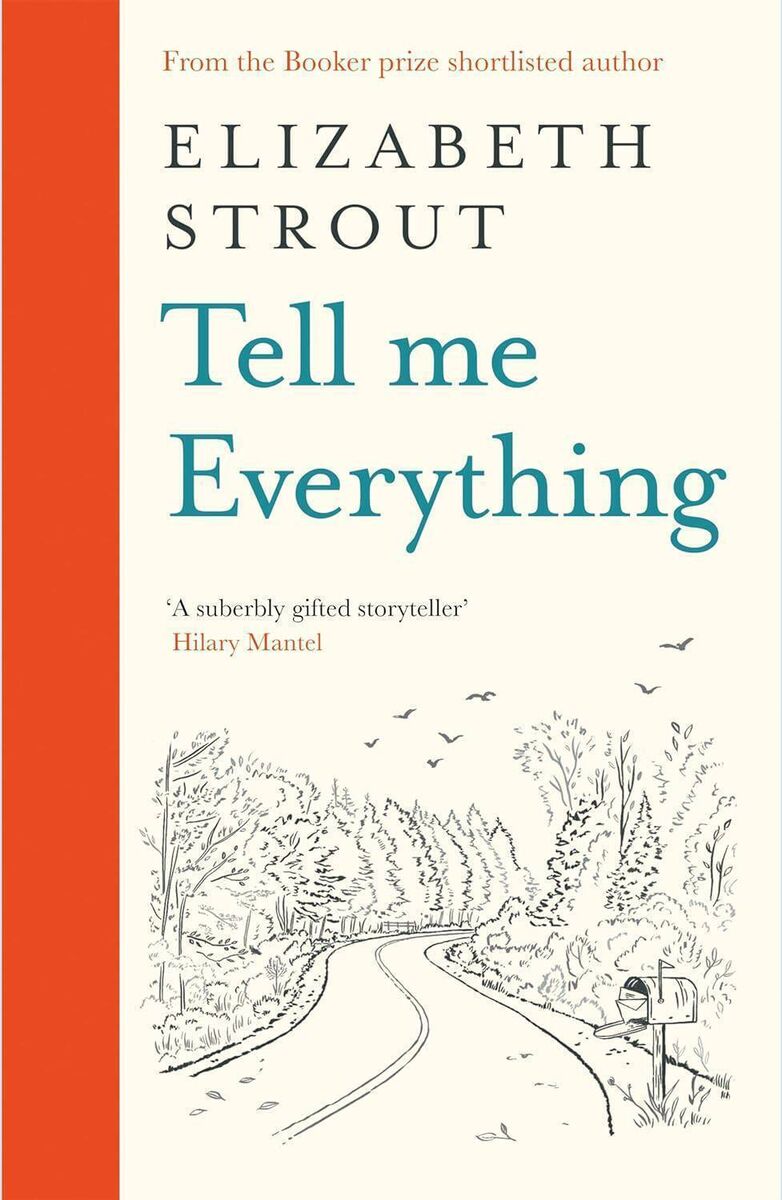
In Tell me Everything, the formidable Olive, whose crankiness and plain speaking belies an unquenchable curiosity and longing for closeness, is ensconced in a retirement home in her hometown of Crosby, where novelist Lucy moved during the pandemic with her husband William, an experience that was the subject of Strout’s previous book, Lucy By the Sea.

As the omniscient narrator of Tell me Everything intones: “Olive Kitteridge had been thinking about all the unrecorded lives around her. Lucy Barton had used that phrase when she first met Olive and heard Olive’s story about her mother: unrecorded lives, she had said. And Olive thought about this. Everywhere in the world people led their lives unrecorded, and this struck her now.”

After some initial awkwardness, Lucy continues to visit Olive, and they share stories in an attempt to bear witness to some of those untold lives while taking stock of their own.

However, Lucy and Olive are only the side attraction in this book, which belongs to Bob Burgess, a lawyer nearing retirement, whose new friendship with Lucy has burgeoned during lockdown. 

Strout sums him up with typically masterful economy: “Bob has a big heart, but he does not know that about himself; like many of us, he does not know himself as well as he assumes to, and he would never believe he had anything worthy in his life to document. But he does; we all do.”

As Bob’s connection with Lucy grows more intense and intimate, the sneaky cigarettes he smokes with her on their coastal walks aren’t the only thing he has to hide from his wife, Margaret, a unitarian minister. 

Meanwhile, he must deal with an alcoholic ex-wife who comes back into his life, his brother’s breakdown, the death of his beloved sister-in-law and the tragic childhood accident that continues to haunt him. 

Not to mention becoming embroiled in the mysterious disappearance of Gloria Beach, the former dinner lady at the town high school, whose son is suspected of murdering her. 

There is also an overarching sense of post-pandemic anxiety, as Bob frets about the conflict in Ukraine as well as the threat of civil war in his own country.

It sounds like a lot to bring together but Strout makes it look easy, rendering it all into a coherent and immensely satisfying narrative with consummate ease. 

She is gifted at conveying the constant little cruelties of family life, the reliability of our core memories and the underlying profundity of the everyday — but most of all, her work is about the desire to be recognised and seen by others.

Occasionally, the characters and their relationships can come across as unrealistic, for example when it transpires that Bob’s ex-wife had an affair with Lucy’s ex-husband. 

Margaret and William, who barely figures in this book, also appear to be unusually blasé about Bob and Lucy’s closeness.

For all the difficulties the main characters encounter, they also lead a somewhat rarefied existence, giving them the luxury of seemingly endless contemplation. 

We do occasionally get a glimpse into how the other half lives — Lucy’s impoverished friend Charlene appears to get a happy ending with a new partner before a brief allusion heralds the looming spectre of coercive control.

Ultimately, however, Strout’s latest dispatch from Maine is another life-enhancing read, and a beautiful testament to the power of love and friendship. 

It ends, fittingly, with the indefatigable Olive, now 91 years old, sitting at the bedside of her friend Isabelle, pondering how love comes in so many forms. 

Strout has previously said that she cannot see Olive dying on her watch. 

Her devoted readers will breathe a sigh of relief and cross their fingers that we will hear more from one of modern literature’s most memorable characters.

x

BOOKS & MORE

Check out our Books Hub where you will find the latest news, reviews, features, opinions and analysis on all things books from the Irish Examiner's team of specialist writers, columnists and contributors.


More in this section

Scene & Heard

Newsletter

From music and film to books and visual art, explore the best of culture in Munster and beyond. Selected by our Arts Editor and delivered weekly.

Cookie Policy Privacy Policy Brand Safety FAQ Help Contact Us Terms and Conditions

© Examiner Echo Group Limited