Laethanta Saoire: Losing My Religion - The Summer of 1980, by Graham Allen
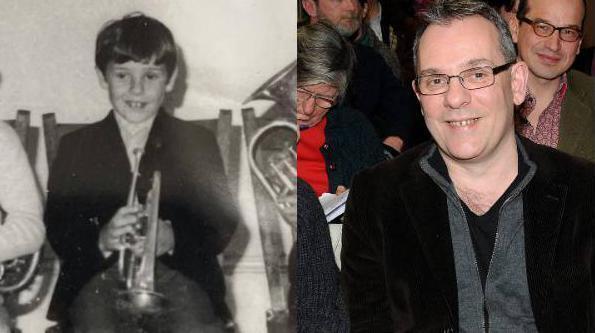
Graham Allen in his Salvation Army days; right, a more recent picture of the Cork-based author.
England, back 40 years ago, had a model of generational rebellion and severance. If you wanted more than your domestic sphere provided, you had to find your way out. Go into exile. Put on your walking shoes and create new footprints. Most seriously for me, at the age of fifteen, was the emergence of a studied detachment, a requisite indifference to the values of my parents. A kind of domestic terrorism, really, a kicking over of every family statue.
My only excuse for such behaviour is that my family was a Salvation Army family. We were uniformed members of the Barking Citadel, our involvement the legacy of my mother’s parents, especially her father. On one uniquely confessional evening, a night I associate with the blackouts of 1974, mum let out that her father put aside his previously dissolute ways when he met Jesus, and my Grand-mother, on the same, glorious, never-to-be-repeated day.
Grand-dad Sergeant Richardson (my dad’s lot were the Allens), was a huge influence on all members of the family, he and his uniformed wife, Alice, in Watford, us five Allens, in Barking, the entire clan, compelled by some inward force of identification and (magic word) duty, striving to attain and then maintain that, for some, quite easy and for others, maddeningly elusive, sense of salvation. Of being (or having been) saved.
It was only a matter of time before I found, buried like a guilty secret in its most underused pages, the Death and Judgement and Heaven and Hell sections of the Songbook of the Salvation Army, which I was gifted on my 12th birthday. Was that explosive little device made of words a wise gift for a young boy like me? I remember the morning, a few years later, leafing through the last pages of the book, discovering there the Principles of the Salvation Army tucked away after the index and never spoken about or referred to, as far as I remember.
The final doctrine reads: "12. We believe in the immortality of the soul; in the resurrection of the body; in the general judgement at the end of the world; in the eternal happiness of the righteous, and in the endless punishment of the wicked."
The bodily resurrection seemed strangely anachronistic, like a remnant from bloody and ignorant earlier centuries. But what sent me, and can still send me, into a rage, was the idea of Hell and its ‘eternal punishment’ for those on the wrong end of judgement. What strange spell had blinded me to this? What kind of God had they been preaching to me? To themselves?
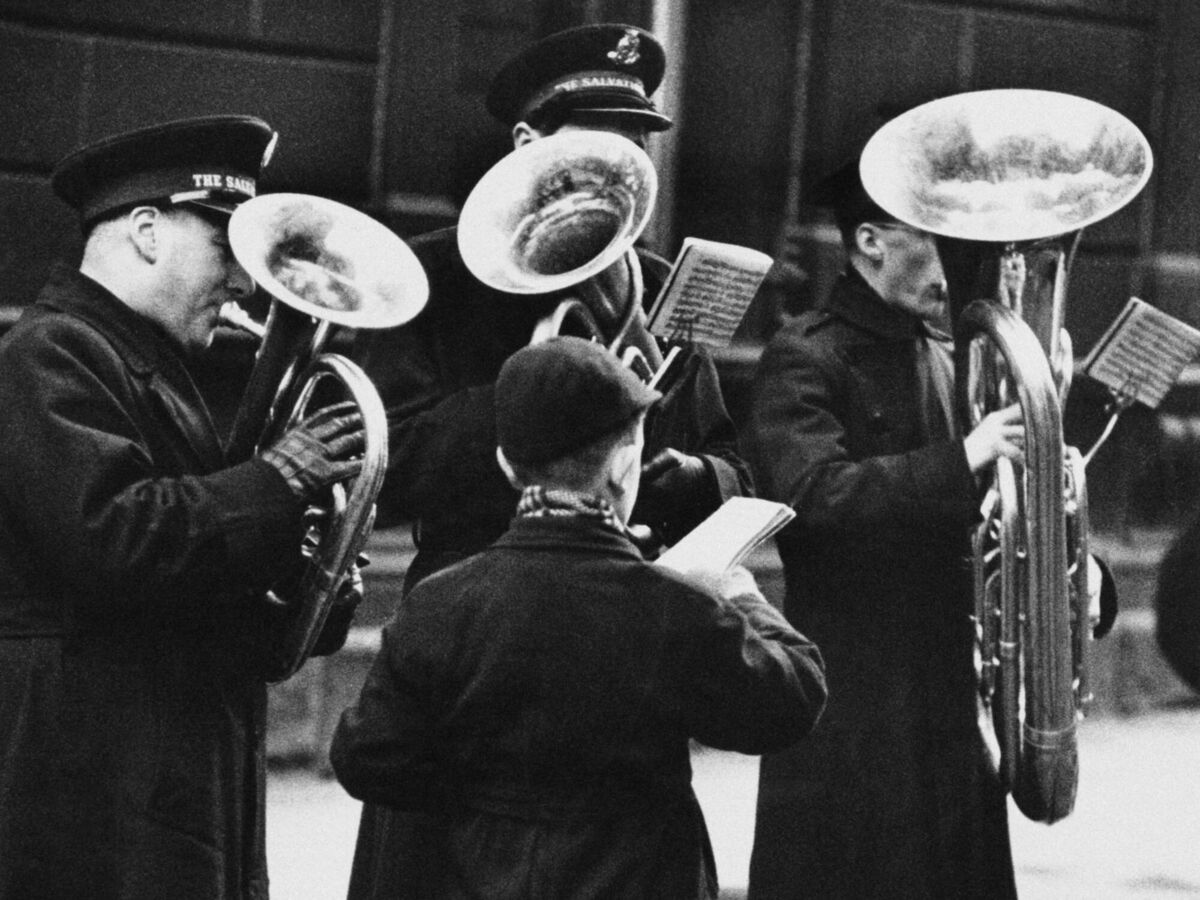
The Salvation Army was a church full of pretty good, sometimes saintly, almost always socially-minded people. Good people to be raised by, perhaps, but I started to resist and eventually, after a few pitch-battles, began the period of domestic rebellion. The summer of 1980 saw me beginning to say no.
No to band practise on Monday evening and Wednesday evening.
No to The East London Youth Band and its many trips away, on tour, or at the week-long summer music camps the Army laid on.
Especially no to the ten-hour Sunday, with open air services on streets were my school friends lived.
No to Sunday schools, and, increasingly, the ideological training of Youth Cadet meetings.
No to two main services (morning and evening), between one hour and three hours long, depending on whether ‘the spirit moved’ or not.
No to duty.
No to responsibility.
No to my Silver Cornet and playing third row in brass bands.
No to the biggest one of all, the one thing that threaten to permanently destroy the uneasy peace of the house, no to my uniform, stashed quietly, out of sight, out of mind, at the back of the wardrobe in my bedroom.
I didn’t know much, back then in 1980, but I did know the power possessed by the simple negative. No! No! No! No! No! No! No! All this mounting array of dissent, was made possible by one simple yes. Yes to education (to reading and homework, and above all that nebulous thing I have ever since called study).
But who could say no to that?
Yes to literature.
Yes to classical music.
Yes to the space and time to think, to read, to improve myself.
How did I ever get on in the earlier years of my schooling, with the Army placing such demands upon me? No one could say no to the idea of the scholarly pursuit of education, knowledge, wisdom, and what in German is called 'bildung', not even my mother.
What made the summer of 1980 so memorable and so culturally important for me was the opportunities my theological rebellion opened up for me. In the space of a few heart-rending weeks, with hindsight far more upsetting for my mother than me, I had transformed into a young adult, journeying to London (whenever I’d earned or somehow acquired sufficient funds) to visit the huge second-hand clothes shop FLIP! on Long Acre just off Covent Garden. I gorged myself on art, and classical music (advanced standing tickets or cancellations for the Proms were extraordinarily cheap).
I spent whole days in London’s main bookshops, on Tottenham Court Road, Gower Street, and in SKOOB Books. I plundered loot in the form of classic and cult books which I devoured. I was two years away from university, but I was certain I was going to be a writer, and I was filled with the desire to claim back the years I had been forced to waste proselytizing for a religion with which I no longer wish to be associated.
Most significant of all was the fact that it was in this summer that I started to go to gigs. Gifted a new set of friends, with similar aspirations to me, all bound to a post-punk, indie aesthetic, the cultural moment was ours and ours alone. Well, that’s what it felt like. Siouxie and the Banshees, The Cure, Joy Division and then, after the tragic death of Ian Curtis on 18th May, New Order, and my favourite live band, Echo and the Bunnymen, these and many other newcomers were making music that directly spoke to me. To my friends. To our generation. For two more summers we ruled the world and then we didn’t. Culture moved on, as it always must, but for me it was enough.
I was saved.
I had saved myself.
- Graham Allen is a Cork-based academic and poet. His new collection, Without Covenant, is published by Salmon Press. His e-poem Holes is currently on exhibition at the Museum of Literature, and can be read here: http://holesbygrahamallen.org. He is currently working on a memoir, and a new poetry collection