Dancing at Lughnasa review: Friel's classic still a step above the rest
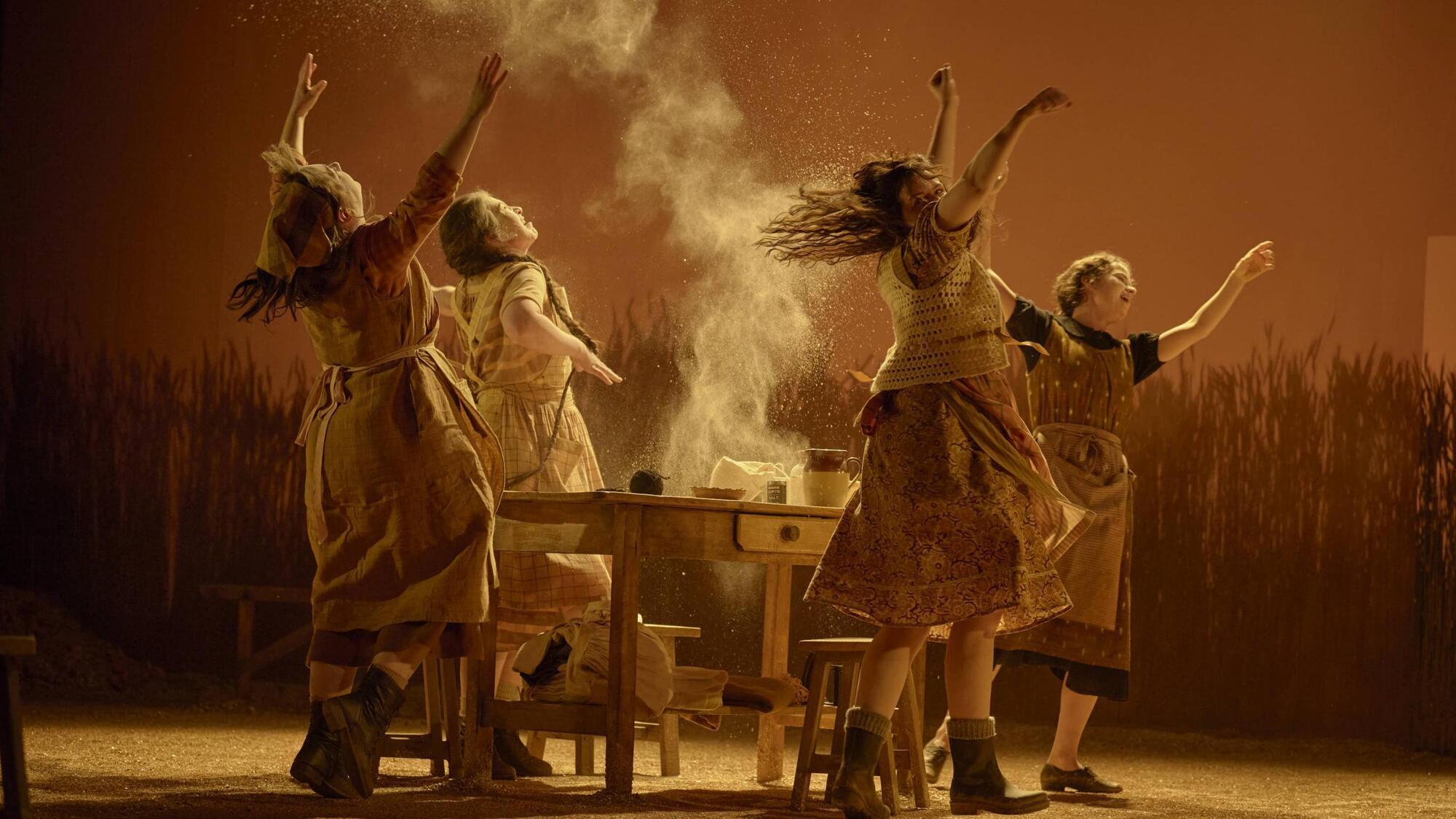
Molly Logan, Nicky Harley, Lauren Farrell, and Zara Devlin in the Gate's production of Dancing at Lughnasa. Picture: Ros Kavanagh
- Dancing at Lughnasa
- Gate Theatre, Dublin
- ★★★★☆
With the Abbey going dark for the late-summer season, the Gate Theatre’s choice to stage Brian Friel’s Dancing at Lughnasa (first seen at the national theatre, of course) seems all the more apt. Its Tony-winning reputation is sure to appeal to the US tourists who were plentiful at this performance, while locals would be well advised to see this finely judged revival, directed with great subtlety by Caroline Byrne.
Lughnasa is a memory play, told from the point-of-view of the grownup Michael (Terence Keeley), as he looks back on the late summer of 1936, when he was a seven-year-old boy in the household of the five Mundy sisters. This, we’re later told, was when the Industrial Revolution would finally come to Ballybeg, and with it, the Chekhovian breaking apart of this unorthodox family unit.
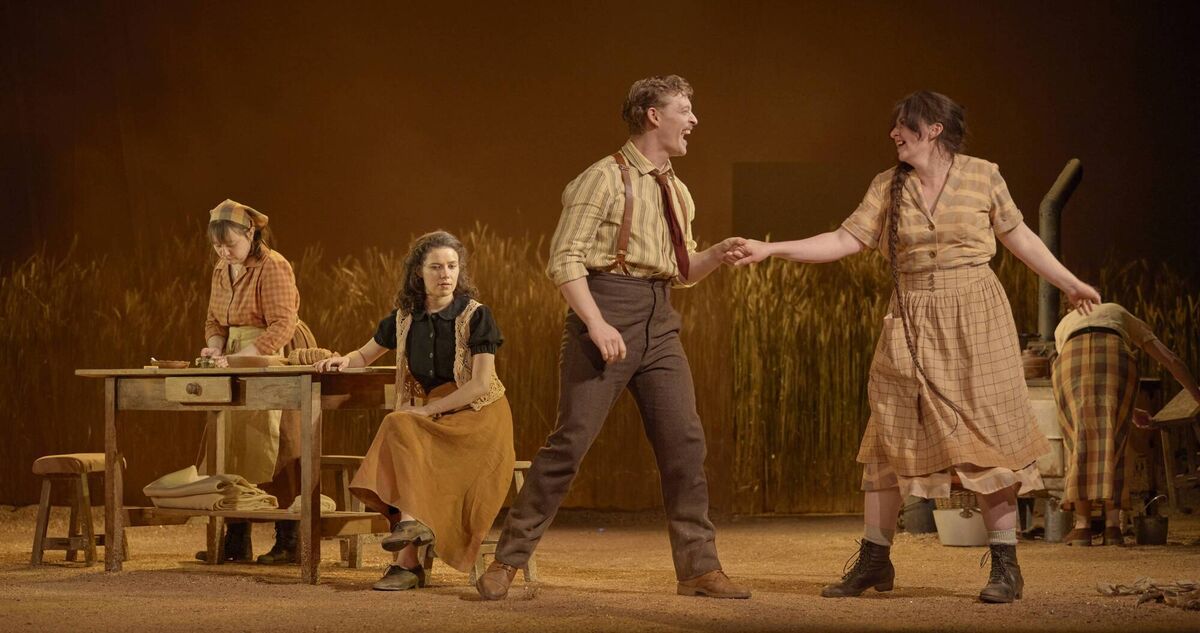
That melancholy, dreamlike tone of nostalgia is reflected in the orange hues of Paul Keogan’s lighting, and, in Chiara Stephenson’s canny set, by the field of tall cereal crops outside the kitchen, through which characters come and go. Yet, while the sense of an ending hangs heavy, and it’s not a happy one, the buzzing life and defiance of the sisters is beautifully conveyed in scenes of their daily life, as we see them bickering, laughing, and dreaming.
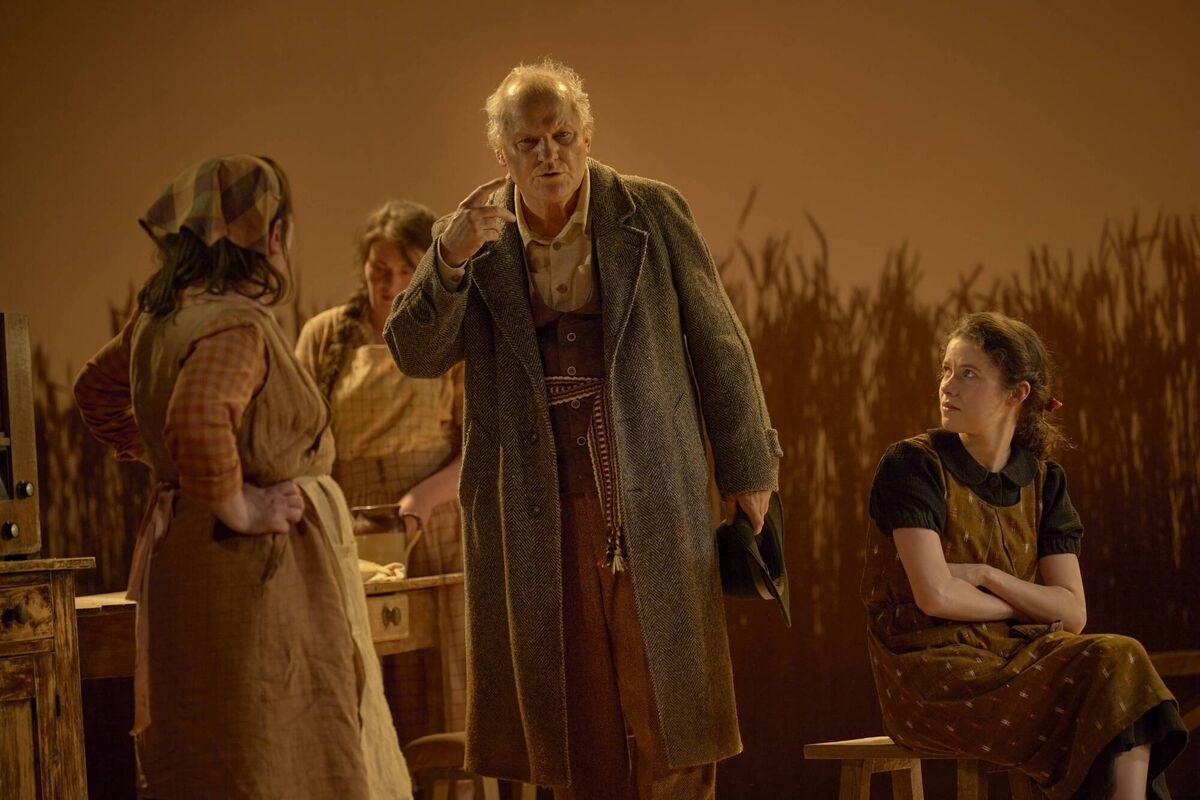
Ruth McGill plays Kate, the “sensible” one: head of the household, and a teacher to boot, giving the role unspoken dimensions and complexity. Zara Devlin gives a touching performance as Chris, the mother of young Michael. He’s a “love child”, his father a feckless Welshman played with great charm by Jack Meade. Molly Logan, meanwhile, revels in the irreverent, earthy wit of Maggie, and shows deep concern, as they all do, for the vulnerable Rose (Lauren Farrell).
It’s those last two who will have the saddest fate; but all the sisters, to their various extents, strain against their meagre lot. That defiance and thwarted desire famously erupts in the titular dancing, as music spills from Marconi, the sister’s capricious wireless. Here, the dance is directed by Sue Mythen, with a credit also to Jean Butler. It’s a moment of abandon, beyond language, evoking something older, and deeper: the pagan roots of Lughnasa, scarcely obscured by a veneer of Catholicism.
It’s a theme that’s elaborated in the figure of Father Jack, returned from the African missions, after having gone thoroughly native. Peter Gowen gives Jack a bright dottiness as he tells his nieces of ritual and ceremony, and gives frank descriptions of alternative family arrangements that would scandalise contemporary religious mores. Jack, in other words, brings the wide world back to Ballybeg, just as the play’s references to the Spanish Civil War and colonialism do.
But nothing is overstated here. Friel does not see history with a capital H as more important than, or separate from, these women’s lives. It’s all in fine, evocative balance. As the grownup Michael tells us in one of his precise framing speeches: “atmosphere is more real than incident” here, and “everything is simultaneously actual and illusory.”
- Until September 21