Book review: Historical meets modern day
'There are Rivers in the Sky' is a sprawling, inventive novel that will amuse you no end, and is bound to make you think
Book review: Historical meets modern day

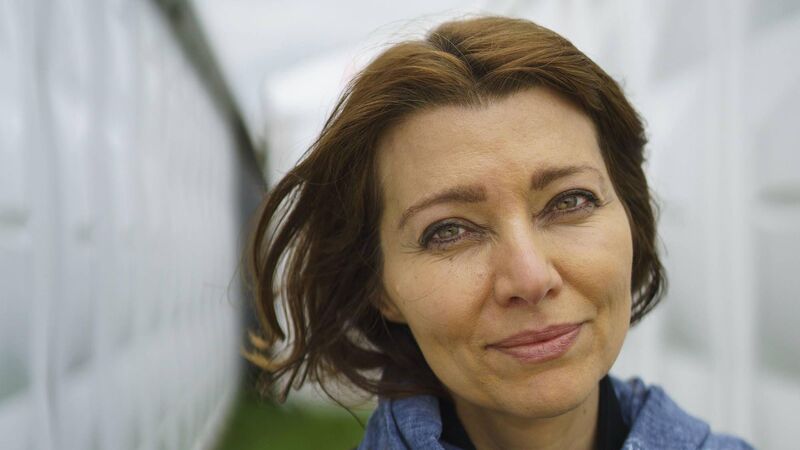
If anyone can manage to encompass stories separated by decades, centuries, and even millennia, it’s Elif Shafak. Picture: Getty Images

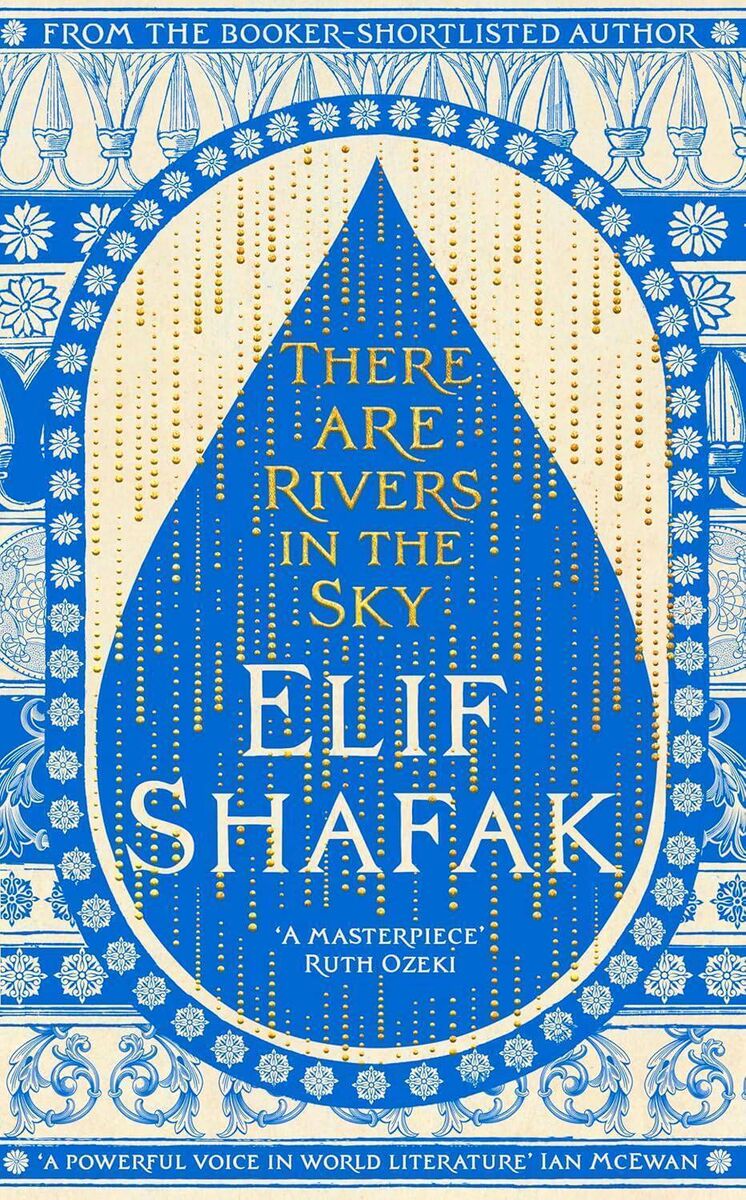
  • There are Rivers in the Sky 
  • Elif Shafak 
  • Penguin Viking, €19.99

Elif Shafak is nothing if not ambitious: her novels combine middle eastern historical threads with present day atrocities and the unfortunates who get caught up in them. 

There are also elements of magic realism: her 2023 novel, The Island of Missing Trees, was in part narrated by a fig tree, and in There are Rivers in the Sky, a single drop of water observes at first hand humanity’s unchanging barbarity.
The little drop, which has an unfortunate fear of heights, first falls from the sky straight on to the head of Ashurbanipal, a mighty Assyrian king, and a man of many contradictions. 

It’s 630 BC, and the drop watches in horror as Ashurbanipal, a learned but vicious monarch, sets fire to his former tutor, who has betrayed him.

Sucked back into the sky, the drop next falls as a snowflake onto the banks of the filthy and foul-smelling Victorian Thames, where an infant has just been born into unimaginable squalour. 

Raised in poverty, Arthur Smyth will rise to prominence as an amateur archaeologist famed for his formidable memory.

And again via our well-travelled drop, his story will be connected to the ancient Mesopotamian city of Nineveh, to a young Yasidi girl called Narin who gets mixed up the Isis genocide of 2014, and to Zaleekhah, a depressed and orphaned London hydrologist whose life undergoes a painful revolution in 2018.

If any modern novelist can manage to encompass stories separated by decades, centuries and millennia, it’s Elif Shafak. 

Her storytelling instincts are good, and she’s at her best when soaring through time and space in search of moral and spiritual connections between very different characters and eras. 

She’s a fan of Charles Dickens, and the great man makes a noisy cameo in the Victorian section of this book, all florid and hurried up.

Though Shafak’s journeys to modern and Ottoman-era Turkey and Iraq are nicely done, her best writing is reserved for chillingly evocative descriptions of mid-19th century London, a petri dish of disease and filth most of which emanates from the rank and corpse-strewn Thames.

The defilement of river spirits and clean water is a recurring theme: the Tigris and Euphrates, along whose banks a mighty ancient empire spanned, bear witness to countless modern horrors, from Saddam’s dams and pogroms to the chilling exploits of Isis. 

Courtesy of Zaleekhah, Shafak movingly describes the plight of smaller rivers buried under the unforgiving bulk of cities like London and Paris, deprived of light, dark but still stubbornly running.


Her imagination sometimes outruns her prose style, and her use of metaphors can be untidy. 

“Faith is a bird perhaps,” she writes, "but Arthur now regards it as a stuffed raven that stares down at him with its glassy eyes."

Her writing is more successful the simpler and sparer she keeps it: "A lone tree burning bright against the sky is a sorrowful sight," or "a poem is a swallow in flight".

No doubting her flair for a good yarn, however: while resorting to the odd coincidence that would make Dickens blush, Shafak skilfully intertwines her three storylines, and in Arthur Smyth, Zaleekhah’s wealthy but morally suspect Uncle Malek, and Narin’s wise and prescient grandmother Besma, the author has created characters with resonance.

The customs and pantheistic oral culture of the Yasidi people is nicely evoked, and Shafak’s description of their sufferings at the hands of the Isis death cult is profoundly unsettling.

Somehow Elif Shafak manages to blend all this with the cultural ultramontanism of 19th century England to create a sprawling, inventive novel that will amuse you no end, and is bound to make you think.

x

BOOKS & MORE

Check out our Books Hub where you will find the latest news, reviews, features, opinions and analysis on all things books from the Irish Examiner's team of specialist writers, columnists and contributors.


More in this section

Scene & Heard

Newsletter

Music, film art, culture, books and more from Munster and beyond.......curated weekly by the Irish Examiner Arts Editor.

Cookie Policy Privacy Policy Brand Safety FAQ Help Contact Us Terms and Conditions

© Examiner Echo Group Limited