Laethanta Saoire: One Faithful Summer, by Billy O'Callaghan
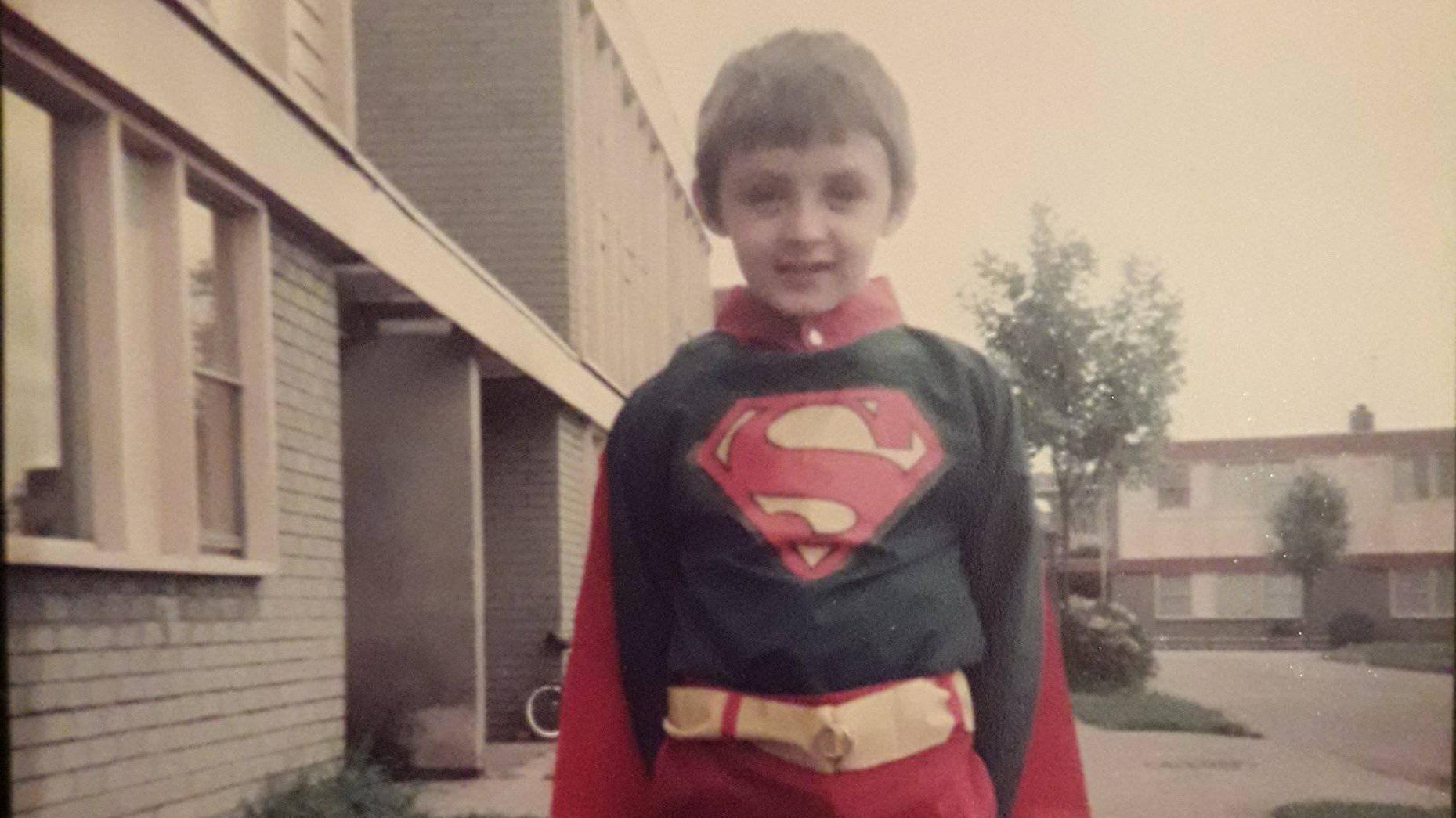
Cork author Billy O'Callaghan as a child.
In memory, childhood summers seem forever golden, those long days spent kicking a ball around hard-baked fields, peeling away sheets of skin from our sunburnt shoulders, splashing in streams for thorneens and tadpoles, breathing air ripe with the tang of cut grass and bonfires. Sweltering months defined by World Cups, best friends, Choc Ices and Fat Frogs, the screaming coldness of the seaside waves with none of us able to swim. When I think back now, this is a lot of what comes to mind. Until I begin to sift.
Because it wasn't all sunshine. Maybe I'm remembering wrong but I recall the summer of 1985 in particular as nothing but rain. And it fit a mood, a year of devastating famine and football stadium disasters, even if a lot of the actual detail passed over me. Because at ten years old I still kept my horizons close. I'd been to Dublin once, on the train, and a couple of times to Kerry, but everywhere else amounted to little more than names on a map, and worlds removed. The tragedies that filled the news caused a sick feeling in the pit of my stomach, but until the Air India plane crashed on our county's doorstep, life, at least to my mind, had kept its grimness at relatively distant bay.
That's how things were when we first heard talk of a moving statue – in Ballinspittle, of all places. We'd been through there on our way to the beach at Garretstown, and what could be seen from the car window was quaint in a drab, nondescript way, comfortable about being stuck in the rut of its past, like so many backwater settlements up and down the country, at least back then. The kind of spot where women, middle-aged before their time and with arms folded across their heavy chests, huddled in doorways to gossip; and where men in flat caps and overcoats stood at the pub counter after hard mornings in the fields, supping stout, remembering bygone days as they'd probably only ever half-happened, and taking turns on the kind of songs nobody sings any more because there's hardly anyone left now who'd understand.
The grotto, half a mile from the village, had little to distinguish it from the hundreds that had been perched alongside back-roads throughout rural Ireland to mark the Marian Year celebrations some decades earlier, and why this one had taken to moving ahead of so many others was left open to the wildest speculation.
At first I paid it little mind, but once the story made it onto the front pages of the Examiner, and then as headlines across England, then Europe, and then the world, everyone wanted to see for themselves just what was going on in that back corner of the beyond. A miracle, I one day heard my mother proclaiming, and Breda Donnell, our next-door neighbour, a decent but always sorrowful poor creature, said she'd heard a priest on the radio advising caution, because it might not be Our Lady behind it but, rather, the old boy, up to some connivance. And that either/or possibility, especially the notion that the Devil himself might have arrived in Cork and be living just down the road, finally caught my full attention. “You need only look out,” she said, indicating the smoke-coloured afternoon and the rain slashing at the glass. “If that's not almighty anger then I don't know what is.”
The hype continued. Witnesses claimed to have seen the statue rocking, a few reported levitation, and a few more insisted that the Virgin's joined hands had opened and drawn widely apart. One evening, while my father was eating a plate of skirts and kidneys ahead of a twelve-hour night shift, my mother told him that Mary so-and-so from St. Columba's Terrace knew a man who'd seen the statue's face change into that of a skeleton's, and that he'd passed out cold with the fright and had revived only when they began pouring whiskey down his throat. Not long out of bed and with sleep still on him, my father nodded but seemed elsewhere in his mind. “We'll go,” he said, as much to himself as to her. “One of the days I'm off, we'll drive down for a look.” My mother pushed what skirts she wasn't going to eat onto my plate. “I'm not sure I want to,” she said, her voice thin with worry. “Not if there's going to be skeletons.”
In mid-August, my father's aunt Julie, who'd lived most of her life in Southampton, came home for a week, and we set out one torrential Sunday afternoon, squeezing into our old blue Volkswagen Beetle that we hoped would make the twenty-five mile journey without us having to get out and push. She clutched rosary beads the whole way and talked about how like England we were becoming with the traffic, and I was interested in the way her cheeks hung around her chin and how her lips continued to move even after the conversation had lapsed, and decided that having the likes of her with us would surely increase our odds of seeing something.
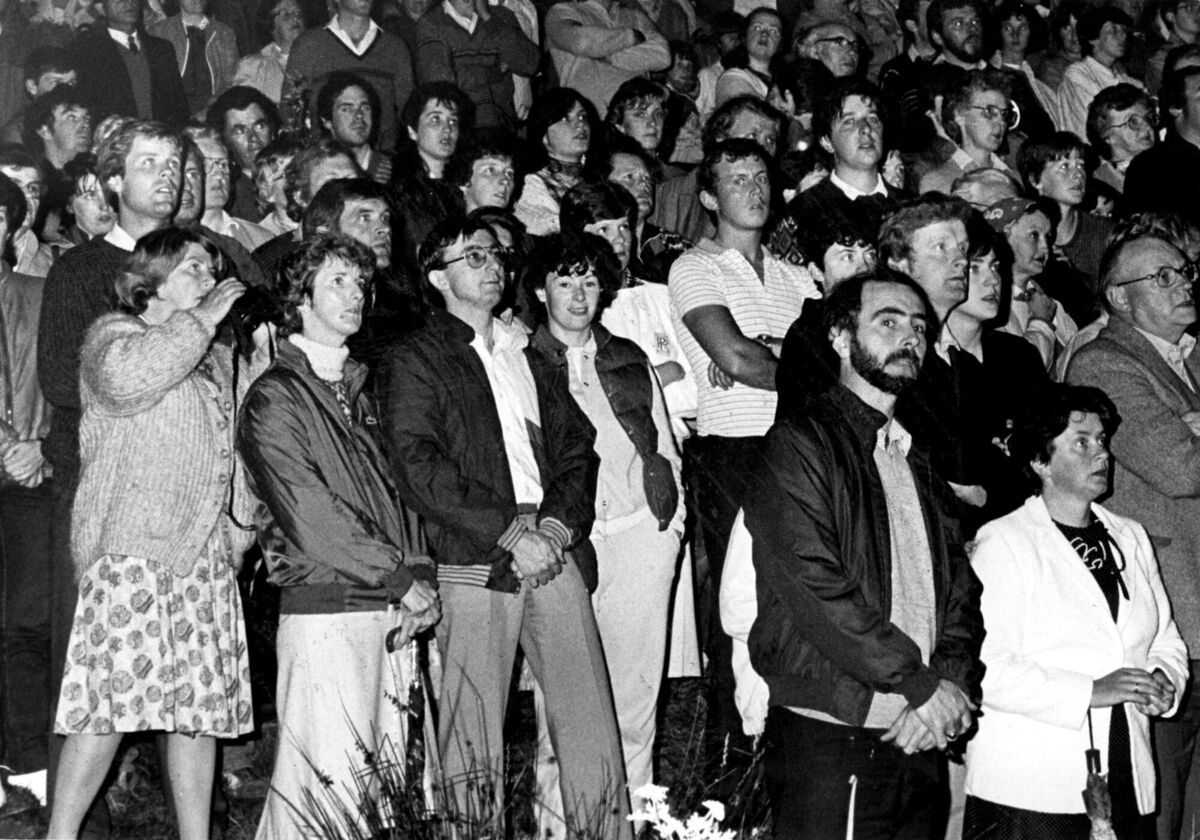
We had to walk the last mile. Cars lined both sides of the narrow road, and we were all immediately drenched. The breeze was full of the drone of prayer, a booming, relentless Angelus, and then eventually the way straightened and there it was – the statue: life-sized and crowned in tiny white lights, in a small alcove cleaved into a gorse-cloaked hillside some twenty feet above and the same distance back from the road. The prayers seeped in distorted growls from a tannoy, and the crowd, numbering surely in the thousands, packed the steeply sloping field directly opposite and chanted along in trance-like accompaniment. “Come on,” my father said, leading us into the pack of bodies in search of a half-decent vantage, and we made it about a third of the way up the field then stood and joined everyone else in trying to see.
I can't recall how long we stayed, only that it was dark when we finally gave in. Nothing was revealed to us. Occasionally, someone would call out, insisting that something was happening, but whatever they'd glimpsed was likely a combination of wishful thinking, tiredness of the eyes and the tricky way the rain seemed to set the lights above Our Lady's head to twinkling. I watched until growing bored, then took to considering the faces around me, men and women of my parents' age and up, and couldn't help but be struck by the sheer force of their faith, an astonishing thing to see, even for a small boy. Hours, they'd stood, just staring, awaiting a sign but, I somehow understood, not really needing one. The statue didn't move that evening, but maybe hadn't needed to, because as far as the vast majority of the congregation were concerned, it wasn't a cast of painted plaster that they were seeing up there on its plinth beside a lonely country road, but the Blessed Virgin herself.
All of this took place thirty-nine years ago, and even if much of it feels barely a breath removed,, it was also such a different world from the one we know today. I've come to view that strange, wet summer as something of a watershed moment – not just because it was the year I began to grow up but because after it a kind of chasm opened, which seemed to set the new Ireland and the old adrift from one another. So much happened in the years that followed. Booms, recession, tribunals, referenda, the Church disgraced by scandal, the Civil War finally ended, at least in political terms. For about five minutes, we were even half-decent at football. That year, 1985, wasn't the last wet summer we'd know, but it was in so many ways the last of its kind.
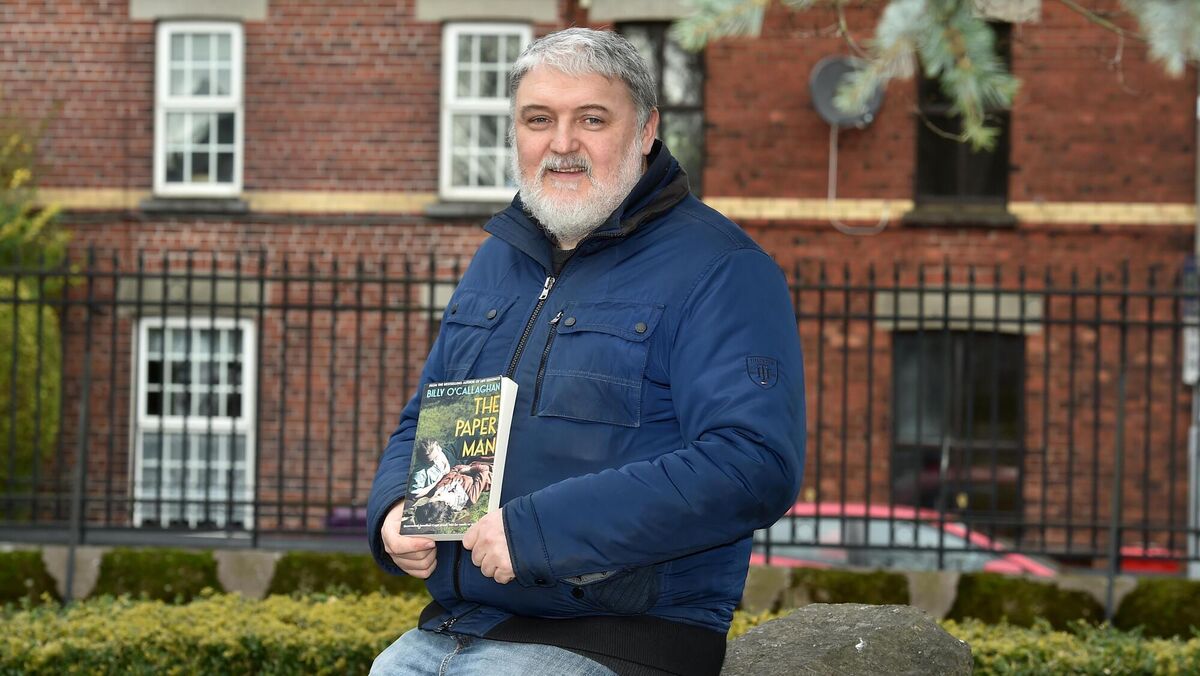
- Billy O’Callaghan is from Douglas in Cork city. His latest novel, The Paper Man, is set in the Jewtown/Albert Road area of Cork