Author interview: Why Catherine Dunne is more than a good enough writer
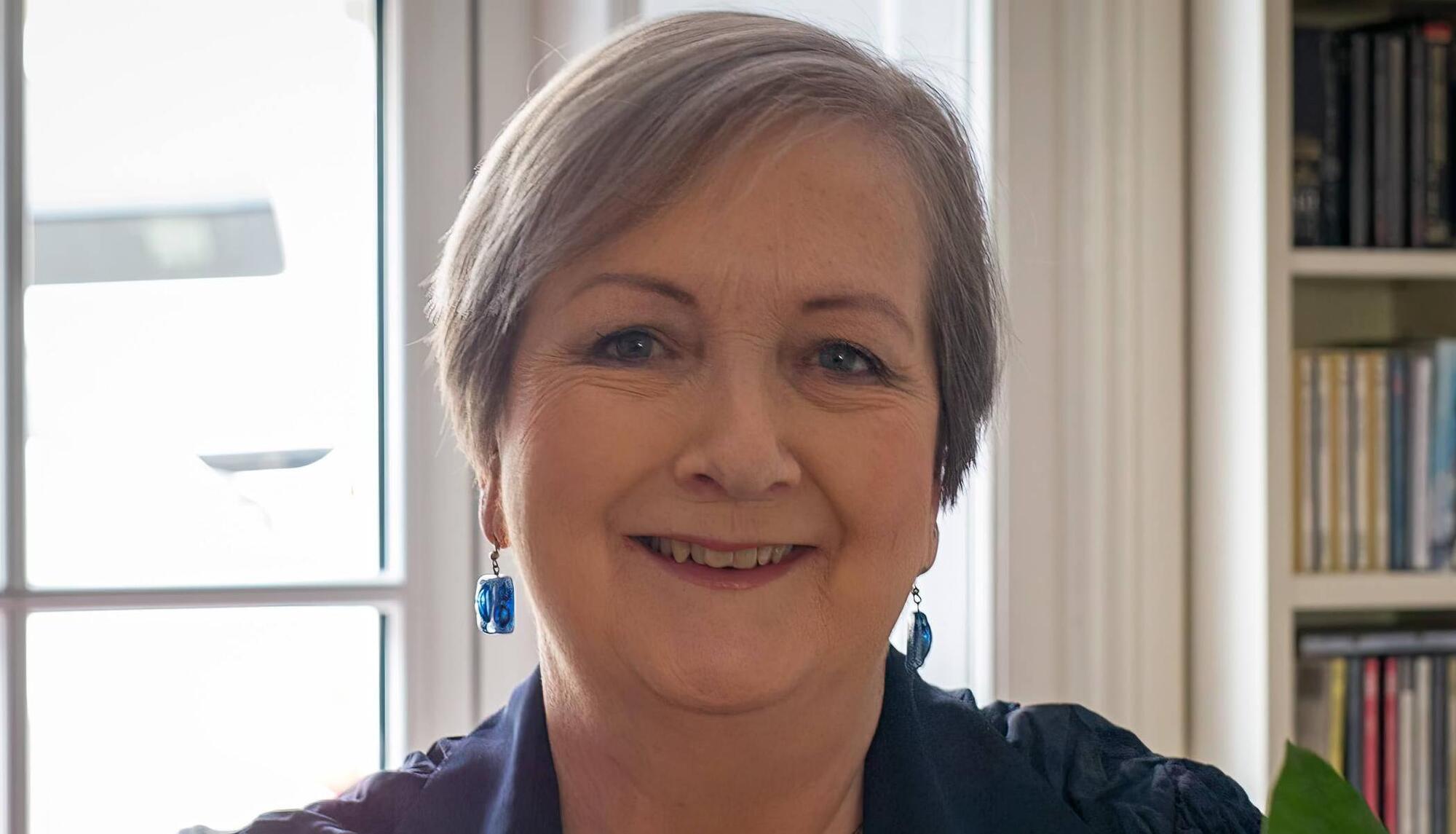
While Catherine is revered by the literary community in Ireland, her novels don’t get anything like the attention, or the sales, that they do in Europe
Author interview: Why Catherine Dunne is more than a good enough writer

Catherine Dunne won the 2018 Irish Pen Award for Outstanding Contribution to Irish Literature, but is more popular in Europe.

  • A Good Enough Mother 
  • Catherine Dunne 
  • Betimes Books, €15.00/ Kindle, €5.89

In 2016, a character, Tess, appeared to Catherine Dunne. She ‘saw’ her walking home around a park, only to find a Garda car parked outside her front door.  Catherine idly wondered what it was all about. 

And when, later, she started to write down the scene, and realised that Tess’s teenage son had been accused of rape. Tess’s mother, Betty, appeared saying she had a story to tell, too.

“I’m always on the lookout for stories,” says Catherine, as we discuss her latest novel, A Good Enough Mother, in the kitchen of her house in leafy Ranelagh. 

“My writing is organic. The people always come to me — not the story.

“And looking back at years when Betty was a young woman, and knowing about women who had to go to England because they were pregnant, gave me a picture of another woman — Maeve.”

This wonderful, wide-ranging novel follows the interlinking stories of four main characters — who have been affected in some way by the church’s negative attitude towards women.

“I knew I wanted to write about the experience of being in a mother-and-baby home,” says Catherine. 

But my point wasn’t to say how terrible it was — but to look at these different women and how they dealt with the catastrophes — and also how little had changed.

She was thinking of all this when her second novel, A Name for Himself, was reissued by Ireland House as a classic of the 1990s. 

The novel featured coercive control, but was written before the term was commonly known. And while she was writing essays around that publication, the Belfast rape trial was going on.

“Like everyone, I was profoundly affected by the trial,” says Catherine. 

“And not just the trial itself, but the attitude towards women that it illuminated — particularly the WhatsApp messages between the young men.

“I had thought all that had changed. And around the same time, in 2017, Catherine Corless came out with what had happened at Tuam.”

She had already researched the subject, while writing her factual book, An Unconsidered People, which was published in 2003, and reissued by New Island in 2021. 

“For that book, she had interviewed more than 100 women who‘had’ to emigrate to England because they were pregnant.

“I really had to examine my own prejudices when I saw how well Irish people fared in England,” she says, “When they had been unconsidered when they left here.”

One woman had a mixed-race child. Her mother never met him because she couldn’t bring him home. Her story was emblematic of what women went through.

Catherine doesn’t plan her books. Quoting EL Doctorow, she says that writing is like driving in fog: You can only see as far as the headlights, but you can make the whole journey that way.

“That’s how writing evolves for me,” she says.

She writes every day, usually for four to five hours, believing that writing is a muscle that has to be exercised or it goes away.

“I write in scenes. And, normally, I stitch them together at the end, so that the seams don’t show.

“But in this novel, because the metaphor of sewing came up again and again, I researched how many panels there are in a quilt. A standard is 66, so I wrote 66 sections.”

Close to her son, Eamon — he recently took her to Australia to celebrate her 70th birthday — Catherine has suffered more than her fair share of trauma. 

Failing to become pregnant after his birth, she went through fertility treatment, and eventually became pregnant — only to give birth to a stillborn son. 

And in 2018 her second husband died after suffering for years with a debilitating neurological illness.

Empathy and family dynamics

It’s therefore no surprise that she writes of grief with such empathy and understanding. But she’s also wonderful at describing the dynamic between mothers and daughters, and between sisters, yet has neither in her life.

“I don’t think too deeply about where writing comes from, because I think if you interrogate it the magic disappears,” she says.

“Having experienced a lot of things in life helps with the process, but writers have strange imaginations, and you can write about something without experiencing it. 

“In one novel I had a character experience fugue states. I wrote it, and when I researched what they were like, realised I had got it exactly right.”
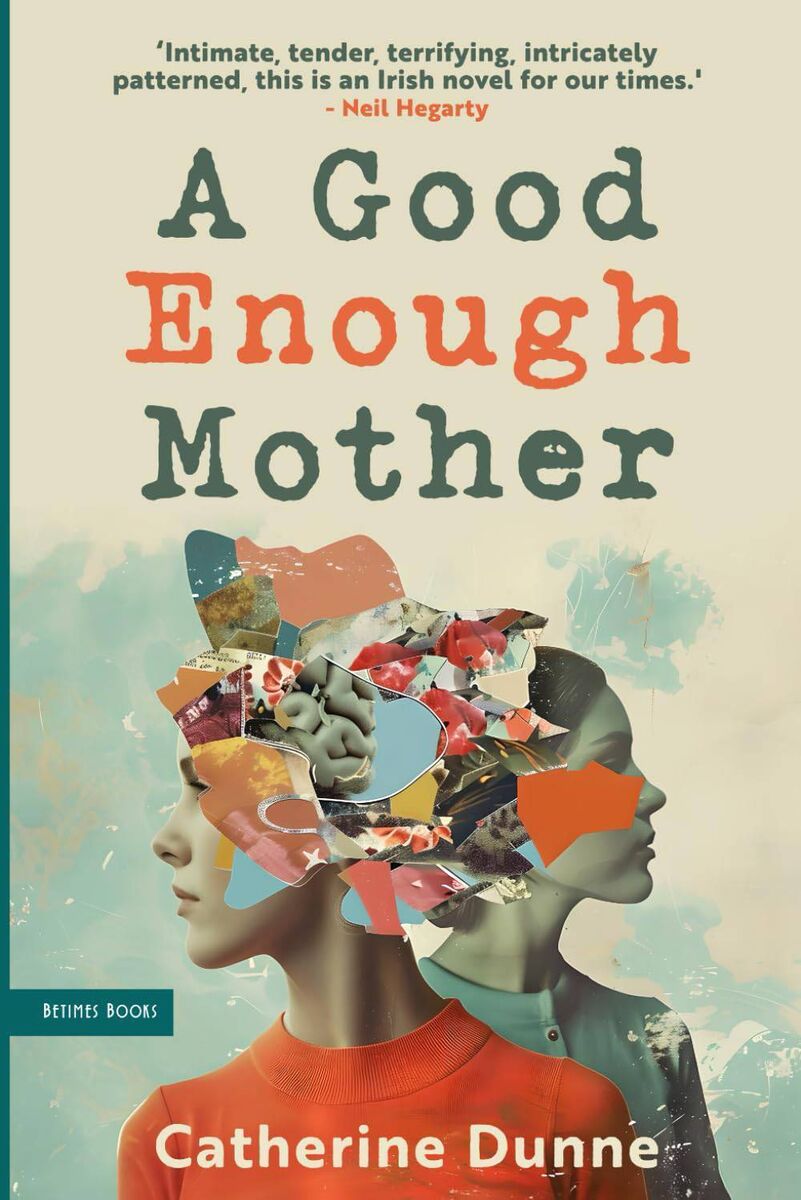
A Good Enough Mother shows the lifelong consequences of mother-and-baby homes on the women who were incarcerated, on their families, and on their friends and contacts. 

When Tess meets a former inmate of a home, Maeve, their encounter links all the stories in a clever, and satisfying way.

It’s no surprise that the novel has already won an award — the inaugural European Rapallo Prize, nor that it has already been an Italian bestseller. 

A big hit in Italy

Because the Italians love Catherine Dunne, and most especially since 2007, when Silvio Berlusconi’s wife wrote an open letter to her husband in a newspaper, begging for an apology for his flirtations with other women.

Mentioning the best-selling author, the Italian wrote, ‘I ask if, like the Catherine Dunne character, I have to regard myself as half of nothing’. 

While Catherine is revered by the literary community in Ireland — she won the 2018 Irish Pen Award for Outstanding Contribution to Irish Literature and is a member of Aosdána — her novels don’t get anything like the attention, or the sales, that they do in Europe. Does this irk her?

“It used to more than it does now,” she says. “I could never understand why something I had written, which had a large audience and critical and popular respect elsewhere, seemed to be more or less ignored here.”

But it’s just one of those things. You learn to get on with it. It’s just the way it is.

Growing up, when Irish books seemed to be all by, and about older males in rural areas, Catherine thought she could never be a writer.

“I come from the generation of, ‘who do you think you are?’.” 

And it wasn’t until the 1970s ,when, living in Toronto, and discovering a novel by Margaret Atwood, that she realised that it was possible to write from a young urban woman’s experience.

“Her writing just blew me away,” she says.

It wasn’t that Catherine didn’t write. Turning from bad poetry as a teenager, she’d sent a stream of stories to David Marcus for new Irish writing.

“And he would return them with lovely comments, but I never got one published,” she says. “The stories always wanted to be novels.”

She was teaching in Greendale Community School when, one day, her friend and colleague, Roddy Doyle, said, ‘You’re writing aren’t you’.


“He said it out of the blue,” says Catherine, who had spent the past decade working, secretly, on a first novel, In the Beginning.

“I had said absolutely nothing to anybody. His approval on reading it, and subsequent help and support, meant everything.” Catherine will never retire.

“Why would you stop doing what you love? To me, writing is as natural as breathing.

“It’s how I make sense of the world. You’re getting into the skin of another person, taking on their views, and feeling what it is like to be them.” 

She’s hoping readers will appreciate such empathy.

“It’s difficult for people to absorb the experience of the 56,000 women who went through the mother-and-baby homes, but if you take one or two, and write what it was like for them, it makes it easier to understand,” she says. 

“The impact stays with you for the rest of your life.”

More in this section

Scene & Heard

Newsletter

Music, film art, culture, books and more from Munster and beyond.......curated weekly by the Irish Examiner Arts Editor.

Cookie Policy Privacy Policy Brand Safety FAQ Help Contact Us Terms and Conditions

© Examiner Echo Group Limited