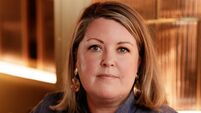
Books are my business: Little Island Books publisher Matthew Parkinson-Bennett
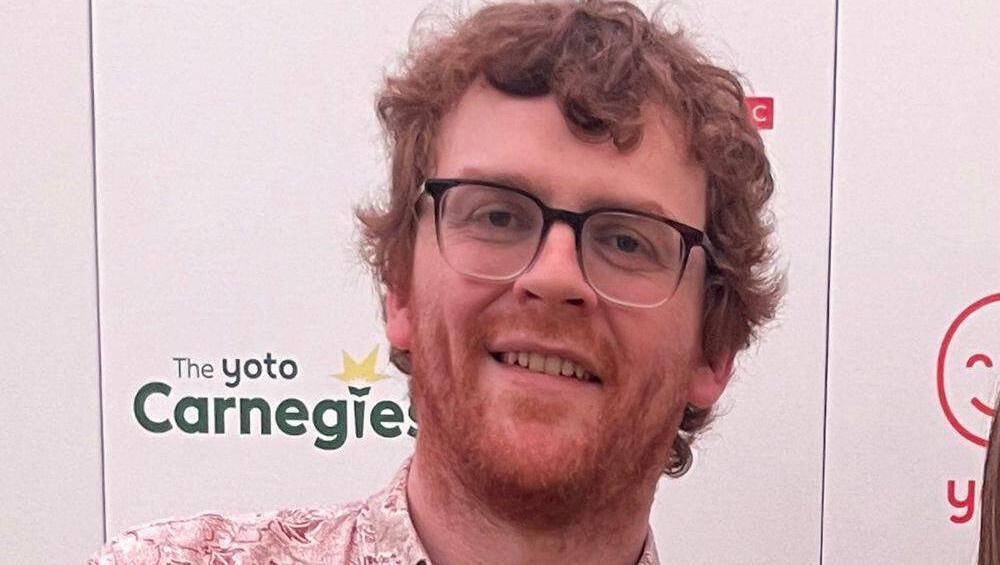
'I came on board with Little Island part-time, initially around 2017. Then my mother was looking to step back, and I took over at that point'
When Matthew Parkinson-Bennett got a job in publishing, despite a warning from his mother, he  had to call her up and say 'you’ll never guess what I’ve done'.

When Matthew Parkinson-Bennett got a job in publishing, despite a warning from his mother, he  had to call her up and say 'you’ll never guess what I’ve done'.

Matthew Parkinson-Bennett is publisher at Little Island Books, which was founded in 2010 by his mother, Siobhán Parkinson, Ireland’s first Laureate na nÓg.

He is based in Rathmines, Dublin.

How did you get into publishing?

My mother worked as an editor when I was growing up — she knew how hard it was to make a living in the industry in Ireland and always warned me of it.

I was living in Oxford, I had finished a master’s in medieval English, and I didn’t really know what to do with myself. I had been teaching English as a foreign language in language schools, which I loved, but it was very hard to get regular hours and security.

I saw a job advertised at Oxford University Press, looking for somebody with exactly my kind of background to edit educational books. 

I applied for it on a whim and I ended up getting it. So I had to call up the mother and say “you’ll never guess what I’ve done”. But once I was in, I was in.

As happens to many people. I got obsessed with and addicted to publishing. I was with OUP for a few years, and then I worked freelance for a long time for a lot of different publishers. I came on board with Little Island part-time, initially around 2017.

Then my mother was looking to step back, and I took over at that point.

What does your role involve?

We are very small, we are three people. We do between ten and 15 books a year, which is quite a lot for three people.

So it does involve everything — less editing than I would like these days, because I’m mostly running the business and overseeing everything.

It is extremely varied day to day. 

I will have my hand in editorial, marketing, sales, publicity, art direction, design, administration, accounting, board meetings, Arts Council applications, selling and buying rights. 

I’m not necessarily taking the lead on all those things, but I have to be across them all. I also do an enormous amount of admin. The variety is great, it keeps it very interesting.

What do you like most about it?

When you are working on a book at an early stage, maybe reading a submission for the first time or starting to work with an author, and then you feel it coming together, when it all starts to click into place, that’s magical.

What do you like least about it?

Publishing involves an enormous amount of admin and data management, and wrestling with spreadsheets, schedules, and calendars — things which don’t necessarily always come naturally to people who got into the industry because of a love of language, story, and books.

It’s a necessary evil, but it’s certainly not my favourite part of the job.

What has been the proudest moment of your career?

Every time a new book is delivered from the printers is a big moment. Every, every launch is a big moment. Every positive review is a big moment. Every award shortlisting is a big moment.

It’s a job with a lot of rewards along the way.

We won two out of the three children’s awards at the Irish Book Awards last year, up against books from big global publishers, which — as a team of three — is extremely satisfying.

Last year, we became the first Irish publisher to get a book on the shortlist of the Carnegie Medal [for The Eternal Return of Clara Hart by Louise Finch], which is like the Booker Prize for children’s books in English.

Three desert island books

On a desert island, you want a book that you can reread endlessly for the rest of your life. That has to be Ulysses by James Joyce, because you’ll never exhaust it.

Next would be a children’s book, one that is beautiful to look at and something that I loved as a child to bring back memories when I read.

I would go for the collection of Shirley Hughes picture books because, as an illustrator, she’s the best.

Her books tell very simple stories of childhood, but there’s a lot of emotional depth and intelligence in them.

My third is a book called How to Talk about Books You Haven’t Read by Pierre Bayard, which is one of the funniest books I’ve ever read and full of profound reflections on the act of reading and not reading.

BOOKS & MORE

Check out our Books Hub where you will find the latest news, reviews, features, opinions and analysis on all things books from the Irish Examiner's team of specialist writers, columnists and contributors.
More in this section

Scene & Heard

Newsletter

From music and film to books and visual art, explore the best of culture in Munster and beyond. Selected by our Arts Editor and delivered weekly.

Cookie Policy Privacy Policy Brand Safety FAQ Help Contact Us Terms and Conditions

© Examiner Echo Group Limited