Book review: A state born of a bloody ethnic war now on ‘downward spiral’
Ethnicity is impossible to avoid when addressing the tumultuous, bloody history of the western Balkans, a point Jasmin Mujanović's book reiterates
Book review: A state born of a bloody ethnic war now on ‘downward spiral’

Jasmin Mujanovic: 'Bosnia and Herzegovina may not yet be a failed state per se, but it is clearly on a downward trajectory.'

  • The Bosniaks: Nationhood After Genocide
  • Jasmin Mujanović 
  • Hurst Price: € 25.99 

SREBRENICA is the only episode of the Bosnian War (1992-1995) to be legally defined as genocide. The massacre happened in July 1995, when the Army of the Republika Srpska invaded Srebrenica, a town in eastern Bosnia and Herzegovina. The Bosnian-Serb forces abused, tortured, and executed 8,000 Bosnian Muslim boys and men.

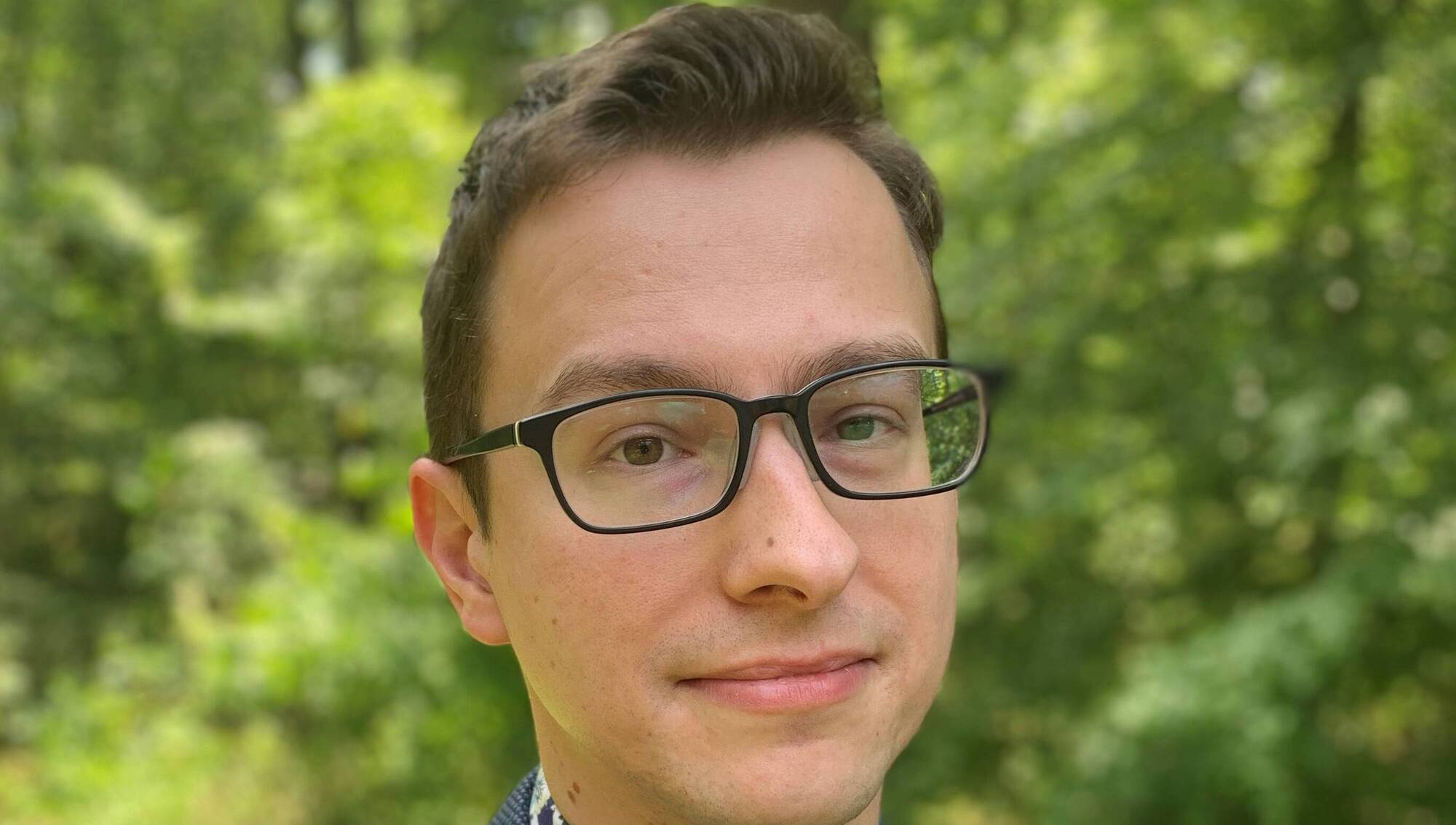
It was part of a larger genocidal project to create ‘Greater Serbia’ via ethnic cleansing and extermination, Jasmin Mujanović says from his home in Los Angeles. The Bosnian-American political scientist has personal skin in this game. He was born into a non-practising Bosnian Muslim family in 1987: His parents, a doctor, and an engineer, were part of Sarajevo’s secular, educated middle class, who came of age during Tito’s Yugoslavia.

“We fled Sarajevo in April 1992,” he says. “First, my family and I were in refugee centres in Croatia, then we went onto Slovenia, then Germany, but by the time the war was winding down in 1995, my parents didn’t want to return to Bosnia,” says Mujanović, a senior non-resident fellow at the Newlines Institute, a nonpartisan think tank in Washington DC.

“They believed in the socialist slogans — like brotherhood and unity — that the old Yugoslavia stood for, and struggled with its dissolution, so we emigrated to Vancouver, Canada, and I later moved to Los Angeles.” It was in the US that Bosnia’s political future was decided. Mujanović provides a thoroughly researched history in his latest book, The Bosniaks: Nationhood After Genocide.

Dayton Peace Agreement

The Dayton Peace Agreement (DPA) was brokered in late November 1995, during the Clinton administration, by the American diplomat, Richard Holbrooke, at Wright-Patterson Air Force Base near Dayton, Ohio. The DPA was signed by the leaders of Serbia, Bosnia, and Croatia, on December 14, 1995 — the beginning of the end of the Bosnian War, which had killed 100,000 people and displaced two million.

The peace deal was brokered on what seemed like a good deal. Supporters of the Bosnia and Herzegovina government — which included Bosniaks, and pro-Bosnian-oriented Serbs and Croats — were able to preserve the country as a sovereign state: Bosnia and Herzegovina.

In exchange, they agreed to administrative divisions of the Bosnian state and the introduction of ethnic provisos and quotas within its governance.

The Croat nationalist camp, after giving up their breakaway ‘Herceg-Bosna’ territory — already on the verge of collapse after 1994 — received a high degree of self-rule in the newly minted Federation entity.

Last, the Serb nationalist camp gave up their Greater Serbia secessionist project. In return, they were granted the majority Serb Orthodox-populated Republika Srpska entity, which was incorporated into the constitution of the post-war Bosnia and Herzegovina state.

Today, in the Global Perceptions Corruption Index, Bosnia and Herzegovina is ranked in 108th place. The country’s unemployment rate is 13%. It has one of the highest youth unemployment rates in the world, at 40%.

“Bosnia and Herzegovina may not yet be a failed state per se, but it is clearly on a downward trajectory,” says Mujanović.

Meaningful reform of Bosnia-Herzegovina politics requires liberalisation of its constitutional regime, he says: “Bosnia and Herzegovina needs a constitutional regime in line with the European convention on human rights.” Last August, the European Court of Human Rights (EHCR) agreed.

The Strasbourg court ruled in favour of a complaint by Slaven Kovačević, an adviser to Zeljko Komsic, the Croat member of the tripartite presidency, who complained to the EHCR about being constitutionally barred from taking part in the vote for Serb members of the presidency.

According to the Bosnian constitution, a Bosniak and a Croat must be elected presidents in the Bosniak-Croat federation and a Serb must be voted in as president in Republika Srpska. This legal provision prevents members of any other ethnic or religious groups from running for office for those positions.

Also, Bosniaks and Croats residing in Republika Srpska or Serbs residing in the Bosniak-Croat federation cannot run for office or vote in their place of residence.

The ruling that emerged from the Kovačević versus Bosnia and Herzegovina case in the ECHR “essentially said 'It is not permissible for ethnicity to be at the centre of a political and constitutional regime',” says Mujanović.

But ethnicity is impossible to avoid when addressing the tumultuous, bloody history of the western Balkans, a point Mujanović reiterates. In the opening pages, he asks: Who are the Bosniaks?

“I define the Bosniak community as those who support Bosnia and Herzegovina as a distinct sovereign polity and maintain the existence of an accompanying, distinct Bosnian cultural and linguistic identity,” Mujanović says. 

[Bosniaks], though predominantly (culturally) Muslim, maintain claims to a pre-Islamic and pre-Christian past, which is also cited as conceptual proof of their ancestral belonging in the historic Bosnian lands.

By the middle of the 19th century, the political and social position of the Bosniaks was weakening, along with the Ottoman Empire. It collapsed in 1922, but its demise began much earlier.

From the collapse of the Ottoman administration in Bosnia and Herzegovina, in 1878, to the end of the Second World War, “the Bosniak community experienced a period of sustained, then rapid, collective political marginalisation, accompanied by successive rounds of targeted violence by Serb nationalists”, Mujanović says. 

From 1918 to 1945, during the first Yugoslav state, Bosnia and Herzegovina went through four partitions, and finally fascist occupation.

During the Yugoslav communist period (1945-1989), led by communist revolutionary Josip Broz Tito, there was some socio-economic improvement for Bosnia and Bosniaks, but ethnic tensions never went away.

The Bosnian genocide

This leads Mujanović to the third and final theme of his book: Remembering the Bosnian genocide.

The International Criminal Tribunal for the former Yugoslavia (ICTY), was set up in [the Hague] 1993 and carried out legal proceedings until 2017, indicting 161 individuals for violations of international humanitarian law committed in the former Yugoslavia.

It tried and convicted two Bosnian Serb leaders, Radovan Karadžić and Ratko Mladić, for war crimes, crimes against humanity, and genocide.

The tribunal also had confirmed indictments against Slobodan Milošević, who, in addition to facing charges for crimes in Kosovo, was tried for crimes in Croatia and Bosnia and Herzegovina, from 1991 to 1995 while he was president of the Republic of Serbia. Milošević died of natural causes in March 2006, before judgment.

Within the Army of the Republic of Bosnia and Herzegovina, nine individuals were indicted by the ICTY. Of these, three were acquitted, while a fourth died in custody.

“There is no question, war crimes were committed during the Bosnian War by Bosnian government forces, or forces closely affiliated with them, all of which were disproportionately drawn from the Bosniak community,” says Mujanović.

“But these were, realistically, a marginal phenomena, compared to the large-scale, systematic campaigns of atrocities committed by both the Belgrade-proxy RS and Zagreb-proxy HRHB regimes.” 

He also stresses that “no evidence has been produced that the Army of the Republic of Bosnia and Herzegovina had any designs, systematic or otherwise, to exterminate or expel the non-Bosniak population of Bosnia and Herzegovina during the Bosnian War.

“So this book was written as a response to renewed revisionist (and triumphalist) discourses concerning the facts of the Bosnian genocide, by Serb nationalists in the region,” Mujanović concludes.

“This retrenchment of sectarianism [by Serbs] has been [made possible] with the indirect support and sponsorship of the political West.”

x

BOOKS & MORE

Check out our Books Hub where you will find the latest news, reviews, features, opinions and analysis on all things books from the Irish Examiner's team of specialist writers, columnists and contributors.


More in this section

Scene & Heard

Newsletter

Music, film art, culture, books and more from Munster and beyond.......curated weekly by the Irish Examiner Arts Editor.

Cookie Policy Privacy Policy Brand Safety FAQ Help Contact Us Terms and Conditions

© Examiner Echo Group Limited