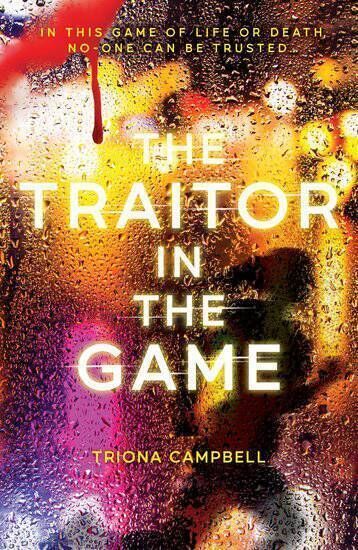
Diverse art of communication is the story of Campbell’s life
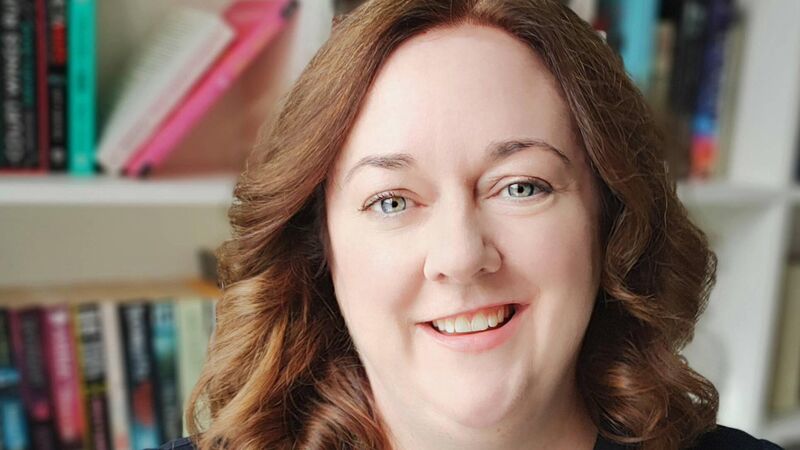
The ability to construct a visual narrative assumed particular importance in the author's youth when communicating with her non-verbal sister
Diverse art of communication is the story of Campbell’s life

‘A good story well told has the ability to work across multiple platforms,’ says Triona Campbell, whose work spans TV, film, and podcasts.

  • The Traitor in the Game 
  • Triona Campbell 
  • Scholastic, €12.60 

The art of communication has been the story of Triona Campbell’s life, from earliest childhood to a three-book publishing deal as a debut author.

“I’ve always been really interested in telling stories,” Campbell says, as Scholastic releases The Traitor in the Game, the second part of her murder-mystery trilogy for young adults.

An established affinity with storytelling is pretty much a given for authors, but in Campbell’s case, the ability to construct a visual narrative assumed particular importance in her early youth.

“My older sister was born severely disabled and non-verbal … so you’re constantly struggling to figure out how best to communicate,” says Campbell.

Storytelling with her sister Keelin was “very much picture based”, she adds. 

“Because she was non-verbal and had issues in terms of communicating and understanding, the best way for us was to do a lot of storytelling with picture books and drawing.

“It makes you think about communication in a different way because it’s not always verbal. It’s in different forms,” she says. 

Story is one of the best ways that we communicate — story in all its forms, not just in written words but in film, television, audio, and radio were things that I was drawn to from an early age.

Campbell’s exploration of storytelling since graduating from Trinity College with a master’s in creative writing has encompassed producing UK teen drama Sofia’s Diary for Sony Pictures/Channel 5 in London, making horror films in the West of Ireland and RTÉ’s video game series Gamer Mode, and writing podcast series  Adventures of a Young Pirate Queen.

Born in Dublin to parents from Derry and Cork, Campbell moved back to Ireland after working in the UK, changing career to become a YA fiction writer after two decades in film and television.

If a three-book publishing deal was something of a long shot for a first-time novelist, the determination to succeed against the odds was another lesson learned in childhood.

“If you looked at the stats beforehand you’d probably never sit down to write a book,” says Campbell. 

“If you think, agents get what, 5,000 manuscripts a week, how am I going to be one of those to get an agent? And from there maybe 1% of their clients get a deal every year so it’s really tough.”

She had, however, “grown up with that feeling of ‘if you keep going you’ll find a way’”.

“I learnt from my sister, rather than the other way around,” she says, adding that their father was adamant that she and her siblings encourage Keelin to become as independent as possible.”

My father was told originally when she was born that she would never walk but he was like ‘we’re going to teach her’ and he did, and she was walking by the time she was five.

“It was that feeling that you could never give up — that you would be able to do something if you just kept trying hard enough.

“She was severely autistic but she had her own kind of presence in terms of communicating.

“I remember once there was somebody babysitting us and she didn’t like them, for whatever reason, so she went and found my mum’s purse, took money out of it, shoved it into their hand and shoved them out the door.”

While Keelin, sadly, has since passed away, her sister’s visual approach to storytelling, honed during her television and video-game work, is again evident in the cinematic approach taken in her high-octane, futuristic novels.

“I think that comes from her [Keelin] because I spent my early years drawing pictures to communicate with her and it made me very conscious of how things are constructed in terms of montages, in film-making as well, how that series of images can have such a profound effect in terms of how you tell somebody something,” says Campbell.

“That is something that probably comes across when I write because I see the images in my mind and I’m almost trying to grab them and put them down on the page. It’s a very visual form of storytelling.”

The Traitor in the Game, sequel to Campbell’s debut virtual-reality thriller A Game of Life or Death, continues the search by Asha Kennedy and her hacker friends for the truth behind the murder of her sister Maya, a leading coder who knew too much.

Set in the near future, Campbell creates a world where artificial intelligence has been developed to control the human brain in a nightmarish computer game role-reversal.

Play Zu Tech’s virtual reality game Shackle often enough and it can hack the human mind until it gains control, using a hidden code in its brain-computer interface.


Asha, having seemingly discovered the secrets of Shackle in the trilogy’s first instalment, now finds that the Zu Tech creator whom she ‘met’ is an AI-controlled hologram, with the enterprise in fact controlled by the shadowy Founders, whose dark ambitions extend beyond gaming to world domination.

It was while researching as producer of RTÉ’s first gaming TV show that Campbell learned about brain-computer interfaces, the “Neuralink, Elon Musk-type of thing, of ‘we’re going to think it and it’s going to happen’”.

In gaming, “by your thoughts you’re controlling the avatar on the screen and I thought OK, so what happens if you reverse the process and send a link back and it was suddenly the avatar who was controlling you?”.

“Technology is evolving far faster than governments can legislate for it, and some of the time big corporations aren’t really acting in the best interests of people they are serving,” says Campbell. 

“So I started writing this conspiracy-type thriller. There’s always an ulterior motive, and it’s that notion of ‘don’t accept something at face value’.

“In terms of sources of information, I’ve been in schools with primary schoolkids who tell me something has to be true because it was on TikTok, and I am terrified by that.

Technology isn’t inherently good or bad — it’s how you use it — but some people use it in quite disturbing ways. 

“There are some really bad actors out there at the moment who are doing crazy things.”

Teenagers’ obsession with gaming made it an obvious subject choice for Campbell’s YA books, whose chapters flash by, one cliff-hanger scene after another, aimed at hooking readers into turning pages with the same compulsion as playing video games.

“All teenagers game, and it’s very nice to write something that reflects that reality,” says Campbell, who regularly plays against her children, including game-designer son Martin, indulging her own passion for retro games such as shooting zombies and Space Invaders.

The rapid advance of AI, which is at the book’s core, signals “the start of another industrial revolution” likely to transform many industries, including TV and film, says Campbell, who while working on the trilogy’s
finale is also currently engaged in creating a feature film from the story of Gráinne Mhaol she told in podcast form in the Adventures of a Young Pirate Queen.

In Asha, she says, she has enjoyed creating a similarly “kick-ass” female lead, one without the magical powers or “chosen-one” status bestowed on many teen fiction characters.

“I really wanted that, for readers to feel ‘hey I could do that; I could stay coding and learn how to do these things myself’.

“My mum was a strong woman from Cork and she would have killed me if I wrote someone who was just passive,” she adds.

Writing trans-media content has become intuitive for Campbell, who says story is her primary concern and its means of transmission of secondary importance, because “a good story, well told, has the ability to work across multiple platforms”.

More in this section

Scene & Heard

Newsletter

Music, film art, culture, books and more from Munster and beyond.......curated weekly by the Irish Examiner Arts Editor.

Cookie Policy Privacy Policy Brand Safety FAQ Help Contact Us Terms and Conditions

© Examiner Echo Group Limited