Opera review: Five stars for this triumphant production of Salome
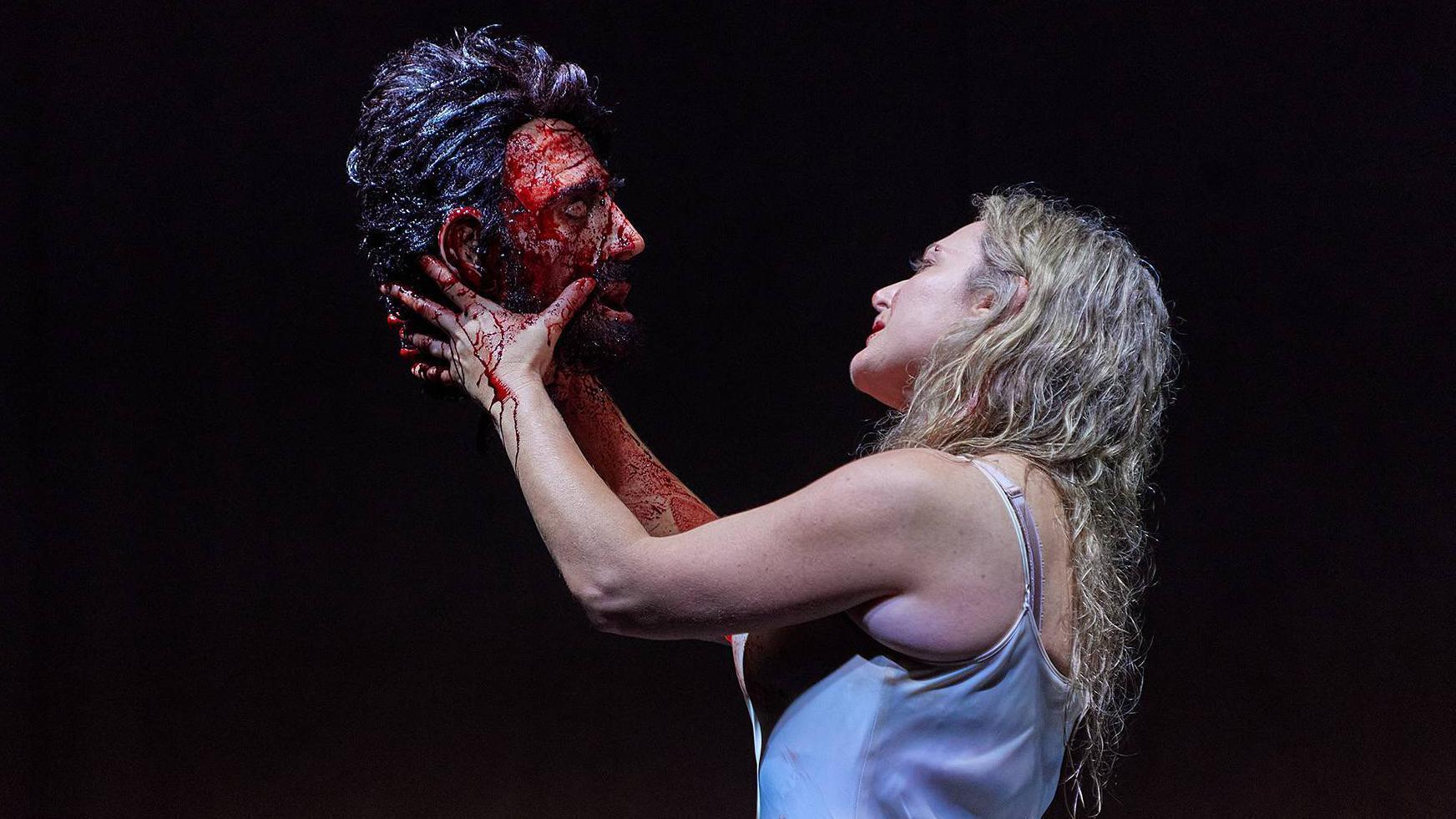
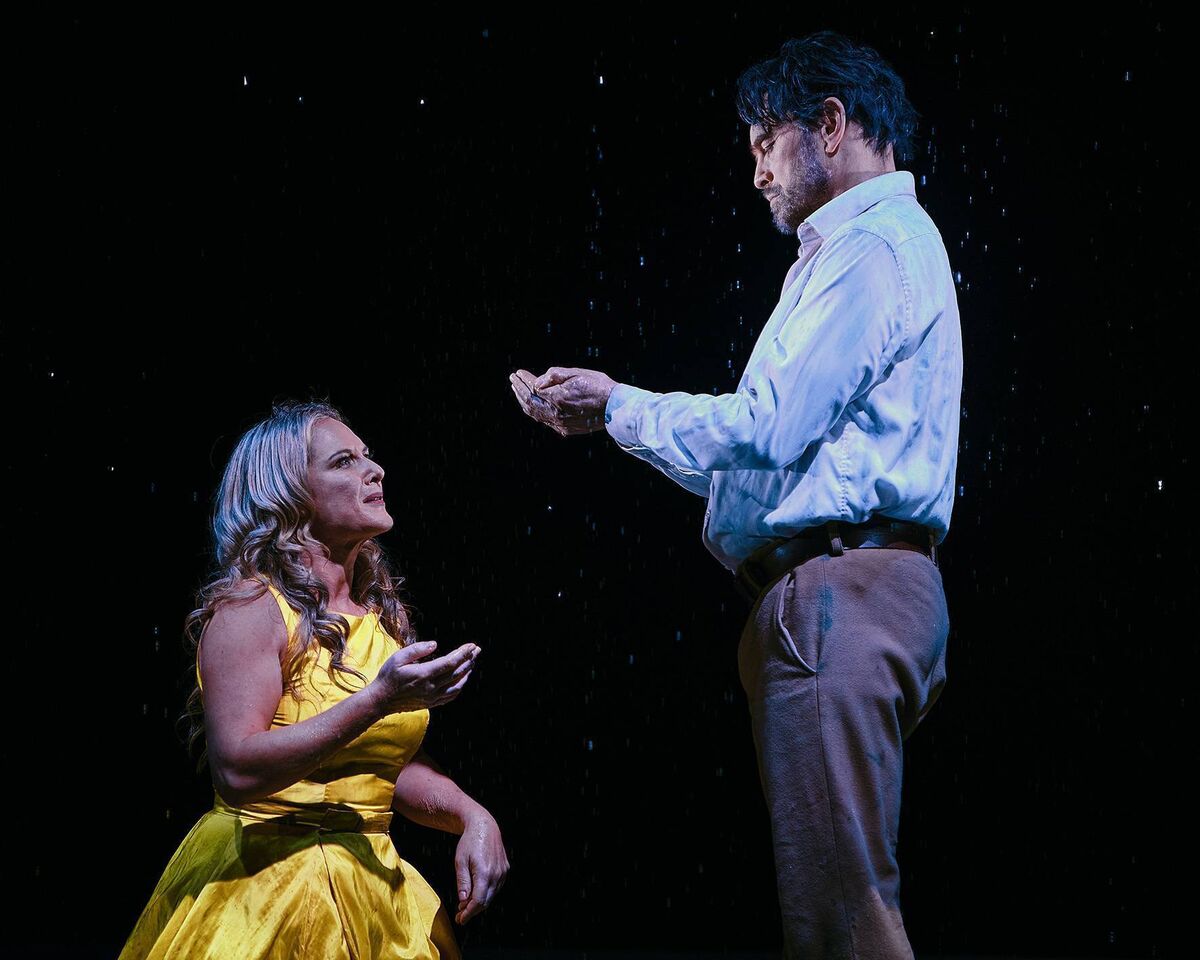
Sinéad Campbell Wallace in Irish National Opera’s production of Salome at the Bord Gáis Energy Theatre, Dublin. Picture: Patricio Cassinoni
★★★★★
On the face of it, a short work by a disgraced Irish playwright might seem an odd choice for Richard Strauss to adapt in 1905. And yet, if you want to move beyond Wagner, to open a door into a more modernist musical universe, subverting romantic conventions as you go, then presumably an opera where the song of love is addressed to a severed head would be just the ticket. (No spoiler alerts, surely, are needed for this biblical tale, mythologized by Oscar Wilde.)
Strauss adapted his version from a German translation, and merely, as he put it, “pruned the text of its literary excesses” to find his aria-free libretto.
If Strauss pruned Wilde’s “excesses”, it remains a work of extremes and irreconcilable contrasts: of pagan versus Christian, eros versus agape, sacred versus profane. It’s the perfect dramatic vehicle, then, for the cacophony of this still-startling score, with its lurches from dissonance to lush orchestration, its clashing chords and unrelenting tension.
The sense of queasy unease, of transgression, is heard in the very first leitmotif, a spiral of clarinet notes that is starkly modern and rendered in an unsettling tritone. This is Salome’s music, sinuous and serpentine, and Leslie Travers’s set design picks up on that: a flamboyantly flowering tree is an unexpected Edenic touch, sitting atop the cistern that holds John the Baptist (or Jochanaan as he’s called here) and inside a concrete bunker of a palace, suggesting it’s not just the prophet who’s confined. The modern touches continue in the costumes, as guards carry machine guns, and white-tied waiters flutter about.
A play of incest, eroticism, and necrophilic desire may have given Strauss a succès de scandale to go with his musical ambitions, but director Bruno Revella wisely steers the course without seeking to be shocking. Nor does he try a modish take on the sexual politics that might tempt a modern director. Instead, he centres Sinead Campbell Wallace as Salome, emphasising that the real drama is her internal turmoil.
Campbell Wallace, in turn, gives a superb performance in a uniquely demanding role. We first see her in a bright yellow dress, her golden hair shining. By the terrible final scene, she’s wet and bedraggle-haired, in a blood-soaked slip. It’s as stark as anything in the music: a short, sharp, awakening and descent. And we believe every step of it.
In one ingenious stroke, Ravella has Salome, after her rejection by Jochanaan (baritone Tómas Tómasson), sit silently at centre stage for minutes on end. As servants argue about divinity, it is really Salome who retains our attention. This world of religious squabbling, of boring parents (a sulky and supercilious Herodes from tenor Vincent Wolfsteiner, and a defiant Herodias from mezzo Imelda Drumm), of court life: it all is diminished for her now. Something bigger, deeper, and more terrible has been awakened, and Campbell Wallace, somehow, communicates all this with a silent gaze.
That flowering tree, too, is ripped up and raised to show its dark, dripping roots, revealing a shallow pool, and visualising those themes of baptism, fluidity, and what Mahler called the “subterranean fire” within.
Later, Liz Roche’s choreography of the Dance of the Seven Veils is a graceful accommodation to the non-specialist dancer. It stops well short of a striptease, while remaining feminine and alluring in Campbell Wallace's performance. You imagine Strauss himself, who thought it should be “played with the simplest most refined gestures”, would approve, at least until some much-needed abandon is introduced, with Salome growing wild, plunging her hair into that pool of water, and leaving Herodes reeling with her demand for the baptist's head on a platter.
A slow and ominous build to the famed finale is achieved by conductor Fergus Sheil and his orchestra, capping a thumping triumph for Irish National Opera. A must-see.
- Salome continues at the Bord Gais Energy Theatre on March 14 and 16