Inis Mara lands in the golden era of Irish language books

Tristan Rosenstock says the quantity and quality of children’s reading material as Gaeilge has increased dramatically since his own youth
Inis Mara lands in the golden era of Irish language books

Tristan Rosenstock says bookshops could certainly do better in promoting Irish language children’s books. File picture: Maxwells

  • Inis Mara 
  • Tristan Rosenstock 
  • LeabhairComhar, €1.50 (World Book Day) 

“Irish language children’s publishing is going through a golden era at the moment," author and Raidió na Gaeltachta presenter Tristan Rosenstock says.
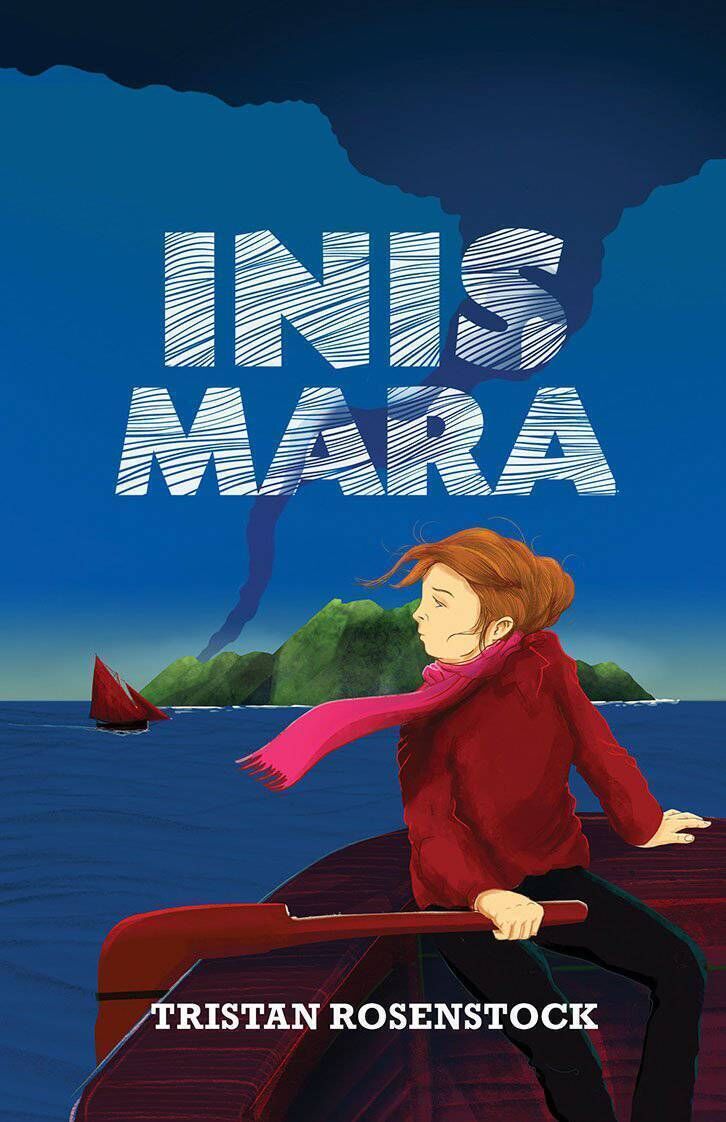
The literary editor of the journal Comhar and son of writer Gabriel Rosenstock, he says the quantity and quality of children’s reading material as Gaeilge has increased dramatically since his own youth.

“When I was growing up, I had probably read most of the offering in a few short months. 

"However, you’ve got a lot of publishing houses now that are focusing specifically on young readers — Futa Fata, An Gúm, An Snáthaid Mhór — publishing books that are extremely polished and well put-together,” Rosenstock, whose debut children’s novel Inis Mara is this year’s World Book Day Irish language title, adds.

“Irish language writers, illustrators, and publishers are doing incredible work, and you can see that in the volume of books that are being published — but also in the quality. I think the standard is higher than it’s ever been in Irish language publishing,” he says.

“I think there’s a critical point: When a few very important Irish language writers for children emerge, the standard gets higher."

People like Áine Ní Ghlinn, Tadhg Mac Dhonnagáin, Máire Zepf, and Sadhbh Devlin have really upped the game, and those of us who are new to the scene need to work hard to come near that standard.

The raising of the bar has brought a move away from the perceived dustiness of schoolbook Gaeilge to include more topical subject matter.

Inis Mara examines issues of environmental protection, truth, and electoral interference, and “its origins really came from Brexit”, he says.

Rosenstock, a presenter and producer of An Cúinne Dána and a bodhrán player with the group Téada, adds: “It’s the idea of what happens when an island withdraws from a group of islands and an ecosystem, and decides to go it alone.

“I worked in current affairs in radio as well and so was following Brexit very closely over a number of years.

“I just thought, having spent a summer holiday on the Aran Islands with my family, what would happen if one of these islands just decided that they were not part of a group of islands anymore?”

The youth-led Fridays for Future movement, inspired by Greta Thunberg, was also rising to prominence in the years preceding the covid pandemic and “that energy was really exciting”, Rosenstock says.

“I tried to marry the two: The idea of going it alone, and climate change.”

On Inis Mara, when it becomes clear that an Santóir — the island’s newly-elected leader — is motivated by greed rather than the common good, it takes a brave young girl to galvanise her community into action against corruption and environmental destruction.

Rosenstock had no need to conjure this fearless female character from his imagination, however.
Poignantly, his source of inspiration was his younger sister Éabha, who passed away suddenly in March 2022 and to whom he dedicates his novel, which was originally envisioned as a picture book.

“I was at a crossroads with the book and not entirely sure where to go with it,” he says.

“I had to take a break from writing for a while.

“When I decided to go that route and to base the main character on my sister, it opened up a huge range of possibilities and really the book wrote itself after that.

“I called her Éabha. A lot of the traits and characteristics that my sister had, you’ll find in the main character,” he adds.

“My sister Éabha joined Amnesty International as a 12-year-old and was writing letters to people who were wrongly imprisoned all around the world.

In the book, the science teacher is imprisoned and Éabha starts writing letters to her.”

His sister “was very affected by things that were happening in the world and, rather than sit back, she did something,” he says.

She volunteered in a refugee camp in Lebanon and taught Syrian child refugees English.

“She was very sympathetic towards the Palestinian cause. The idea of people not having a voice frustrated her — people being completely disenfranchised,” Rosenstock says.

“That’s why I wanted to place emphasis on the election in this book and on the importance of voting.

“Climate justice also very much affected her, because it’s the poorest people on the planet that are most affected by climate change,” Rosenstock adds.

“I do workshops and ask children to describe Éabha, the character in the book, and they list off all these adjectives — she’s brave, courageous, smart, fearless, compassionate, and it’s very heartwarming when I hear them say that.”

Rosenstock, who says An Santóir is based on “a couple of characters in world affairs”, finds that the concept of a young female character leading classmates against a corrupt leader appeals to young people attending his author events at schools, libraries, and festivals.

“They like that idea of young people having power and having a voice, that the younger generation leads the change.”

Author-reader interaction plays a part, along with initiatives such as World Book Day — which falls during Seachtain na Gaeilge — in what former Laureate na nÓg Áine Ní Ghlinn termed “lifting the invisibility cloak” from Irish language children’s literature.

Benefits of State funding 

State funding is a boost, as is increased accessibility, with Inis Mara available in both Braille and digital formats.

Quality illustration is key across all age-groups, and Rosenstock says Bantry-based Mark Wickham carefully treads the “very fine line” between children’s and teen literature, to create a contemporary graphic-novel style suitable for Inis Mara’s 10-plus readership.

Interaction is also encouraged — particularly in picture books, via QR codes — allowing readers to hear text spoken or sung, as in his father Gabriel’s Púcaí Schmúcaí, and Teach Teidí by Tristan’s wife Sadhbh, both of which joined Inis Mara in an unusual family triple on the 2023 shortlist for the Gradam Réics Carló Children’s Book of the Year awards.

“Live events definitely help. All these things are important in driving home to children that this is a living language, a fun language, and there are lots of books available for them in this language,” Rosenstock says.

“All these things help normalise Irish language books for children.

“It’s not just a small little niche thing, it’s becoming increasingly mainstream.

“None of this would work if the books weren’t good, and I think the quality is extremely high and the publishers deserve an awful lot of credit.

Authors Sadhbh Rosenstock, Tristan Rosenstock, and Gabriel Rosenstock were all shortlisted for the Gradam Réics Carló Irish Language Book of Year for Children at the 2023 Irish Language Publishing Awards. File picture: Maxwells

“Libraries have definitely increased their offering of Irish language books and Children’s Books Ireland have done amazing work. The visibility is greater than it was,” he says.

“Where we’re getting let down sometimes is in bookshops,” he says.

“You really need to try to find an Irish language book for children in certain bookshops — not all — but some hide them better than others.

“I’ve often been into bookshops and asked where the Irish language children’s books are, and it takes me three or four people before I actually find them.”

That’s not good enough. Bookshops could certainly do better.

However, he adds: “There are definitely more children reading Irish language books than ever before, because the more books that are available, the more they’ll read when they realise it’s not just a school subject or something they have to do — it’s something that’s very enjoyable.”

Rosenstock, who is working on a sequel to Inis Mara due for publication this autumn, will continue lifting the invisibility cloak on Irish language books when he is one of the children’s authors joining current Laureate na nÓg Patricia Forde on a Whole Wild World bus tour of libraries and schools from Donegal to Cork, on April 22 and 23.

He will also appear at World Book Day events in the Dublin area, and with illustrator Wickham at the West Cork Literary Festival in July.

  • World Book Day takes place on March 7, and among the titles available free in exchange for €1.50 tokens is Alan Nolan’s Molly Malone and Bram Stoker: The Curious Case of the Irish Yeti, available exclusively to readers in Ireland.
  • worldbookday.com

x

More in this section

Scene & Heard

Newsletter

Music, film art, culture, books and more from Munster and beyond.......curated weekly by the Irish Examiner Arts Editor.

Cookie Policy Privacy Policy Brand Safety FAQ Help Contact Us Terms and Conditions

© Examiner Echo Group Limited