Kids’ books reviews: From penguins on a sun holiday to fairy friendship
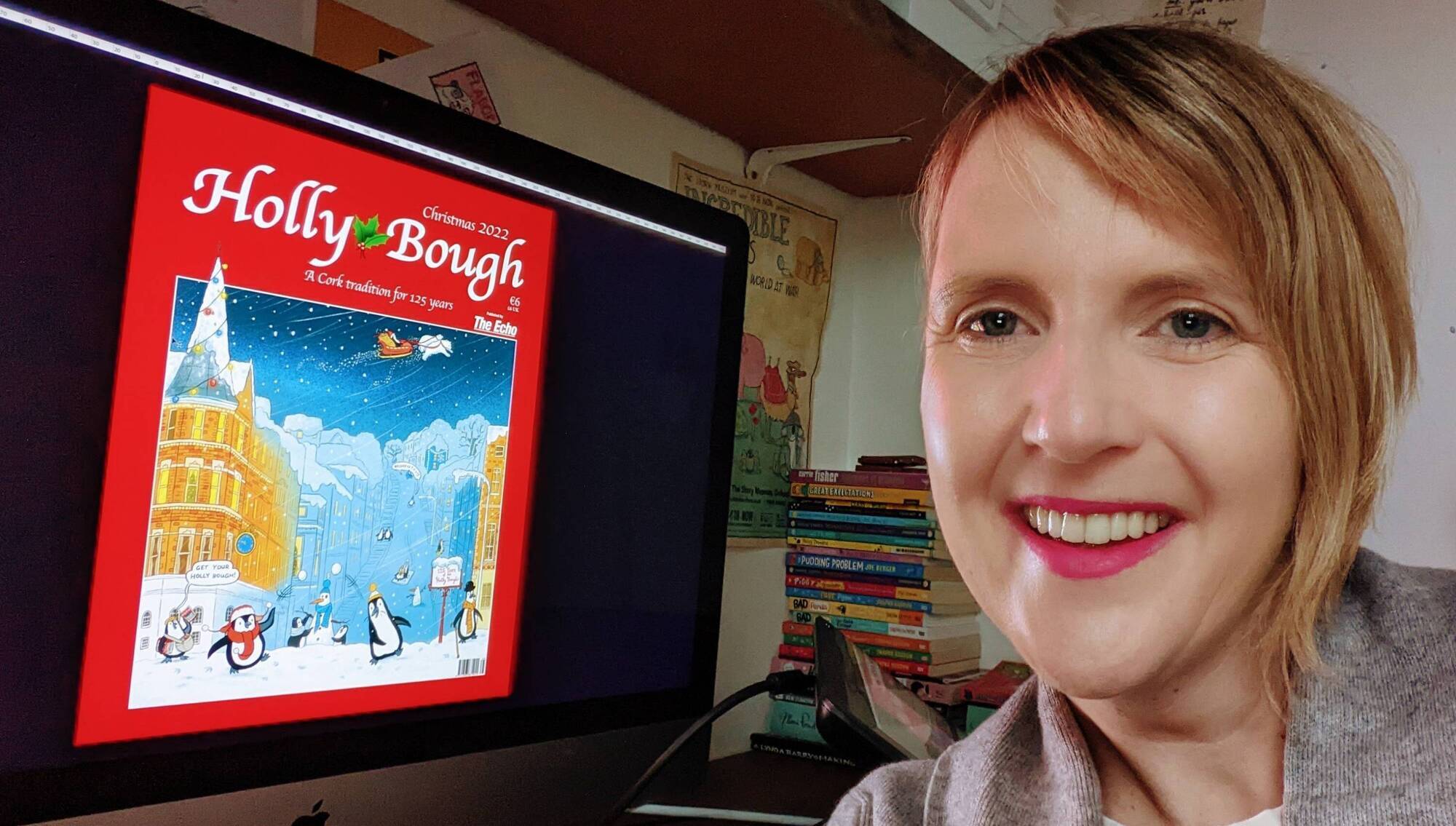
Cork author and illustrator Sheena Dempsey with her artwork for the cover of the 2022 Holly Bough.
It’s so cold on the Antarctic snow that even the penguins are in danger of frostbite and Splash, for one, has had enough.
Sick to her flippers of the freezing weather and a daily diet of krill, she decides it’s time for a change. Though she and fellow penguin Pablo are polar opposites in terms of temperament, she manages to persuade home-bird Pablo that what they need is a sun holiday.
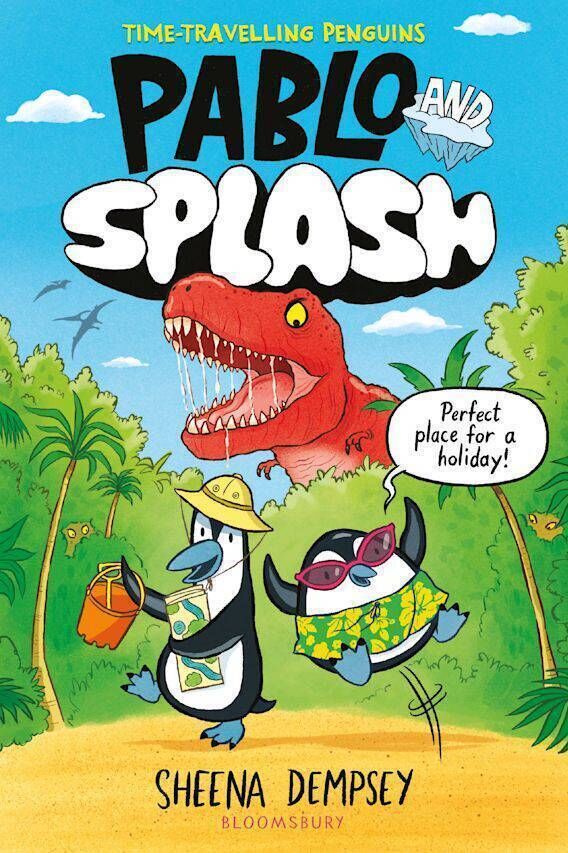
As it’s too far to swim and penguins can’t fly, they decide their passport to foreign travel is via the scientists working on the polar ice.
With notions of water slides and beach bars filling their heads, Pablo and Splash set off in search of their dream holiday but instead find themselves stuck inside one of the scientists’ experimental machines, the TimeBender.
The significance of its name being lost on the two penguins, they realise far too late that they are travelling not to a swanky hotel but through time, first hurtling towards the sun, then back to the Cretaceous period and an Earth inhabited by dinosaurs.
Splash, though normally a glass-half-full kind of penguin, is too busy bemoaning the lack of mocktails and deckchairs to realise that being 65m years away from home is a rather more serious problem.
The frozen wastes of the Antarctic seem suddenly very attractive, but getting home is not going to be easy with a carnotaurus on their tails and a dysfunctional time machine in need of repairs.
Pablo and Splash, loosely based on the impulsive and cautious characteristics respectively of author-illustrator Sheena Dempsey and her husband Mick, work well together as a problem-solving double act whose contrasting attributes add comedic effect.
Dempsey, illustrator of Swapna Haddow’s and series, is no stranger to creating comic anthropomorphic characters and her time-travelling penguins’ expressive flipper-flapping and facial features help establish them as distinctive personalities full of waddly charm.
Initially conceived as a lockdown webcomic project called , which became an Instagram hit, is the first in a new series from Cork native Dempsey, with a second title due for publication in November and a third in 2025.
Dempsey, who has illustrated the words of Niall Breslin and Fearne Cotton, as well as creating the cover of the 2022 edition of Cork’s , passes on tips for budding graphic novelists in the closing pages of , transforming simple pear and egg shapes at the stroke of a pencil into characters animated with personality.
With her full-colour debut graphic novel Dempsey, who grew up in Rochestown and now lives in Kent, has tapped into a growing readership of under-10s who have likely already devoured Dav Pilkey’s and Mark Bradley’s and are hungry for more.
“Albie arrived wearing nothing but fur; he could have been either a Him or a Her.
“Most teddy bears let their owner decide; but Albie would not, for a bear has its pride.” The trouble is, though, that not only does Albie refuse to let his owner decide what clothes he will wear, but Albie can’t decide either.
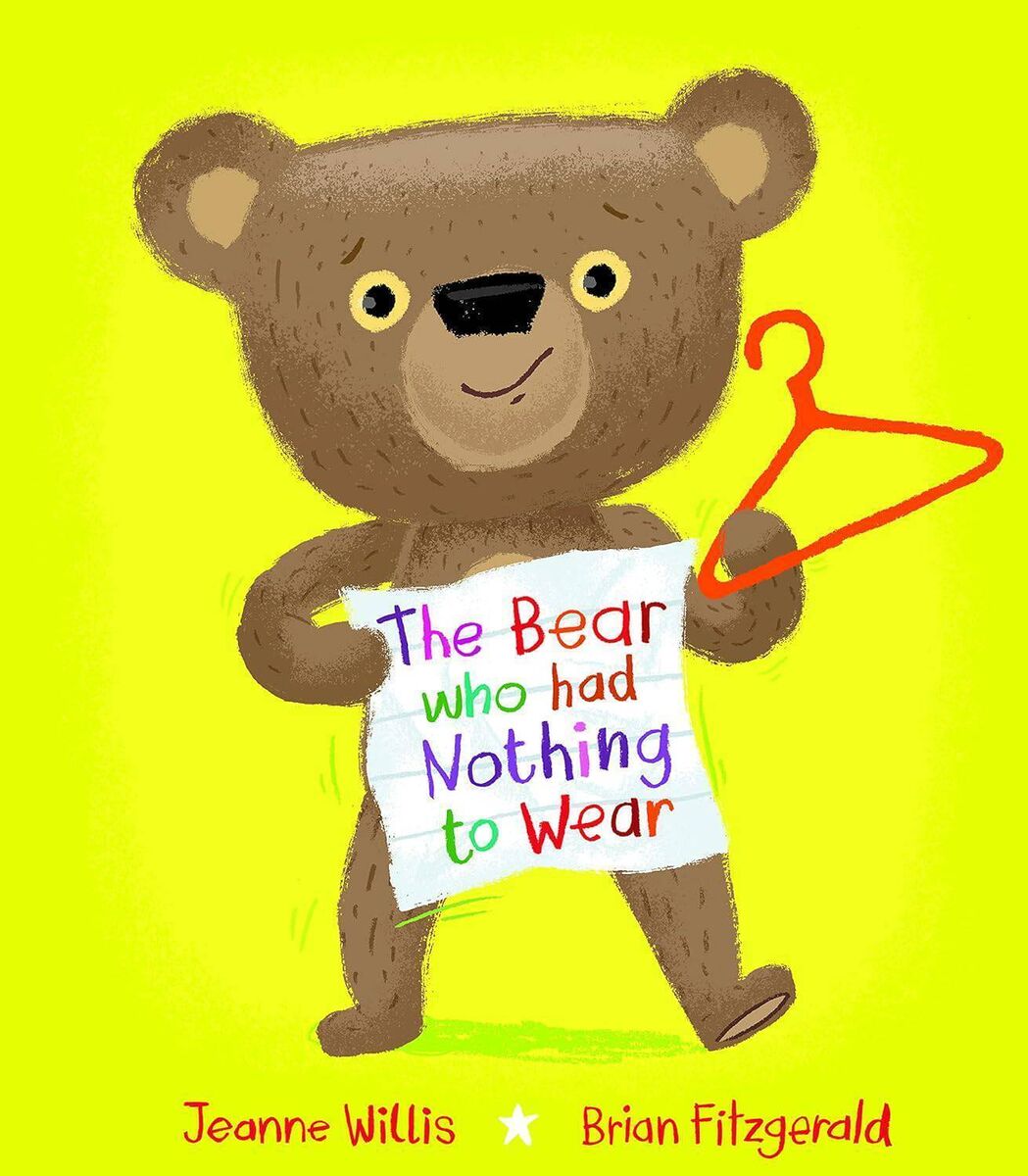
One day Albie is a prince with a crown, “pantaloons and a tunic, a ruby red gown”, and the next he’s a fairy queen bear with glittery wings, “a wand and a dress made of petals and things”.
A cowboy outfit or a pirate costume, a city slicker’s sharp suit or country gent style with a tweed cap? Albie weighs up every fashion option but none seems to take his fancy, and soon there are piles of discarded outfits on the floor, yet still nothing that quite matches this bear’s personality.
Dún Laoghaire illustrator Brian Fitzgerald captures the emotions of teddy tantrums and bear-faced pique as Albie grows increasingly frustrated. Throwing off the last of the garments, he finally realises that being as bare as a bear can be, unfettered by dress codes and fashion, is what makes him truly happy.
A rhyming picture book released this month in paperback, is a rhythmic read-aloud tale highlighting the importance of expressing one’s individual identity.
The image we present to the world is not simply a matter of a change of clothes, however, and Albie’s happiness at his new-found freedom of expression is only increased by discovering the joy of giving, when he redistributes his unwanted clothes to bears less affluent than himself.
In the same way that humans often have the misconception that they own a cat, when in fact they are merely the feline’s personal servant, Lola forms the impression that the creature she and her mother have just found in the forest may now belong to her.
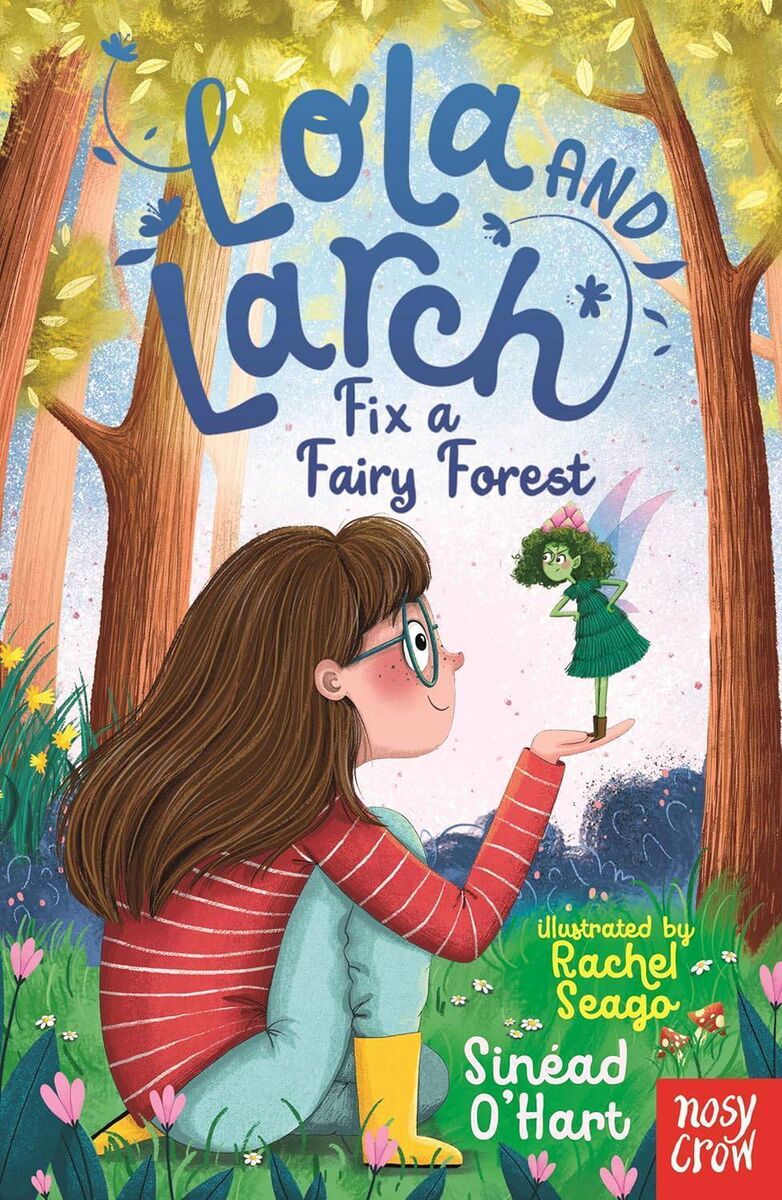
Lola’s short-lived delusion evaporates, however, when what appears to be a white rabbit transforms into a tree fairy called Larch who makes it abundantly clear that she is not the personal possession of Lola or indeed of anyone else.
Larch, as it turns out, needs Lola’s help with a couple of matters. Firstly, Larch wants to get home, once Lola can establish from the tree fairy’s patchy description, where Larch’s home actually is. Secondly, Larch has spotted a strange dark thing in the forest, a “shadow on the ground, just creeping”. She has reason to believe that the dark shadow is creeping towards her village, and that behind this malevolence is the baddest (but most beautifully botanically named) of bad fairies, Euphorbia Spurge.
Though Euphorbia’s exact motives remain shrouded in purple mist, she desires fairy magic and Larch is in possession of plenty of that, albeit of a slightly wonky variety. Unable to fully control her powers, Larch variously appears as a rabbit with a fairy head, a fairy with a rabbit head, and then a rabbit with fairy wings.
Her malfunctioning magic makes her appear “odder than a three-eyed toad” to her sidhe brethren, whose acceptance of Larch, or lack thereof, is among the story’s many interwoven themes.
In Larch, Wexford-born author Sinéad O’Hart has managed to combine the deeply-attractive notion of fairy friendship with the cuddliness of a bunny wearing a sparkly rainbow pendant round its neck. Her sassy attitude, occasional rabbit droppings, burps, and fondness for snail slime, on the other hand, provide giggles galore for readers aged seven-plus in this first title in a new series of chapter books, illustrated by Rachel Seago.


BOOKS & MORE
Check out our Books Hub where you will find the latest news, reviews, features, opinions and analysis on all things books from the Irish Examiner's team of specialist writers, columnists and contributors.