Ireland In 50 Albums, No 28: Mary Coughlan,  Tired And Emotional (1985)
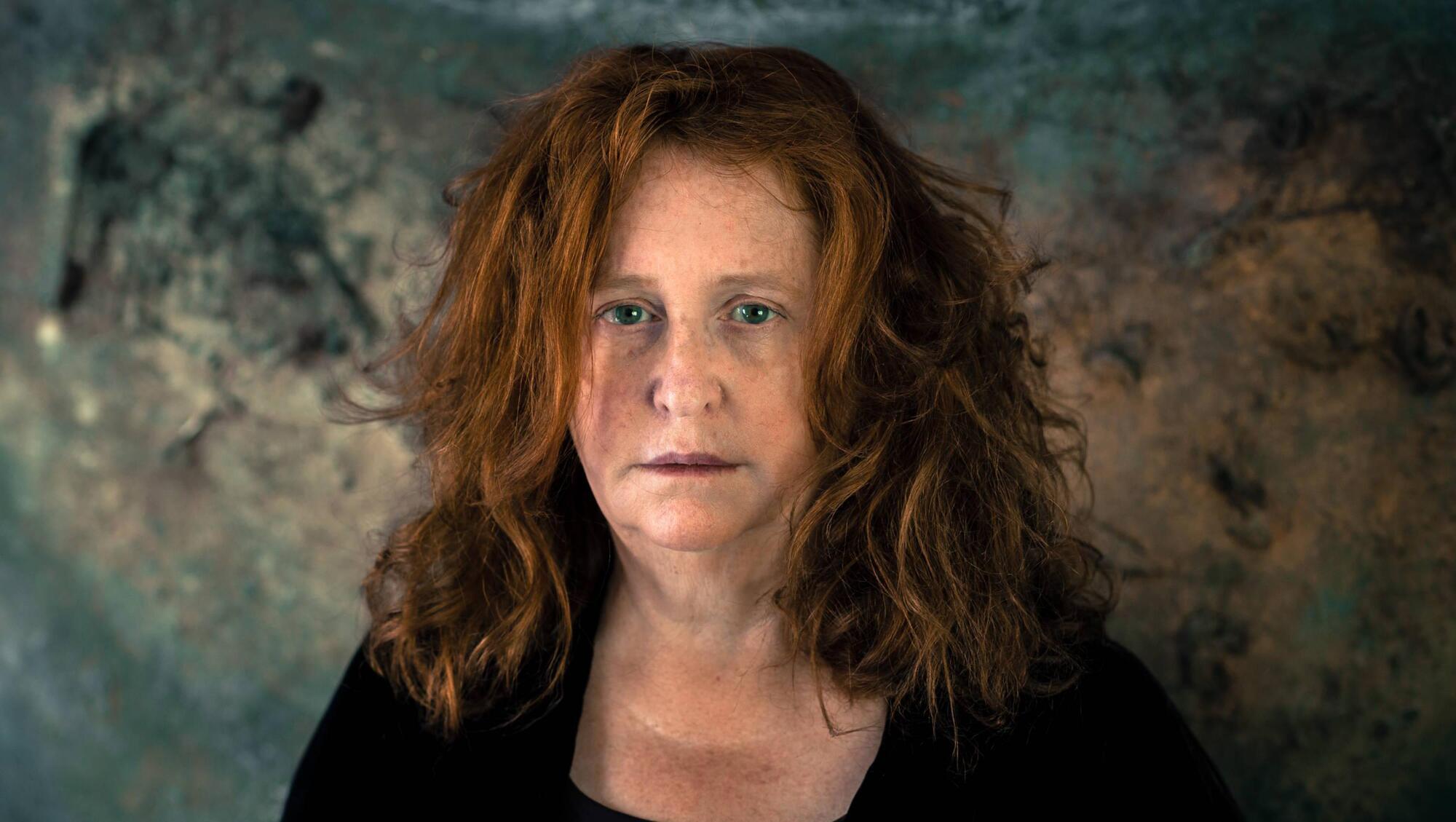
Nobody was as surprised as Mary Coughlan when her debut album became such a phenomenon in the 1980s 
Ireland In 50 Albums, No 28: Mary Coughlan,  Tired And Emotional (1985)

Mary Coughlan brought an Irish twist to bluesey songs with Tired and Emotional. Picture: Frank Millar

Arguably Ireland’s greatest jazz and blues singer, Mary Coughlan, has been creating uncompromising and wholly personal music for five decades. Born in Shantalla, Galway city, Coughlan endured a difficult upbringing – something she sings about with poignant heft – with north stars coming by way of Edith Piaf, Billie Holiday and Bessie Smith, each who recognised and replicated the sounds of their own human experience.

As Coughlan describes it, she was leading a “hippy lifestyle”, before she was discovered, teaching breastfeeding, writing magazine columns, and singing at the odd session. Then, along came Dutch musician and producer Erik Visser heard her and made magic.


“He met me one night in the pub and moved into my house the next day with me and my then-fiancé,” Coughlan laughs.

With Visser, she burst onto the Irish music scene with her debut album, Tired and Emotional, in 1985, a record that sold 100,000 copies, led to an appearance on The Late Late Show, a hit single with ‘Delaney’s Gone Back On The Wine’, and tours of Britain and Europe.

No one was more shocked than Coughlan. “Unbeknownst to us, Erik was a very famous musician and was just in Ireland for a little while, And we found out over the course of a few months that he was very well known, and toured all around the place, Japan and South America,” he recalls.

Upon his return, Coughlan had had an accident. “I was knocked down when I was crossing the street at six months pregnant. And Erik would come to the hospital every day and play guitar. Then when my daughter Aoife was born, he wrote a song called ‘Aoife’, which was number one in Holland, Belgium and The Netherlands. Then he went away for two years and when he came back he said: ‘Now it’s your turn. Now we’re going to write an album together’.” 

At that stage, Coughlan had had three children and had been recently separated. Her mother looked after the kids when she rehearsed and recorded, which could only be done after the bank closed – given that the owner of the studio, Gerald Coffey, worked in that local financial instution.

“I was so green. I didn’t know how a studio worked or what headphones were,” Coughlan laughs now. “I remember Gerald once asking me how were my cans, and I told him to mind his own business!” 

They recorded the album in Greenfield Studio in Headfort, costing them £1,700 at the time. “We had a few songs that were trademarked at the time,” she says. “My ex-husband wrote the ‘Double Cross’, which was number one in I think January 1985. And then, we had done a couple of Billie Holiday covers. A few months earlier I had sung them on the Late Late Show after Gay Byrne overheard a cassette that I’d sent into an RTÉ show called Sounds Promising. He asked if he could pinch me for the show. I was so green looking back now.” 

Coughlan continues to be inspired by American singer Billie Holliday, whose records she bought on Portobello Road while she lived in London. “I became the first female street sweeper in London at the time,” she says. “That’s actually where the song the ‘Double Cross’ came from. I hitched up my pants and walked like a man.” 

Neighbours remembered Coughlan as the woman who hung recyclable nappies on the line while singing ‘Nobody’s Business’, but it wasn’t until she moved to Dublin that she began to really consider that the music industry was a genuine consideration.

Mary Coughlan
Mary Coughlan

“I spent a week travelling around Dublin, bringing cassettes to different people,” she says. “I remember going to Sony and Warner Brothers and nobody was really interested. And then, when I was living out in Howth, I got a phone call to say that Jackie Hayden [known in the music industry as the man who signed U2 to their first record contract[ and Clive Hudson, who was the managing director of Warner’s at the time in Ireland, wanted to come to my house to see me play. They saw me and offered to sign me. Then Erik, Gerald and I got paid £1,000 to split between us. That changed everything. I remember in the weeks before that I had four people turn up to my gig, and in the weeks after there were people lining the streets.”

 Ireland’s music scene at that time still felt like a cottage industry, Coughlan insists. “We used to go around putting up posters of ourselves to get people to buy our album,” she laughs. 

“And on the first album we didn’t have drums or anything, we just used upturned paper baskets. But what made me stand out, I think, was my outspokenness. It was around the time of the divorce referendum and contraception ban, and I was outspoken about all that.” 

The song ‘The Beach’ (“He was walkin' on the beach / When I went down for a swim / I hadn't got my towels with me / I wanted to strip-off and go in”), also poked fun at former dogmas. Written by Visser about when a bishop in Galway banned women from wearing two-piece swimming togs when bathing publicly, Coughlan sang it with pride.

Funnily enough, religious motifs seemed to follow her. When she released her next three albums––Under The Influence in 1987, Uncertain Pleasures in 1990, and Sentimental Killer in 1992–– the Irish News said that she “doesn’t just take her audiences to church with her music, she practically baptises them with her passion and pain”.

Echoing this is musician Wallis Bird: "Mary cares not what others wish, she cares only what the song desires, and for that reason, we will forever find ourselves in Mary's palm. I worked with and have watched Mary many times and have robbed - I mean inspired - many cues from her! The great thing is that she never rested, she always pushed herself. Never the same show twice.” 

  • Mary Coughlan continues to tour and will play several shows around Ireland through March. See www.marycoughlan.ie

 Mary Coughlan: Behind the Scenes

Tired and Emotional, by Mary Coughlan. 

In her 2009 autobiography, Bloody Mary, Coughlan documented the realities of life behind the scenes: addiction problems, relationship troubles, familial abuse, career mismanagement, suicide attempts, and dark days spent confined to psychiatric wards.

Despite the difficulties she encountered, the music kept coming. She also appeared in two films by acclaimed Irish director Neil Jordan - 1988’s High Spirits with Peter O'Toole, Daryl Hannah, and Donal McCann; and 2005’s Breakfast on Pluto with Cillian Murphy and Stephen Rea.

More recently, theatre became another stage for Coughlan’s talents. In 2019, her early life was dramatised in Woman Undone, created by the singer and Irish theatre company Brokentalkers.

More in this section

Scene & Heard

Newsletter

Music, film art, culture, books and more from Munster and beyond.......curated weekly by the Irish Examiner Arts Editor.

Cookie Policy Privacy Policy Brand Safety FAQ Help Contact Us Terms and Conditions

© Examiner Echo Group Limited