Book review: Too many manipulative twists in ‘The Fury’ ruins real empathy

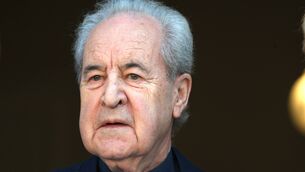
Alex Michaelides' third book has been billed as 'he biggest thriller of 2004'. File picture: Rosdiana Ciaravolo/Getty Images
- The Fury
- Alex Michaelides
- Michael Joseph, €16.99
Billed as “the biggest thriller of 2024”, hopes were high for Alex Michaelides’ third book. It has a great cover featuring a small rocky island viewed across the dark, brooding sea against a dramatic orange sunset in the background.
The author’s first novel, , published in 2019, sold more than 6.5m copies.
The author, born in Cyprus to an English mother and a Greek-Cypriot father, has an MA in English from Cambridge and an MA in Screenwriting from the American Film Institute in Los Angeles. The latter, I suspect, lies behind the elaborately contrived plot.
It opens with a short prologue recalling a storm on a Greek island, with Leo on his hands and knees being sick in the vegetable garden, as three gunshots ring out.
Leo runs through the olive grove to the ruin where a body lies in a pool of blood. The narrator and the others arrive as Leo starts to scream, and so the tragedy begins.
It is a great opening, but it will be sometime before all the questions it gives rise to are answered.
First of all, who is telling the story? The chatty voice addressing the reader belongs to Elliot Chase, a playwright about 40 years old, with one big hit to his name: “I feel that you and I should be sitting together on a couple of bar stools right now, as I tell you this tale…”
He claims this is a true story, not so much a whodunnit as a whydunnit. It is a tale of murder but it’s also a love story.
She married Otto, the much older producer who discovered her, and he gave her the island as a wedding present. She retired at 40, and when Otto died she moved to London with her young son, Leo.
She married an English businessman called Jason, and the novel opens as she decides to escape the English winter by going to the island with a group of friends.
Without telling Jason and Leo, she also invites her old friend Kate, a colorful, boozy English actress, and Elliot.
The other two are Nikos, a local caretaker living alone on the island, and Agathi, Lana’s personal assistant, cook and household manager. Agathi adores Lana and has been with her long enough to become one of the family.
The scenes on the island are the best part of the book, the wildness of the location and the local atmosphere nicely evoked.
The fact that everyone on the island is being set up with the motivation to be a potential murderer — of Lana, we gather, though she is not named in the prologue — is acceptable as part of this genre.

Less acceptable are Elliot’s long digressions into the characters’ London pasts, especially his and Lana’s first acquaintance, and his rambling lectures about writing technique — flattering the reader by sharing his technical knowledge.
Elliot’s own back story is revealed in a long digression just when the reader is keen to know more about happened on the island.
I like a twist in the tail, but there are innumerable twists in this tale, each of them undermining the real empathy the reader felt for the character before the latest revelation.
I came to hate Elliot about 100 pages before the end for this manipulative carry-on. None of his emotional revelations changed that hostile feeling.
A promising-looking thriller was ruined by bogus complications, laid on one after another, instead of convincing plot development stemming from character.
BOOKS & MORE
Check out our Books Hub where you will find the latest news, reviews, features, opinions and analysis on all things books from the Irish Examiner's team of specialist writers, columnists and contributors.