Book review: Debut novel casts a light into fuzzy corners of our society
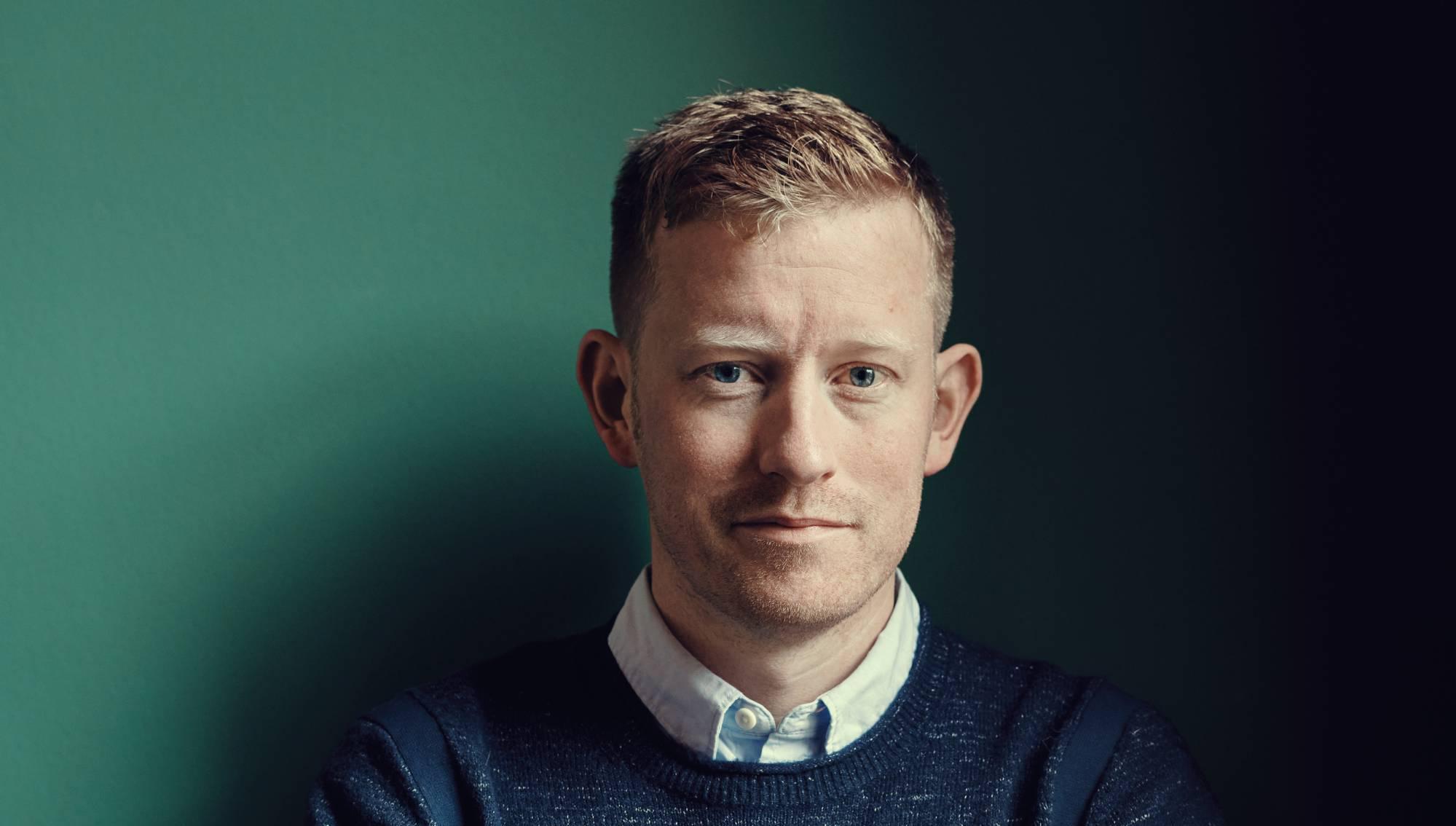
Colin Barrett's 'Wild Houses' sharply depicts the claustrophobic but often darkly hilarious reality of life on the margins of a small Irish town.
Book review: Debut novel casts a light into fuzzy corners of our society

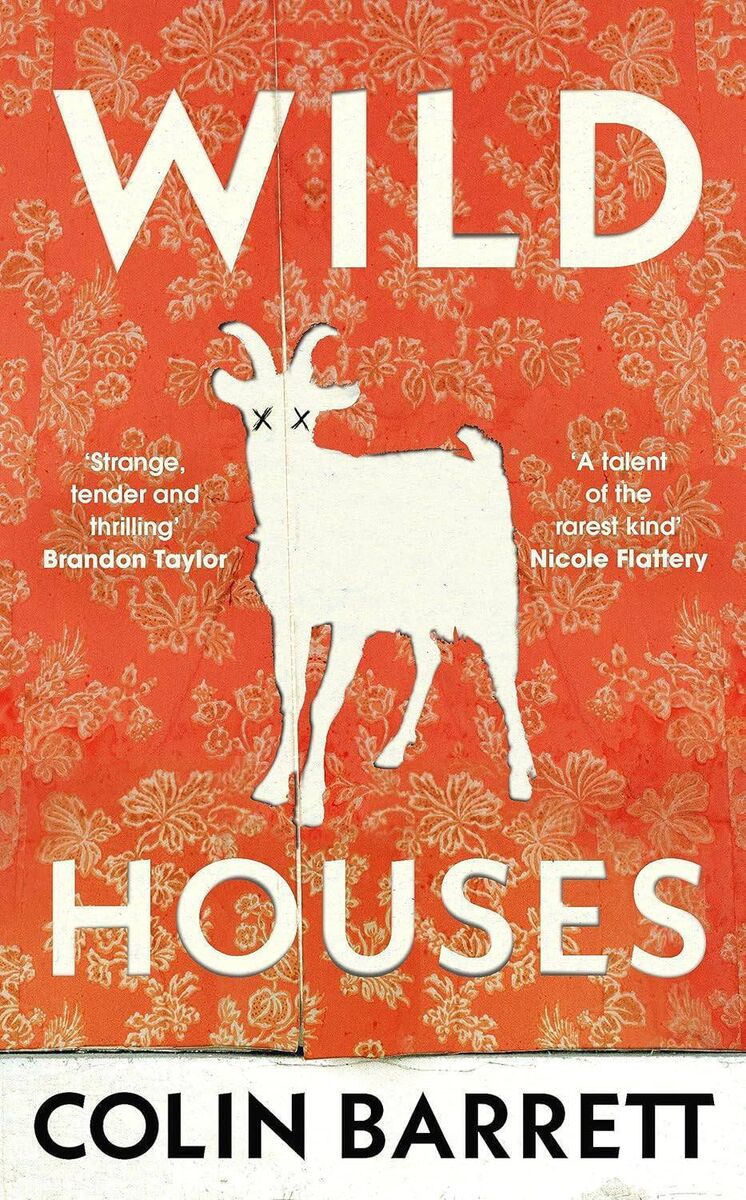
Colin Barrett has followed up his highly-regarded debut collection of short stories in ‘Young Skins’ with his first novel ‘Wild Houses’.

  • Wild Houses
  • Colin Barrett
  • Vintage, €14.99

When Colin Barrett’s short story collection Young Skins won the €25,000 Frank O’Connor international short story award in 2014, the judges described it as an “instant classic”, with the novelist Alison MacLeod asking “how dare a debut writer be this good?”. 

Ten years on, Barrett is making another literary debut, publishing his first novel, Wild Houses

While Young Skins and Barrett’s other short story collection, Homesickness, might be considered hard acts to follow, the Mayo native says he didn’t feel the burden of expectation. 

The fact that most of Wild Houses was written when he was living in the Canadian city of Toronto helped him achieve some distance from any of that pressure.
“I didn’t think too much about any of that. When Young Skins came out, I did a lot of readings at a lot of festivals and it had a long lifespan as books go. It was a very novel sensation to meet people I didn’t know who had read the book and had an opinion about it, that was very gratifying.

“But writing Wild Houses, it probably helped a little bit that I was in Toronto, away from things. Any kind of idea about an audience or people waiting on it just kind of fell away,” he says.

Barrett, who was born in Canada before moving back to Mayo when he was a young child, was in Toronto with his wife, a doctor, and they have a daughter and son. 

The family have been back in Dublin for a few months and are settling in after their stint in Canada, with Barrett taking up a role as writer-in-residence at his alma mater UCD.

While he is acknowledged as one of Ireland’s finest writers, Barrett plays down his talents, saying he’s ‘not very smart’ and that he doesn’t find writing easy.

“I mean, it’s definitely something I work on, I wouldn’t say it comes naturally.”

The main reason my books take such a long time to write is that I’m just naturally lazy. It’s all in there, it just takes a bit of time to get it out.

“But I certainly have an appetite and a patience for writing and rewriting the prose until it feels right, until it’s got the rhythm I want, until it feels like it’s doing what I want.”

Wild Houses traverses similar terrain to Barrett’s short story collections, sharply depicting the claustrophobic but often darkly hilarious reality of life on the margins of a small Irish town.

Unlike Young Skins, which was set in the fictional small town of Glanbeigh, the novel takes place in real-life Ballina, near where the author grew up. 

It is told from the perspective of vulnerable loner Dev, whose cousins kidnap Doll English, the brother of a local drug dealer, and hide him in the basement of Dev’s house; and of Nicky, Doll’s teenage girlfriend, who sets out to rescue him.

Barrett says that although the kidnapping is the engine that drives the plot, he wanted to tap into the permeable nature of communities in small towns, and the spillover from house to house reflected in the title.

“I’m always writing about grey areas, where borders become fuzzy and I love writing that type of character — like, are they a criminal?

“They’re unemployed, but they do stuff under the table or for cash in hand, that sort of stuff, those informal economies in these kinds of places.”

That’s what I like to go into in my writing — those themes around class and who’s a criminal, who’s a citizen, and who’s outside those categories, who has fallen between the cracks in some way.

“That’s always been a theme in my stories and it definitely continues with Dev and Nicky. They are two sides of the same coin. They both have trauma but they are both trying to just function while not having to face it and that manifests in different ways.”

Nicky is also considering a future outside the limiting confines of Ballina, and gets a glimpse of what that life could be like from Marina, a former workmate, now a Trinity student, who she encounters at the party where Doll goes missing. 

The push and pull of wanting to escape a small town is something Barrett can identify with.

“I was the first in my family to go to university. So that thing of feeling like a fish out of water, Marina embodies that. She’s kind of stuck between two worlds — she is looked at a bit askance by the locals and she has this whole other life.

“I remember when I was Nicky or Doll’s age, 16 or 17, I wanted to get out of my small town. I knew I wanted to write and I would probably have to go to college to do that. But I felt a lot of ambivalence, I was really nervous about it.

“You don’t want to leave what you know, even if what you know is driving you mad. It was a difficult cultural adjustment, I found it hard to make friends and fit in and I wasn’t seeing my old friends regularly any more.” 

When Barrett did go to UCD, to study English, it expanded his horizons in terms of literature.

“I was a relatively introspective kid who was reading whatever I could get my hands on.”

I understood literature as something dead people did — James Joyce, Charles Dickens, Jane Austen. 

"I knew there were contemporary writers but I guess I thought you had to be in America or London to write, or move there if you were Irish,” he says.

It was at college that he also encountered literary journals such as The Stinging Fly and The Dublin Review, instrumental in promoting new writers and the short story form, which Barrett fell in love with.

“I really only discovered the short story in college, having access to UCD library and being able to get short story collections by writers.

“I probably was on course to write a novel and then I became consumed with short stories. What made me want to write short stories was the fact that there were magazines publishing them in Ireland. Until I published a story in The Stinging Fly, I had never met a writer. So that made it tangible as a culture.

“My only writing mission was that I was going to try and write a story good enough that I could get in one of these magazines, that was my earliest ambition.”

For now, his ambition doesn’t extend beyond doing the best job he can as a writer. When I ask him if he can continue Ireland’s winning streak at the Booker Prize this year, the reply is typically self-deprecating.

“Ah Jaysus, we’ll see how it goes. They might have their fill of the Irish.” 

He is not one for the millennial practice of manifesting his goals, then? He laughs.

No, I don’t manifest. My manifesting doesn’t go beyond trying to get out of bed in the morning. We’ll see what happens.

“The Booker thing was fun to watch. It was great that Paul Lynch won and Paul Murray’s book also did amazingly well. I have judged one or two literary competitions and if you win it you deserve it but at the same time, it’s so arbitrary — it comes down to people’s taste.

“You only control what you can with a book, you’d drive yourself mad trying to control its reception. However good or not it is, whatever flaws it still has, I’ve done as much as I can. I’m lucky to be able to say that.”

  • Colin Barrett will appear at West Cork Literary Festival this summer. The festival will take place in Bantry from 12-19 July and the full schedule will be announced at the end of March. 
  • www.westcorkmusic.ie/LFProgramme

BOOKS & MORE

Check out our Books Hub where you will find the latest news, reviews, features, opinions and analysis on all things books from the Irish Examiner's team of specialist writers, columnists and contributors.


More in this section

Scene & Heard

Newsletter

From music and film to books and visual art, explore the best of culture in Munster and beyond. Selected by our Arts Editor and delivered weekly.

Cookie Policy Privacy Policy Brand Safety FAQ Help Contact Us Terms and Conditions

© Examiner Echo Group Limited