Books are my business: historian and host of 'Censored' podcast Aoife Bhreatnach
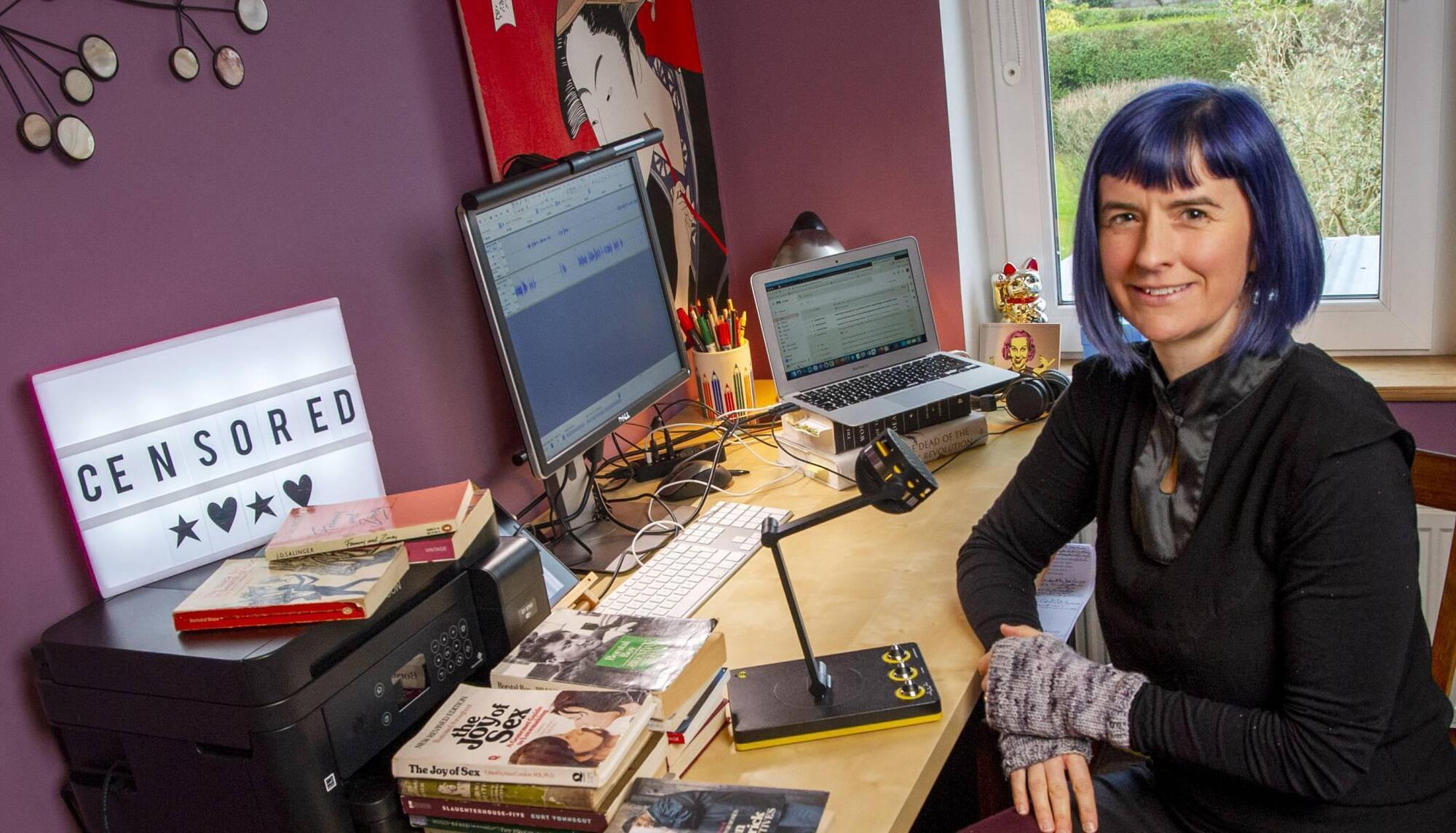
Hst of the 'Censored' podcast Aoife Bhreatnach: 'It is wonderful to know there is a group of people out there who are interested in this random niche topic.' Picture: Daragh Mc Sweeney/Provision
Aoife Bhreatnach is a historian from Cork and host of Censored, described as a podcast for the filthy minded. It explores banned films, books, magazines, newspapers, and cinema.
How did your podcast come about?
When I was looking at my bookshelf one day, I noticed Brendan Behan’s Borstal Boy, which was banned. I had one or two more that I knew for definite had been banned but then I thought perhaps there were other less well-known ones.
The blacklist is actually a bit epic — they were adding hundreds of books a year.
I was surprised at the range of books that had been banned.
There were 12,000 on the list, if you add it up over the years, but then you look at the scope and the different types of books, from fluffy romance through to the bonkbusters of the ‘70s.
If you can ban James Bond and John McGahern in the same time period, there is something quite interesting going on there.
Is there a lot of work involved in doing a podcast?
Yes. It is a skill you have to learn through repetition — I have made a number of stupid mistakes along the way in creating the audio.
Also there is the editing, if there was a magic wand to do that, it would be wonderful, although it is vital to the process of creating the final product.
Then there is the publicity side of it, which is the most difficult because there is so much content out there.
I got help from a fellow history podcaster, Fin Dwyer who does the Irish History Podcast. He gave me a lot of useful and practical tips, as well as a microphone he wasn’t using.
What do you like most about doing the podcast?
I like meeting people who say ‘I love your podcast’. The feedback has been really positive.
It is wonderful to know there is a group of people out there who are interested in this random niche topic.
I get people telling me really interesting stories about censorship that occur to them because they have heard the podcast.
They are little slices of that time from the ’60s and ’70s that aren’t in the formal history books because people haven’t done an oral history of how life was under censorship.
What do you like least?
I would have to say all the uploading and the technical stuff. It’s a slog but it’s something you just have to do.
Any favourite books you have covered on the podcast?
I got really obsessed with hating The Ginger Man by JP Donleavy. I actually did a second episode on the injustices meted out to the main female character in the novel.
That was banned twice. When the ban expired, the board renewed it again.
They were very much anti- The Ginger Man, probably not because it is a horrible book but because it is rude.
There’s an American novel from the ’50s that I love called The Best of Everything by Rona Jaffe, which is a bit like Sex and the City, that kind of vibe.
And in the Edna O’Brien The Country Girls trilogy, my absolute favourite was part three, Girls in Their Married Bliss.
Everyone reads The Country Girls, part one, because it is the titular one but it isn’t particularly rude, so I think people are a bit disappointed that it is so famous for being rude.
But part three has some of the funniest sex scenes ever written — incomparable and it doesn’t get read enough. It is so fresh still — if it was written today, it would be a massive hit.
Three desert island books
Number one has to be Jane Eyre, I’m in a long-term relationship with that novel so that has to come with me wherever I go.
One that I read this year that captured something for me is The Art of Losing by Alice Zeniter, translated from the French [by Frank Wynne].
It is an incredibly rich and complex piece of work that I will read again. It speaks so much to the experiences of war and displacement we are seeing now, even though it is specifically about France and Algeria.
The third would be Revolutionary Road by Richard Yates, which I read for the podcast. I had seen the film but wasn’t really impressed, it did the book a disservice.
For a book from the ’50s, it is really clear about what toxic masculinity is, what it does to men and what they do to women in return.
- censored.ie

Subscribe to access all of the Irish Examiner.
Try unlimited access from only €1.50 a week
Already a subscriber? Sign in