Film Review: Wonka is a beautifully-imagined prequel - Timothée Chalamet is a treat
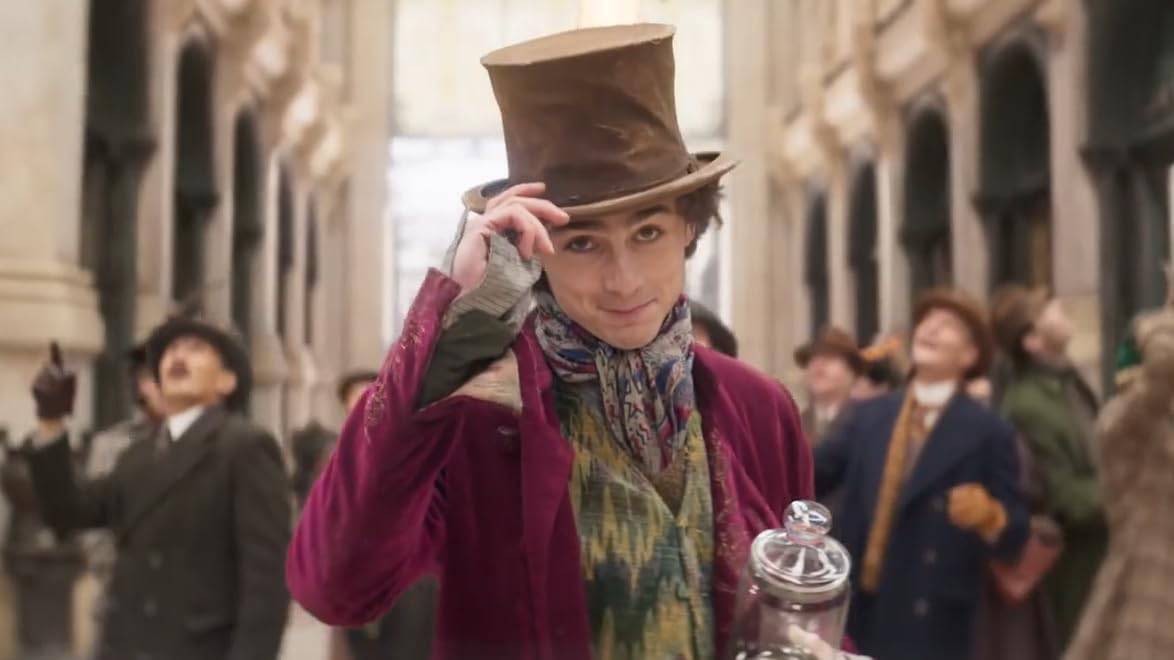
Timothée Chalamet is a treat in Wonka
- Wonka
- ★★★★☆
- Cinema review
Let’s all pretend that the Wonka travesty starring Johnny Depp never happened, shall we? Thank you.
is a prequel to the original Willy Wonka and the Chocolate Factory (1971), which opens with the top-hatted Wonka (Timothée Chalamet) arriving in the big, bad city as a young man with a dream of fulfilling his mother’s (Sally Hawkins) ambition to make the best chocolate in the whole world.
Once there, alas, he finds himself heavily indebted to the grasping landlady Mrs Scrubit (a raucous Olivia Colman), and quickly runs afoul of a sinister cabal of scheming chocolate manufacturers headed up by the nefarious Slugworth (Paterson Joseph).
What’s an eccentric chocolatier to do?
Written by Simon Farnaby and Paul King, with King directing, Wonka plays out in a quasi-Dickensian world littered with indentured orphans, harsh circumstances and – spoiler alert! – miraculous reversals of fortune.
King and Farnaby might well have been apprehensive at the prospect of devising a prequel for Willy Wonka, but it’s fair to say that the pair have form when it comes to reimagining beloved characters: Paul King directed the recent Paddington movies, with Farnaby co-writing Paddington 2.
It’s no surprise, then, that Wonka has a gentle, whimsical sense of humour, and that it boasts a strong theme of inclusivity: when the unfortunate Willy finds himself working in Mrs Scrubit’s laundry to pay off his hefty debt, he discovers that his fellow debtors include the former accountant Abacus Crunch (Jim Carter) and the abandoned waif Noodle (Calah Lane), both of whom possess the kind of skills the illiterate Willy will need if he is to outsmart Slugworth et al.
Beautifully imagined – the city itself is a kind of Mitteleuropean burg that bears a passing resemblance to a Victorian-era Venice – Wonka is a heart-warming homage to the original movie and a charming prequel in its own right, with toe-tapping musical numbers (along with a poignant reworking of the original’s Pure Imagination) and a fine supporting cast that includes Olivia Colman, Rowan Atkinson and Jim Carter, all of whom are eclipsed by Hugh Grant in scene-stealing form as the hilariously deadpan Oompa-Loompa (Grant could very easily – like the Minions before him – generate his very own spin-off franchise).
If there’s a caveat it’s that there are none of the flashes of dark obsession that made Roald Dahl’s Willy Wonka such a fascinatingly mercurial character; similarly, and while Paterson Joseph is suitably oleaginous as Willy’s nemesis Slugworth, the villains generate more laughs than menace.
Overall, though, it’s terrific, and Timothée Chalamet is a worthy successor to Gene Wilder in the role of the dream-weaving Wonka – he’s a little bit zany, yes, but impressively sincere and grounded too.