'You’ve got the best of both worlds': Paul Cook on the Sex Pistols touring without John Lydon
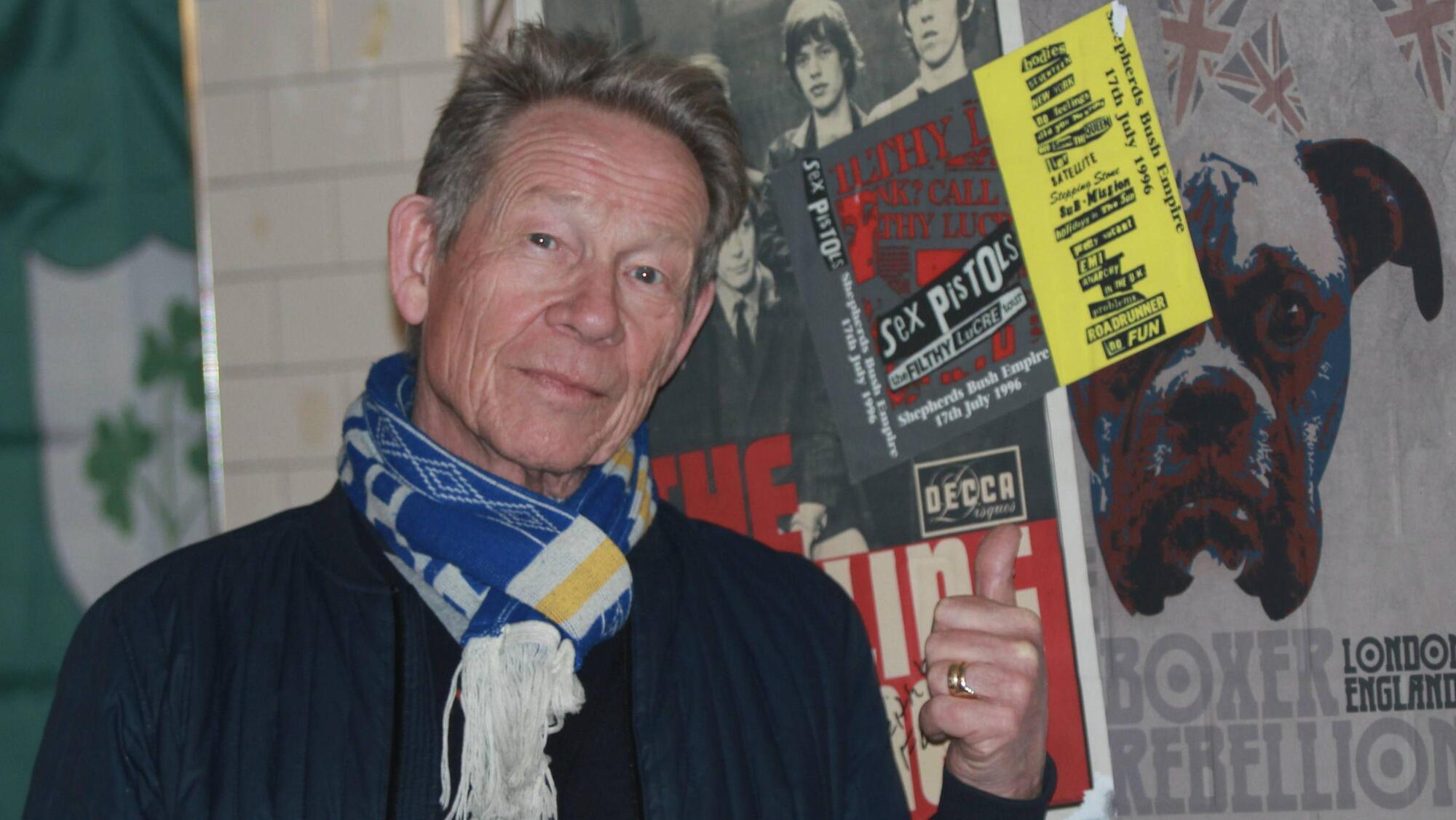
Paul Cook of the Sex Pistols in a west London pub earlier this year. Picture: Richard Purden
I’m walking with Paul Cook through Shepherd’s Bush in West London. It was these very streets where he would meet his life-long friend and Sex Pistols guitarist Steve Jones as lads skipping school. It was also where he suffered an attack from six assailants with an iron bar at the height of the Pistols’ infamy in June 1977.
“I wasn’t a fighter and it was a dangerous place to be if you were in the wrong place at the wrong time,” the 69-year-old drummer explains. “I had a knack of walking into trouble and got badly beaten up not far from here by a bunch of Teddy Boys for looking like a punk. There was a reaction against the punks that was so far out there; we were public enemy number one and front-page news. A lot of it was caused by us, I must admit.”
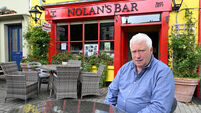
A sense of a working-class community still anchors the area, and you quickly sense why Cook has stayed rooted here. We enter a pub on Uxbridge Road; there’s a poster advertising the Pistols’ 'Filthy Lucre' gig at the Shepherd's Bush Empire in 1996. Not far from here, Jones and Cook would tuck into plates of pie and mash at their favourite shop, A Cooke, until it closed in 2015.
The band didn’t want the same fate to affect Bush Hall, another local grassroots venue. Members of the Pistols played three sold-out benefit shows with Frank Carter on vocals in 2024. They also wanted to “run a flag up the pole” and see if the Sex Pistols could work without John ‘Johnny Rotten’ Lydon. They continued to tour throughout 2025.
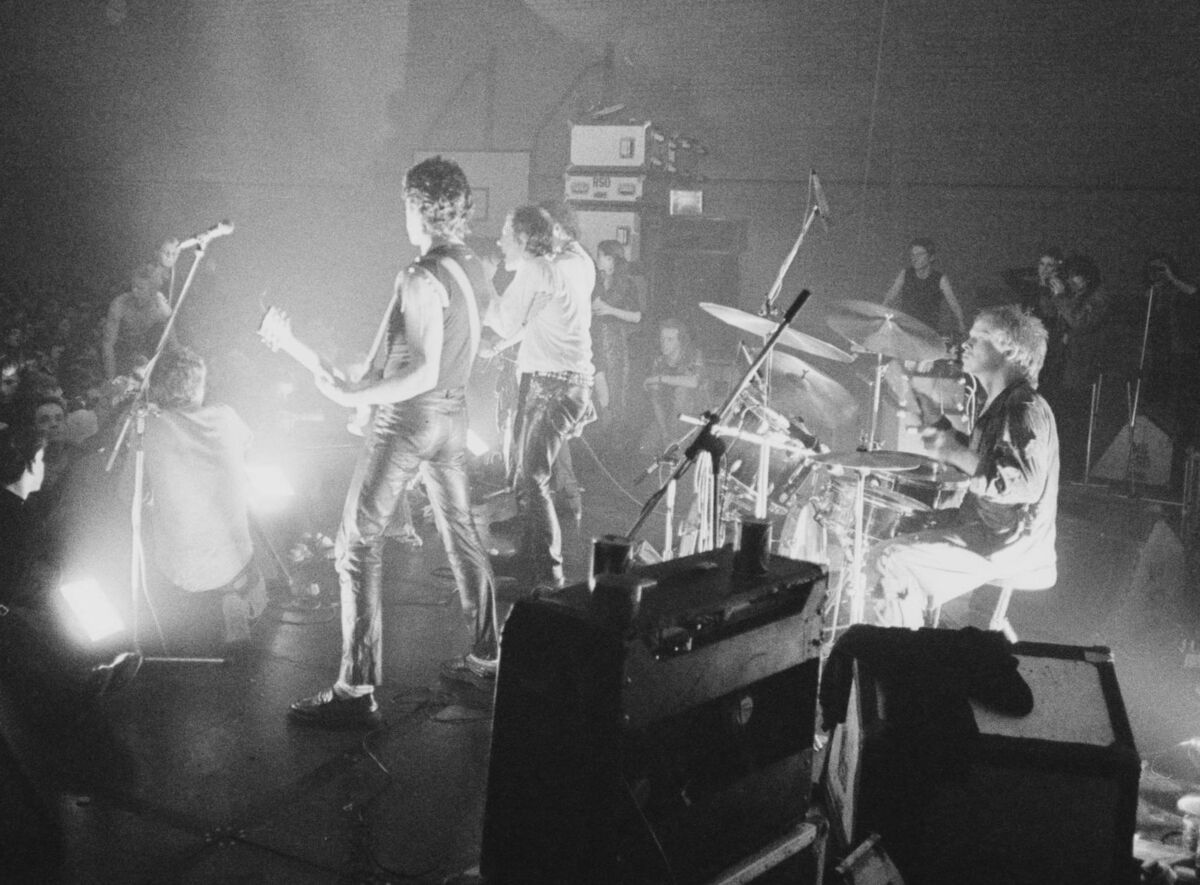
“With Frank, it’s going great. He’s slotted in seamlessly and is the real deal. It was a big call to replace John, but it went fantastic. The press went off the scale. People say it’s not John anymore, but you don’t have to come if you don’t like it. You’ve got the best of both worlds because John is doing his thing with PiL. Frank is doing a brilliant job; he’s got big balls stepping up and doing it.”
The past doesn’t sit still, and this November marks 50 years since the band released their debut single, To mark the moment, the Sex Pistols featuring Frank Carter, will head out on a short tour that begins in Dublin.
“We never actually played in Ireland until 2008,” explains Cook, referring to the band’s appearance at the Electric Picnic festival. “We were meant to play Belfast [in 1996] but it got cancelled because something flared up there.” The cancellation also led to a show in Dublin being scrapped.
While John Lydon’s Cork roots are well recognised, it’s lesser known Cook also has Irish connections. “My grandmother was Irish, which isn’t very well known, actually,” he says.
And yet, Irish politics had an influence on the band from the very beginning. When burst through in 1976, it dropped references to the IRA and the UDA into a three-minute single at the height of the Troubles. It said much about where Britain was and how a new generation felt about it. The country was already charged and fraying at the edges.
“It was a violent time," explains Cook, "with strikes and football violence, and that spilled over naturally into the punk movement.” Then came the Bill Grundy interview incident, with the Pistols swearing on live television. "He didn't expect us to turn up drunk as well, I think he met his match," reflects Cook today. "He was somebody who was an establishment figure and very condescending when he talks about 'all this money' and 'Mozart'. He got what he deserved."
Cook also argues the cultural infrastructure was extremely narrow. “There was no music culture apart from and I like to think we had a hand in changing all of that.”
Subsequent singles, and further amplified their popularity. It's often overlooked that these songs were loaded with pop hooks as much as punk.
"The Pistols had those great sing-along choruses, it was uplifting", explains Cook. "It was that British cultural thing as well with fashion, football and style, which is very indigenous to these islands. It's not a mob mentality, but wanting to belong to a moment or a club if you like — you want to feel part of something."
Cook draws a direct line between the football terraces and the way the Sex Pistols sounded and connected with people. The "big choruses" and singalong energy in punk came, partly, from "the atmosphere of 5,000 fans singing in unison on the terraces”.
He refers even further back to the British music hall tradition, where communal singing was an essential part of working-class expression and solidarity. Outside of London, the Pistols are only playing Dublin, Glasgow and Edinburgh. Cities where expressions around music, fashion and football allegiances are tightly bound up.
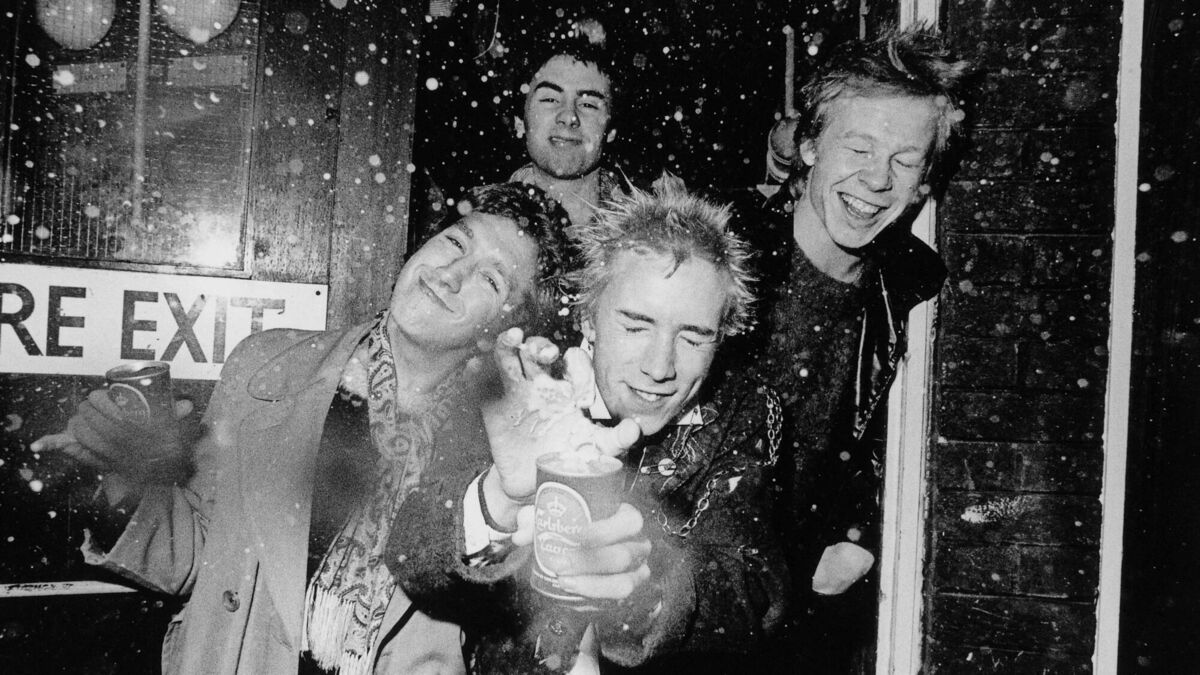
"You get that same intensity of belonging with people like us, football fans, who are into the band’s rebelliousness and anti-establishment edge, which sits very strongly in places like Celtic. There can be a bit of stick from the other side for it too, for what you support or what you’re seen to represent, whether that’s politics, or identity, but that’s part of it."
The visibility of punk was partly due to its architects, with Malcolm McLaren orchestrating the chaos. Alongside him, Vivienne Westwood gave the band its visual identity with clothes that were as confrontational as the music. Jamie Reid’s artwork, most famously on the sleeve, turned the imagery into a direct act of provocation.
“I just thought — yeah, so iconic, isn’t it? It still is. It’s so in your face," says Cook of the cover today. "I mean, we’ve got the Anarchy flag, God Save the Queen and Pretty Vacant with the two buses. All Jamie Reid's stuff was brilliant. We should all open up and give credit where it's due. Everyone brought something to the table."
Cook agrees with John Lydon's rejection of American punk on the Sex Pistols as an influence. Guitarist Glen Matlock has previously mentioned Cook's ability to create hooks, adding he was a "melodic drummer".
“People say we were influenced by American punk, but I wasn't. I listened to Tamla Motown and soul music. That’s where all my little drum licks and feel come from. That’s all I listened to when I was growing up. We also listened to glam rock; it was Roxy, Sweet, Bolan, you couldn’t avoid it. Every Thursday on it was Bolan, Bowie, Mott; ‘All the Young Dudes’; that was punk before punk.
“David Bowie was a game-changer for my generation. The Spiders from Mars were essentially a proto-punk band of working-class musicians," he says.
'Never mind the bollocks' was a phrase often used by Steve Jones; it was also the name of the band's only album, released in June 1977. For Cook, its influence on American bands is notable. It was seen as a touchstone for both Guns N' Roses and Nirvana.
“They’re the offspring, really, those white trash bands, Guns N’ Roses and Nirvana. Duff and Slash are big supporters. They were like a rock version of punks when they first turned up; same attitude, just a different genre.”
While Cook suggests he hopes the band had a hand in “changing things”, there is no doubt you can almost feel the energy of when the group began to take off when he discusses those pre-fame nights at the 100 Club. He recalls one fan in particular.
“I remember seeing Shane MacGowan at the 100 Club. We would play on Tuesday nights. It started off as 20, then it would be 30, 40, and then we'd walk around the corner, and there would be a queue around Oxford Street at six o'clock. We thought: ‘fucking hell, we’re on our way'.”
- Sex Pistols (featuring Frank Carter) play at 3Arena, Dublin, on December 7 as part of their 50th Anniversary Anarchy In The U.K. and Ireland Tour
The Sex Pistols' ending in 1978 was swamped in turmoil. It leaves a sense of what might have been, had the line-up held, if Sid Vicious had lived, and if the band had not burned out so fast.
“Sid could have and probably might have been a big star in his own right,” says Cook. “He had everything going for him. He had the look, he invented the pogo, and he could sing all right. He definitely could have made a career, but obviously it wasn’t to be. He was on a one-way ticket really.”
While Vicious was a good fit for the Pistols visually, the band suffered musically without Glen Matlock, an essential songwriting element of the original four-piece who departed in 1978. “Glen should have stayed. That was a bad decision,” admits Cook today.