John Lavery: National Gallery exhibition a reminder of the talents of great artist
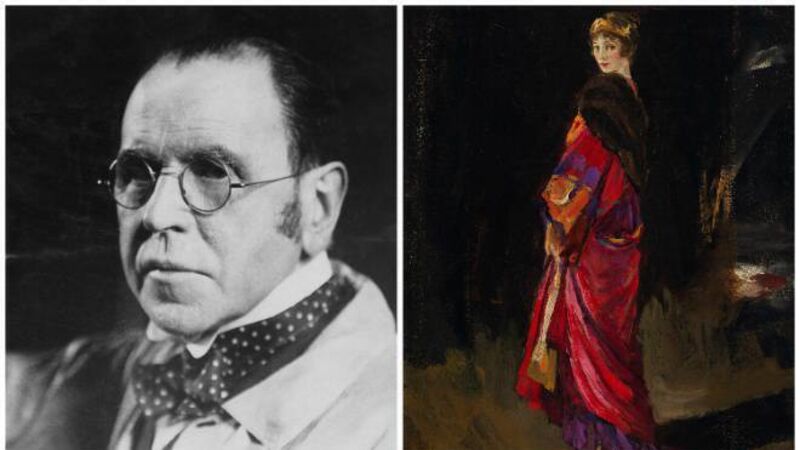
John Lavery, and his piece, Lady Lavery in an Evening Cloak.
The National Gallery of Ireland’s plans for Lavery: On Location were already in train when Dr Caroline Campbell was appointed director in November 2022, becoming the first woman to hold the position in the institution’s 158-year history. But the timing could hardly have been more appropriate; Campbell is a native of Belfast, and John Lavery is the most successful artist to have ever come out of the city.
The National Gallery holds many of Lavery’s most important paintings, including the portrait of his wife Hazel that graced the Irish pound note for nearly fifty years, but Lavery: On Location is the first major exhibition of his work in three decades. Produced in collaboration with the National Museums of Northern Ireland and the National Galleries of Scotland, it features seventy of his pictures, mostly painted on his travels in Ireland, Scotland, England, France, North Africa and the US. Many were made for his family and friends, and have never been shown before.
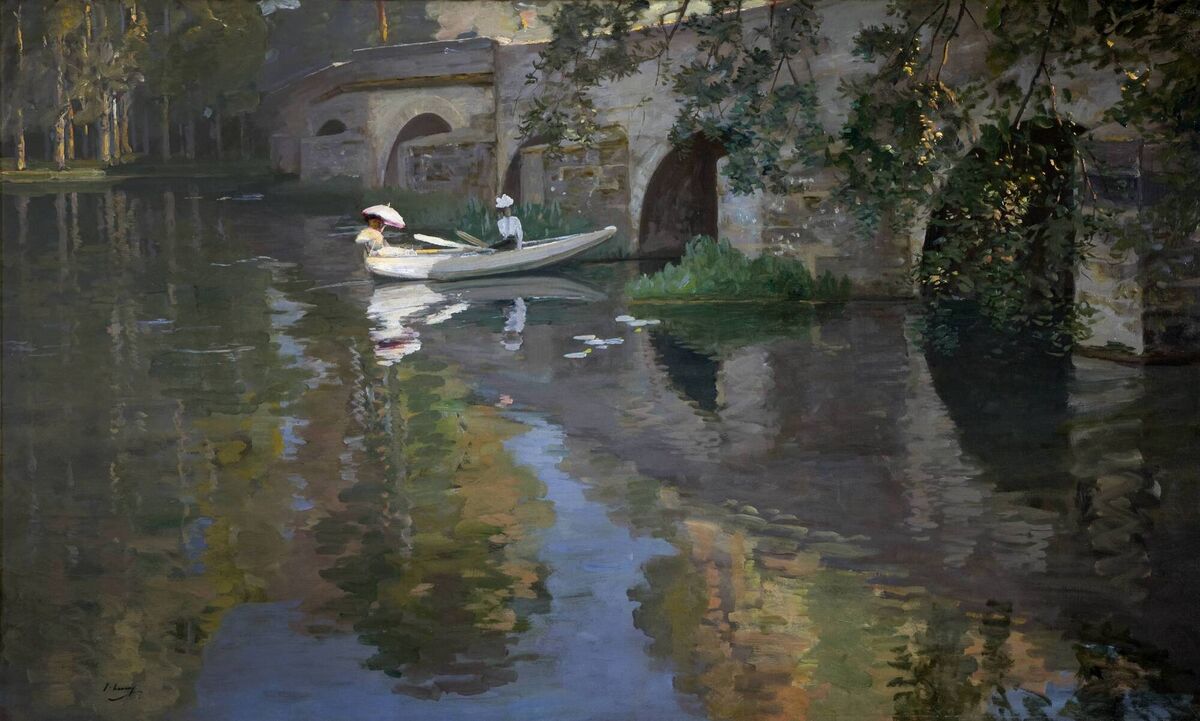
Campbell was an early admirer of Lavery’s work. “I remember seeing his wonderful painting, The Bridge at Grès, when I was small,” she says. “But one of my best artistic memories is being brought to Dublin by my mom for the first time when I would have been about 15 or 16. I remember she brought me in front of the portrait of Hazel Lavery with her daughter Alice and Lavery’s daughter Eileen in his studio in London. We looked at it and talked about it. And every time I came back to Dublin, I would visit the gallery and look at that picture once more. Lavery, for me, is a real talisman, and someone I've come back to again and again throughout my life. He's an extraordinary painter.”
Born in 1856, Lavery became one of the most famous – and wealthiest – artists of his day in Britain and Ireland, but he was very much a self-made man, having suffered the loss of both his parents in his childhood. His father Henry was a failed spirit merchant who perished when the passenger ship the Pomona, en route to America, was wrecked off the coast of Co Wexford, and his mother Mary died of grief just three months later.
“After Lavery was orphaned at the age of three,” says Campbell, “he spent his earliest years with his uncle on a farm in County Down, but then, aged ten, he was shipped off to relatives in Salcoats, in Ayrshire, Scotland. He was not well looked after there. In the autobiography he wrote at the very end of his life, he talks about how he was often very hungry. He ran away to Glasgow, where he trained as a photographer, and that gave him the wherewithal to begin his artistic training.”
Lavery studied painting at Haldane Academy in Glasgow, at Heatherley’s School in London, and at the Académie Julian in Paris. “He then moved to an artistic colony at Grez-sur-Loing just south of Paris, in the forest of Fontainebleau, and he stayed there for a number of years. One of the paintings in the show, A Garden in France, was actually made nearby, in the garden of his friends the Heseltines, about 10 years after he first worked in Grez. The painting came to the National Gallery last year, through the heritage gift scheme.”
Another painting from around that time is the aforementioned The Bridge at Grès, which the Ulster Museum has loaned for the exhibition. “In the early 1880s,” says Campbell, “Lavery painted in the style of an artist called Jules Bastien-Lepage, who was the biggest influence on painters in the late 19th century, far more than the Impressionists. He went for a very meticulous, tight way of working, concentrating on natural details. You can see that also in Lavery’s painting of the cherry tree that opens the exhibition.”
Among the friends Lavery made in France was the sculptor Auguste Rodin. “We have a wonderful, beautiful picture in the show called Summer, of a woman with a parasol on a beach. That was a painting he gave to Rodin, it normally hangs in the Rodin Museum in Paris.”
Lavery’s first wife, Kathleen MacDermott, died of tuberculosis in 1889, shortly after the birth of their daughter, Eileen. In 1909, he remarried, to the Irish-American socialite Hazel Martyn, and they set up home at 5 Cromwell Place in London, where he established himself as a society portraitist and landscape painter. Their home was famously an informal meeting place during the Treaty negotiations between Ireland and Britain. Michael Collins and Arthur Griffith were regular visitors, as was the Laverys’ neighbour, Winston Churchill, whom Hazel Lavery taught to paint.
“Lavery and Churchill were good friends,” says Campbell. “In fact, the exhibition includes a picture Lavery did of Churchill painting in the south of France.”
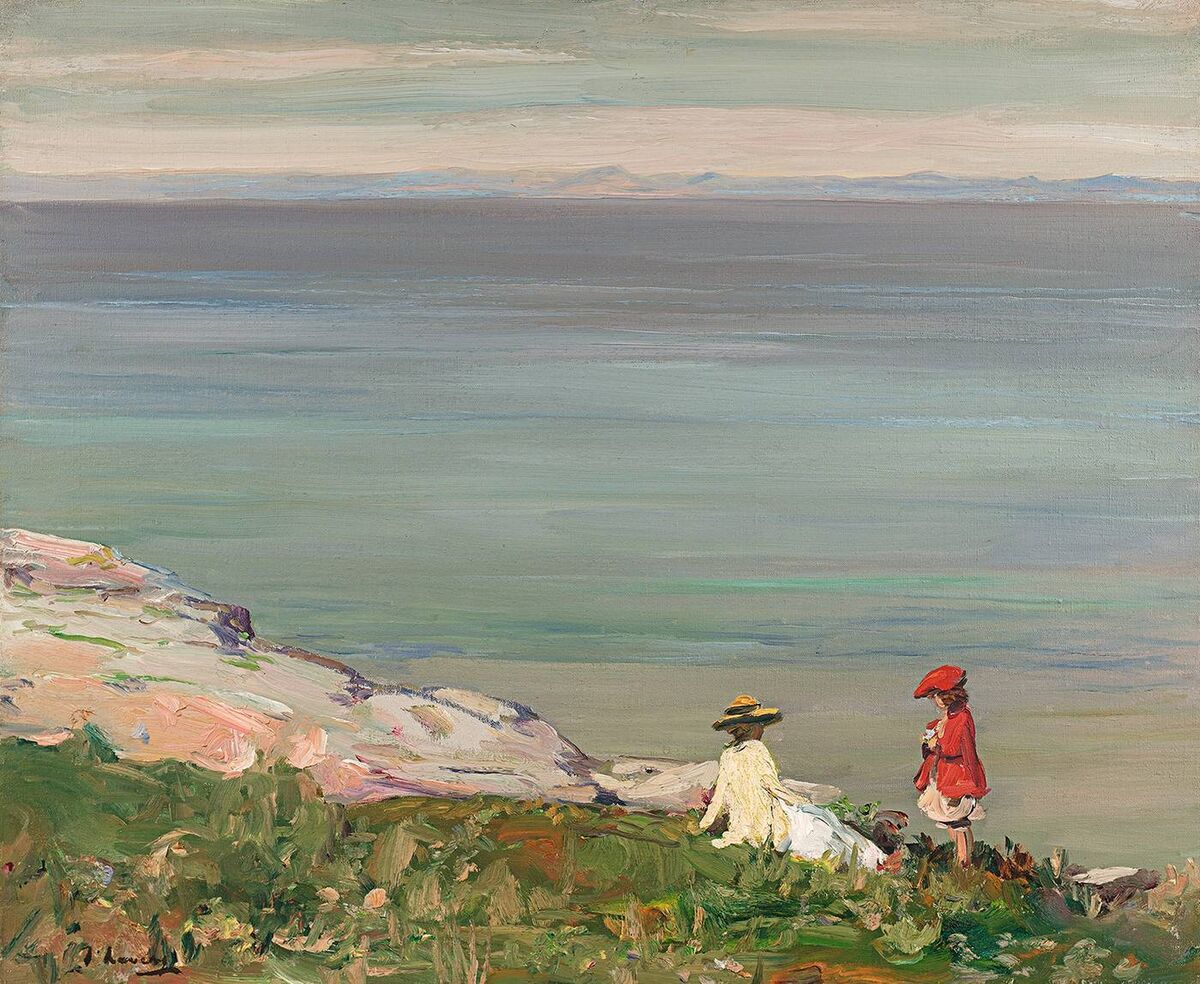
While the Laverys were regular visitors to Italy, Switzerland, France and Spain, they also maintained a second home in Morocco. “I have many favourite paintings in this exhibition,” says Campbell, “but if I can mention one in particular, it’s the picture of Hazel and Alice on the cliffs in Tangier. It looks idyllic, but at the time they were living there, people worried about European women being taken for the white slave trade, and Hazel was terrified that Alice, who was a very young girl, might be seized.”
Lavery’s wife and daughter both died young in 1935; Hazel at 54 after an operation to remove a wisdom tooth, and Eileen at 45 when she succumbed to tubercolosis. Lavery spent his last days with his stepdaughter Alice at Rossenarra House in Kilmoganny, Co Kildare, where he died of natural causes on 10th January 1941.
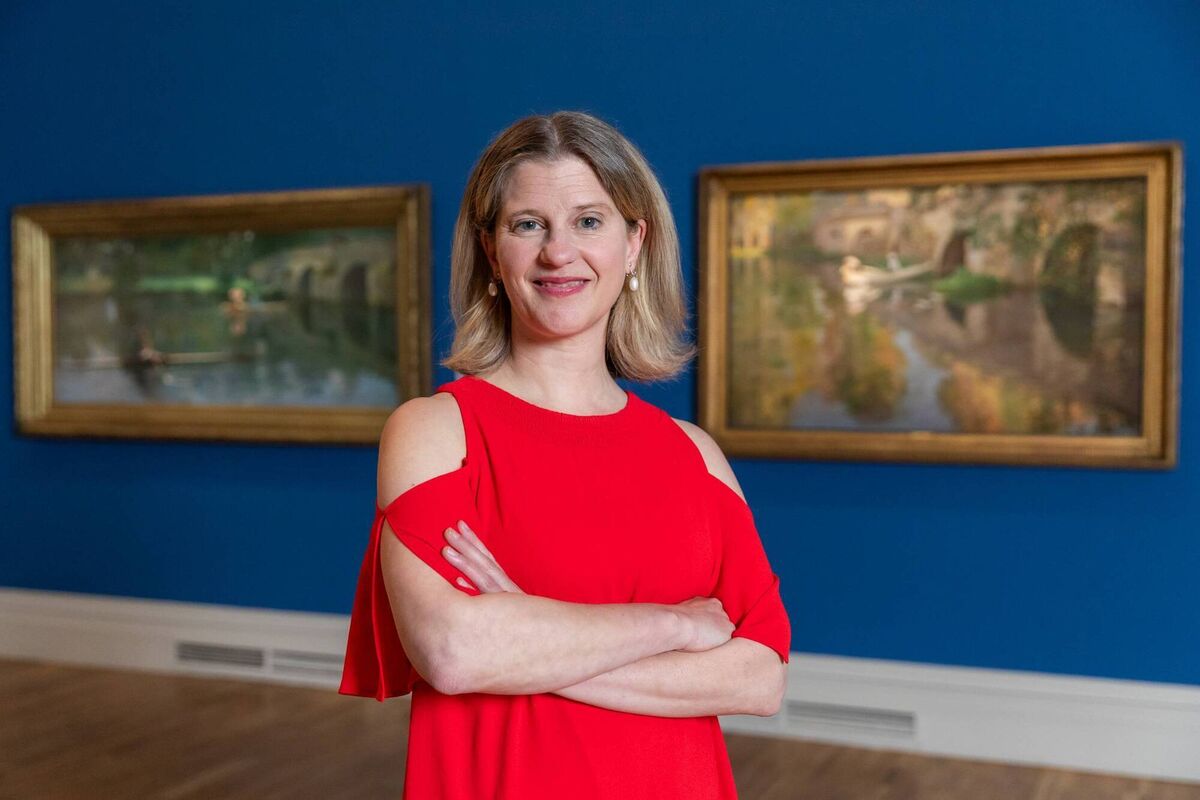
As Campbell acknowledges, “Lavery’s work is not really well known any more, except in Scotland and Ireland. It's not so well known in England, it's certainly not known in France, and it’s very little known in America too, though he was collected in all those places in his lifetime. There are quite a number of works in this exhibition from English public collections, from the Ferens Art Gallery in Hull to the Tate and the Royal Academy in London, and more are from private collections. But very few of those works would be shown publicly in England, while in Scotland and Ireland, he's absolutely adored.
“Hopefully, Laverty: On Location will help change all that.”
- Lavery: On Location runs at the National Gallery of Ireland until January 14, 2024.
- The exhibition is curated by Professor Kenneth McConkey, Emeritus Professor of Art History at the University of Northumbria and Dr Brendan Rooney, Head Curator and Curator of Irish Art at the National Gallery of Ireland.
- Further information/booking: nationalgallery.ie