Opera review: La Bohème sweeps us along on a wave of emotion

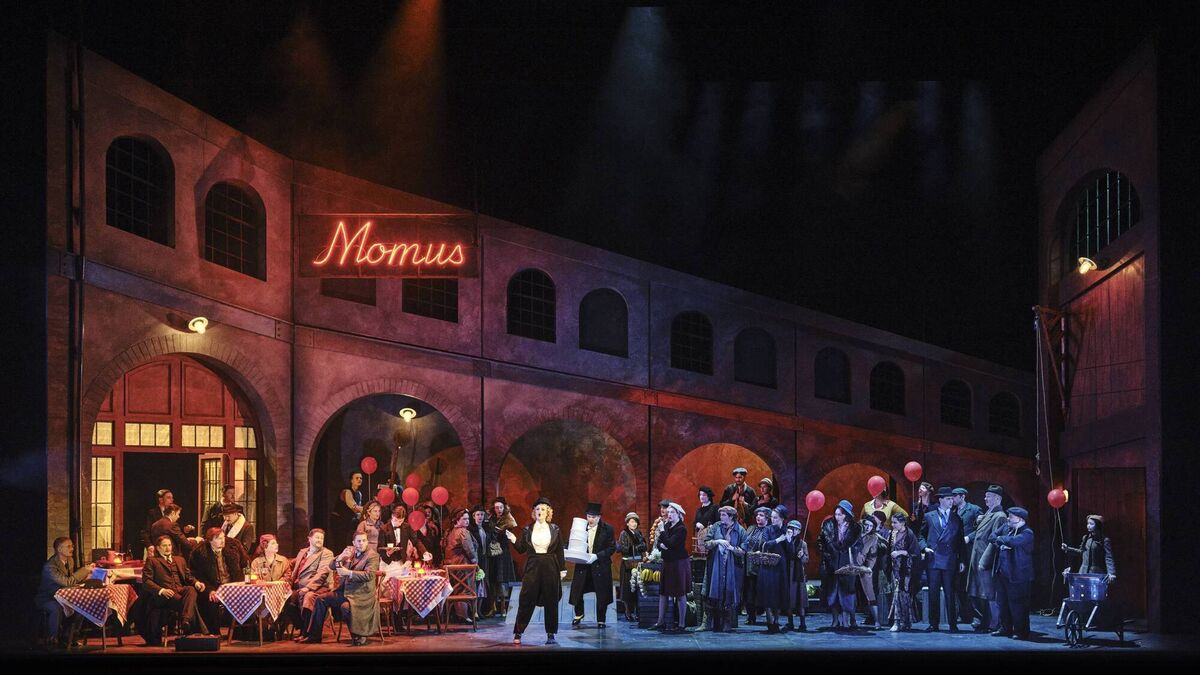
A scene from INO’s production of La Bohème at BGE Theatre. Picture: Ros Kavanagh
- La Bohème
- Bord Gais Energy Theatre, Dublin
- ★★★★☆
Given the famous lovers’ vow of Rodolfo and Mimi, “We’ll part when the flowers appear,” you’d almost forget that La Bohème could be framed as a Christmas show. But the Irish National Opera’s new production, directed by Orpha Phelan, certainly does not.
We begin, after all, on Christmas Eve in Paris, and the bustling second act is crammed with children, dreaming of presents, and getting some too, as Parpignol the toyseller, got up like Saint Nick, cavorts about. Of course, the main business of Puccini’s great work remains more adult things like love and death, but these are apt seasonal emphases in a production that’s highly approachable and light on its feet.
Phelan takes us not to the 19th century, but rather to the interwar years in the French capital. We meet our titular bohemians – Rodolfo (tenor Merunas Vitulsksi), Marcello (baritone Iurii Samoilov), Colline (bass Lukas Jakobski), and Schaunard (baritone Gyula Nagy) – not freezing in a writers’ garret, but squatting in an abandoned factory.
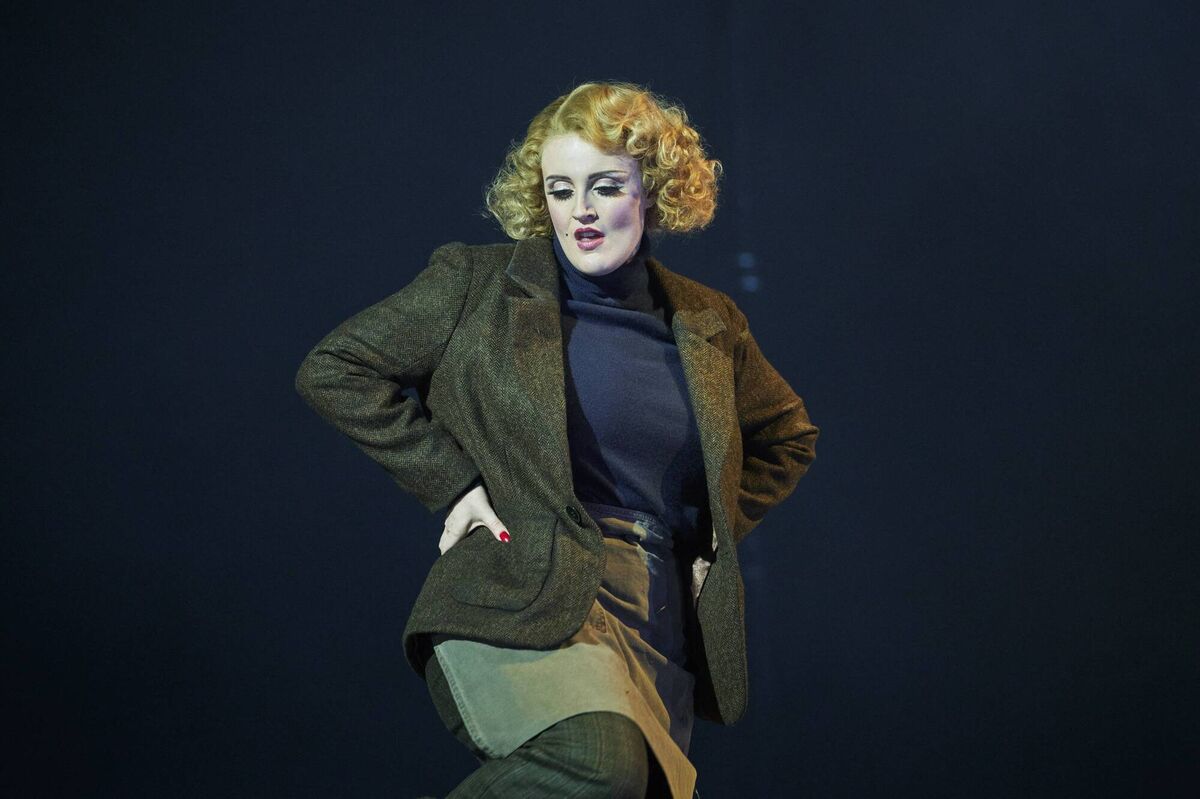
It makes for equally cold digs, but that doesn’t stop this lively quartet’s high-jinks. Musetta (a suitably confident Sarah Brady), when we meet her in Act 2, is in hat and tails like a Weimar-era cabaret singer, and one can even spy a James Joyce-like figure, observing alone from his table the carousing at the Cafe Momus.
Designer Nicky Shaw, meanwhile, nods to the art of that time, literally raising Mimi’s gelida manina to a cinematic plane, as images of it and her profile float above the bohemians’ makeshift studio. It all makes perfect sense, and does not stop the production conveying the essence of what Puccini was trying to do here: integrate feeling and realistic drama with the most sumptuous music.
Puccini’s opera is based on a popular book of its time, Scenes de la Vie de Bohème, and this is how it feels: the four acts appearing as episodic moments in the stories of the two couples, Rudolfo and Mimi, and Marcello and Musetta, rather than having a strong dramatic line between them. Because of that, the orchestra must be a star, doing the work of creating momentum; here, under conductor Sergio Alapont, it very much is. The best moments are the forte playing as it intertwines with, carries, and embellishes the emotional heights of the singing to express all the tangled tumult and confusion of love, desire, and loss. It’s impossible not to be swept along by the familiar big hitters.
If the tragic finale suffers from a little too much fussing over a muff for Mimi, and leans a little too close to verismo as it fizzles out, it’s not before Celine Byrne has made the show her own. Her Mimi doesn’t ever really strike one as consumptively fragile, but what matter? Her singing is a wonder: as soaring as the music, sensitive, beautiful, and true to her character’s emotional journey, if not her physical one.
- Until November 26