'There was a magical chemistry between Andy Warhol and Jean-Michel Basquiat'
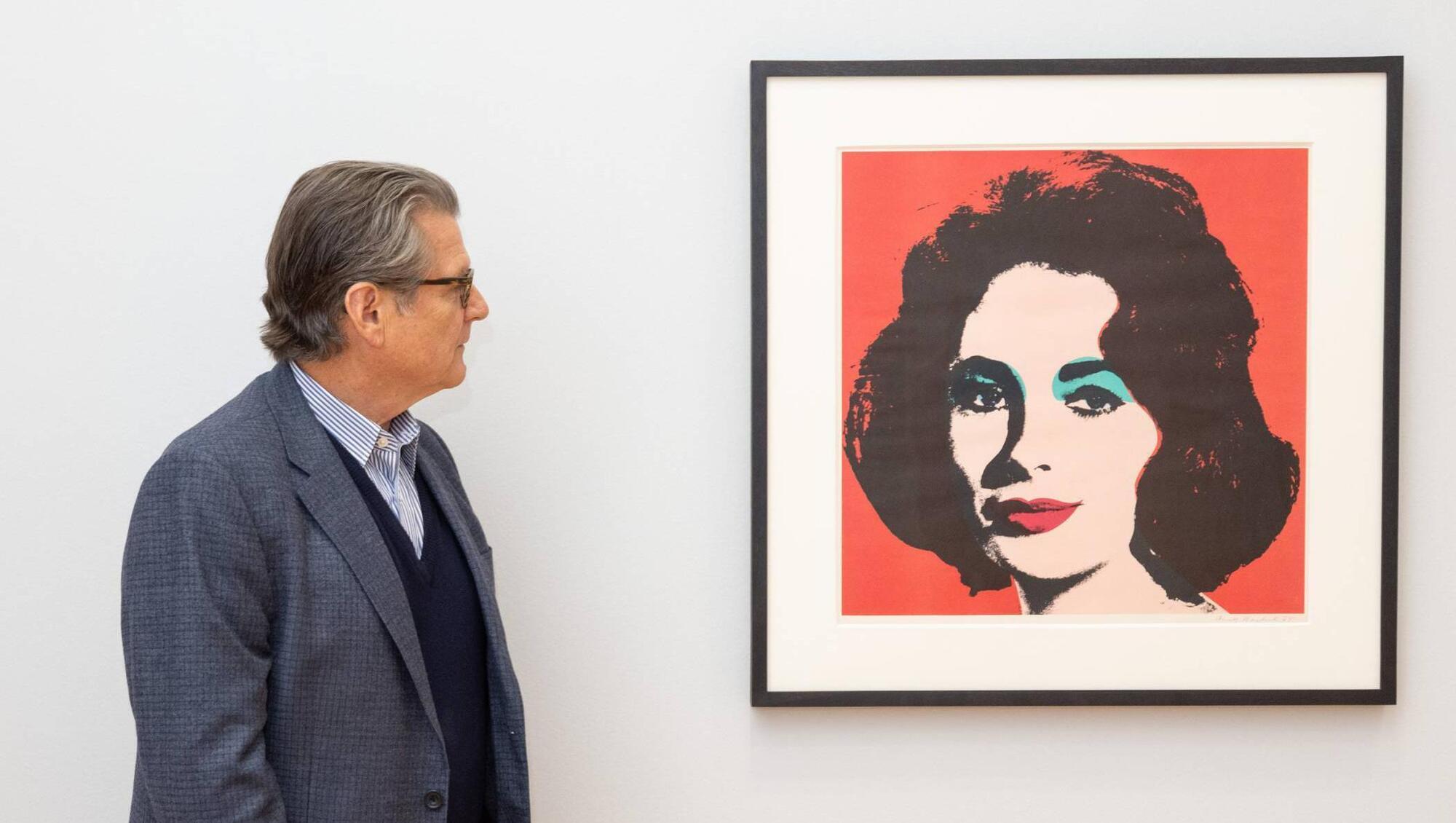
Vincent Fremont with one of the pieces in Andy Warhol Three Times Out, an exhibition at the Hugh Lane Gallery, Dublin. Picture: Naoise Culhane
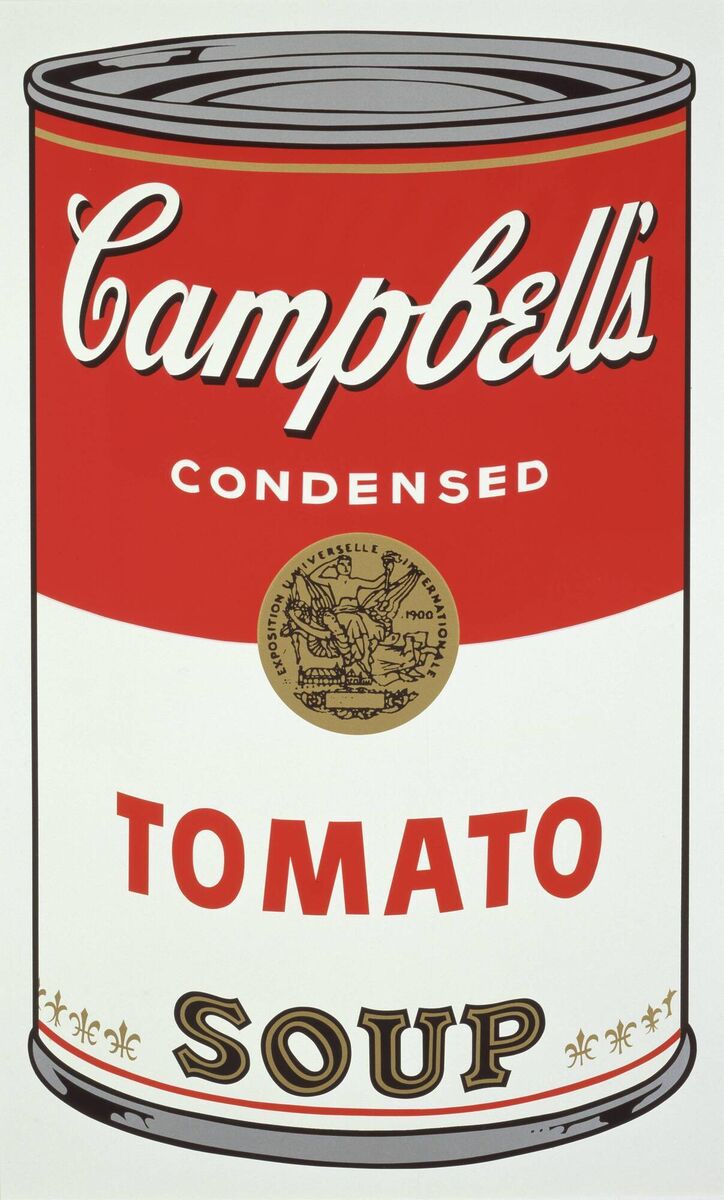
Andy Warhol was one of the most recognisable artists of the 20th century. A pale-faced enigma in designer glasses and an extraordinary succession of wigs, he first found success in New York in the early 1960s with his Pop Art paintings of the humblest of subjects; a collection of Campbell’s soup cans, in all 32 flavours.
Warhol’s subject matter soon extended to famous figures such as Marilyn Monroe and Elvis Presley, whose newspaper and publicity photographs he reproduced using screen printing, a technique associated with commercial art, and a lurid palette of colours.
By the time of his death in 1987, his work was dismissed as superficial and meaningless by many in the art world, largely as a consequence of the society portraits he produced to commission for figures as diverse as the Shah of Iran, Diana Ross and Jackie Kennedy. Since then, however, both his reputation and the value of his work have soared; in 2022, his painting Shot Sage Blue Marilyn sold for $195 million at auction at Christie’s New York.
The new exhibition Andy Warhol Three Times Out, at the Hugh Lane Gallery, gives a broader picture of the artist’s life and career than is usually allowed by his detractors. Curated by gallery director Barbara Dawson and head of exhibitions Michael Dempsey, it features 250 works on loan from the Andy Warhol Museum in Pittsburgh, Pennsylvania and other museums and collections in the US, Canada and Europe.
The exhibition has been five years in the making, and includes contributions from figures close to the artist, such as Vincent Fremont, who managed his studio and helped establish the Andy Warhol Foundation to manage his estate after his passing.
Fremont first met Warhol in August 1969, when, aged eighteen, he and two friends from high school arrived in New York from San Diego, California. They booked into the Chelsea Hotel, and called to Warhol’s Factory studio at 33 Union Square West the next day.
“Andy got his tape recorder out and started interviewing me,” says Fremont. “My friends left, but I spent a couple of hours with him. That's how it started, and little did I know that I'd be working with him the rest of his life.”
Warhol served as a mentor to many, including Lou Reed. He produced the first album Reed wrote and performed on, The Velvet Underground & Nico, and designed its iconic ‘banana’ cover in 1967. “I didn't meet Lou Reed until 71/72,” says Fremont. “He was close to Andy for a long time, he would come up and visit the Factory quite often. But then he pulled away, and that was a big regret of his later. It was something he wrote about on the album, Songs for Drella.”
Fremont met many of the most celebrated musicians, actors, artists and authors of the day at the Factory. Among them was David Bowie, who had already written a song called Andy Warhol when he visited in ’72. Bowie and Warhol were both plagued by shyness, and their first meeting was notoriously awkward. Within minutes, Bowie resorted to doing a mime routine, which left Warhol bewildered. The encounter was filmed by another Warhol protegée, Michael Netter, and can be viewed online.
“Michael shot the video on a Sony Portapack,” says Fremont, “and I was his assistant. Bowie was just breaking big in New York and he had the Greta Garbo hair and the fedora hat. But the mime? Oh my God, we all hated mime.”
Later, Warhol and his friends went to see Bowie’s concert at Carnegie Hall. “And Bowie performed his song 'Andy Warhol'. I was sitting next to Andy, and when I looked over, he was turning more and more red because it was so embarrassing for him.”
Warhol was a polymath. He made films, staged plays, published books, designed for fashion houses, record companies and the media, and founded Interview magazine, whose focus on celebrity saw it nicknamed the Crystal Ball of Pop. Collaborating with other artists was another facet of his eclecticism, a practice highlighted in the Hugh Lane exhibition.
Warhol was particularly taken with Jean-Michel Basquiat, the street artist whose reputation – like Warhol’s – has rocketed since his death of a heroin overdose in 1988. The two collaborated on more than 160 paintings.
“There was a chemistry between Andy and Jean-Michel that was absolutely magical,” says Fremont. “They were very, very close. The New York Press tried to disparage their relationship, saying Andy was a blood-sucking vampire. But they missed the whole point; it was the older artist mentoring the younger artist. The way they painted together was extraordinary. Andy was trying to get Jean-Michel off heroin, and then, when Andy died, Jean-Michel was crushed because, like Lou, he realised he had kind of pushed away from him.”
Warhol also collaborated with Peter Beard, the artist best known for his African wildlife photography. “Peter’s widow, Nejma Khanam, loaned in some great pieces for the Hugh Lane exhibition, including a whole group of drawings they did together.” Warhol is often associated with Studio 54, the legendary nightclub in Manhattan, where he was regularly photographed with the likes of Grace jones, Bianca Jagger and Liza Minelli. Away from the limelight, however, he was a far more complex character that his public persona might suggest.
“He never talked about it,” says Fremont, “but he volunteered at soup kitchens a lot in the early 80s. He would go to the kitchens and serve meals to the homeless. And he went to church every day. When he moved to 66th street, he’d walk over to the Church of St Vincent Ferrer. I'd wait outside to pick him up, and he’d come out in 15 or 20 minutes. That was an aspect of his life that really didn't come to light until after he died.”
Warhol was 58, and had just undergone gallbladder surgery, when he passed unexpectedly in his sleep at New York Hospital. Even in death, he projected glamour; he was buried in his hometown of Pittsburgh in his platinum wig, along with a copy of Interview magazine and a bottle of Beautiful Eau de Parfum by Estée Lauder.
- Andy Warhol Three Times Out runs at the Hugh Lane in Dublin until January 28, 2024. Further information: hughlane.ie