George Shaw: 'You don’t really learn much in art college'
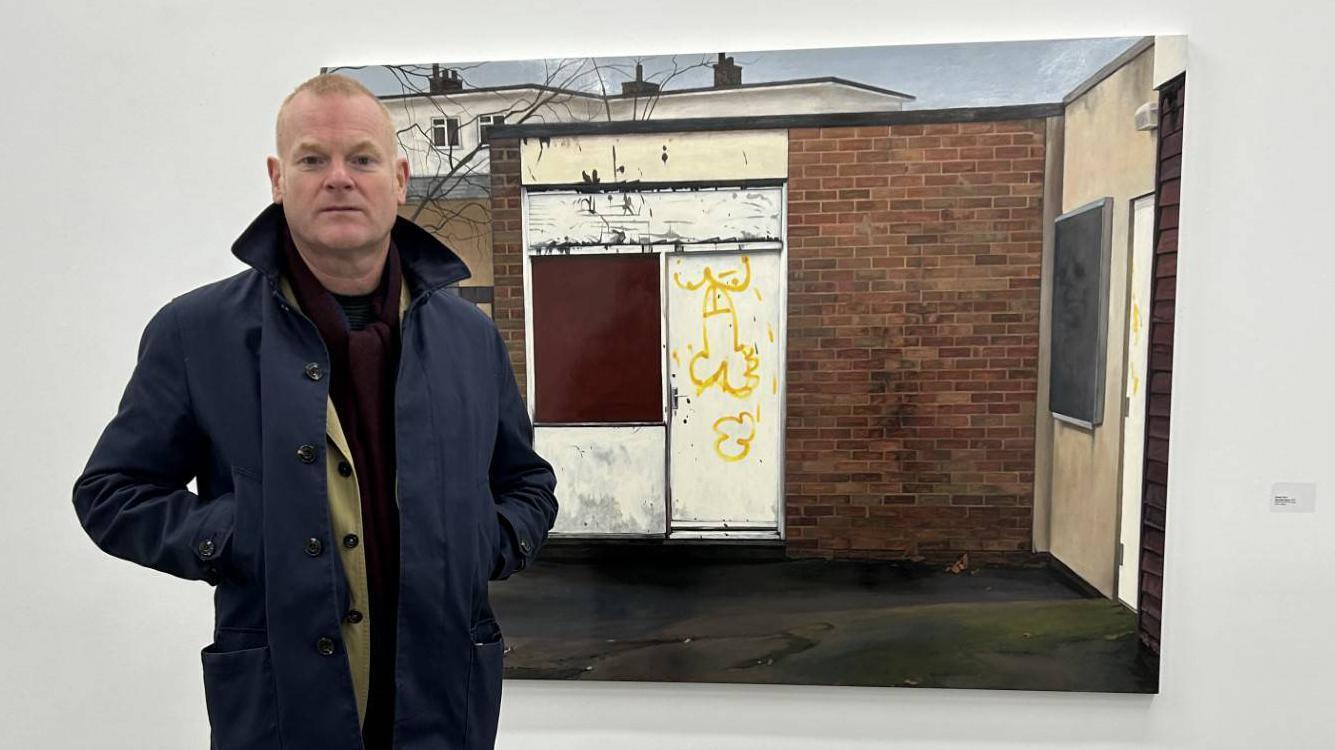
George Shaw currently has an exhibition in Limerick. (Image courtesy of Anthony Wilkinson Gallery, London)
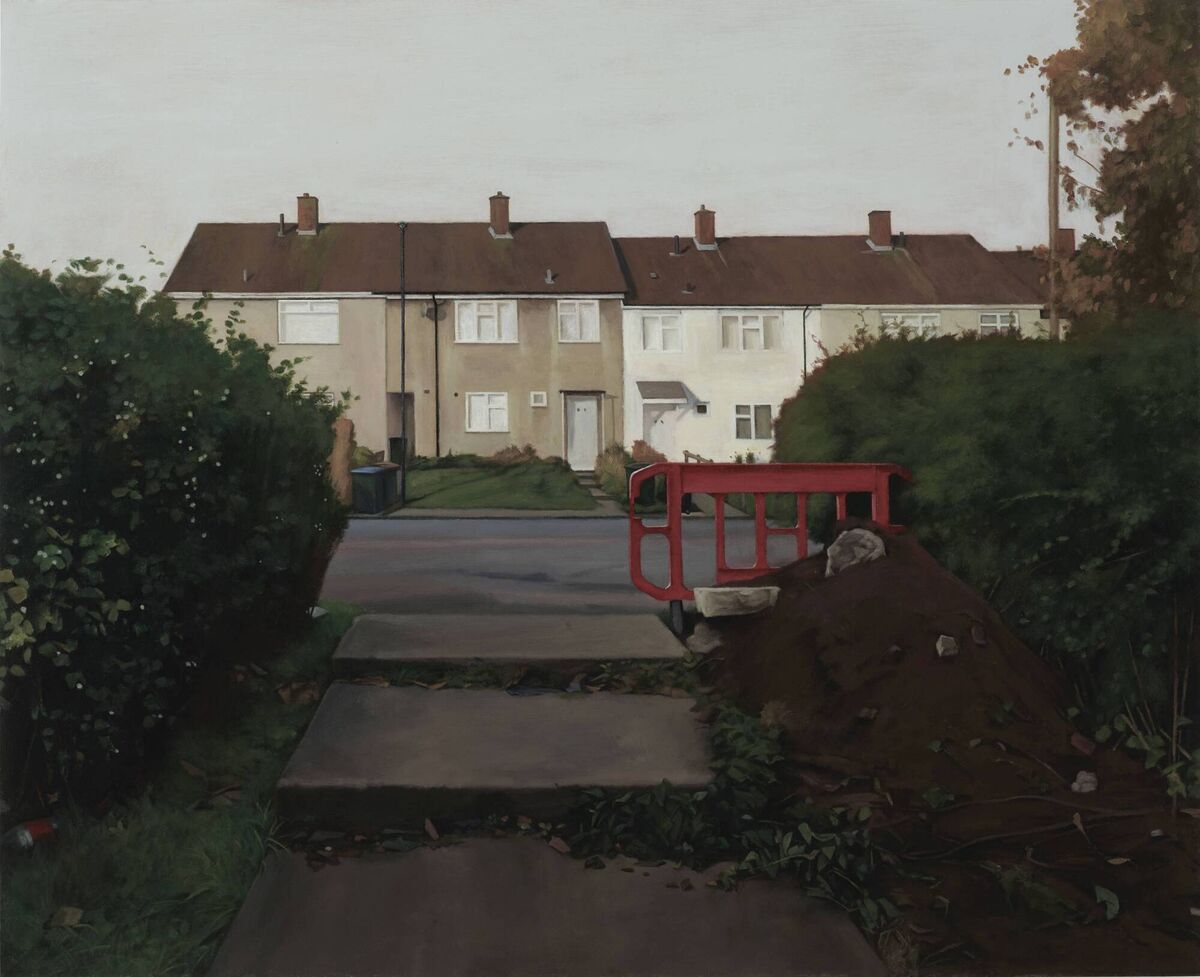
The British artist George Shaw is best-known for his eerie paintings of Tile Hill, the council estate in Coventry where he grew up in the 1970s. There are no people or creatures in his streetscapes, nor are there vehicles, and the sense of uncanniness is heightened by his preference for Humbrol enamel paints – more often used to colour Airfix models - over traditional oils or acrylics.
These days Shaw lives more than three hours from Coventry, in Ilfracombe, North Devon. But he has never really left Tile Hill, at least not in his imagination, and the place inevitably informs his exhibition of new work at Limerick City Gallery of Art, Nothing Strange or Startling.
“When my mother died three years ago, we cleared out the house and gave the keys back to the Council,” he says. “I’ve been gone a long time, but it still felt like a wrench.” ‘Nothing strange or startling’ was how Shaw’s mother would reply when asked if she had news, an expression she brought with her from Letterkenny, Co Donegal, when she emigrated to the UK in the 1950s. She liked it there and chose to stay, marrying an Englishman and settling in Coventry.
“Those old council estates are much maligned now,” says Shaw. “But in the 1960s, Tile Hill was the kind of place people queued up to live in. When my mum and dad got that house, it was the first time they had a toilet or a bathroom to themselves, and the first time they had a garden, at the front and back. The estate was not very urban, really. It was quite raw, you know. There weren't that many cars around, and there were woods and large playing fields and opportunities to play outside. It was quite idyllic, really.”
The family travelled to Letterkenny for a couple of weeks every summer, and he retains a great affection for Ireland. Nothing Strange or Startling is his second solo show here, after Neither My Arse Nor My Elbow at the Douglas Hyde in Dublin in 2013. “Every now and then, one of my neighbours in Ilfracombe will burn real peat, and it takes me right back to those summers in Donegal, in 1974 or ’75. Just that particular smell… it’s very evocative.”
Shaw left Tile Hill in the mid-’80s to study art at Sheffield Polytechnic. “When I first showed an interest in being an artist, and started going to galleries, the work I was looking at wasn't engaging with the present tense at all. It was more historical. It meant nothing to me. The music and television of the day just seemed more relevant, so even though I was good at drawing, I did film and video at college.”
On graduating in 1989, he became a primary school teacher, and made no art at all for ten years or so. “Then I began painting in the evenings, only because it was something I could do in the little bedsit I lived in. For a long time I thought I was kind of a lone wolf, but then I began to find other people, other painters, working the same way as me. I got a little studio and started painting more often. And then my friends encouraged me to do a post-grad, so I jacked in the teaching and went and did that.”
Shaw completed an MA in Painting at the Royal College of Art in London in 1998. “You don’t really learn much in art college,” he says. “That’s probably one of the reasons I started making paintings with Humbrol enamels. I was getting rid of all the technical aspects of painting I found laboursome. I had a medium of my own, and I could deal with the technical challenges myself.”
He was drawn to painting the landscapes of his childhood because “I wanted to mark the passage of time in my paintings,” he says. “Like, I was here, you know. I didn’t just come and go and leave no trace, there were these little markers on my road through life.”
Shaw began showing his paintings at a time when the Young Brit Artists – Damian Hirst, Tracey Emin, Sarah Lucas et al - were storming the art world with their conceptual pieces. Given how unfashionable painting had become, no one was more surprised than Shaw himself when he was nominated for the Turner Prize in 2011. The prize was eventually awarded to the installation artist, Martin Boyce, but he acknowledges that even being shortlisted was good for career.
“It’s one of those things that follows you around like a bad smell,” he says. “But yeah, it did bring quite a lot of exposure to the work and to my ideas, which I was quite grateful for.”
Shaw is grateful also to have come of age in the late ’70s and early ’80s, when “music tradition and youth culture were challenging a lot of the more right-wing aspects of society, the skinheads and Nazis and racists. There was a feeling then that we were maybe moving into better times. But lately, there seems to be a resurgence of those kind of beliefs, and I think it’s made many of my generation quite sad that they’ve come back with such force.”
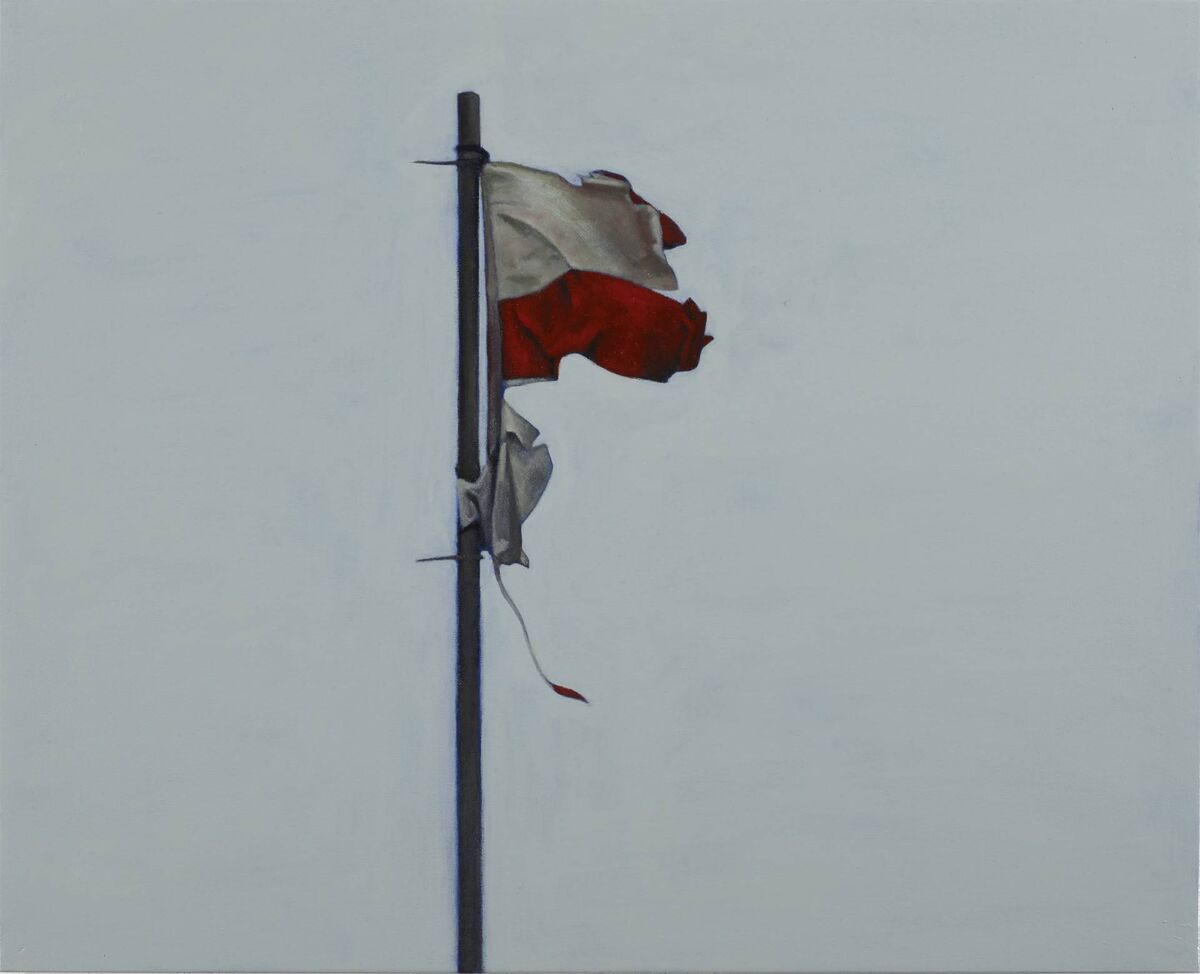
One painting in Shaw’s exhibition is called Half-English. It depicts a tattered flag, or what’s left of it, hanging from a pole, and is based on a photograph he took in the carpark of a pub. “Flag waving is something I’ve always found unsettling,” he says. “Union Jacks and St George's flags have become much more prevalent of late in Britain. But you’d think that somebody who went to the trouble of putting a flag mast in their carpark would make sure the flag wasn't falling apart. It seems to sum up the hypocrisy and pomposity of flying a flag, when it has all the glory of somebody hanging out their dirty washing.
“Calling the painting Half-English was sort of a joke of mine. I mean, there’s only half a flag in the picture, but it's also a reference to myself being not fully one thing or another. I may be half-English and half-Irish, but I'm never quite sure which half is which.”
- George Shaw: Nothing Strange or Startling runs at Limerick City Gallery of Art until January 28, 2024. Further information: gallery.limerick.ie