Culture That Made Me: Mark Little on Sinead O'Connor, Apocalypse Now, and Tomorrow's World
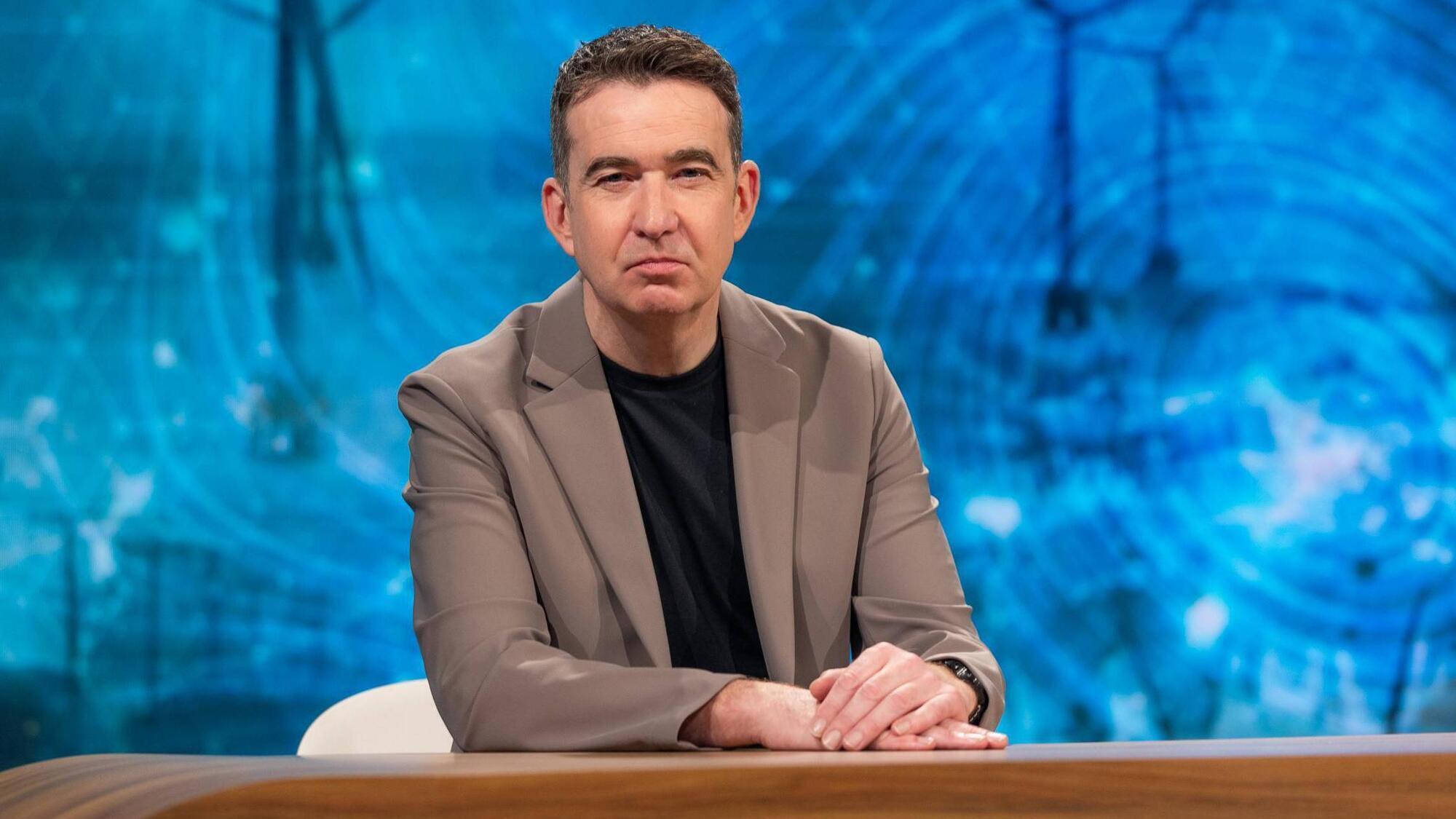
Mark Little presents Ireland 2050: Tomorrow Tonight, a speculative docu-drama, on RTÉ on Wednesday.
Mark Little, 55, grew up in Malahide, Co Dublin. In 1991, he joined RTÉ as a radio reporter. He became the station’s first Washington correspondent in 1995, and later spent several years as an anchor on Prime Time. As an entrepreneur, he launched both Storyful (acquired by News Corp) and Kinzen (acquired by Spotify). He has written books and presented documentaries. He co-presents Ireland 2050: Tomorrow Tonight, a speculative docu-drama on news events in Ireland 2050, Wednesday, Nov 15 on RTÉ One.
As a teenager, I was impressed by Hunter S Thompson’s Fear and Loathing on the Campaign Trail ’72. He was part of that new journalism wave with Tom Wolfe, Joan Didion. A lot of writing that came out of that era – the counterculture in America and politics, late ’60s, early ’70s – defined how I looked at culture and politics in my own country, at a time in Ireland in the ’80s dominated by Charlie Haughey and a very conservative mindset. I define myself today as a storyteller. What I loved about Hunter S. Thompson was his attention to detail that everybody else ignored. He has a great description of finally getting to sit with Richard Nixon in his limo, and all they talk about is American football.
I'm inspired by the war correspondent, Ernie Pyle. He wrote a beautiful essay about D-Day where he notices the four-leaf clover floating on the water, amongst the bodies of sailors and soldiers. He describes the four-leaf clover: “Hell, yeah, lucky.” His attention to the essential human detail of something that everyone else misses is the talent of a great storyteller. Too many political journalists and broadcasters want to give you the horse race and who's up and who's down. Real storytellers tell you how a person is feeling in a moment, even if that person happens to be the president of the United States or a soldier on Juno Beach on D-Day.
I grew up in north county Dublin, but I spent a lot of time with my grandmother. She lived in the Liberties. She listened religiously to Frankie Byrne, Ireland’s first agony aunt, and her programme, Dear Frankie. A lot of voices on the radio in the ’70s and ’80s were women's voices. So when I think about people who inspired me with their radicalism, it was Nuala O’Faolain, Nell McCafferty, Marian Finucane and even Frankie Byrne, who spoke to her listeners like she was sitting by the fire. They were the storytellers that were influential in my life.
When I was about 16, my girlfriend at the time said to me, “My cousin Sinéad’s gonna be huge.” Sinéad O'Connor had just recorded a song, ‘Take My Hand’, with In Tua Nua. She dominated a lot of the music I listened to: the dance myself and my wife danced to at our wedding was ‘Dancing Lessons’; her song ‘Black Boys on Mopeds’, which was about Thatcher’s Britain, was massive for me; ‘Daddy I’m Fine’ is the most angry and confident song I know. Sinéad O'Connor became a voice of my generation – definitely, in a very strange way.
Apocalypse Now is based on Joseph Conrad’s book Heart of Darkness. It was adapted by Francis Ford Coppola with Martin Sheen in the lead role. I re-watch it every few years. I see something different every time. Some of the dialogue is outstanding. Marlon Brando, sitting there, in a late role in his life. Obviously the famous scenes of the helicopters riding in, with ‘Ride of the Valkyries’ playing as they’re dropping napalm. It’s one of those movies people my age would know lines off by heart: “I love the smell of napalm in the morning … It smells like victory.” It’s probably my favourite movie.
The movie Quadrophenia was released in 1979. It was about the emptiness of life in the mid-60s, in Old Britain. It’s based on a kid who’s a mod, with a Vespa scooter. He’s part of a group, but he's alienated from society, tragically so. Sting plays one of the characters, Ace Face. Phil Daniels, the narrator in ‘Parklife’ by Blur, was the main character. The movie felt radical at the time. There was a famous line about mods, “elegant living in difficult circumstances” – working class kids dressing up, buying clothes and men dancing. Dublin’s mod movement in the 1980s kicked back against the heavy metal that dominated some nightclub scenes. To be honest, I wasn't a good mod. I loved the music, but didn't go with the parkas, Vespas and the Badgers.
The Buzzcocks have a song about “nostalgia for an age yet to come”. That sentiment has defined my life, as I look around the corner and I get excited by what I see. I got that from programmes like Tomorrow's World. James Burke was a presenter on Tomorrow's World. He made a TV programme called Connections in the late 70s about great scientific discoveries of the modern age. He did the best “timed piece to camera” in the history of television. It's about a space launch. It’s on YouTube. He does this credible description of how a rocket works and at the end the rocket shoots up. He greatly influenced me, and my love of the future.
I loved Dave Allen. He was the English person's idea of what an Irish person was, doing Paddywhackery and impressions of priests and drunk people, but actually what he did was make fun of English people because he was smart as a whip. He could outwit anybody. He would tell a joke that would start in one place and five minutes later would go in a completely different direction. He was one of the most cerebral comedy people I’ve ever seen.
Adam Curtis made a series of documentaries called The Power of Nightmares: The Rise of the Politics of Fear. It begins in Greeley, a town in Colorado where the Muslim Brotherhood's later leader, Sayyid Qutb, was sitting, watching men and women interact. A crooner was singing the song, Baby, It's Cold Outside, in the background. The documentary goes into that scene, and explores Islamic radicalism. Adam Curtis has a series of documentaries that changed the way people looked at television-making.
The Fog of War: Eleven Lessons from the Life of Robert S McNamara, by Errol Morris, includes interviews about the Vietnam War with US Secretary of Defense Robert McNamara. I remember seeing that in the cinema. It wasn't hectoring. It wasn't telling me what to think. He just put this person up on screen – McNamara sitting there, tying himself up – and I was captivated by it.