Book Review: The Kidnapping recalls the survival of Don Tidey after IRA abduction
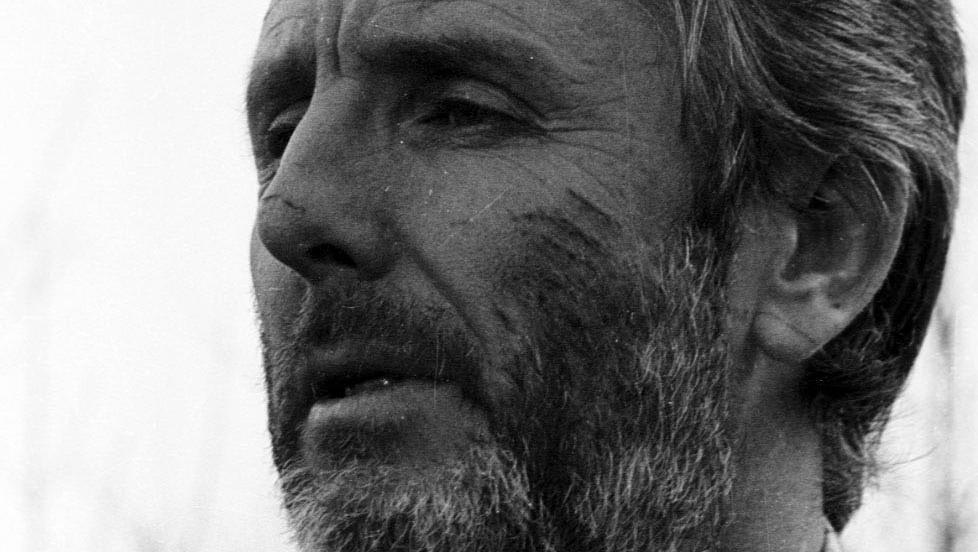
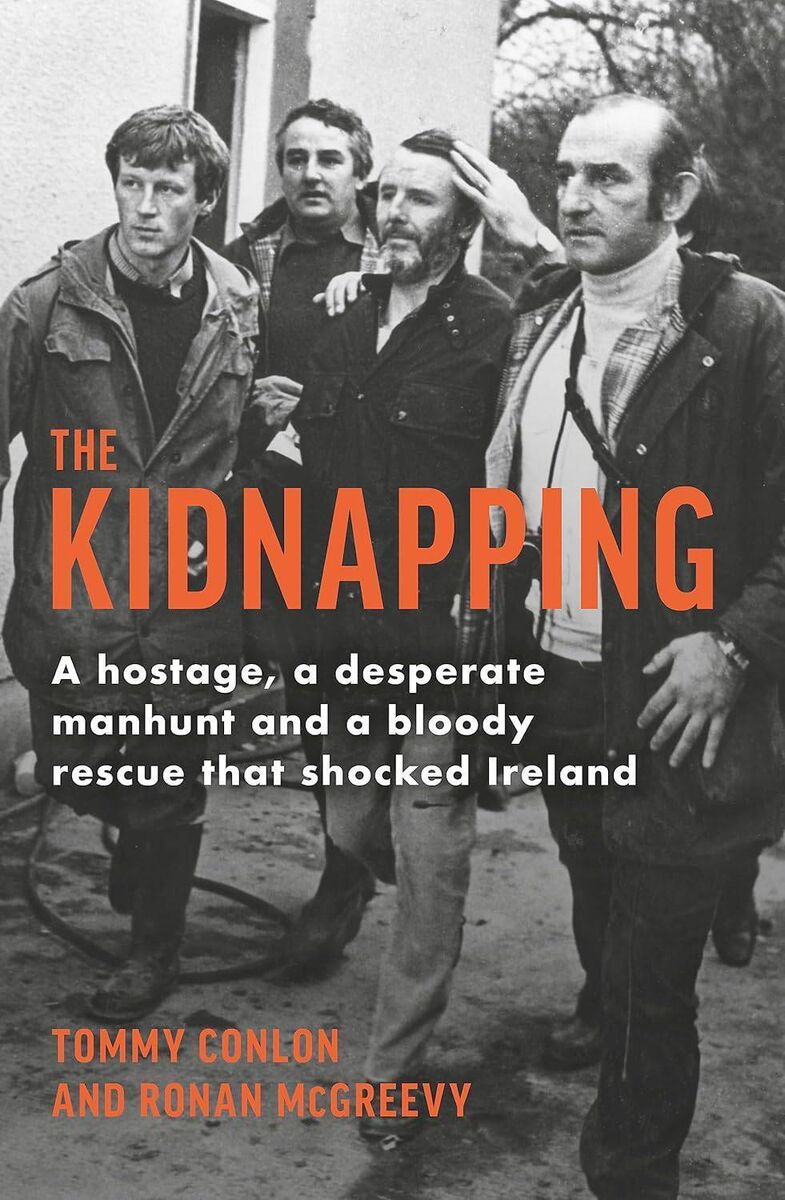
Businessman and kidnap victim Don Tidey after being rescued in December 1983; he had been held captive by a ruthless IRA gang for 23 days in rural woodland in Co Leitrim. Picture: Eamonn Farrell/RollingNews.ie
- The Kidnapping: A hostage, a desperate manhunt and a bloody rescue that shocked Ireland
- Tommy Conlon and Ronan McGreevy
- Sandycove, €16.99
The picture that adorns the cover of this fascinating book shows a remarkably composed middle-aged man, named Don Tidey, surrounded by three stony-faced male individuals. One is noticeably younger than the other two and one of the older men has what is clearly a submachine gun on his shoulder. The hand of a fourth unseen man is on Tidey’s head.
The photo from a cold, dank Friday in mid-December 1983 was taken outside the garda station in Ballyconnell, Co Cavan, just a short while after Tidey had been rescued from a makeshift hideaway in Derrada Wood near Ballinamore in Leitrim by a joint operation of the army and gardaí of the Irish state. It will stare out at a shocked nation from the following day’s .
What makes Tidey’s composure remarkable is the fact that he has been held captive by a ruthless IRA gang for 23 days in a rural woodland which had become a hell on earth for the 48-year-old British-born supermarket executive. The other men are detectives who had been searching for him for over three weeks after he had been abducted by an IRA gang posing as gardaí outside his south Dublin home.
The detail in this book is extraordinary and much of it comes from the interviews Conlon and McGreevy, both Leitrim natives, and distinguished journalists, have undertaken with many of the main players, most notably Tidey himself.
We learn that Tidey is confined to a cramped and soaking sleeping bag during his ordeal, is allowed to relieve himself just twice a day in the early morning and late at night, and survives on bread, sometimes with jam, the odd piece of fruit and tea. The weather is freezing, the terrain brutal and unforgiving, and his captors are callous killers dressed in khakis and balaclavas. They have killed before and will do so again during his dramatic rescue. There is no small talk between captors and captive, and he never sees any of them.
Tidey who had served in the British army is better suited to coping than most. He uses mental and some limited physical exercises to keep him in reasonable health although he warns his captors that he has an ear infection which is liable to get much worse and bring him agony. They manage to get him ear drops which give him some relief.
One of the themes of Conlon’s and McGreevy’s work is the extent to which the IRA gang had the support of the local community during Tidey’s captivity and their subsequent escape. They have people to help them get food, hot water, ear drops, and most crucial of all, shelter, in the form of safe houses when their lair is discovered.
They are not shy about detailing the amount of help the kidnappers had but are at pains to point out that the vast amount of locals in the area were law-abiding citizens who voted Fianna Fáil or Fine Gael and abhorred violence. Much of the discussion around the help the IRA gang received centres on local Sinn Féin councillor John Joe McGirl. It is a sordid tale of intimidation and betrayal of the state.
When one of the joint garda and army patrols, sweeping the vast wood, stumbles across the IRA kidnappers, one of the gang opens fire with an automatic submachine gun after an unarmed trainee garda, Gary Sheehan, asked them to identify themselves.
He shows no mercy to Sheehan or army Private Patrick Kelly who is standing next to the young trainee garda. Sheehan dies instantly. Kelly is mortally wounded and pleads with his colleagues not to leave him as he lies dying in a remote Leitrim wood. Others are wounded but survive and the gang escape in the confusion. Tidey is nearly shot by a soldier who finds him but is not sure whether he is the hostage they are seeking, or a member of the IRA gang.
What follows is a massive manhunt for the killers of two servants of the state by a group with a warped ideology that they are somehow the true heirs of the 1916 rebels and the first Dáil. Conlon and McGreevy interchangeably use the words criminals and terrorists to describe them, and they are right. Four days after the rescue, three members of the gang of five are traced to a house in Claremorris, Co Mayo, but manage to escape thanks to what the authors describe as an embarrassing farce.
One armed detective has the opportunity to shoot them as they run out of the house and despite explicit warnings in advance by the garda authorities that members of the gang should be shot if necessary, he does not do so. Perhaps unlike the amoral killers he was not willing to shoot unless shot at first.
Conlon’s and McGreevy’s account of the kidnap and rescue of Don Tidey is riveting. They have gone to great lengths to recreate the story of the courage and bravery of Tidey and those who sought to rescue him. But their book is much more than that. They place the event in the wider context of the IRA’s campaign of murder and mayhem during the troubles and weave Tidey’s story and that of the families of Sheehan and Kelly into a compelling narrative.
These interviews make for harrowing reading. Sheehan was just 23 when he was murdered and came from a family with a long tradition of garda service. Kelly was a 36-year-old father of four young children when he too was murdered. His wife and children suffered gravely in the years that followed and one can only read of their experiences with deep sorrow at what they endured when he was cruelly taken from their lives.
One of Private Kelly’s sons, David Kelly, tells the authors of his mental struggles as his mother tried to rebuild her life and that of her children in the aftermath of their father’s brutal murder. He finds a catharsis of sorts when he confronts Martin McGuinness at a shopping centre in Athlone during the 2011 presidential election accusing him of knowing who his father’s killers were.
McGuinness, the Sinn Féin candidate for the presidency, angrily denied it but his denials rang hollow, and his campaign was never to recover. The idea that he had left the IRA a decade before the killing as he said he had was rightly treated with contempt by Kelly and the electorate. Conlon and McGreevy likewise treat with contempt the idea espoused by IRA supporters that Sheehan and Kelly were victims of friendly fire.
No one has ever been convicted of the murders of Gary Sheehan and Patrick Kelly. A man named Brendan McFarlane, who had escaped from the Maze prison two months before Tidey’s kidnapping was charged with a number of offences related to the incident and after various delays stood trial in 2008. He was acquitted by the judge after various prosecution evidence was deemed inadmissible. Three others suspected of being involved in the kidnapping were also Maze escapees.
Conlon’s and McGreevy’s book is a triumph of narrative history about the Irish state and the troubles, intertwining personal narratives with wider themes of remembrance, loss, courage, and blame. Above all though it will stand as eloquent testimony to the lost lives of Gary Sheehan and Patrick Kelly.