In Pictures: The legacy of Cork International Film Festival
Marjorie Brennan looks through the archives and tells the stories behind the images of one of the oldest film festivals in the world
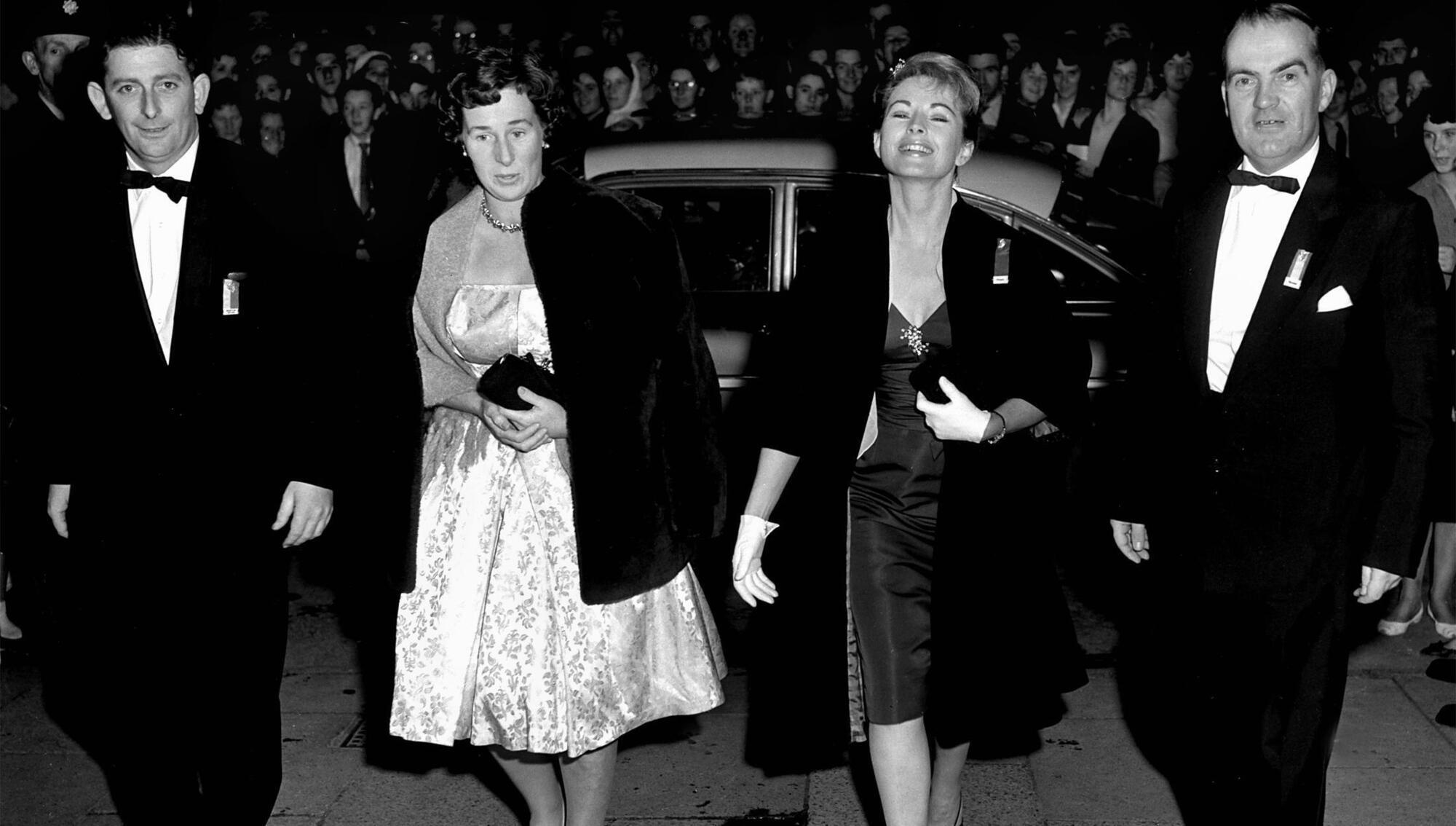
Actress Jean Seberg is accompanied by festival director Dermot Breen and his wife Vida and Donal Crosbie of the Examiner/Echo.


Actress Jean Seberg is accompanied by festival director Dermot Breen and his wife Vida and Donal Crosbie of the Examiner/Echo.

A Town like Cork

  • The opening night of the first Cork Film Festival in 1956. A large crowd gathers outside the Savoy Cinema on Patrick Street to welcome the stars, Virginia McKenna and Peter Finch, who were arriving for the Irish premiere of A Town Like Alice.

The Cork Film Festival is one of the oldest in the world, and had its first outing in 1956, when it was selected as one of only five international festival locations by the International Federation of Film Producers’ Association. 

It was originally part of An Tóstal Corcaí, the Festival of Cork — an initiative which included a host of cultural events.

With somewhat refreshing candour, the original Tóstal Corcaí programme of 1956 (digitally archived by the Department of Digital Humanities at UCC) stated:

“The question is no doubt being asked what a city like Cork stands to gain from a Film Festival — the citizens in general, that is, apart from the devotees who want to see everything new in the cinema. The answer probably depends largely on what we shall make of our Festival. If we can give it a special character that will clearly distinguish it from others and, if possible lift it onto a superior plane, then perhaps we shall be able to make it a permanent feature of the life of the city. Then also, perhaps, Tostal Corcaighe would become known abroad in the way that Edinburgh and Salzburg are.”

Those aims were certainly achieved by the festival, now in its 68th year, and its success was due in large part to the efforts of Dermot Breen. 

Born in Waterford and educated at the Presentation Brothers College on the Mardyke, he was The Palace cinema’s manager when he helped secure Cork’s official status as a festival venue.

In the picture featured, crowds can be seen outside the Savoy Cinema for the showing of A Town Like Alice

Securing the film for Cork was seen as a huge coup because the film, featuring prisoners of war in Malaya, had been withdrawn from Cannes in case it would be viewed as anti-Japanese.

VIP visit

Christy Ring and American actress Jean Seberg at the Cork Film Festival in 1959

  • Glen Rovers captain Christy Ring meets Jean Seberg during her visit to the Cork Film Festival in 1959.

Jean Seberg was already creating a stir ahead of her appearance at the Cork Film Festival in 1959, having just filmed her iconic performance in Jean Luc Godard’s French New Wave classic À bout de souffle (Breathless) which was released the year after. 

The French actress attended the festival to promote The Mouse That Roared, in which she starred with English actor and comedian Peter Sellers. 

Also showing at the festival that year were some films of national and local interest — the first public screening of Mise Éire, featuring the landmark score by Cork composer Seán Ó Riada and a screening of Louis Marcus’ debut documentary on his fellow Corkman, sculptor Seamus Murphy.

On her trip, Seberg brought a touch of je ne sais quoi to the English Market where she mingled with locals. 

It was reported at the time that she later missed a press conference because the wig she was wearing to cover the short haircut she had sported for Breathless fell into a bath at her hotel. 

Seberg was later pictured wearing a headscarf, as in this famous photograph of the actress with the legendary Cork hurler Christy Ring, taken at a fixture between his club, Glen Rovers, who were Cork senior hurling champions, and the local college side UCC. 

A report in the then- Cork Examiner described the encounter. “Miss Jean Seberg endeared herself to the GAA men by throwing in the ball at the Glen Rovers-UCC hurling match and talking to Christy Ring, instead of keeping her Sunday afternoon appointment at the Press Club, left Cork, but not before kissing the Blarney Stone.”

The photograph is an endearing juxtaposition of cultures, with Ring clad in his Glen Rovers battle garb, glancing away from the photographer as if he can’t wait to get on the pitch, while Seberg looks effortlessly chic in a simple shift dress decorated with a brooch, her iconic pixie cut
covered by a headscarf. 

The image crystallises Ring’s fame, echoing as it does the equally famous photograph of him chatting to Robert Kennedy in Gaelic Park from the following decade.

Controversy

Protest at Cork Opera House against the showing of Martin Scorsese's film The Last Temptation of Christ.

  • Protest at Cork Opera House against the showing of Martin Scorsese’s film (The Last Temptation of Christ) October 3, 1988


There were many occasions when the festival wrestled with censorship. 

In 1969, Bishop Con Lucey objected to the opening gala film of I Can’t, I Can’t with contraception as one its themes. The film went ahead, which according to UCC academic Dr Finola Doyle-O’Neill, showed the authority of the Church was waning, that the festival was willing to defy its pronouncements. 

The clergy voiced its displeasure again in 1988, when it was announced the film festival would show The Last Temptation of Christ, directed by Martin Scorsese. The film stirred up huge controversy, particularly over scenes in which Willem Dafoe as Jesus imagines having sex with Mary Magdalene, played by Barbara Hershey. The Bishop of Cork, Michael Murphy, had asked members of his congregation not to attend.

A small group of people demonstrated outside the Opera House, where the film was being screened as part of the festival, and there was a counter-protest of students who dressed in biblical costumes.

In Michael Moynihan’s book Crisis and Comeback: Cork in the Eighties, former film festival director Mick Hannigan recalled how he was not particularly enamoured of the counter-protestors, referring to the incident captured in the accompanying picture.

“Satire should always punch upwards, but on the night they were punching downwards. The people protesting were sincere Catholics, and they were having a vigil: they weren’t objecting. They were an easy target for the students, who dressed up in mock-Palestinian clothing, one of them was dressed as the Virgin Mary. One of their placards read ‘Jesus was nailed, not screwed’, and there was a shot of one of the religious people trying to tear that down. It was a bit unfair — here you had students having a laugh at sincere people — but the image was very good, because within that image you have conflict,” said Hannigan.

Ultimately, the film was a flop, something which was perhaps anticipated by one of the audience members featured on the RTÉ news the next day, whose identity provides a particularly delicious twist to the story.

Said Hannigan: “We showed it at midnight and they had cameras there when the audience started coming out at around 3am. Tom McSweeney was their reporter and he spotted an old lady coming down the stairs from the showing and he went straight over: “What did you think of the film?”

“It was okay,” she said, “Quite slow and drawn-out. I don’t know what all the fuss was about.”

"That’s what went out on the six o’clock news the following evening, and the nine o’clock news. What Tom didn’t realise at the time was that, that was my mother, who was then in her 70s.”

More in this section

Scene & Heard

Newsletter

From music and film to books and visual art, explore the best of culture in Munster and beyond. Selected by our Arts Editor and delivered weekly.

Cookie Policy Privacy Policy Brand Safety FAQ Help Contact Us Terms and Conditions

© Examiner Echo Group Limited