Ireland in 50 Albums, No 20: A Woman's Heart (1992) compilation
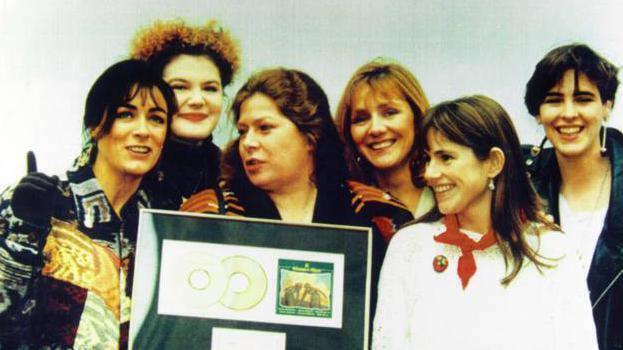
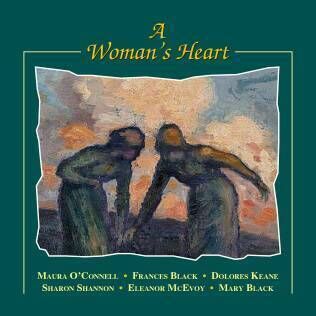
A Woman's Heart: Mary Black, Maura O'Connell, Dolores Keane, Frances Black, Sharon Shannon and Eleanor McEvoy.
In 1992, Eleanor McEvoy was a jobbing musician. The scene in Dublin for session musicians was vibrant. She was picking up work at Windmill Lane Studios, appearing on tracks with artists like Liam Clancy, U2 and Sinéad O’Connor. She was moonlighting with Mary Black’s band as well as doing her own gigs.
One night, Mary Black and her husband, Joe O’Reilly, head of Dara Records, came along to one of her gigs at Mother Redcaps, a music venue in Dublin’s Liberties. McEvoy dropped in a song in her set, A Woman’s Heart, reluctantly because she already had other slow tracks as part of her setlist, but the song struck a chord with Black, who had also heard her singing it late one night at a party. The following morning, O’Reilly phoned McEvoy.
“Joe said, ‘Eleanor, I'm thinking of putting together an album that would just be women.’ Back then, that was so unusual,” says McEvoy. “Nobody was doing stuff like that. ‘That song of yours,’ he said, ‘would be a great title track. How would you feel about dueting with Mary on it because you’ve a following here in Dublin, but nobody knows you outside Dublin and the other artists are all well-established?’ I was delighted to record with Mary because I knew it would get airplay and I worked well with her.”
The album was relatively easy to stitch together. It consisted of 12 tracks from six female artists – McEvoy; Black, and her sister Frances; Dolores Keane; Maura O’Connell; and Sharon Shannon. Only McEvoy’s two songs had to be recorded, as the other tracks were taken from previous records on Dara Records’ back catalogue. To cut costs, McEvoy’s songs were recorded over two nights, as it was cheaper getting studio time from midnight onwards. Mary Black came in at 2am to record her duet on the title track.
The album came out in July 1992, although it’s said it escaped rather than being released, going quietly onto the airwaves. The title track caught on. Something about its melody and its lyrics about the pain of bittersweet romance, “as only a woman’s heart can know”, resonated with listeners around Ireland.
“The song sprung from my state of mind, my hormones. I was in my early twenties, living in a bedsit in Rathmines, with all the normal ups and downs of life,” explains McEvoy, “but when it comes to the writing of the song – and the success the album – you have to realise the context in Ireland at that time.
“When I was in college – I explain to my daughter now – contraceptives were illegal. They weren't just difficult to come by or frowned upon. I remember the students’ union in Trinity selling condoms and people being arrested. It was that dire. Women were in a different place in society. I was never one of these ‘women are better than men’ folk. I love men far too much for that, but I felt women sometimes had a different type of lowness or type of feeling down. That was where it came from.
“It certainly isn't a song you'd think would be a hit. I wrote it for me because it’s a title that's gonna alienate 50 percent of the population. It has no rhymes. I can count on one hand his songs that have no rhymes in them.”
The timing had something to do with its resonance. Divorce and abortion were all still illegal in Ireland in 1992, but the Catholic Church’s grip on society was loosening. The Bishop Eamonn Casey scandal – in which he was outed for fathering a child and using church funds for maintenance – erupted in February that year.
“Ireland was changing,” says Maura O’Connell. “It had changed a lot from even from when I left to live in Nashville in the mid-to late-1980s. Free university education came in. It was a moment that caught the imagination – the strength of women, the power that women knew they had, but it had never quite been expressed in that way before. It struck a seam that had never been mined. It captured the zeitgeist.”
McEvoy moved to Los Angeles after signing with Geffen Records the same week A Woman’s Heart came out. “My mother was calling me saying, ‘That song of yours is getting played a lot on the radio.’ I was thinking, Yeah, yeah, that’s only my mother exaggerating. She probably heard it twice. When I flew home for something, though, and I got into the airport, it was playing. I got into a taxi, and it was playing in the taxi. Then I got into the bedsit and I put on the kettle and flicked on the radio, and it was on the radio, and I thought, OK, that's a bit weird.”
Even some women working as prostitutes stopped McEvoy in the street and patted her on the back. “Your song meant an awful lot to us, love, especially in our game.”
There were, however, snarky, chauvinistic comments from some quarters.
“When we went on the road,” says McEvoy, “people said, ‘Oh, I bet they’re all fighting like cats and dogs. That tour will be so bitchy. Actually, it was the opposite. It was pretty supportive. I would have gigged nearly always with men. There was much more trouble on those tours. Some of the reviews were like, ‘Oh God, whiny women’. There was one review by a well-known journalist who has made an about-turn on it since, which seen through 2023 eyes can be seen as so misogynistic.”
O’Connell had been nominated for a Grammy Award a couple of years before A Woman’s Heart, but she never experienced a reaction like the public’s outpouring at their gigs around Ireland, playing concert halls as well as dancehalls and hotel ballrooms in “every town in Ireland,” swears O’Connell.
She adds: “We had great fun. We played this dice game called Yahtzee that Dolores Keane came up with in the dressing room, until someone would shout at you, ‘You’ve to go out and sing now!’ ‘Where am I in the game?’ The audiences were amazing. It’s the only time in my life that I had security. There were so many people, security would have to bring you in through the crowd. Of all the bits and pieces of success I’ve had, it was the loudest.”
A Woman’s Heart, which Dara Records only expected to sell 3,000 copies if lucky, went on to become the biggest-selling album in Irish chart history. The success of the record had a huge, positive affect on the careers of Eleanor McEvoy, Sharon Shannon and Frances Black in particular, bringing them their music to wider audiences.
“I remember Whitney Houston’s song 'I Will Always Love You' was the Number 1 single in practically every country in Europe, Asia and America,” says McEvoy. “A record executive got onto his colleague in Ireland and said, ‘What the hell is with this unknown crowd at Number 1 in Ireland? 'I Will Always Love You' is Number 1 everywhere else in the world. What’s with these women keeping it off the #1 spot in Ireland?”
- Eleanor McEvoy’s single South Anne Street – the Christmas Mix will be released 21 November. See: www.eleanormcevoy.com.