Book Interview: Helene Hanff's cousin Jean introduces the reissued Letter from New York
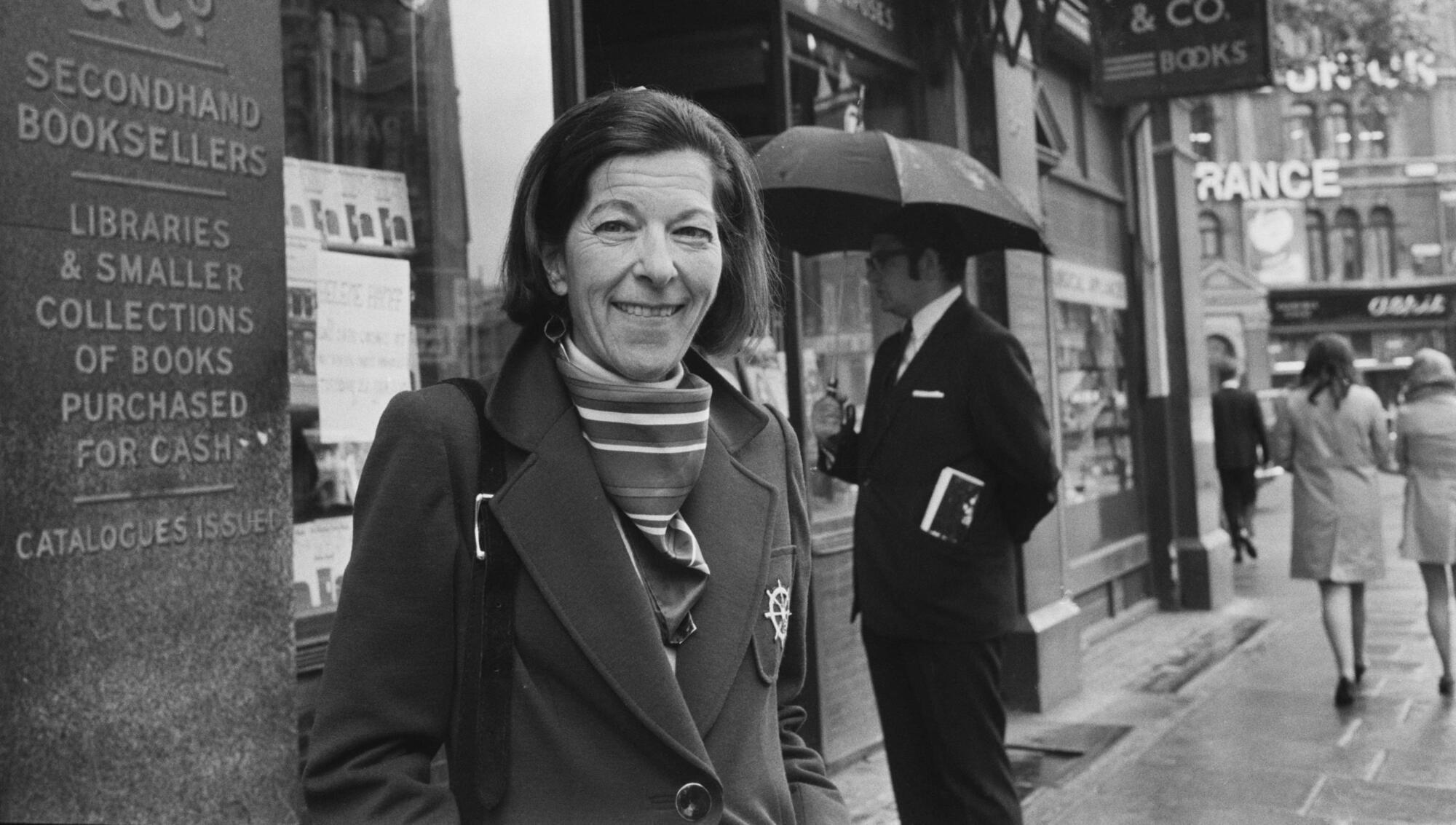
American writer Helene Hanff (1916 - 1997) outside second-hand booksellers Marks and Co at 84 Charing Cross Road in London, UK, June 1971. Hanff wrote the book '84, Charing Cross Road' in 1970, about her correspondence with Frank Doel, chief buyer for the shop. (Photo by Evening Standard/Hulton Archive/Getty Images)
- Letter from New York
- Helene Hanff; with an introduction by Jean Hanff Korelitz
- Manderley Press
When she was younger, the writer Jean Hanff Korelitz “loathed” her middle name, which had been her maternal grandmother’s maiden name, and longed to have a ‘normal’ middle name like Susan, Amy or Sarah. But the name took on a new complexion when as a teenager, she discovered she shared it with a famous writer, who also happened to be her cousin. That writer was Helene Hanff, a New Yorker whose book, , recounting her long correspondence with a London bookseller, became a huge hit, and was later made into a film.
As a budding writer herself, Hanff was fascinated with her mysterious cousin and in 1977, when she was 16 years old, she paid the first of many visits to Hanff’s apartment. It was the start of an illuminating and rewarding friendship for Korelitz, who went on to be a bestselling author herself, writing books including , , and , which was adapted for the HBO series , starring Nicole Kidman and Hugh Grant.
Between 1978 and 1985, Helene Hanff recorded a series of essays about her beloved native city for BBC Radio 4’s . In these characteristically whimsical dispatches, she gave listeners a glimpse of her daily life in Manhattan, from strolls through Central Park to the glamorous social life of her best friend. The scripts were published as a collection, , in the 1990s and it has now been re-issued by Manderley Press, with an introduction by Korelitz, and illustrations by New Yorker cartoonist Bruce Eric Kaplan.
I ask Korelitz, what her cousin, who was memorably portrayed by Anne Bancroft in the film of , was like.
“She is a very unusual writer in that it is really all there on the page. She was quirky, she was sometimes cantankerous, she was sardonic. She was great. I thought she was a big secret my family had kept from me,” says Korelitz, who is based in New York, where she lives with her husband, the Irish poet Paul Muldoon.
Hanff became a publishing sensation with , which chronicled two decades of correspondence with Frank Doel, who worked at the eponymously located London bookshop, Marks & Co. From initially seeking out English literature books, Hanff became intimately acquainted with the lives of the shop's staff, even sending them food parcels during the post-war shortages. Sadly, she never got to meet her penpal — Doel died in December 1968 from peritonitis. She did get to visit the shop, which was then closed, in 1971, a trip she recounted in her 1973 book .
While , propelled her to ‘overnight’ success, Hanff had been writing for many years, with an unsuccessful spell writing for theatre before she went on to work on the earliest US television dramas — she told Korelitz that working on the mysteries in the 1950s taught her more than Aristotle and Stanislavski had ever been able to teach her about creating tension and suspense.
“Her only goal from childhood was to be a produced playwright and that never happened, then to become internationally known for some letters she wrote to a bookstore in another country, nobody could have seen that coming,” says Korelitz. “That was something that she saw the humour in. She loved having fans, she loved having readers, she loved having people stop by the apartment. I was often there and the phone would ring and it would be the doorman downstairs saying ‘you’ve got some friends here’ or ‘so-and-so is visiting from London and just wants to come up and say hello', it happened all the time. She was very appreciative of her late-in-life emergence as a writer. She wrote for decades without any recognition at all and then suddenly to have this late-in-life renaissance was something she did not take for granted.”
What does Korelitz think it was about that charmed readers and listeners alike and led to it becoming a classic?
“It was Helene’s chutzpah and her willingness to say something. It doesn’t strike me as a time and place where people were that free with their opinions. Yet here comes Helene blasting through a brash American exuberance into a world where people kept their opinions to themselves and were more polite perhaps. Those first letters in were just so out there in terms of what she actually said — ‘What is this awful book, how could you send me this piece of trash?’. I think it would have horrified them but also charmed them. They loved hearing this stranger in another country speak her mind. They fell for her because she was irresistible.”
The book was adapted into a stage play and later a film, produced by Mel Brooks, who cast his wife Anne Bancroft as Helene, with Anthony Hopkins playing Frank Doel. It was frequently shown on television, and drew many new readers to the book.
“Helene loved the movie, although she complained about one scene where Anne Bancroft took a book to the park and read it wearing gloves. She said ‘I never would have done that, who wears gloves to read a book?’. She got an enormous kick out of that whole story that Mel Brooks bought the rights for Anne Bancroft as a gift, because she loved the book so much.”
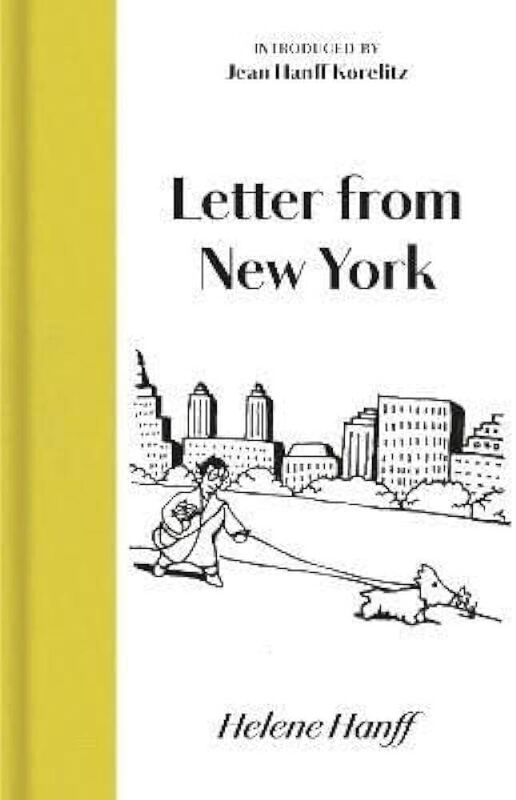
Korelitz hopes that the reissue of will lead to a rediscovery of Hanff’s other work, including , her 1961 memoir, which is a particular favourite. New York has long been a source of fascination for people all over the world and Korelitz says Hanff had a gift for encapsulating its essence.
“Her work transports us to a time before easy communication where letters were the way you made a date, greeted somebody or expressed an opinion. It really does bring back the New York of my childhood. That is what the streets looked like, that is what they smelled like. She referred to her building as its own small town — she knew everybody in that building. She was in and out of their homes and she used their refrigerators when she had a big party.”
Hanff was an inveterate letter-writer and took great care over her correspondence, incurring huge expense in postage costs which she could ill afford. Korelitz laments the decline of letter writing, especially as a window on the past.
“The big losers are historians and anybody who cares about the lives of any thinker at all. It is not the same reading an email as it is reading letters … I just read a biography of Eugene O’Neill that was full of his letters. We are all the losers by the disappearance of letters.”
The middle name of which she was once so ashamed is now a source of pride for Korelitz. It helped lead to her first national publication, a review of in magazine, in which she talked about meeting her cousin and bringing her middle name “out of the closet”. As she writes in the introduction to : “That name would appear, for the first time, in the magazine as Jean Hanff Korelitz, just as it has for every poem, article, essay, and novel I’ve published since then.”