Karl Whitney: What shoes should a writer choose?
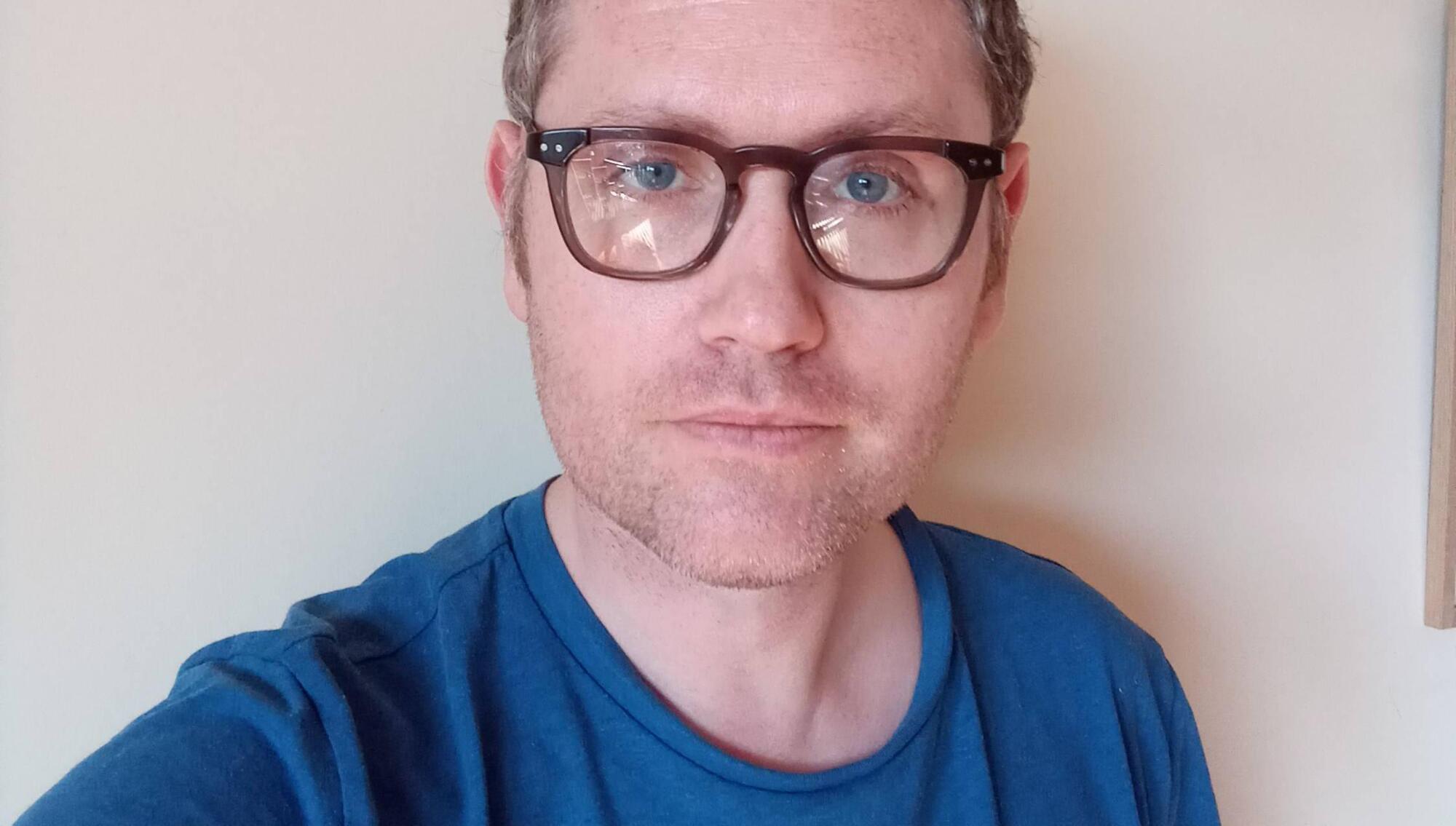
Karl Whitney, author and writer
Any writing career, like any life, has its ups and downs. Over time, I’ve learned to anticipate the low points — the times when little to no money is coming in and you have to tough it out until things get better. One of the things I tend to do, now, when I get the distinct sensation that I’m on the downslope, is to invest in shoes.
There’s nothing worse, when you find yourself with very little money, than finding out that the shoes you bought on sale a few months before are falling apart, or leaking, or squeaking, or that key parts of their structure are made from cardboard and cheap glue. They looked like a bargain then, but now they seem like a curse. I still have a box of shoes rendered imperfect over time that I still delude myself might be salvageable if I find the right cobbler. I live in hope.
This time around, though, I’ve gone looking for shoes that will last a bit longer — and a few pairs at that. Recently I bought a pair of boots from a manufacturer that can, I’m told, be easily repaired in the future. I’ve begun to refer to them as ‘my last pair of shoes’. In theory they could last me a lifetime, but that could well be wishful thinking.
The serious point, beyond the idea of making our clothing habits less wasteful, is about the ebb and flow of life as a writer. Often I’ve been at my poorest when I’ve been working away on something substantial such as a book. You put a lot of your own time and money into this period, and, once it’s over and the book is out there, the financial rewards, if we’re being truly honest about it, aren’t enormous. In fact, it’s typically income that’s well below the poverty line. You supplement it with other work — but that’s time away from writing.
I often think about this reality that faces most writers (and artists more generally) when I read headlines about those who’ve won big awards. Most awards, while attention-grabbing, aren’t huge in real terms. A writer who’s spent four years writing a book might be rewarded with a shortlisting for a high-profile award if they’re lucky, and, if they win it, they win … what? Often much less than what might typically be considered a reasonable year’s salary by others.
So ‘writer wins award’, while significant and very welcome for the writer in question, is more broadly comparable in news terms to ‘woman wins the Lotto’ or ‘man attacked by seagull’. A colourful story that makes it think it might possibly happen to them, even though statistically it’s unlikely.
I think that there are a lot of people who just can’t exist without writing. It’s almost a way of being in the world: to be able to come to terms with life and experience through the written word. I grudgingly admit that I’m probably one of these people. I spend a vast amount of time avoiding sitting down to write, and eventually this evasion becomes so unbearable that I must put words on the page. I’m not sure if it’s about personal expression or it’s about the satisfaction of simply making something out of nothing. Sometimes, my thoughts boil over and I need to give them form, and that’s when writing becomes essential; at other times it’s simply about seeing what emerges through engaging with the writing process. You don’t know what will happen until you do it.
Without money in the bank and decent shoes on your feet you don’t write as well. When my life is consumed by worry about the basics in life I simply don’t have the capacity to work in the way that I ideally might. Getting to the point where you can work freely means compromise – you work in a variety of ways to gather money, you apply for funding, you invest hope in a future that might never materialise. Then, if you’re lucky or you stick with it long enough, or both, you end up in a position where you have a few months, or maybe even a year or more, to work away on something you want to do.
A lot of Irish writers emerged over the last decade or so, and I suppose in my own way I was one of them. Much has been written about how literary journals and Arts Council funding have helped to develop this talent. From my perspective, I certainly benefited. I had been dabbling in journalism for a long time while doing other things, but I wanted to write in greater detail and that meant heading towards something longer. Journals like , run by the writer Greg Baxter, the , edited by Brendan Barrington, and , edited by Susan Tomaselli, played an important part in my progress.
As a writer your work is, in general, carried out against the background of uncertainty: will this idea you’ve had eventually come to fruition, and, if it does, will anyone be interested? Sometimes this uncertainty is personal or artistic; often it’s financial; at other times, one’s uncertainty echoes wider issues. When I look back a decade or so, I can see how my choices were shaped by the economic crises Ireland was still experiencing in the early part of the 2010s. Jobs weren’t available; emigration was increasing. The way I saw it then, if I wanted to write I should attempt it seriously or else regret it. As everything seemed uncertain anyway, making a personal choice to pursue something uncertain felt logical.
There are downsides to living with so much uncertainty, though. At times, I’ve put so much pressure on my writing as a way of expressing myself, as a way of paying bills, that I’ve found myself thinking: if I don’t have a good day of writing then I’m in trouble. Confidence is important when writing but doubt is always lurking in the wings. When things go badly, and you put too much pressure on yourself, doubt can take over. Rebuilding confidence can be a difficult and slow process, and if you’re dependent on the income you earn as a writer then putting everything back together can be a frustrating process. Many writers quit altogether, or lose years of their career, in this way. Hope dissipates and can’t be recaptured.
Writing’s not all bad, of course. There are moments when you think that nothing can touch the sense of satisfaction you derive from those moments at the keyboard when everything flows perfectly and you produce something you didn’t think was possible. It happens infrequently, but those moments are enough to keep dragging you back to the blank screen or the empty page. Such instants are elusive but addictive.
There’s a concept called averaging that the UK’s revenue department applies mainly to market gardeners who might have a good year one year and a poor harvest the next. If they wish, they can add two years’ profit together and pay tax on the average. It’s applied to writers too. It acknowledges the good times and the bad times, and how one can arrive hot on the heels of the other.
So when I spend my days tracking down shoes that will last, I’m also thinking about the future, insuring myself against the bad times that might well be around the corner. How long will they last, these bad times? There’s no way of knowing. And the shoes? Hopefully long enough to see me through.