Theatre review: The Glass Menagerie fails to find new ways to speak to a modern audience
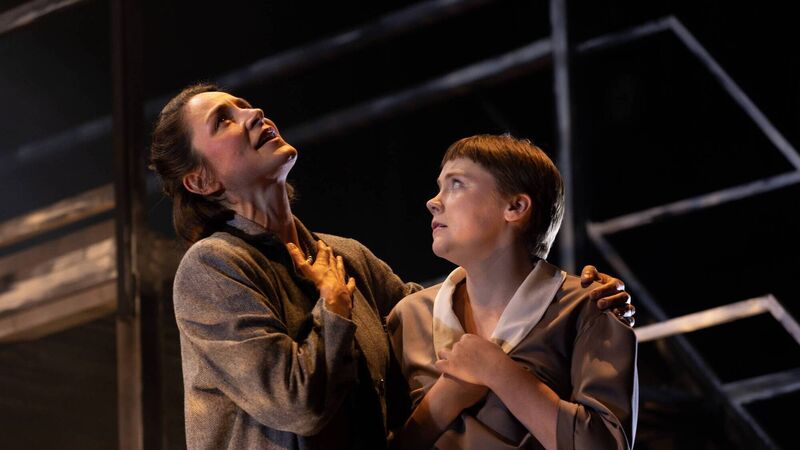
Natalie Radmall-Quirke as Amanda and Chloe O’Reilly as Laura in The Glass Menagerie. Picture: Darragh Kane
★★★☆☆
While A Streetcar Named Desire and Cat on a Hot Tin Roof arguably occupy a more prominent place in the public imagination, The Glass Menagerie was Tennessee Williams’ breakthrough work and it remains a much-loved classic.
In the current production in Cork’s Everyman Theatre, directed by Emma Jordan, all the classic markers of Williams’ work are present and correct — florid dialogue, familial tension and emotional repression giving way to melodramatic outbursts. The dysfunctional family triad in this scenario comprises overbearing mother and fading Southern belle Amanda (Natalie Radmall-Quirke), pathologically anxious daughter Laura (Chloe O’Reilly) and frustrated son Tom (Darragh Feehely), who also serves as narrator.
Amanda, desperate to secure her daughter’s future, takes refuge in rose-tinted memories of the past to escape the worries of the present, Tom lives for cheap thrills in bars, dancehalls and movie theatres and Laura takes comfort in collecting the delicate figurines of the title. Cooped up in a dimly-lit tenement apartment in 1930s St Louis, with only a fire escape ‘terrace’ for respite, they veer from affection to antagonism in their exchanges.
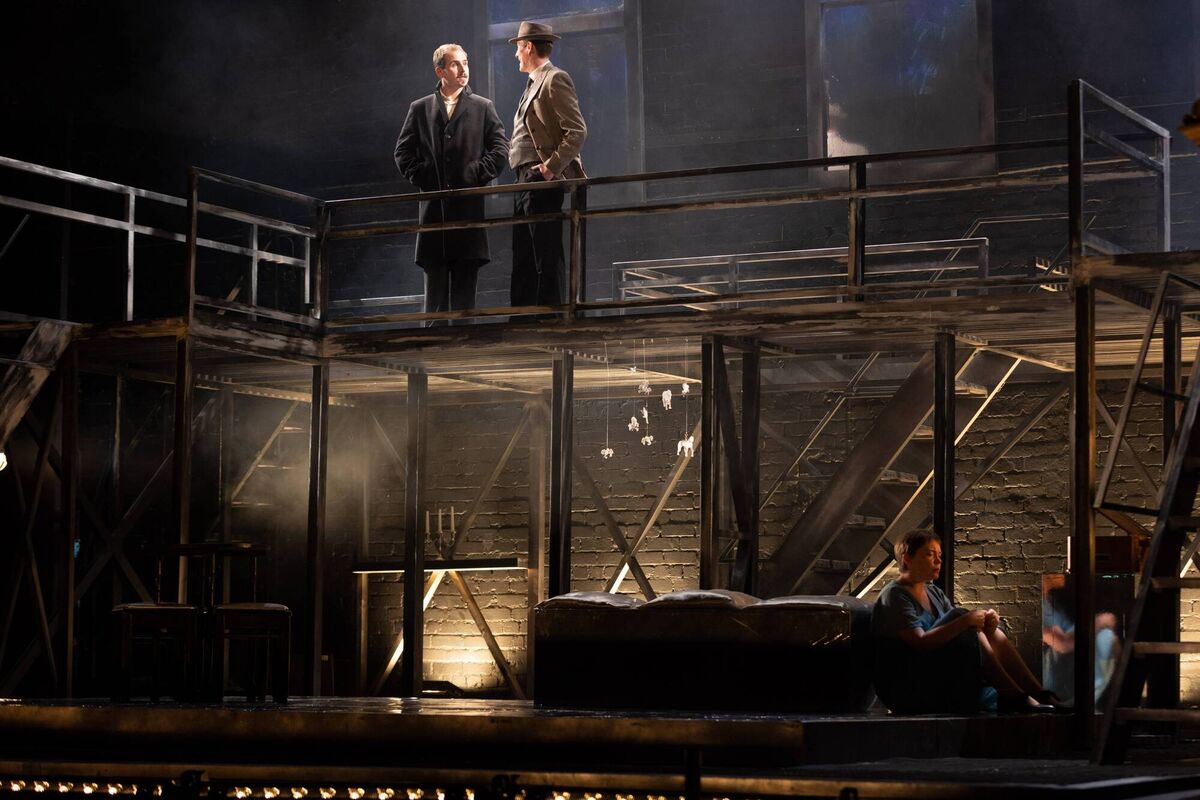
The Southern accent has tripped up many a talented actor and Radmall-Quirke certainly takes on the challenge, but in the longer monologues, the consistency wavers somewhat. All of the actors do well with Williams’ blackly humorous lines which punctuate the play and elicit grim chuckles of recognition from the audience. However, even though many of the themes of struggle, both personal and economic, still resonate, a play that is more than 80 years old needs to find new ways to speak to a modern audience and overall, this production ultimately fails to clear that hurdle. Some of the details also distract — the bare-bones set, while attempting to reflect the tenement setting, lacks authenticity, with the characters at one point sitting down to dine at a tiny round table.
The play gets an injection of energy in the second half with the long-awaited arrival of ‘gentleman caller’ Jim O’Connor, played with conviction by Lórcan Strain. As the dimly-lit set sinks even further into darkness with a power cut, the candlelight represents the faint glimmer of hope that Jim offers, especially when his pep talk lifts Laura from her despair. But that hope soon dissipates and hastens the play to its downbeat denouement. The emotional final speech is poignantly and affectingly delivered by Feehely. As the lights go out, literally and figuratively, Williams leaves us pondering the fragility of human existence in his own inimitable way.
- The Glass Menagerie continues at the Everyman Theatre until Saturday, Aug 26; everymancork.com