Book Review: I Could Read the Sky remains sharp and perceptive
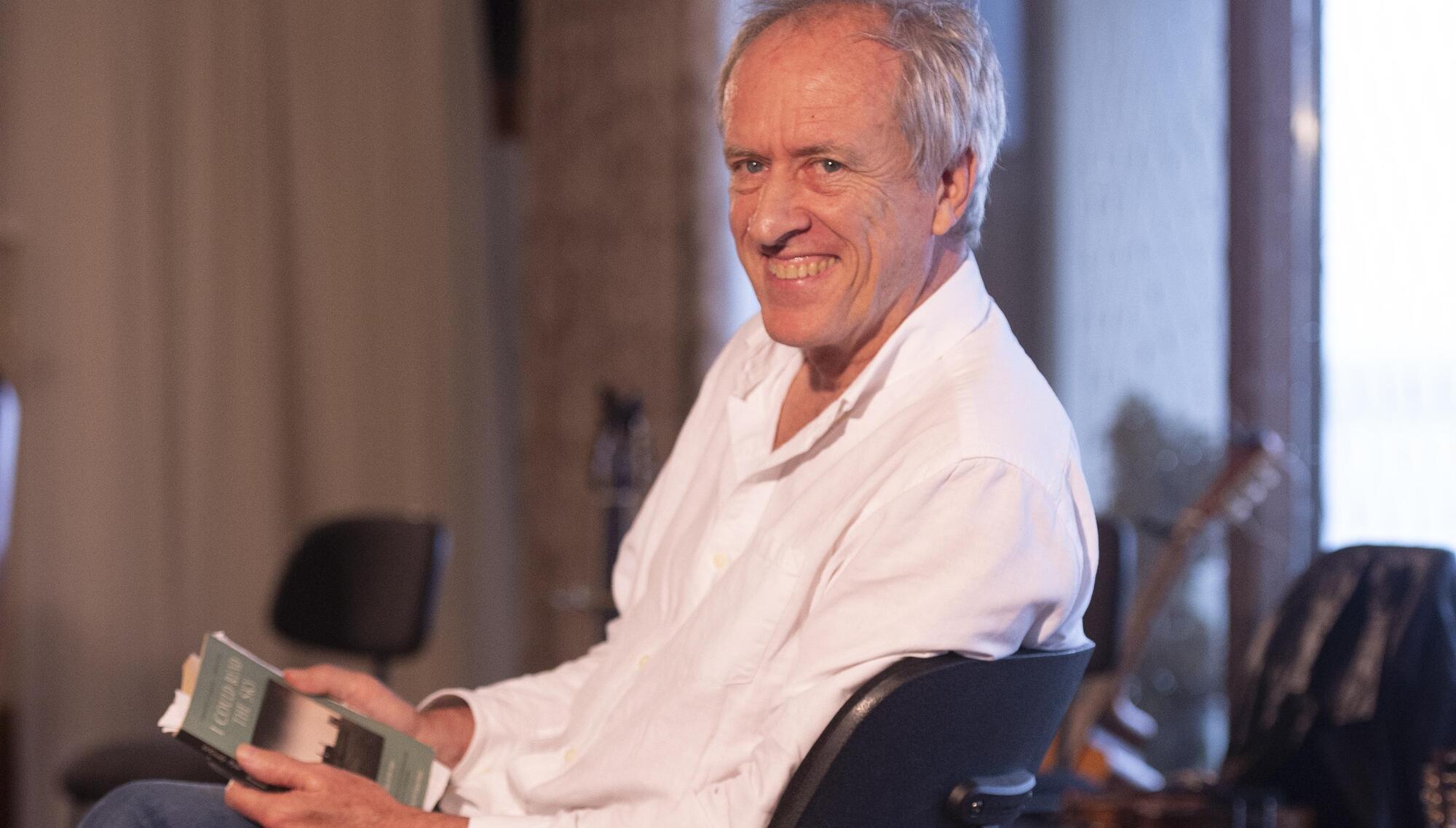
Timothy O’Grady with his novel I Could Read The Sky at the West Cork Music presentation of Masters of Tradition at the Maritime Hotel, Bantry, Co Cork. Pic: Dan Linehan
- I Could Read The Sky
- Timothy O’Grady and Steve Pyke
- Unbound, €21.00
Self-indulgence can be a double-edged sword: it can satisfy and remonstrate at once. It can enrich just as it undermines.
Did we really eat all the chocolate? Why oh why did we open another bottle? Why, in God’s name, did I buy another bloody fishing rod? Do we really need such a brutish, climate-killing SUV?
All those near irrelevancies pale though when compared to that gold-plated, no-sooner-finished-than-regretted indulgence of reading a book in a single sitting.
Such gluttony, such mainlining avarice, such certainty that another book worthy of absolute attention is at hand, may not be everyday, but when it happens it is as exciting as any of the great opening paragraphs literature has to offer.
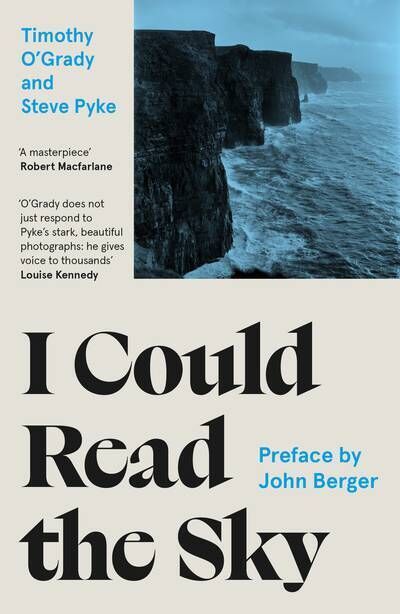
I Could Read The Sky, a wonderful collaboration between author Timothy O’Grady and photographer Steve Pyke, was a one-sitting splurge for me, a no-distractions-tolerated indulgence that will bear rereading after rereading.
Many of you have read it as it was first published nearly 30 years ago – Gerry Adams named it his book of 1997.
It has just been reissued with a greater contribution from Steve Pyke.
And what a contribution; the consequence of that collaboration, the synergy of the partnership lifts the publication to a plane that neither O’Grady or Pyke might easily have reached if working alone.
The text is musical, vibrant, and poetic. Indeed, Anthony Cronin, in his 1997 review, seemed relieved that it barely escaped what he imagined was the grim fate of being described as a lyric novel.
The book has a sharpness about it, an unflinching perception that time after time cuts to the marrow of the personalities on stage.
Neither does it flinch from the fatalism circling their lives like patient vultures' shadows.
There is a rhythm too, one that may have attracted Clare fiddle player Martin Hayes to provide a soundtrack to the audiobook.
There is also a film – soundtrack from Iarla Ó Lionaird - in which author Dermot Healy plays the central character as he, in his cold, empty London bedsit, recalls his life that began in the inevitable, white-washed cottage in the West of Ireland and, wearing myriad identities, moved from one backbone job to the next until his body could not longer sweep or dig.
O’Grady captures the collegiality, the acceptance of a common fate, that sustained communities, especially all-male communities, of economic emigrants as few others have done in recent decades.
The book was, coincidentally, originally published just as that great novel of emigration to America - Annie Proulx’s Accordion Crimes – was released.
In a second coincidence the central character in I Could Read the Sky is an accordion player and, when words fail him, he turns to the music of his homeland to express deeply buried emotions and memories.
Though not directly connected to the text Pyke’s photographs amplify it in a way that goes far beyond mere coincidence.
They offer a context that the text, set in a particular historic frame, might not have achieved so profoundly if left to stand alone.
If there is a reservation about the book it is that it ploughs, as so many others have already, the arc of melancholy, separation, sadness, loneliness, and alcohol misuse that veers towards rage.
It may do it better than nearly all others, but it is still a construct with a well-defined origin and a predictable destination.
Nevertheless, the elegance of the writing, the pertness of the observations are memorable.
The book's humanity and grace shine through and may well make it a one-sitting indulgence for many others.
The fate of the Irish diaspora seems to have changed in the decades since this book was first published.
No longer hewing wood or drawing of water, today’s exiles march to a different, less oppressive tune.
How interesting it would be if O’Grady and Pyke turned their attention to that victory for the human spirit and Irish resilience - and how wonderful it would be if they did as well as they have done here.