Books are My Business: Laureate na nÓg, Patricia Forde
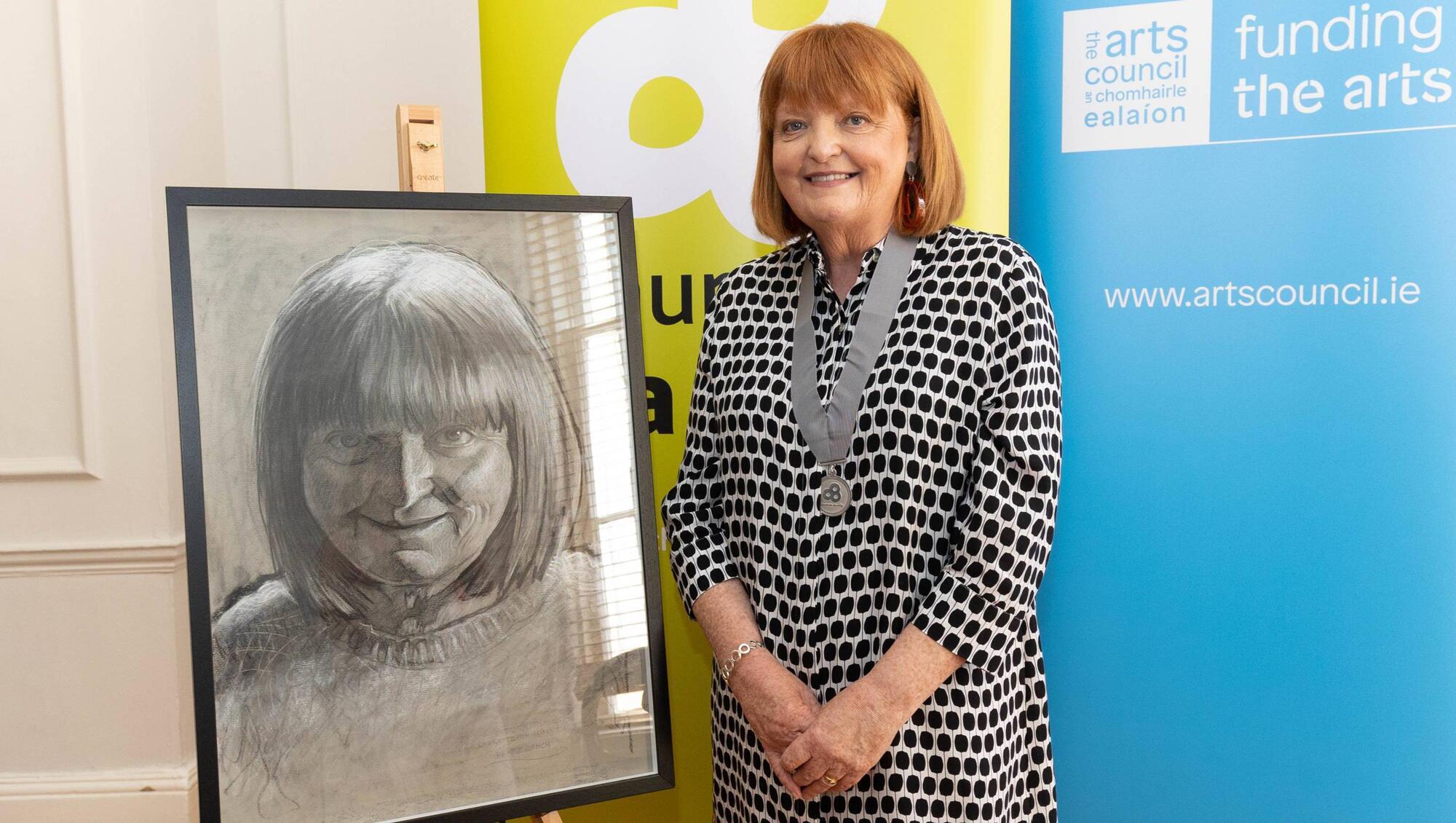
Patricia Forde was appointed Laureate na nÓg (Children’s Laureate) Picture: Julien Behal Photography
A mixture of delight and trepidation. It is a huge privilege and responsibility.
I’m number seven and the first six did exemplary jobs, so they set the bar good and high.
It is a lovely thing to be an ambassador for children reading, and the other side of the job is to promote Irish writers and illustrators, and I love doing that as well.
I was writing from when I was in college and then after university, I didn't really know what to do.
I tried to be an actress and I didn’t really want to do that.
Eventually I did a one-year course to become a primary school teacher and I taught for nine years.
I wrote my first television programme there, and I was reading contemporary children’s books to the children I was teaching all the time.
I had a very good insight into what they were reading and then I just thought I could try writing one of these.
I took a leave of absence from school to do that, but Christmas of that year, I was asked to take over Galway Arts Festival as director.
I did that for five years and while I was doing that, I think I managed to write one or two books.
It wasn't really until after that, that I made a conscious decision that I was going to have a go at this and I've been writing ever since.
I’ve published about 25 books for children. I’m slightly unusual in that I write from picture books right up, and I write in Irish and in English.
Laureate na nÓg has a theme, and mine is ‘Samhlaigh, Samhlaigh! Making It Up As We Go Along’.
As part of that, we plan to take a bus full of children's writers and illustrators down the Wild Atlantic Way.
We’re going to write and create stuff on the bus to share with children we meet along the way.
A lot of my theme is about creativity — I would love children to have time to pause and to daydream, to just let themselves go and have fun.
Because sometimes with reading and writing in school, with the best intentions in the world, it ends up being about decoding words.
And if you're dyslexic, or you have problems with that, it's like a barrier to the real jewel in the crown, which is the story.
So I don't care how children get the stories, whether they hear them on an audiobook or have somebody read to them.
What I’m interested in are the stories and getting the stories to them.
We already know that children who love stories, who love books, are inclined to do better in our education system.
But we also know that children who read are better equipped for life because a book can be a window or a mirror, a mirror in that you see yourself and a window in that you see others.
And both of those things are really important in the society we’re living in.
If you don’t see yourself in a book, it’s hard to feel included.
The publishing industry has made great strides recently, there’s been a lot of talk about inclusion and diversity and we need to keep that up.
Reading fosters empathy and creativity, you know that the world doesn’t have to stay the same way and possibilities are to be embraced and not feared.
It sounds like a tall order but I think reading ticks a lot of those boxes.
One of the books that had the biggest impact on me was by JRR Tolkien. It was the first time I saw somebody create a whole world that didn’t need us at all, that didn’t have any reference to us, and I was blown away by it.
I grew up in the middle of Galway city and Kenny’s bookshop was down the street.
I remember going in and Mrs Kenny told me that Tolkien had been an external examiner in the university in Galway.
So that melted my brain — the idea that he been here where we lived.
Whenever I read now, I think of Connemara and the landscape, and wonder how much Tolkien was influenced by it.
I would definitely bring and I might bring Tom McCaughren’s , because I would be in nature and Tom invokes that so well, he just conjures that up out of nothing.
And by Hilary Mantel, because I love it and it is good and big.