Book Interview: Noelle McCarthy on documenting her mother's life in Grand
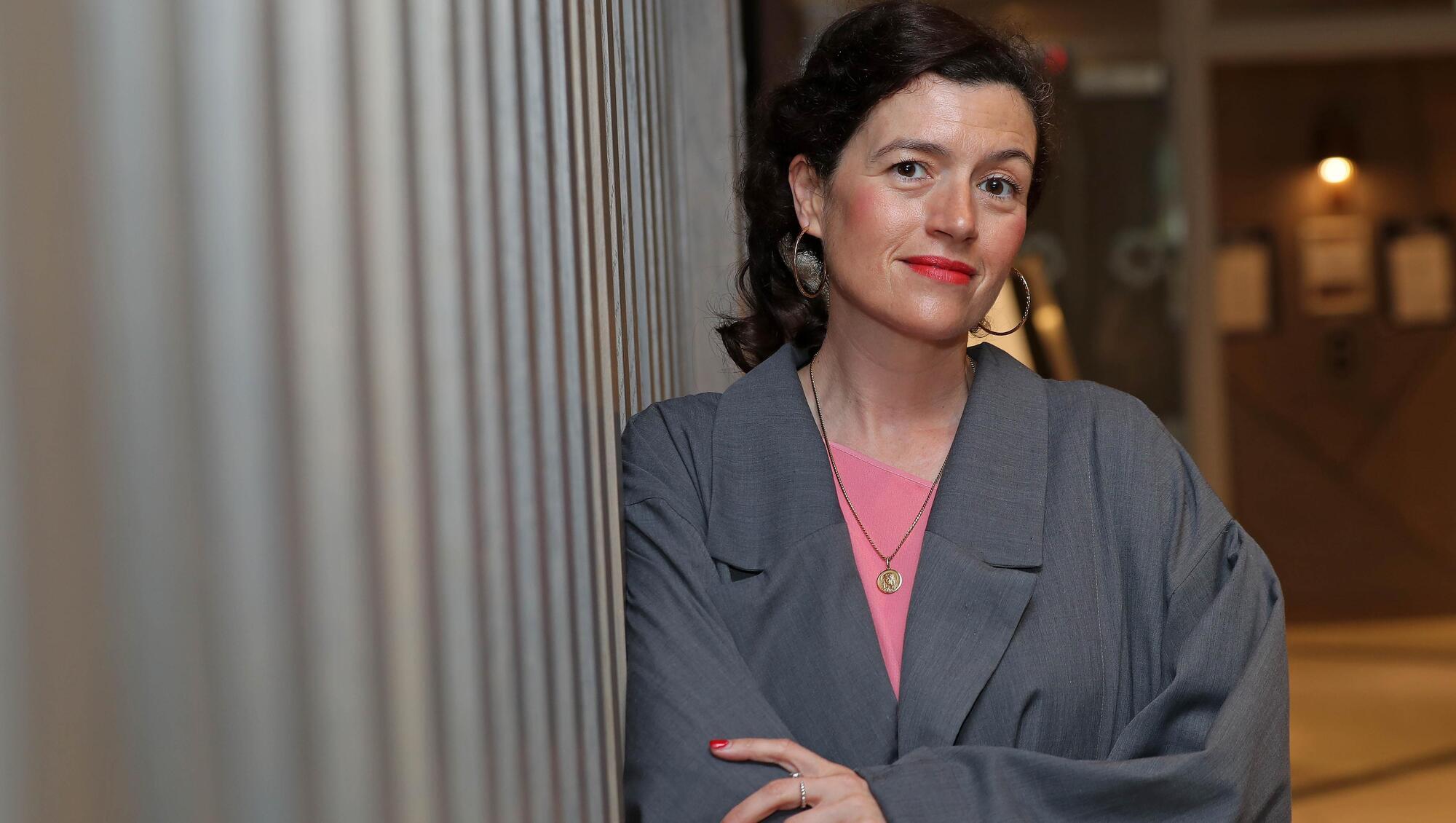
Author Noelle McCarthy, at the Maldron Hotel Cork, South Mall, Cork. Picture: Jim Coughlan.
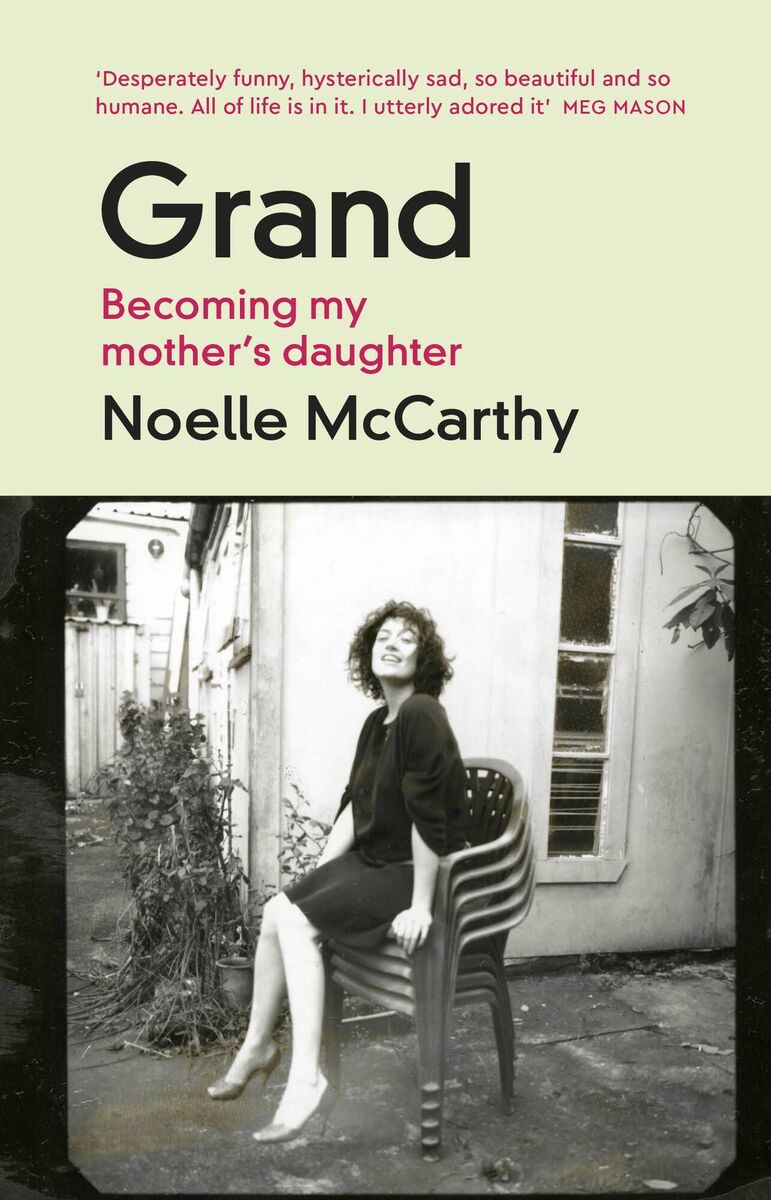
- Grand: Becoming My Mother’s Daughter
- Noelle McCarthy
- Sandycove, €18
When Noelle McCarthy was a teenager in Cork, she won the Junior Champion prize at the local Speakers Club in the Metropole Hotel and was duly photographed for the then . In her head, this northside girl from Hollymount, looked “sophisticated and pretty”. But the photograph in the paper shows “a stumpy girl with a thatch of bushy hair and red cheeks”. As McCarthy writes in her memoir, , her younger self in that photo is wearing a smile that says ‘please like me’.
Cut to Auckland in New Zealand where the adult McCarthy is working as a broadcaster in a radio station and living a life of constant launches and boozy lunches, sometimes appearing in the press. She is in the grip of alcoholism. One night, she gets out of the lift in her apartment building on the wrong floor, having been drinking. She remembers a light flashing in her face. She tries to turn her key in a door and turns back when her name is called. It results in an unflattering photograph of McCarthy looking “puffy-faced and vacant-eyed” that ends up in the gossip pages of a newspaper.
McCarthy writes that typically, after a night out, her crumpled clothes would have cigarette burns, her hands would be shaking and she would smell of wine. History was repeating itself. The sub-heading of is ‘Becoming My Mother’s Daughter.’
McCarthy’s mother, Carol, was an alcoholic who died in her mid sixties. Carol, a qualified psychiatric nurse who worked in Our Lady’s on the Lee Road before getting married and having a family, is as much the subject of this insightful and compelling memoir as the author. It is emotionally honest and beautifully written, evoking Cork’s quaint old pubs, such as The Chimes where McCarthy would be brought by her mother who was supposedly getting her ‘messages’. The ‘messages’, that evening’s meal, were a bit of an afterthought for this woman who liked to spend a couple of hours drinking with her friends in the afternoon until her husband collected her outside the funeral home near North Gate Bridge.
Now aged 45, married with a six-year-old daughter and free of alcohol for 14 years, McCarthy was in Cork recently before joining her former professional rugby player husband, John Daniell in France where he used to play. The couple make long-form podcasts together, dealing with issues such as racism.
McCarthy says she is at a stage where she is ready to talk about her life. “I think not writing the book would have taken more out of me than writing it. When I started writing, I made a decision that I was going to go where it took me, especially as it related to myself. I was going to be as honest as I could because those are the books that I love. If I’m reading a first person memoir and I get the sense the writer is holding back, it’s frustrating.”
She admits that her memoir is probably not easy for her wider family. (Her father and sister only suggested a few small changes in the manuscript when McCarthy showed it to them.)
“But I think everyone who writes memoir probably comes up against that sense of things that were private for a long time being brought up again. It can be painful. But people were understanding of my need and desire to write the book.”
Being dragged to the pub as a kid was not something McCarthy enjoyed. Carol had “a knife-edge relationship” with various barkeepers around Cork city. She could be troublesome; McCarthy admits to having been ashamed of her at times. But Carol had her demons. She had two children — one the result of rape — before she met her husband with whom she had four children. Of the children born to Carol as an unmarried mother, one of them, Jonathan, died as a baby. She named the other child Tara.
McCarthy says that while it sounds like a cliché, it was only when she became a mother that she thought of her own mother’s loss when her illegitimate children were taken from her. Carol used to sometimes drunkenly call out those two children’s names, ranting and raving, no doubt with deeply embedded grief.
While McCarthy had a difficult relationship with her mother, they made peace in the last decade of Carol’s life.
On the train from Dublin to Cork having flown from New Zealand with her 10-week-old daughter, Eve, McCarthy wanted to show her baby to her mother. “I was thinking about what my mother would have gone through. I could feel the visceral pain of that. That was the first time I really started thinking about myself as not the centre of the world.”
McCarthy, the eldest of four, believes in the notion of inherited trauma. “It’s about legacy, isn’t it? It’s about what comes down through the generations and what gets passed on. That’s what inspired . I think the death of a parent is a moment in your life when you have to deal with it. I was in my early forties when my mom got sick. It was brutal and scary but it also made me reflect on my life, my mother’s life and all the lives that had gone through the generations. I had that sense of being part of a much wider history.”
While McCarthy comes from a working class background, she attended the relatively posh St Angela’s in Cork, thanks to something of a campaign that Carol waged to get her bright daughter enrolled there. McCarthy and her siblings went on to third level education.
McCarthy’s mother believed in education. “I’d call her a keen student of psychology without any formal language around that. She was always deeply perceptive about people. I’d say she was frustrated. She was so smart. At one stage she had three kids under the age of five.”
McCarthy studied history and English at UCC and signed up to do a Masters on Bram Stoker, looking at the popular 19th century Gothic tradition. “But I was 22, working part time in Cafe Paradiso. I wanted to be in the world.”
When New Zealander, Bridget Healy (who used to help run the vegetarian restaurant) was asked by McCarthy where she might move to, she suggested her native country. It was also suitably far away from Cork and McCarthy’s sometimes embarrassing mother.
McCarthy is currently the International Institute of Modern Letters Writer-in-Residence at Victoria University in New Zealand. She has come a long way since being the little girl brought against her will to the pub and later becoming in thrall to booze. It has been some journey.
Now, she is working on a book about . “It’s about that relationship I haven’t been able to shake off, being obsessed with the book. I first read when I was about 14 and I kept coming back to it. It was a formative time for me and it affected how I saw men and sex and power. Dracula was the key erotic figure in my life. Looking back at it now, as a 45-year-old mother, it’s terrible; he’s a monster. Why I was I so obsessed? I think a lot of us are obsessed with scary things.”