Joseph O'Connor on writing, music, and being a 'Gregorian chant geek'
Joseph O’Connor is a master of many writing genres but he is also deeply musical, as his latest novel and an upcoming celebration of it in the central character’s hometown Killarney illustrate. He spoke to Clodagh Finn
Joseph O'Connor on writing, music, and being a 'Gregorian chant geek'

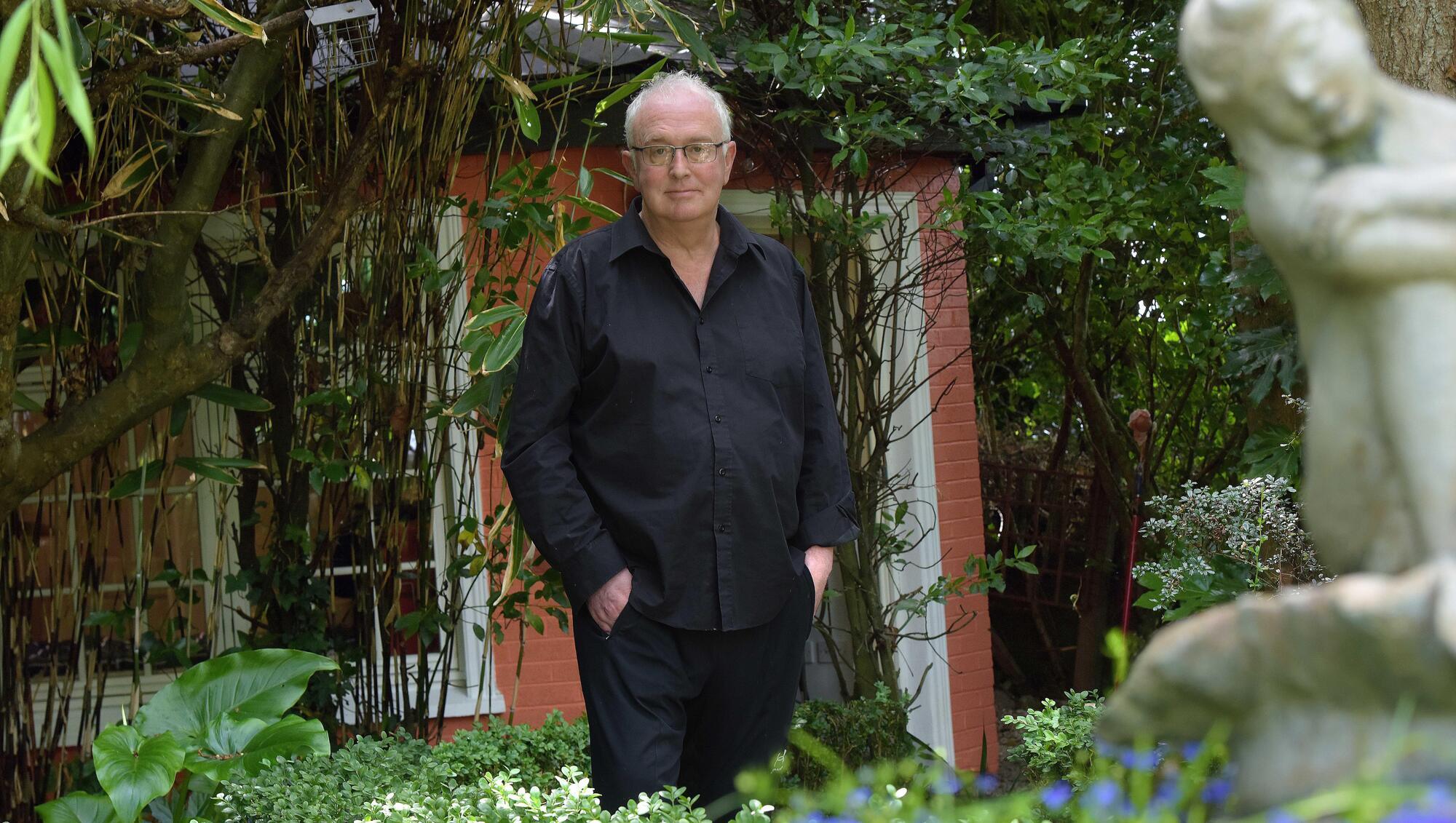
Joseph O'Connor outside the room, at the end of his garden, where he writes. Pic: Moya Nolan

It is unexpected, and rather beautiful, to hear author Joseph O’Connor talk about sacred music with such deep admiration that he playfully refers to himself as a “Gregorian chant geek”.

He fell in love with it, he says, when he discovered it lulled his eldest son, James, now 23, to sleep as a baby. His “very, very curious and alert” first-born did not like to sleep, but late one evening he nodded off after his father happened upon Gregorian chant on the radio.

When it worked a second time, a few weeks later, O’Connor bought some Gregorian chant CDs.

“Every time I put them on, he nodded. Even for myself, if I’m troubled or busy, I put on Gregorian chant and it just sends me off. It’s like morphine. I just go into some other place.”

His love of — and, indeed, need for — music bubbles to the surface as he talks about the “soundtrack” to his bestselling latest novel, and soon-to-be-film, My Father’s House. (Hollywood company, Pretty Pictures, has just acquired the rights and, although details have yet to be worked out, O’Connor says he’s – “delighted”.)

Choral music is central to the book, a masterful and lyrical study of Monsignor Hugh O’Flaherty, the Irish priest who smuggled thousands of Allied troops and Jews out of Italy during the Second World War. 

The Monsignor and his agents are members of a choir, which provides the perfect cover to plan the Rendimento, a daring escape mission to spirit a large number of resistance fighters and refugees out of Rome on Christmas Eve 1943.

 Joseph O'Connor at his desk in the room at the end of his garden where he writes. Pic: Moya Nolan
Joseph O'Connor at his desk in the room at the end of his garden where he writes. Pic: Moya Nolan

In fact, the more O’Connor thinks about choral music, the more he feels his fictionalised choir is an apt metaphor for the very real work carried out by Monsignor O’Flaherty and his helpers.

“It’s a very exposing kind of singing. There is nowhere to hide and everyone has to absolutely be on the money all the time.”

It echoes the kind of complete cooperation needed to secretly move people out of occupied Rome.

“The choir,” he adds, “also dramatises the kind of comfort and consolation that I imagine would come from being in this incredibly dangerous situation. 

Above you, the bombs are dropping, and at the end of the street, there are the Nazi tanks but tonight, for the next 90 minutes, there is us in a room and we’re singing.”

It’s entirely fitting, then, that music will be at the heart of next week’s event to honour the Monsignor in his hometown, Killarney.

O’Connor’s long-time friend, broadcaster and creator of Other Voices TV series Philip King hosts a special night at the INEC Arena.

There will be sacred chamber music, of course, and folksong to celebrate Delia Murphy, the singing star and ambassador’s wife who defied protocol to help Monsignor O’Flaherty. 

Soprano Sharon Lyons and countertenor Nils Wanderer are also on the bill. “When there is music in the room you go over a bridge; you go into this new place and you feel you are at something very special,” O’Connor says.

He is also genuinely excited — “overexcited” even — to be talking about his novel in the place where Hugh O’Flaherty grew up.

In fact, the seed of My Father’s House was sown in Kerry more than three decades ago when the then-aspiring writer entered a competition in the Irish Post in London. The prize was a trip to Listowel Writers’ Week.

“There was a journalism category and a short story category and I entered both and I didn’t win in either, but I remember coming into the dingy bedsit in Lewisham in southeast London, where I was living at the time, and there was a ‘1’ flashing on the 1980s answering machines that we all had then.

“I pressed it and it was the voice that anyone in Ireland would have recognised. It was the great John B Keane. He rang me and said, ‘You didn’t win, but look why don’t you come over anyway? You’re an O’Connor and I’m married to an O’Connor and Kerry is full of O’Connors. You probably own Carrigafoyle Castle if you look into it closely enough.’ I did go the next year and someone told me the bones of the story.”

It might even have been John B himself, but he can’t recall. In any case, the story lodged and when he later heard that Delia Murphy, Ireland’s first singing super-star and wife to wartime Irish Ambassador to Rome, Dr TJ Kiernan, was also involved in the escape, it was a “great, great day”.

“I felt the book had come to life. If you are writing a book with a lot of good, high-minded heroic people, you have to be careful that they are not all saints. Delia was very high-minded and very courageous, but absolutely wasn’t a saint. She had a moral compass, like Hugh, but she was more cheeky and irreverent.”

As she put it herself in real life: “I risked my neck and Her Excellency’s immunity because a voice inside of me said it was my duty to help.”

 Joseph O'Connor: "If you are writing a book with a lot of good, high-minded heroic people, you have to be careful that they are not all saints." Pic: Moya Nolan
Joseph O'Connor: "If you are writing a book with a lot of good, high-minded heroic people, you have to be careful that they are not all saints." Pic: Moya Nolan

In the fictional world, she was one of the voices that O’Connor enjoyed most.

“I used to love every morning sitting down at the kitchen table at home with Delia, seeing what kind of lip she is going to start giving everyone today.”

Here’s one glorious example of her turn of phrase: “I’m a Catholic, I love the faith as best I can, but I wouldn’t be a great one for kissing the altar rails. Not at all. Wouldn’t be a Holy Mary. There’s good people of every persuasion, and there’s 24-carat bastards. Life schools you the way no catechism will.”

It is clear, too, that O’Connor has immense regard for Monsignor Hugh O’Flaherty. He believes he had the same kind of moral courage as Nelson Mandela.

Neutral Dublin did not approve of what he was doing. The Pope didn’t like it. The Germans were trying to stop him and, as O’Connor muses, there must have been days when he argued with himself.

“Hugh is not a radical person. In many ways, he is quite a conservative priest. He would not have been able to live with himself if he didn’t do what he did,” he adds.

After the war, he downplayed his heroic work and always passed whatever glory there was onto others, a fact that became even clearer as many of those who knew O’Flaherty wrote to the author to describe his extraordinary intellect (he spoke seven languages and had three PhDs), his modesty and his deep faith.

Marie Lalor, from Trim, Co Meath, for instance, shared her family’s memories of a man who visited them in retirement. 

Her brother Mark recalled: “His greeting to our mother Anna, in his Kerry accent [which probably blended in well with Italian tones!], was ‘What’s noo, Nan?!’ One summer day, rather than knocking at the front door, he climbed in through an open window!”

My Father’s House has brought the wartime bravery of O’Flaherty and Murphy back into public consciousness, but for O’Connor a book’s first duty is to be beautiful.

“There is enough ugliness in the world. One of our jobs is to put beauty back in. I always want my sentences to have beauty and euphony and musicality,” he says.

If musicality is in the warp and weft of My Father’s House, it also runs through generations of the O’Connor family.

My Father's House by Joseph O'Connor

O’Connor was delighted to find a great aunt had been a piano player in the Liberties in the 1900s.

“She would have seen a thing or two,” he says. His father Seán O’Connor, who wrote a memoir of his Liberties childhood, Growing Up So High, is also musical.

“Dad is a good singer. He sings in a choir and he goes to singing lessons and at that point in the Irish evening when someone says, ‘Stand up there and give us a song’, he’s up and he sings ‘Nessun Dorma’ and ‘Come Back to Sorrento [Torna a Surriento]’. And everybody goes quiet.”

O’Connor, brother to singer Sinead, will admit only to singing in the shower, but he says if there is a purgatory, it is an eternity without music.

“I love every sort of music. I find music completely fascinating and riveting. And I would stop in Grafton Street and listen to an 18-year-old busker who isn’t very good almost before I would read any novel. I find music completely compelling. I never have a day without music.”

That love of music is also evident in his and wife screenwriter and novelist Anne-Marie Casey’s eldest son, James, the baby put to sleep by Gregorian chant. He is doing an MA at the British and Irish Modern Music Institute.

His youngest son, Marcus, 19, is studying Classics in Oxford.

“We went over to see him a few weeks ago. He was in the university production of the Importance of Being Earnest. It was a golden day. I’m so absolutely proud of them both.”

Given the title of his book, it seemed appropriate to ask about being the father in his house in south county Dublin. For now, though, the emphasis is on Hugh O’Flaherty and My Father’s House.

“I have the distinction of having had my photograph taken with three people called Hugh O’Flaherty: the retired Supreme Court judge, the Monsignor’s nephew; his son; and a boy of 10 or 12 who is the judge’s grandson. I like to think there was another Hugh O’Flaherty floating around in the ether.”

  • Joseph O’Connor in conversation with Philip King in an evening of readings and music at the INEC Arena, Killarney, 7pm July 13 (www.inec.ie)

More in this section

Scene & Heard

Newsletter

From music and film to books and visual art, explore the best of culture in Munster and beyond. Selected by our Arts Editor and delivered weekly.

Cookie Policy Privacy Policy Brand Safety FAQ Help Contact Us Terms and Conditions

© Examiner Echo Group Limited