Book Interview: Joanna Biggs looks at beginning again when life falls apart
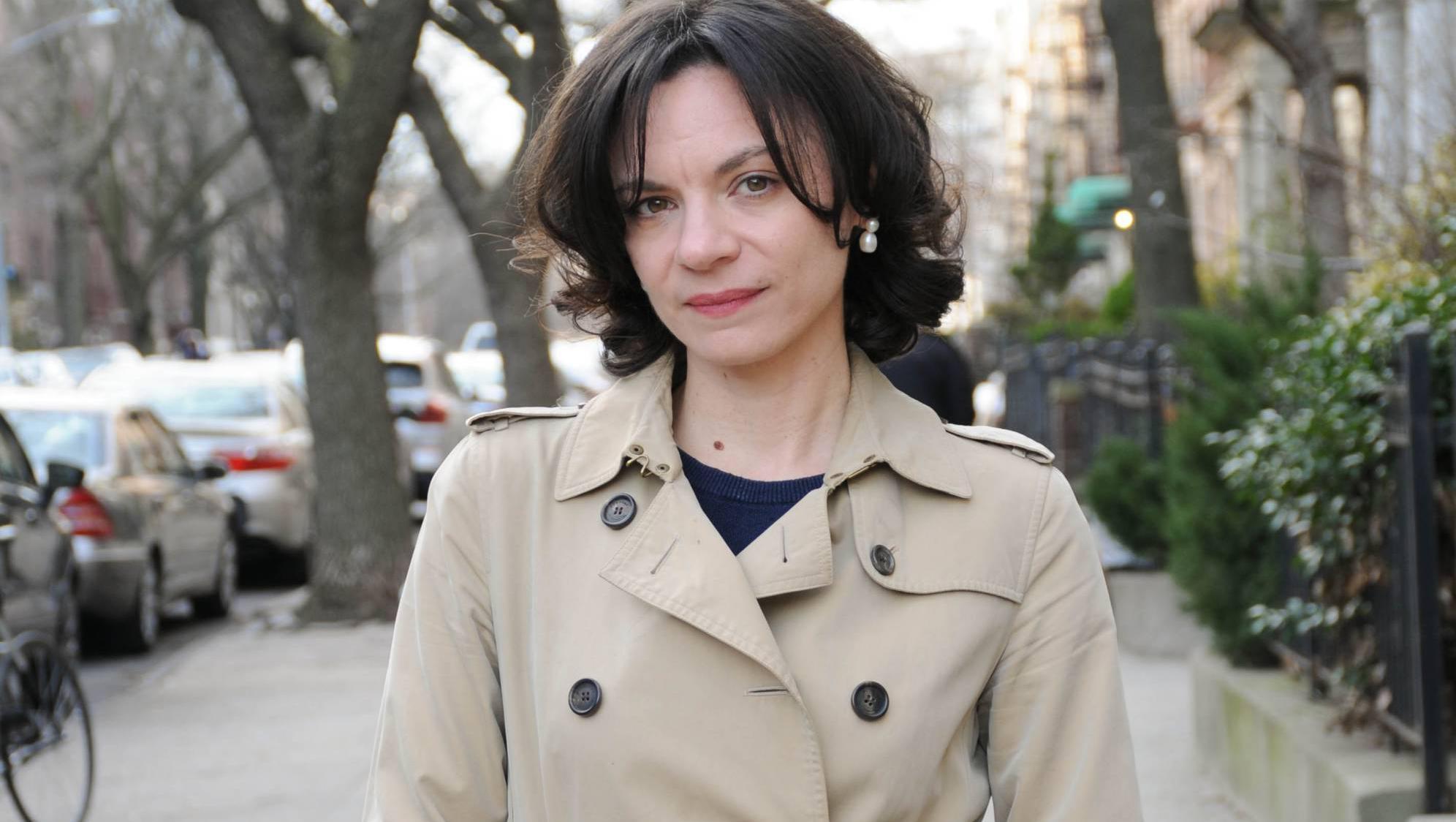
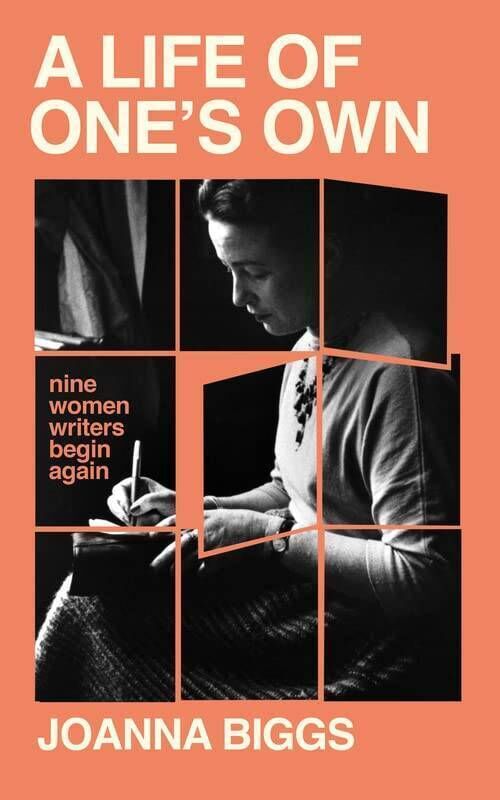
Joanna Biggs’ ‘A Life of One’s Own’ combines memoir, biography, and literary criticism in the most imaginative and inspiring of ways. Picture: Hillery Stone
- A Life of One’s Own
- Joanna Biggs
- Weidenfeld & Nicolson, €22
Writer and literary critic Joanna Biggs got married in pink, partly because Sylvia Plath and her own mother had done so, but also because she wanted to challenge the institution of marriage.
She gave a speech on her wedding day in 2011 for the same reason, but later discovered that moving the dial on the ritual itself was much easier than carving out a comfortable space for herself within the day-to-day reality of married life.
When Joanna’s marriage to a fellow writer broke down four years later, she returned to Plath, the writer who had dazzled her as a teenager, to try to work out how she might negotiate the world as a newly single woman.
The result was revelatory.
She discovered a new Sylvia Plath: Sylvia, the divorcee, someone she hadn’t realised existed, right there between Sylvia the wife and Sylvia the depressive.
“It’s a huge disservice to see Sylvia as dark and depressive,” she says. “She was there for me since I was a teenager, but I started to see new things in her life; how she reclaimed things. I saw in her this new quality of remaking herself over and over again.”
The poet and novelist started again after a suicide attempt during her college years and later when her marriage to Ted Hughes broke down. “All the work we have from Plath — from 'Lady Lazarus' to – is because she was able to find a new path. It’s extraordinary and it’s exactly what I needed to hear,” Joanna Biggs says, explaining the impetus for her absorbing new book .
The title is a pleasing and deliberate echo of , in which Virginia Woolf argues that a woman must have money and a room of her own if she is to write fiction.
What Joanna Biggs set out to find is how a woman might lead a life of her own, within marriage, or more pertinently outside it. As a literary critic, it was natural for her to turn to books to find answers, so she cast her net over the female writers who influenced, inspired and comforted her most. She lands a magnificent catch, brimming with every shade of humanity.
It is also a voyage of discovery. Biggs excavates — that is the right word — the work of nine female writers and unearths something new in each one. Prepare to see the work of Mary Wollstonecraft, George Eliot, Zora Neale Hurston, Virginia Woolf, Simone de Beauvoir, Sylvia Plath, Toni Morrison, and Elena Ferrante through new eyes.
Ask her why she chose them, and she says she picked the best writing from women who lived in a variety of relationships. For instance, George Eliot (Mary Ann Evans) lived with, but was not married to, her soulmate George Lewes: “Their not-marriage [was] more than a marriage.”
Zora Neale Hurston, on the other hand, had a series of great affairs. Simone de Beauvoir famously had an open relationship with Jean Paul Sartre, while Toni Morrison was divorced.
“I was interested in other ways of arranging romantic life and how that intersected with their work,” the author explains.
But Joanna Biggs does much more. She includes a rich gallery of the writers’ female characters along with a searing account of her own choppy journey through unhappiness, “lostness”, and chaos. She had lost faith in the so-called traditional goals of a woman’s life at a time when she was also losing her mother to Alzheimer’s.
Depression set in. As she writes: “Everything seemed immovable. Everything seemed impossible. And yet I knew I had to change my life.” The week her husband moved out, she began visiting Mary Wollstonecraft’s grave. Best-known as the author of , you’ll discover a different Mary here. Biggs portrays the confident woman who knows she is not born “to tread in the beaten track”, but also one who is so devastated by the break-up of her relationship with Gilbert Imlay that she attempts suicide twice in a year.
She rises again, though, which gives Joanna Biggs’ heart a vicarious lift as she recounts how Mary’s anger shades into defiance as she tells her ex-partner: “You may render me unhappy; but cannot make me contemptible in my own eyes.”
“I loved her mixture of passion and reason,” Biggs says. “I feel in life there are some things you can’t do until you engage emotionally and I was very appreciative that Mary saw that and brought that to her work. The intellect can be a cage — these things need to be tempered.”
Writing about her own experience brings with it a feeling of vulnerability, but Joanna hopes that her openness will help to create a new space not just for her, but all women.
“There are lots of things that I did not manage very well. I wasn’t good about being creative with the institution [of marriage]. Marriage didn’t work, so what else might work? I’m still trying to learn. I want that space for myself and all women.”
She is particularly protective of the younger women she works with as a senior editor at in New York: “I work with some extraordinary writers and their best work is made when they are given enough space and safety to go there. I want to support them.”
, however, is not just about giving writers room, literally and figuratively, to exercise their craft. It is about helping women to carve out spaces in society when the traditional structures, such as marriage, fail them.
Joanna Biggs is not against marriage. Far from it. She says she is a romantic. “One of the reasons romantics go into and out of marriage is that they believe that a better union is possible. I’m a Lawrentian in that way. I believe in souls aligning.”
Marriage is not doomed either, she says. But she says a critical engagement with the institution, so that both people are supported within it, is good for everyone.
Seven years on, Joanna Biggs says she is scarred, but still standing. She moved to the US 18 months ago and is looking forward to a New York summer. Her mother died a year ago, but she has surrounded herself with a band of female friends to whom her book is dedicated.
“I have friends that hold me to account, but they are kind to me and love me and find ways of valorising my life even if it is not the traditional one. It’s a supportive and warm way to live. And to have fun. I’m doing all right.”
If she were to pick a fictional character as a friend, she’d go for Dorothea Brooke from her favourite book, George Eliot’s .
“She is a wonderful example of someone who is rigorous in herself and thinks about doing things properly in life and in art. Yet, she has that sparkle to her and is also attracted by all the things in life that are beautiful and frivolous. It’s a good combination.”
Speaking of good combinations, combines memoir, biography, and literary criticism in the most imaginative and inspiring of ways. It looks at how women are boxed-in by society’s expectations and institutions, and then it proceeds to punch out a series of holes to let some glorious air in.