Books Are My Business: Book and magazine designer Fiachra McCarthy
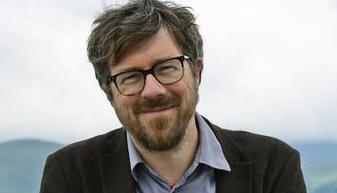
Fiachra McCarthy /BAMB
Fiachra McCarthy is a graphic designer with a focus on book and magazine publishing. Originally from Skerries in Dublin, he is now based in Fenit, Co Kerry. He has designed a range of book covers for publishers including Merrion Press, New Island, and Tramp Press.
I studied graphic design in Athlone in the mid-90s and I got my first job in a design agency around 2000, then I moved to as a graphic designer, where I met Lisa Coen, who was the typesetter.
Years later, she started Tramp Press and she asked me to design the cover for one of their first books, , a reissued novel [by Charlotte Riddell].
That was my first commission; I have done most of Tramp Press’s books since. I stayed in magazine publishing for around 14 years, then got a corporate job.
I lasted six months and quit to go freelance. That was seven years ago, and I would say book design has been about 50% of my work.
Generally, I would read the manuscript first but sometimes if you read the book, it can be overwhelming.
What is more interesting to know is why did the editor or the publisher want this book out in the world.
Getting them to talk about the book and asking questions can be a good way [of finding inspiration].
A really good example of that is the cover of , by Sophie White, which is a haunted house with legs.
Sarah Davis Goff of Tramp Press described it to me as a horror story but her body is the haunted house, and that was it.
Sometimes it is as simple as that and sometimes it is not, there could be 20 drafts.
The tendency is not to get authors involved until a late stage. I would try to have a chat early on and make them feel comfortable and then I don’t talk to them until it’s done.
It’s a much busier marketplace and Irish people read a lot. Everything is becoming more visual now.
For example, with Emilie Pine’s book , if you went on Instagram and looked for the hashtag #notestoself loads of people were photographing the book, on a table with a cup of coffee, or holding it — that was my first inkling of how important social media was.
People connect with a book and want to be seen reading and sharing it. It is not just about the bookshelf in the shop any more.
It is a really good space to be creative in, I’m very lucky that my clients are up for pushing it a bit.
Friday is my design day, I make some coffee, put on some music, muck around, and see what comes out of it.
I love when you get the package back and there is the physical object. That buzz has never left me.
I’m very lucky really. I suppose having to do my accounts.
If I had to go back to when I was studying, I would be pretty happy if someone had told me that I’d have my own office in Kerry, five minutes from my house and I’d be designing book covers.
Publishers used to famously not credit designers but I do think that is changing, especially in the last 10 years, probably because of social media.
I see big publishers launch stuff on Twitter and the first reply is “who did the cover?”.
A big thing for me starting out was Tramp Press were always tagging me in their Instagram posts and on Twitter.
That made a big difference when I started freelancing.
I really love by Mona Elthawy.
It is an illustration of Mona herself. Because she is so striking, you instantly just think, what’s this about?
I also got to do Paul Brady’s book, , with Merrion Press, and that was great.
with Tramp Press felt like a big shift in gears, that you can be a bit more subtle and people will respond.
Absolutely. There’s tons of stuff I haven’t read but the covers are so class, I just put them on the shelves and look at them.
There’s a book called [Harry Sword] about drone music, by White Rabbit Press.
The cover is multi-coloured, but there is a tracing paper wraparound on the hardback that has the print on it, you can take it off and see the full image.
I bought the hardback and I don’t want to read it because I’ll ruin it. I’ll buy the paperback and read that.