The Rooster House: A powerful memoir that takes in Ukraine's story

Victoria Belim’s haunting new memoir tells the story of Ukraine through the lens of her own family, from WWII occupation to Chernobyl – to the trauma of today.
The Rooster House: A powerful memoir that takes in Ukraine's story

Victoria Belim's mother Asya with some of her students, from The Rooster House.

How does the past, recent or distant, shape us? What does identity really mean? Is it linked with nationality, borders, and language — or is it something deeper and richer, connected to the soil itself? What happens when you push the past down because it’s too painful?
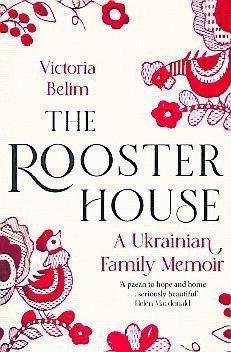
Victoria Belim’s book The Rooster House: A Ukrainian Family Memoir, begins with a line from Chekhov’s The Cherry Orchard: “If we’re to begin living in the present, we must first of all redeem our past and then be done with it forever.”

What began as an academic project on the history of Ukraine ended up as an intergenerational memoir. “As I was travelling in Ukraine, I began realising how powerful personal stories are to convey its history,” she says.

Belim is half Ukrainian, and half Russian. She grew up in central Ukraine, spending much time with her grandmother Valentina in the countryside, before moving to the US in her mid-teens. In 2013 she moved to Brussels with her British-Indian husband, where she works as a writer and translator. She speaks 18-20 languages — it varies, she says, depending on which ones she is using most.

“I grew up in a very multinational family,” she tells me via Zoom. “My mother is Ukrainian, my father Russian, my stepfather Belarusian, my stepmother Azerbaijani — we never had a focus on national identity. That whole concept was quite foreign to me. But when the war first started in 2014 [when Russia annexed Crimea], I was pushed to think, where do my loyalties lie? What am I? What makes me Ukrainian? Until then it was not so important.”

Between 2014 and 2019, Belim spent chunks of time revisiting the rural village of her childhood, and staying with her grandmother Valentina. What began as an exploration of her country — after years away, she was “blown away by the complexity of its culture, its arts. Every town, every region, is famous for some kind of artisanal work. Embroidery, pottery, leatherwork, food. I wanted to share these stories, for people to know about it” — became something deeper.

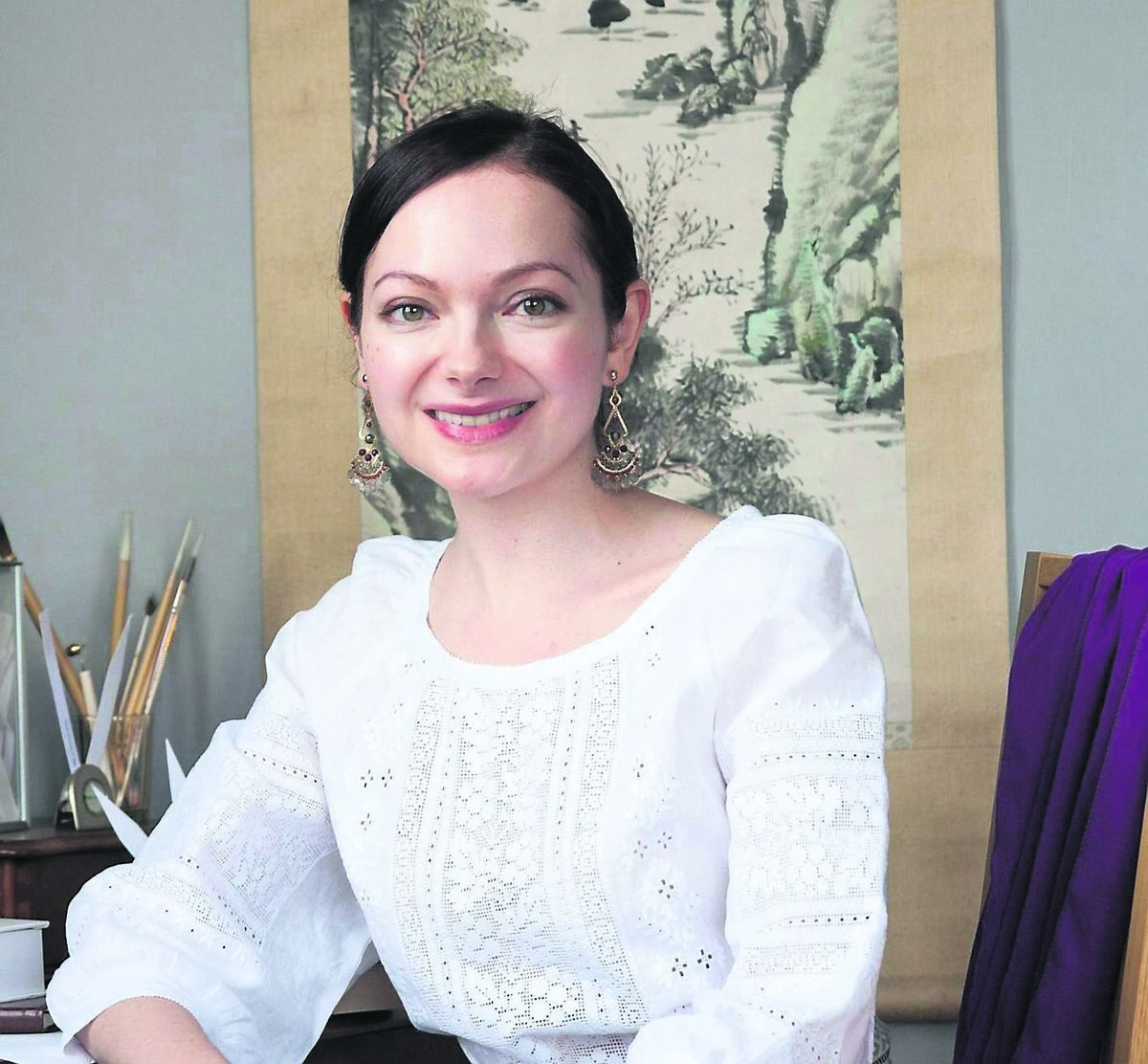
Victoria Belim, writer of The Rooster House.

THE PARADOX

She discovered her great grand uncle Nikodim, an ordinary citizen, had disappeared during the reign of Stalin. Vanished without a trace, perhaps to the Rooster House. This was a vivid neo-baroque building in the nearby town of Poltava, originally built as a bank, but requisitioned by the security forces. People would take detours rather than walk past it — it was where citizens were disappeared, tortured, and killed. The beautiful red building had a terrible history, and nobody wanted to speak about it.

Least of all Valentina, Victoria’s fierce grandmother, whose focus remained determinedly on tending her orchard. Her cherry trees, her potatoes, her tomatoes. “In Ukrainian culture and folklore, the concept of a garden is almost sacred,” says Belim. “It’s a place to plant seeds, a place of safety, a place of beauty and love.”

Valentina had been born into famine in 1930s Ukraine, surviving because her mother Asya married her father Sergiy, who had a ration book. Asya had seen people dead in the streets from starvation; her daughter Valentina then survived a second famine.

“The famine Valentina remembered vividly was the one after the second world war, which was devastating,” says Belim.

“She had memories of eating weeds from the garden — so she would never eat greens or spinach if I cooked them, because she associated these with famine.

“I didn’t understand Valentina’s obsession of caring for her orchard. I understood gardening as a hobby, but for her, it was more than that. I only realised much later that for her it wasn’t just a source of food, but the idea that she inherited this land and therefore she must take care of it, and that took priority over everything else.”

It also served as an excuse to disassociate from Belim’s increasing obsession with what happened to Nikodim, her great-grandfather Sergiy’s brother.

“Nikodim wasn’t an important person himself, but he was part of that whole century of oblivion, of trauma and pain, that whole century that was so bloody for Ukraine,” Belim explains. She describes how fear and division were used by the state to keep people separate from and suspicious of each other.

“That fear was so corrosive,” she says. “It wasn’t just Valentina who didn’t want to talk about the past — it was a whole society, which means that the past was never processed. The horrific reality of violence in Ukraine during the Soviet period was the intimacy of that violence — how many people reported each other, how many neighbours were responsible for their neighbours’ downfall, or worse.

“Valentina loved her neighbours, but she was also slightly wary of them. You say only so much, you show only so much. You don’t want people to talk about you. Even after the fall of the Soviet Union, these fears persist, and they shape people’s relationships and points of view.”

And yet Victoria was warmly welcomed into the homes of strangers in her quest to discover more about her family’s distant past.

“That’s the paradox,” she says. “Ukrainians are so open and curious, ready to embrace you and invite you to their homes. It was really touching.”

RECONNECTION

After much brick-wall bureaucracy and many false starts, Belim eventually found a sympathetic civil servant who helped her discover what had happened to Nikodim. His fate was nightmarish, Kafkaesque, Orwellian. She also discovered secret police files on her great-grandmother Aysa, who had been taken to the Rooster House, but released.

“All these bits of information in it,” Belim remembers. “Was it good that she didn’t have a degree, that she didn’t speak a foreign language? Was it bad? All these details are there to assemble a case against her if need be. Everyone was vulnerable. Anyone could report you. It could be a piece of unsubstantiated gossip. Anything. And you could lose everything.”

The book also reveals (I won’t) what had been driving Belim’s obsession to discover her long-dead relative’s fate; she was processing a far more recent traumatic event in her own life. She’d been suppressing it, because it was too painful. Instead, she threw herself headlong into the past.

“I realised this later,” she says, of her “single-minded obsession to make sense of the past.” Of her own more recent trauma, she describes how “for the longest time I couldn’t talk about it, because it was too painful. I had no idea how to deal with it because in my family the modus operandi was ‘forget about it, focus on today.’ Work, study, look towards the future.

“But you always have this burden of grief and pain that’s holding you back, making it impossible to move on.”

The book — an intimate portrait of a creative artisanal culture deeply connected with its surrounding nature, yet thrumming with an underscore of unease — helped with the processing of her own loss. 

She even reconnected with her eccentric uncle Vladimir, with whom she’d fallen out with in 2014 when he’d suggested she and her extended family “owed the Soviet Union a debt of gratitude”. Of their eventual reunion, she says drily, “We didn’t talk about politics.” Nothing, she says, is ever black and white.

And now Ukraine is once again being battered by its neighbour, forcing its people to rip themselves away from their homeland so that they may survive, and to rely on strangers in other places, until it’s safe enough to go home.

“What has been so positive is how Ukrainian society has come together,” she says of the country’s current situation. “There are so many grassroots movements which have assembled to help each other, to take care of each other.

“Our mission for Ukraine, whether we are inside or outside the country, is to be an ambassador. To help, to support, to make sure that Ukraine’s voice is being heard.” 

She says that even when people began talking about Ukraine in 2014, little was understood about its history and culture. I say, a bit inanely, that I hope Ukraine wins the Eurovision again, purely for the symbolism. 

“I used to think that symbolic gestures didn’t make much difference,” she says. “But actually, it can be so heartwarming to see a Ukrainian flag or some other gesture of support. So many people are doing their best to help. When people know more about Ukraine — it’s a place with a history, a place with a story.”

And like anywhere suppressed by a more powerful neighbour, a creative and resilient people.

  • The Rooster House: A Ukrainian Family Memoir by Victoria Belim, published by Virago, will be published on May 18 and is available for pre-order now
x

More in this section

Scene & Heard

Newsletter

Music, film art, culture, books and more from Munster and beyond.......curated weekly by the Irish Examiner Arts Editor.

Cookie Policy Privacy Policy Brand Safety FAQ Help Contact Us Terms and Conditions

© Examiner Echo Group Limited