Book Review: Mick Clifford looks at 'Killing Thatcher' - a chilling account of the IRA's manhunt
"Killing Thatcher is even-handed, never shying away from the conditions and deprivations that led young men like the Brighton bomber Patrick Magee to sign up to kill."
Book Review: Mick Clifford looks at 'Killing Thatcher' - a chilling account of the IRA's manhunt

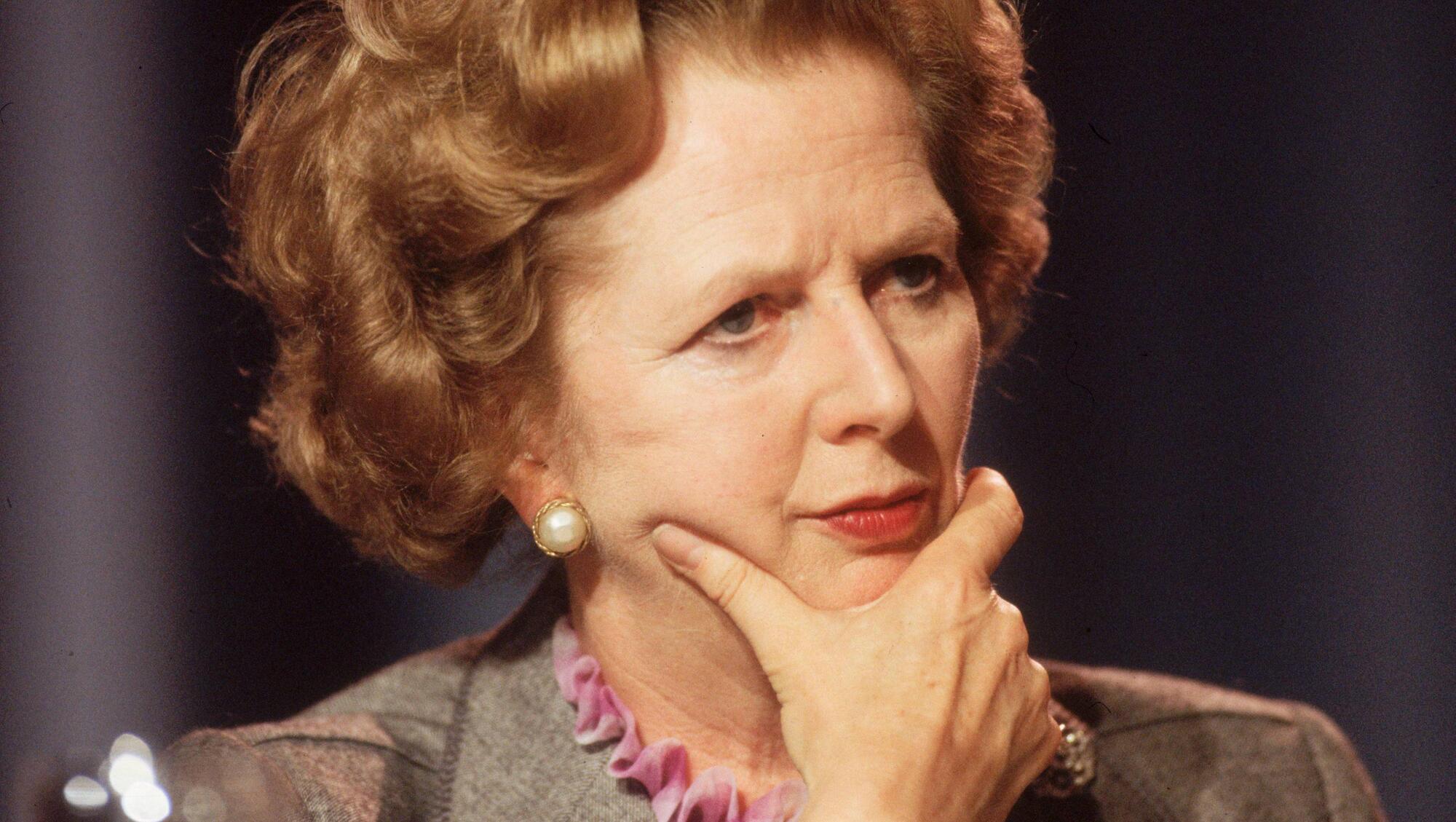
British prime minister Margaret Thatcher looking pensive at the Conservative Party Conference in Blackpool. (Photo by Hulton Archive/Getty Images)

  • Killing Thatcher: The IRA, the Manhunt and the Long War on the Crown
  • Rory Carroll
  • Harper Collins, hb ÂŁ25

Margaret Thatcher was the perfect opponent for the Provisional IRA, as implacable in her belief that right was on her side as they were in theirs. She came to power in 1979, a few months after her confidant, Airy Neave, had been killed when a bomb exploded under his car in the House of Commons.

Neave had been shadow secretary of state for Northern Ireland and had advocated military escalation against the IRA. 

He was murdered by the Irish National Liberation Army, but Thatcher, understandably, saw little difference between the two organisations. The killing personalised her approach to the Irish question.

Within six months the IRA had assassinated Lord Louis Mountbatten with a bomb that exploded as his boat exited Mullughmore harbour in Co Sligo. Two teenagers and an elderly woman also died.

Later that day, 18 British soldiers were killed in another IRA operation in the North. Thatcher’s response was informed by her general approach to her politics.

She was resolute, bullheaded, fully confident that what she was doing was in the interest of the vast majority, and with no compassion for the victims of her policies. In this guise, she held firm against the demands of the IRA hunger strikers two years later.

She kept her nerve as 10 men starved themselves to death, before finally bringing the strike to a close. 

What appeared to be a victory for Maggie turned out to be the biggest boost the Republican movement could ever have wanted. The slow, painful deaths endured by the prisoners also made it personal for their comrades. 

They were going to get Thatcher.

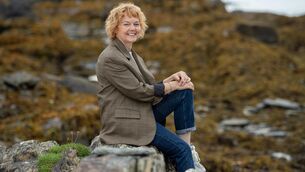
Author, Rory Carroll.

THE FEEL OF A THRILLER

Rory Carroll’s compelling book should not be judged by its title. Certainly, the main plot is the run-up to, and aftermath of, the bomb attack on the Grand Hotel Brighton in 1984, which was designed to kill Thatcher, ostensibly in revenge for her handling of the hunger strikes.

The main players, in both the IRA and the security services, are fleshed out in detail and the narrative has the feel of a thriller.

But Carroll goes beyond that, providing broad context to the operation at Brighton and a potted history of the Troubles, reaching back through the years, and even centuries, to point out the actions and grievances in the “ancient quarrel” between, and within, these two islands off the coast of Europe.

Killing Thatcher is even-handed, never shying away from the conditions and deprivations that led young men like the Brighton bomber Patrick Magee to sign up to kill.

Magee, like so many from his background, had little opportunity at school, or thereafter, to make the most of an intelligent mind. 

A combination of repulsion at the conduct of British soldiers in Belfast, grievance at the sectarian state, and sheer boredom seems to have led him into a life of ‘armed struggle’, as the IRA termed its campaign.

Magee was assigned to the England department, mainly engaged in a bombing campaign. He was good at applying himself and being cool under pressure. 

The path he had chosen ensured that he would have an itinerant lifestyle, and that his marriage and family would suffer. For some, his application might be described as dedication to a cause. Others would interpret it as fanaticism.

What leaps from the pages of this book is the sheer waste of human life. Bomb-disposal expert Peter Gurney walked in to find his best friend lying dead in the basement of a fast-food outlet in London in 1981, after an IRA booby trap was triggered.

Then, later, following the Harrod’s bombing at Christmas 1983, Gurney had to sift through the wreckage. He came across a body, that of a young woman, which he initially mistook for a mannequin.

“She had been blown through a plate-glass window and lay broken upon gaily coloured wreckage. Her skirt had been blown off and she had underpants adorned with a heart that embraced the message,

‘I love you’. Instead of seeing her as a clue to the bomb as the job demanded, he saw her as a person. Who had she been, this girl? Who had she loved, and who had loved her? That night, at home, he wept.”

Eventually, a plan came together to have a go at killing Thatcher.

The aftermath of the IRA bombing of the Grand Hotel in Brighton.

PRECISION

It was a year in the making and, operationally, was carried out with precision. Magee did everything possible to complete the mission and, to the greatest extent, to cover his tracks.

The target narrowly missed being injured, if not killed, when the bomb went off on the sixth floor and sent all manner of debris cascading through the hotel. 

Thatcher had been working and was escorted from her room at 3.10am, still in her ballgown, when she encountered a rescue team. 

“Good morning, I’m delighted to see you. Thank you for coming”, she is recorded as saying to the emergency workers, who just didn’t know what to make of her.

Five of those gathered for the Conservative Party conference were killed. Had the Provos got their target, the trajectory of history could have been altered to a degree beyond rational speculation.

The author documents the loss of life and plight of the injured in prose that is measured, yet chilling.

One of the injured, Donald McClean, related how when he went for an X-ray, the radiographer had an Irish accent.

“Her very first comments were to apologise for being Irish and advising me if this was upsetting me, she would get one of her colleagues to do the work,” McClean said.

He was touched and saddened that she felt the need to apologise. The following chapters on the subsequent hunt for the bomber are edge-of-the-seat stuff.

Killing Thatcher – The IRA, the Manhunt and the Long War on the Crown, by Rory Carroll

RESPONSIBILITY

Two quotes stand out: In 1983, after the Harrod’s bombing, during a visit to the North, Thatcher said: “I want the people of Northern Ireland to know that they will remain part of the United Kingdom as long as the population here wants.”

Disputing that principle was at the heart of the Provisional IRA’s long campaign, yet all these years later, after thousands of deaths and stuttering peace, it still applies.

Patrick Magee’s reflections on the Provo campaign are also noteworthy. “I am satisfied we prevailed, but at terrible cost,” he wrote in his own memoir.

Certainly, Thatcher and the British military bear a share of responsibility for that cost, but it remains the fact that the IRA killed more human beings and more civilians than any other armed actor in the conflict.

Acknowledgement of that might go some way towards the kind of proper reconciliation that remains one of the obstacles in moving towards normality north of the border and the possibility of a united Ireland.

In the meantime, this book should be read far and wide and particularly by anybody who was not around in those darkest days of human waste.

x

More in this section

Scene & Heard

Newsletter

Music, film art, culture, books and more from Munster and beyond.......curated weekly by the Irish Examiner Arts Editor.

Cookie Policy Privacy Policy Brand Safety FAQ Help Contact Us Terms and Conditions

© Examiner Echo Group Limited