How Billy O'Callaghan's new book The Paper Man came to be set in Cork's Jewtown
In his most ambitious work to date, Cork author Billy O’Callaghan links a famous pre-war Austrian footballer to Cork’s own local Jewish history, writes Mike McGrath-Bryan
How Billy O'Callaghan's new book The Paper Man came to be set in Cork's Jewtown

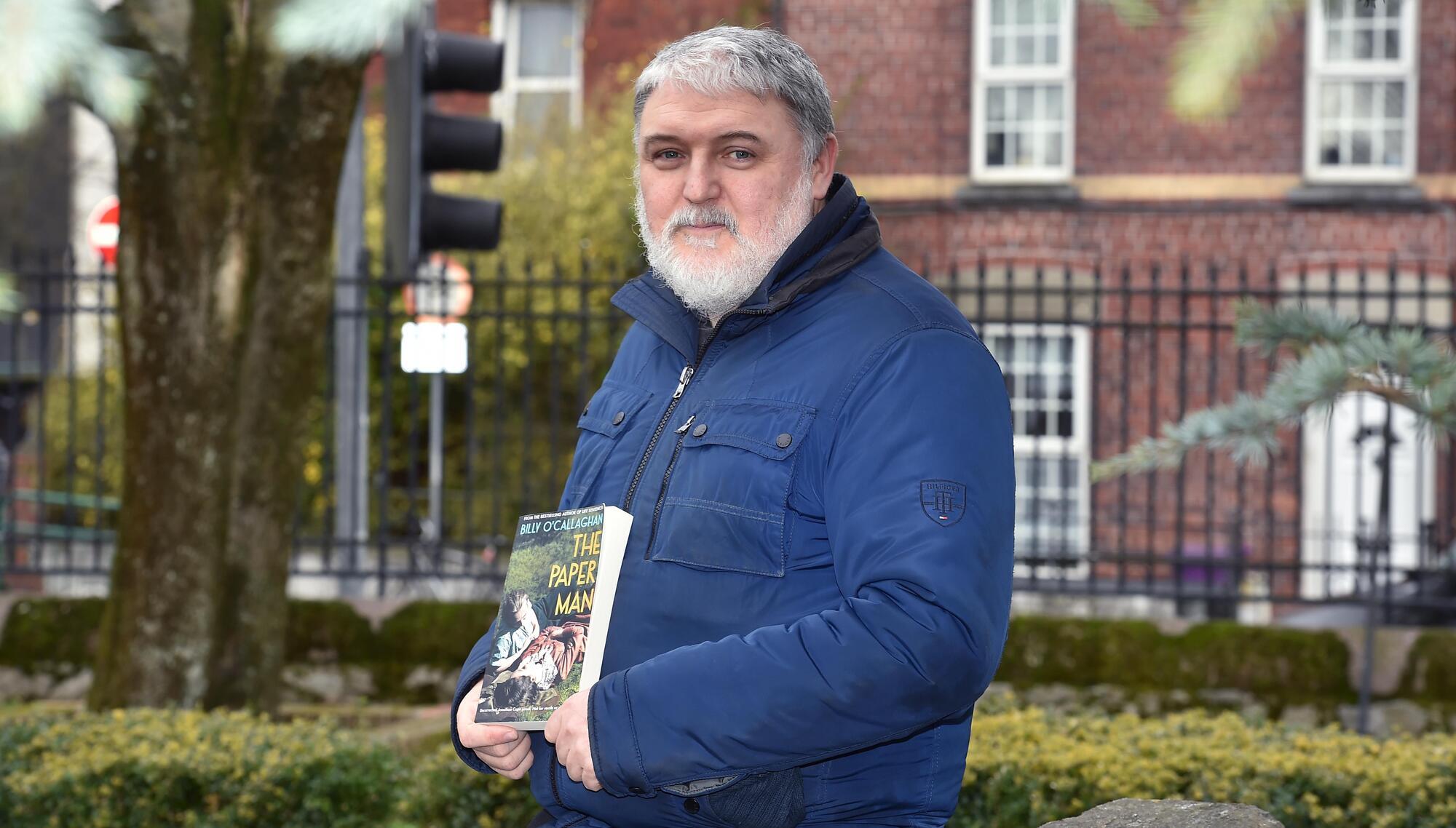
Author Billy O'Callaghan with his new book The Paper Man set in Cork's Jewtown. Picture Dan. Linehan

“It’s a funny one, because with every book, I never imagine that they’re ever going to come out, that they’re just there for me when the work is being done. To be honest, I don’t love this time of it, now, before it comes out,” says Billy O’Callaghan over the phone, with the gentle candour and honesty that informs a writing style that has endeared him to readers in Ireland and beyond.
O’Callaghan is speaking of The Paper Man, his newest novel, due for release in May via Penguin Random House in Ireland, and how, as a ‘finished’ piece of writing, the real work around it is only beginning.

A story that weaves together threads of O’Callaghan’s own lived experience, reflections on the nature of relationships, and a lifelong interest in the lore and history behind continental soccer, The Paper Man picks up when a young man, Jack Shine, comes across love-letters and newspaper clippings among the belongings of his mother, Rebekah, in 1980s Cork.

Seeking to learn more of her story, which includes coming to Cork as a Jewish refugee fleeing WWII, he delves into the story of 1930s Vienna, and all roads seem to lead to Matthias Sindelar, a once famous Austrian soccer player known as ‘The Paper Man’, who protested the German Anschluss of the nation, and was subsequently found dead in his apartment of suspected monoxide poisoning.

“I went to Vienna in 2014 for a short-story conference at the University of Vienna,” says O’Callaghan, “Somebody contacted me to say that there was a PhD student that was writing some of her PhD on some of my stories, and would I speak to her when I went out there.

“So I did, and she offered me a tour of the city, asked me what I’m interested in. I said, ‘finding out about Matthias Sindelar’. She didn’t know who I was talking about, so she contacted her father, and he didn’t know. He and his wife came along, and they took me on a tour. It was very hard to find any information about Sindelar, Austria’s greatest-ever footballer, but it was pre-war, [now] forgotten by history.

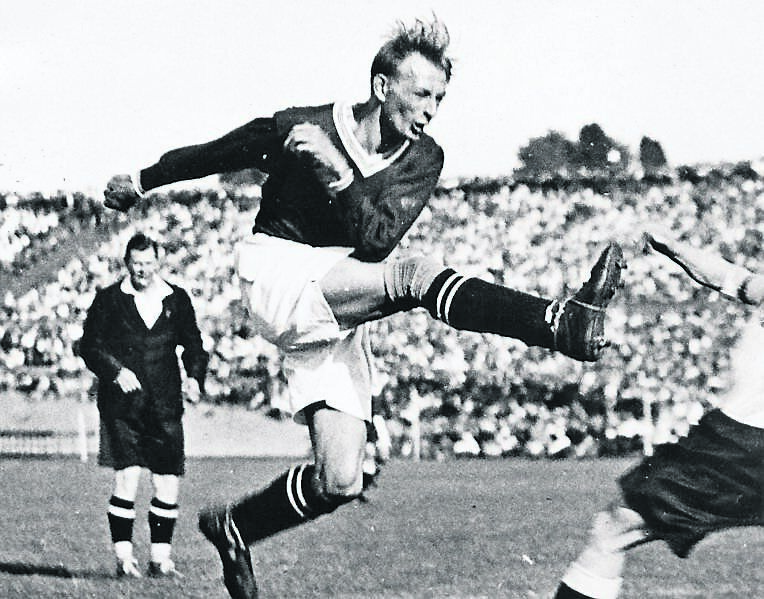
Austrian professional footballer Matthias ‘The Paper Man’ Sindelar, in 1931, the inspiration for O’Callaghan’s new novel. Picture: Ullstein Bild/Getty

“We found the different parts of the city that we needed to visit, and we eventually found his grave. At that point, I wasn’t really thinking about writing about him. But as I started to kind of get a feel for the story, I thought maybe it would be something people would like to read about, if I could only figure out how — and that was a protracted journey.”

THE MECHANICS OF FICTION

To get to the real-life intrigue of how the soccer star met his end, he turned to fiction — and also a past with which he was familiar — to set a basis for this creative journey, harking back to the Leeside of the 80s, when upheaval and economic depression was rampant.

“The grounding of it was Cork — where I’m from, where I live, the place I know. Down through the years, I knew a lot of people living in ‘Jewtown’ [an area bordered by Albert Road and Shalom Park, in Cork, which became the Jewish ‘quarter’ for a period in the city’s history] ... [but] I couldn’t figure out a way to connect Sindelar in Vienna in any vague way to the world that I knew.

“The only way I could figure it out was an uncertainty — Sindelar was Catholic, but everything connected with him was Jewish. He played for the Jewish football teams, he grew up in the Jewish area, he lived there all his life, all his friends were Jews. That was the only connection I could think of, to make it so personalised.”

That personalisation evokes a very specific set of circumstances and experiences. From a writing perspective, O’Callaghan began researching the city’s immigrant history.

“I was born in 1974. The story is set in 1980. I needed to set it that early, to have people that could still connect back to Sindelar. I didn’t want any computers or anything to enter into the story, because then records become a lot easier to access. I wanted to keep that element of uncertainty and mystery.

“I was just trying to write my feeling of Cork from that time. I also liked the idea that Jewtown, even in the ’80s, there probably weren’t that many Jews living there, still. It had been from an earlier time that the name lingered. It gave me an outsider’s view onto Cork as well.

“Once I was able to have a character come from Vienna, to Cork, I had to figure out, then, how I was going to make that work — a pregnancy.”

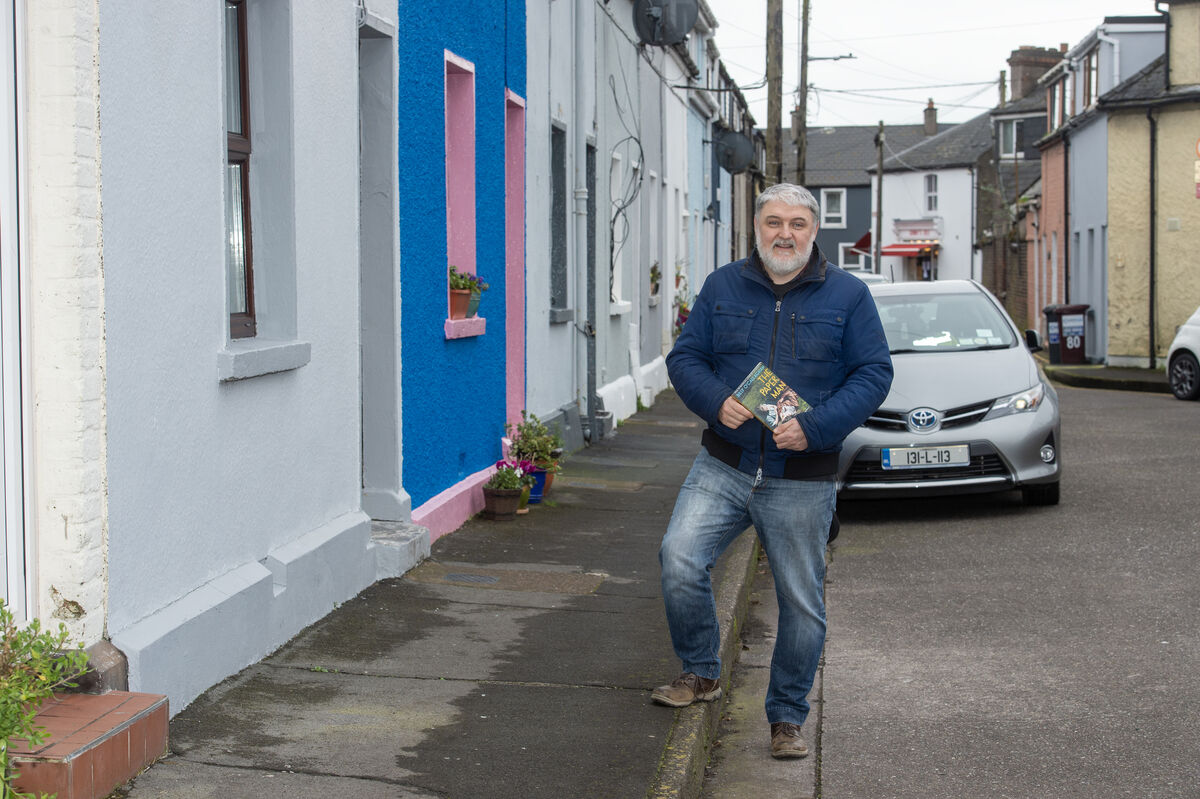
Author Billy O'Callaghan: "The grounding of it was Cork — where I’m from, where I live, the place I know." Picture Dan Linehan

A SEARCH FOR IDENTITY

That history of immigration and of fleeing war, persecution and deprivation carries many modern-day parallels, in the midst of conflict in Eastern Europe and the Middle East, along with the looming prospect of climate change-related migration.

But for O’Callaghan, the story is as much about personal experience and relationships, as it is about social commentary.

“The book was started a couple of years ago, but it’s notable, the situation that we find ourselves in now. When I was reading about Jewtown, most of the settlement of Jews into Cork seems to come from the time of the pogroms, which would have been in Ukraine and Belarus, up to Lithuania. It would have been the early 1900s. It’s a small note that today we’re seeing an influx from the same part of the world, and they’re running from the same sort of menace.

“I had Rebekah, the character in the story, coming to relations of hers, that she had never even met, relations of her father’s. There was somebody to come to. It’s a different situation for her. I don’t know how she’d have survived, if she hadn’t a support network here, coming in pregnant.

“We [Irish] didn’t do great with unmarried mothers, which was something I explored in my last novel, Life Sentences, which was about my own family going back. There was a lot dealt with in the book, and what this book is about is family, a search for identity, from Jack, who’s the character in 1980. It’s him searching for his past. It’s something that I don’t seem to be able to let go of, the same themes seem to be troubling me the whole time.”

That search is at the heart of The Paper Man, a young man, putting together the pieces of the life of a loved one, examining his parents’ past lives, to find the greater context for his own existence.

It all makes for a very big story to maintain an emotional connection but those themes of identity and family manage to do just that, and haven’t been far from his mind throughout the process.

“It wasn’t a great struggle for me, because I think it’s something that dominates my writing in general. It’s obviously something that I’m always trying to understand better. The final draft of this was finished during covid, and I had nothing but time really to concentrate on it and immerse myself in it.

“But at the same time, my mother died about a year and a half ago, and during that, she went through a tough time, and we were very, very close. The fact that I was writing this book, it was actually my mother who introduced me initially to Sindelar, completely, unintentionally.

“When I was about 15, she got me a Christmas present of a book on the history of the World Cup, which was the perfect present for me, because I was obsessed with books, and I was obsessed with football. That would have been the first time I’d ever heard of him. That was my connection.

“When I was writing about the situation with Rebekah, who dies of TB, there was a TB outbreak in Cork, at that time, one of the historical moments within the city. As she was dying of TB, my own mother was dying. The parallel was there ... it just sort of heightened the sense of family for me, and it was something that I knew I would have to address through the book.”

  • Billy O’Callaghan’s The Paper Man (Penguin Random House) is available in May at all good bookshops.

x

More in this section

Scene & Heard

Newsletter

Music, film art, culture, books and more from Munster and beyond.......curated weekly by the Irish Examiner Arts Editor.

Cookie Policy Privacy Policy Brand Safety FAQ Help Contact Us Terms and Conditions

© Examiner Echo Group Limited