'I need to write, to tell stories': Cork author Eibhlís Carcione on her gothic debut novel for children
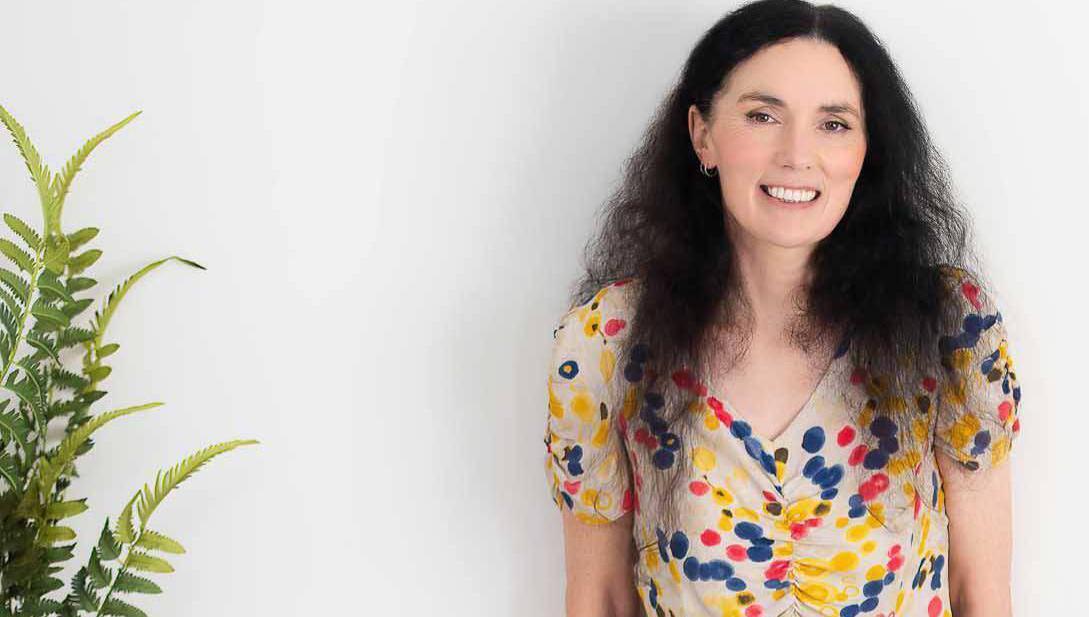
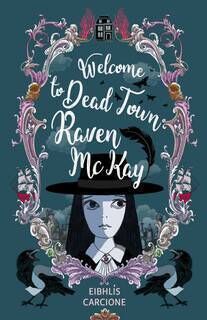
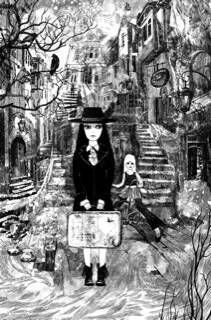
The heroine of Eibhlís Carcione’s debut fantasy novel for children came to her in a dream: A black-haired girl at the edge of a curious town inhabited by the living and the dead. Her parents are missing and all she has in the world is a battered, beige suitcase with a faded sticker of a black butterfly on it.
Her name came later: Raven McKay. And when she arrives in Grave’s Pass, you are immediately transported to an otherworldly realm brought to life in spine-tingling detail by an author with something special to offer.
Eibhlís has a unique perspective. Or súil eile to borrow TG4’s motto, which seems an entirely apt phrase for a children’s author, teacher, and bilingual poet with three collections in Irish. Her new book, , is in English but it is infused with the myths and legends of Ireland — and beyond.
Yet, it is also startlingly new. When Raven McKay goes to Grave’s Pass to meet her third foster parent in six months, she spots “pooka horses chasing goblins in a vacant lot, three banshees on a bus, a zombie in ripped jeans staring in the window of a phone shop, a bogeyman walking a labradoodle, a ghost on a ladder cleaning windows, a ghoul sipping coffee at an outdoor café”.
What follows from that magnificent opening paragraph is a book that demands to be read in a single sitting. It might be aimed at 10- to 12-year-olds, but readers of all ages will be swept up in the mystery, the lyrical language, and the pervasive ghostly atmosphere that sends “a prickle of fear between the shoulder blades”, to quote one of Eibhlís’s beautiful phrases.
It doesn’t come as a surprise, then, to hear that one of the author’s favourite books is by Máirtín O Cadhain: “It is one of the masterpieces of Irish literature in which the newly dead tell all the town gossip to the dead in the coffins. There are great scoundrels in it and I thought it would be a cool idea to have a town inhabited by the living and the dead together.” Humans — or humes, as they are called — and ghosts, goblins, and spooks of every hue live cheek-by-jowl in Grave’s Pass, a town influenced by Eibhlís’s experience of the hills of Cork City and the cobbled streets and hilltop villages in Sicily where her family go on holidays.
Eliminating the boundary between the living and dead will resonate with anyone who has suffered bereavement, as their lost loved ones are never far away — in their memories at least. That is certainly the case for Eibhlís, who lost her son Liam. He was a beautiful, healthy boy who became ill and died suddenly in 2012, just before his seventh birthday.
She says she draws strength from many things. For instance, it helped her to hear then Taoiseach Micheál Martin, in an interview with Joe Duffy, speak of his grief after the deaths of two of his children. “I understand, and he helped me in some ways because he is somebody I admire and he and his wife have suffered a lot. It helped me to listen to him. That’s exactly how I feel. The pain will never go, but I do try to be very strong.” When she wrote her debut, she thought of her son because he loved creepy stories. He loved the books by RL Stine, fairytales, Roald Dahl, , and, indeed, wanted to write books himself.
“After Liam died, we found his activity book. In it, he wrote he wanted to be a writer when he grew up and live zero kilometres from home. That sums him up. He loved being with us,” says Eibhlís.
His influence, though, is evident in the pages of his mother’s book. “Liam loved spooky stories and .” Her debut does not shy away from the darker side of life.
“I think there are forces of good and evil in life and I think myth and folklore and legends help us cope with reality. In daily life, you are going to meet friends and frenemies. In Grave’s Pass, for instance, there is friendship for Raven McKay, but also people who present as friends but aren’t friends. We see characters overcoming difficulties and I think that helps us.”
Writing certainly helps her to cope with grief: “The pain sharpens, but I get a lot of positivity from writers, poets, books. I’ve always loved writing. I’ve been writing poems and stories since I was a teenager. There is a lot of good in life and I am a positive person.” Loss and grief, however, often leave others at a loss for words. People don’t know what to say, but all they need to do is be kind and to be there, she says.
“I don’t like it when people say that she [the bereaved person] will never be right, but I would say that it’s terrible. She needs support and she needs to move forward. You are not doomed if you suffer tragedy, you really are not.”
The day of Liam’s funeral, Listowel Writers’ Week rang Eibhlís to say that she had won first prize for her poem in Irish, ‘Ag Faire ar na Fáinleoga (Watching Swallows)’. The judge was Cork-born poet Eiléan Ní Chuilleanáin, one of Eibhlís’s favourite poets. It was a single ray of light at an unspeakably difficult time and it encouraged her to write more.
Since then, she has won several prizes and written three collections of poetry in Irish: (2015), (2019), and (2023), all published by Coiscéim. There are recurrent themes. As she explains herself: “I have written hundreds of poems, often about the power of nature, mermaids, myths, magic, and the occasional ghost.” In Tonn Chlíodhna, or The Wave of Clíodhna, the title poem in her first collection, she writes of heartbreak:
“I miss you,”/you declared in a letter.
That’s a lie./You knew quite well/that I was hanging from the cliff edge/clinging to a tuft of heather.
And then, (spoiler alert), comes the redemption. The narrator is saved by Clíodhna’s magical wave and is alive and well. “This is a wondrous sea-place/where I write my lines in the seal tide.” Eibhlís’s own tragedy has made her particularly sensitive to natural disasters, conflict, and the grief of others, she says.
She has written poems about Chernobyl, Aleppo, Fukushima, the pandemic, and the Famine. Her poem about Polina, a young girl killed on the first day of war in Ukraine, recently won acclaim. She was invited to read it at the Poetry As Commemoration Jukebox launch in Cork last August.
Indeed, writing and creativity is very much present in the Carcione household in St Luke’s in Cork City. Eibhlís’s Italian-American husband Jayson Carcione is an accomplished short story writer while daughter Rosa, 16, also loves stories and drew the beautiful cover design for (Seal Woman), Eibhlís’s most recent poetry collection.
The Carcione dogs, basset hound Bella and cocker spaniel Maddie, are also involved: They sit at either side of Eibhlís when she is writing. She writes longhand and doesn’t start until the story is gasping to be told and she can see it in her head, like a film.
There is something about writing by hand that helps her creative process, just as switching into Irish taps a different part of her psyche. “I love where Irish leads me,” she says.
She is delighted that attitudes to the language have started to change: “Gaelscoil education, Raidió na Gaeltachta, TG4, writers, musicians have helped with this. Some people were taught Irish very badly. This has left scars. But I think in general we have shaken off the negative image. Education and the arts have helped. The film has highlighted the beauty of our language. The film captures suffering and loss in a way that I don’t think could be conveyed in English.”
To return to her own debut. It is striking that she said she saw it like a film in her own head because is vivid, compelling, and wonderfully filmic. Not to mention ripe for a sequel.
Whatever happens, there will be more from this singular writer’s pen. As she says herself: “I need to write, to tell stories.”
For now, though, Eibhlís Carcione is not looking too far ahead. One step at a time.
The next big date is June 1, when this stunning debut, with exquisite illustrations from Ewa Beniak-Haremska, is published by Everything With Words.