Book Interview: Charleen Hurtubise on writing as catharsis
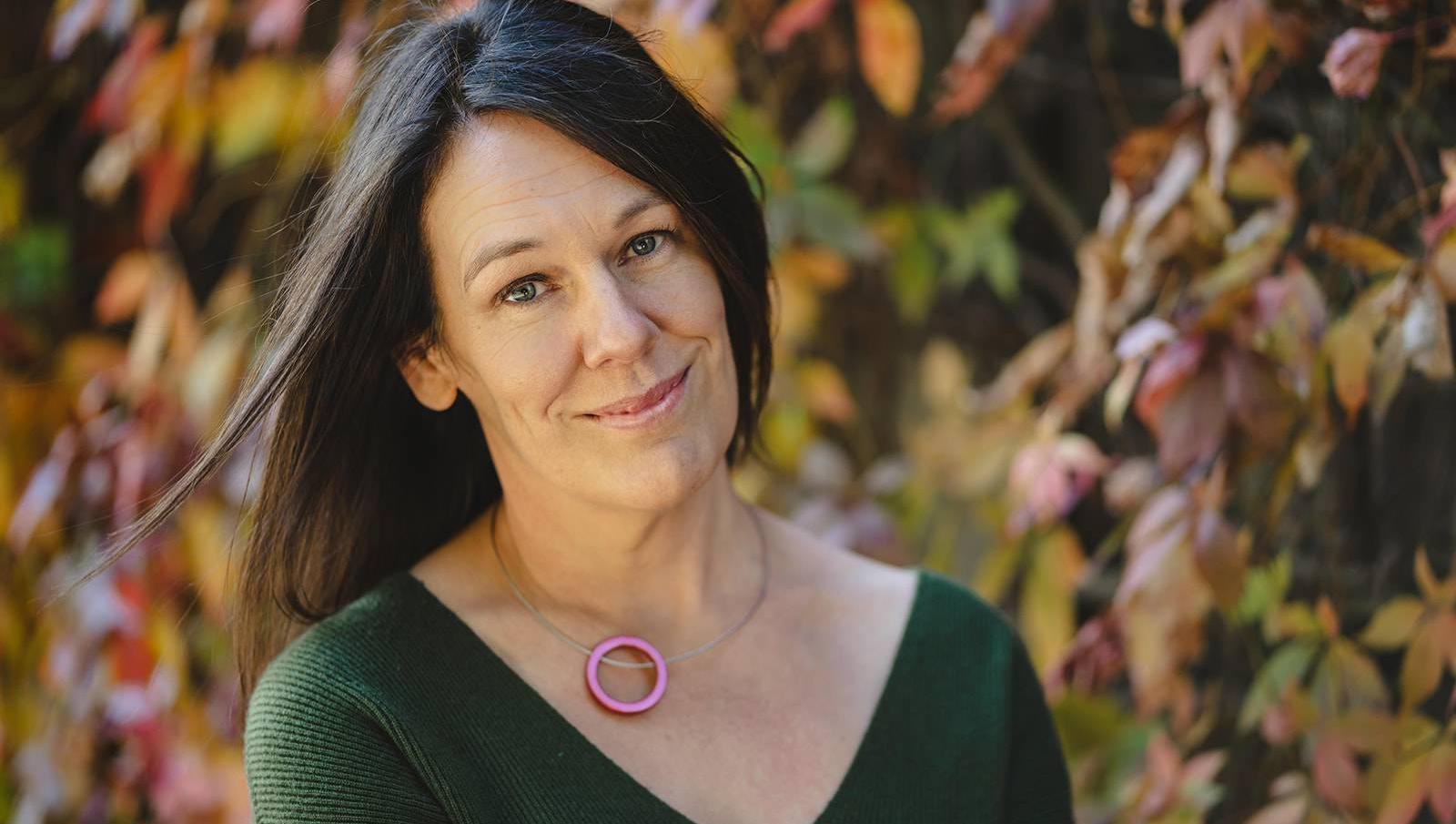
Author Charleen Hurtubise
- The Polite Act of Drowning
- Charleen Hurtubise
- Eriu, €15.99; Kindle, €6.87

In August 2020, when I was on a retreat in the Tyrone Guthrie Centre, Annaghmakerrig, one of the writers, Charleen Hurtubise, read the first chapter of her novel in progress. Hauntingly atmospheric, it had the whole room mesmerised.
The chapter described an afternoon at a beach in Michigan through the eyes of Joanne, an observant 16-year-old who is watching the uneasy dynamic between a group of teenagers. When, later, she hears that one of them has drowned, she wonders, uneasily, if she had watched it happening. I longed to know how the novel panned out.
And with the recent publication of , I now know the plot — and it doesn’t disappoint. It follows Joanne’s summer — and that of her troubled family and neighbours in a small lakeside town. And when the foster child, Lucinda, arrives in town, she and Joanne become instant friends, as they break all the rules together. But Lucinda has a mean streak, and it’s hard for Joanne to cope, especially when her mum’s fragility spills over into something worse.
Charleen grew up in Michigan, before moving to Ireland 25 years ago.
“It’s not my story,” she says, when we meet for a late lunch in the Avoca café in Powerscourt, County Wicklow. “I started with this girl in the water. And it wasn’t until I read the science of drowning and realised it’s always a quiet event, that the novel took shape, and I brought in the mum. But I know the novel’s emotional territory. Joanne feels the things I felt when I was younger. I was number six in a family of nine, and I was a little bit lost and was quiet. An observer. And like her, I was not street smart.
“You know the way Joanne looks at everyone around her and they all seem to have personalities?” she says. “That is my own perspective. My sisters were so strong.”
As for the rebellious Lucinda, she came out of nowhere. “I had a best friend, and we got into a lot of trouble together, but she was nothing like Lucinda,” she says, adding that she really likes Lucinda. “She’s in trouble, obviously, but she’s taking no prisoners.”
Charleen came to Ireland for a break after she graduated from university. Then fate intervened in the form of Conor, who is Irish, and apart from a year spent in Hawaii, the couple have lived in Ireland ever since. They have three teenage children, and Charleen teaches full-time.
She’s always dabbled in writing, and 10 years ago she began to take it seriously.
“I wrote a book that got a lot of attention from agents, and got close to being published, but nobody took it on. I was devastated and started to do a few writing courses.” These culminated in an MFA in children’s writing at University College Dublin.
But it was after this, in early 2017, when Charleen was teaching writing at the university, that her life tipped upside down.
“My mum was sick, and my dad,” she says. “I went over to visit for a month, taking my youngest son, and both of them died while I was there — in the same week in January.”

After a very rackety childhood, one she describes as utter chaos, with a terrible sibling dynamic, Charleen had been happy for years. She missed her sisters and brother, and was always happy to see them, and the once rocky relationship with her mother had resolved.
“I got on great with Mum. I loved her as an adult. She came over when I graduated from my MFA in Trinity, (in Technology and Learning,) and I’d just had my last child. We had such a lovely relationship. She loved my kids, but after her death, being in the house with all my siblings, all of us grieving, that childhood dynamic, and trauma came up again. It was so puzzling.”
Back in Ireland, Charleen started sinking into depression. “I withdrew from friends, and I became hyper vigilant with my kids,” she says. “I am hyper vigilant, because I know what can go wrong.”
When Charleen was 16, she was going out with a guy who died in her arms, from an aneurism. “I never got over the shock of that” she says, “and that people can be taken from you. And nobody helped me deal with that. I remember sitting in this room, alone, for weeks.
“I was looking at my teenage daughter and wondering how could my parents not know how to protect me? They were so holy Catholic, but it's neglect — not sitting down with and talking to your children — not giving them time.”
On top of all that, Charleen’s life felt in flux. She was struggling to learn Irish for her teaching job, and, with nobody taking on her book, felt an utter failure. And when, due to her depression, she felt compelled to cancel her family’s planned visit to Michigan, she realised she was in deep trouble.
Recovery took time. She was still suffering when lockdown hit. But thanks to anti-depressants, act therapy, and writing, she came through.
“And during lockdown I took an online course from the Royal School of Drawing in London.” This led to an Arts project on Ireland’s bogland, that has kept her busy in the frustrating years when, struggling to find a publisher, she put the book to one side.
“It’s taking up a lot of time again,” she says, mentioning The Peatlands Installation, scheduled to be displayed this summer. “But this time I’m not doing animations or drawings, just the technical side, and the edits and 3D stuff — and talking to these lovely artists who are already working in the bog.”
All of which begs the question: as a full-time teacher, how does she fit everything else in? “Neglect,” she says, laughing, then tells me she’ll give me an example.
“Last week I had a newspaper article to write, and I had a grant application for the art project which took all of my time. I was up until 4am, and into school the next day. When that happens, I have a chat with family, and tell them I’ve all this to do, but I’m here. I check in with them, and at the end of it, I put things away and give time to them. We watched a film last night, and I’ll give the whole weekend to them. I’ll make sure I’m available.”
There are times, over the past few years that Charleen almost gave up on writing. But the writing community never gave up on her. She met other writers through the Irish Writer’s Centre’s Borders X programme, and at the Cill Rialaig retreat they sent her on. And those friends, who with her formed a writing and gin club, were instrumental in pairing her with her publisher. Two of them, Michelle Gallen and Olivia Fitzsimons, are launching her book for her.
I’d arrived with a final copy of the novel — the first one Charleen had seen. She flicked through it with great excitement before signing it for me. And when I ask her if she had a writing ambition, she hugs the book and says: “This is what I wanted. It’s my lifetime ambition. I just hope I get to keep doing it.”
There’s a lot of drama before the novel ends; with some things resolved — but a lot left to ponder. Before I leave, we discuss the various characters, and debate whether they’ll end up all right.
“They’re all drowning really,” she says. “That’s the metaphor. The mum finds her way, and might be OK, but has Lucinda the potential?” wonders Charleen. “Maybe she’ll be OK, but probably not. We’ll see.”
Then, after a pause, she laughs. “Well, I guess we won’t see, because it’s fiction, right?”