Face the strange: David Bowie's personal archive goes on display in London
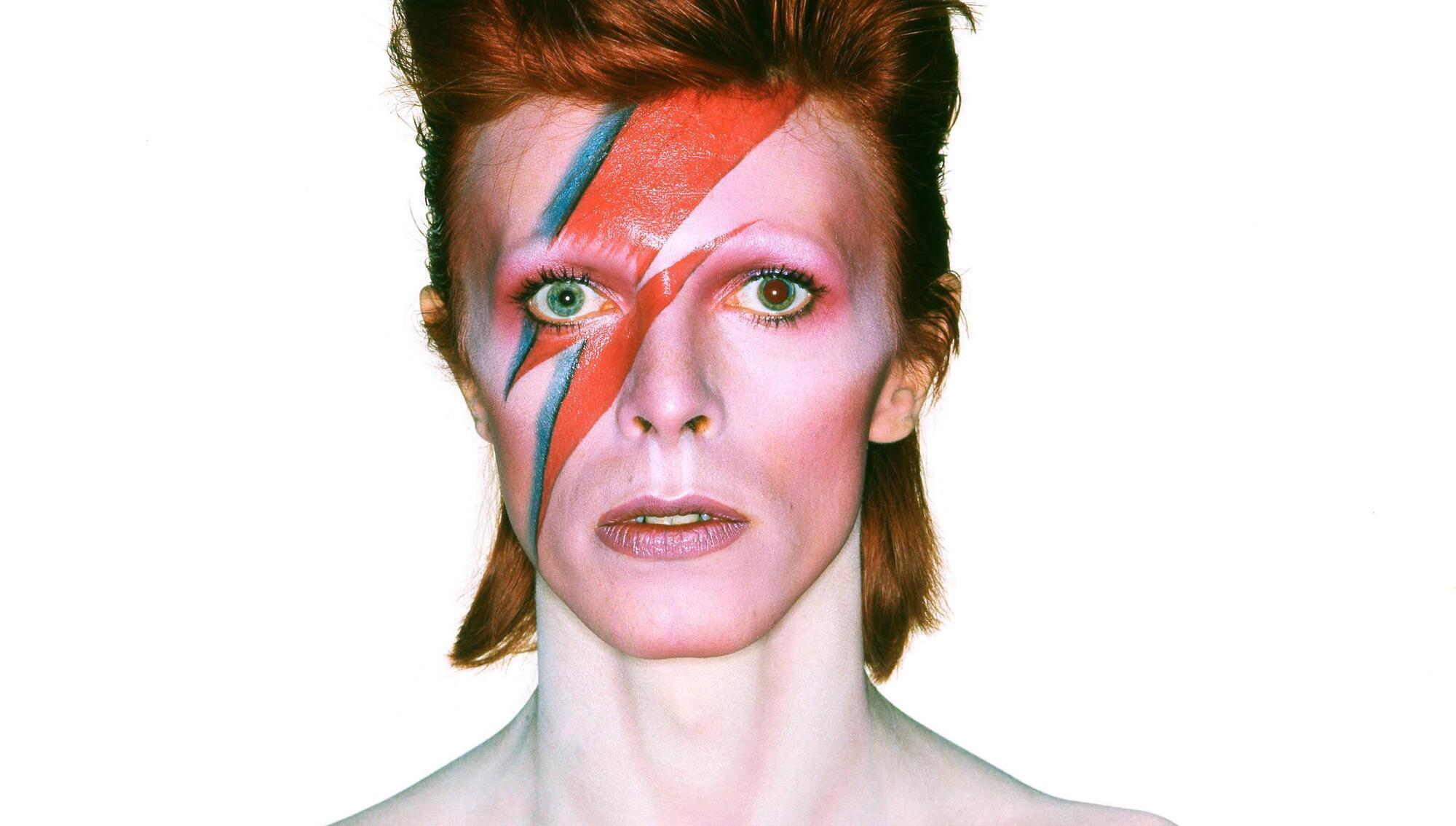
Photo of the album cover shoot for Aladdin Sane (1973) by Brian Duffy with makeup by Pierre La Roche.
Great news, Bowie fans. (And let’s face it, who isn’t?) Just as the Starman carefully curated his own death, releasing his last album, Blackstar, on his 69th birthday, two days before permanently exiting this world on January 11, 2016, from a cancer he’d kept secret, so too has he carefully curated his legacy.
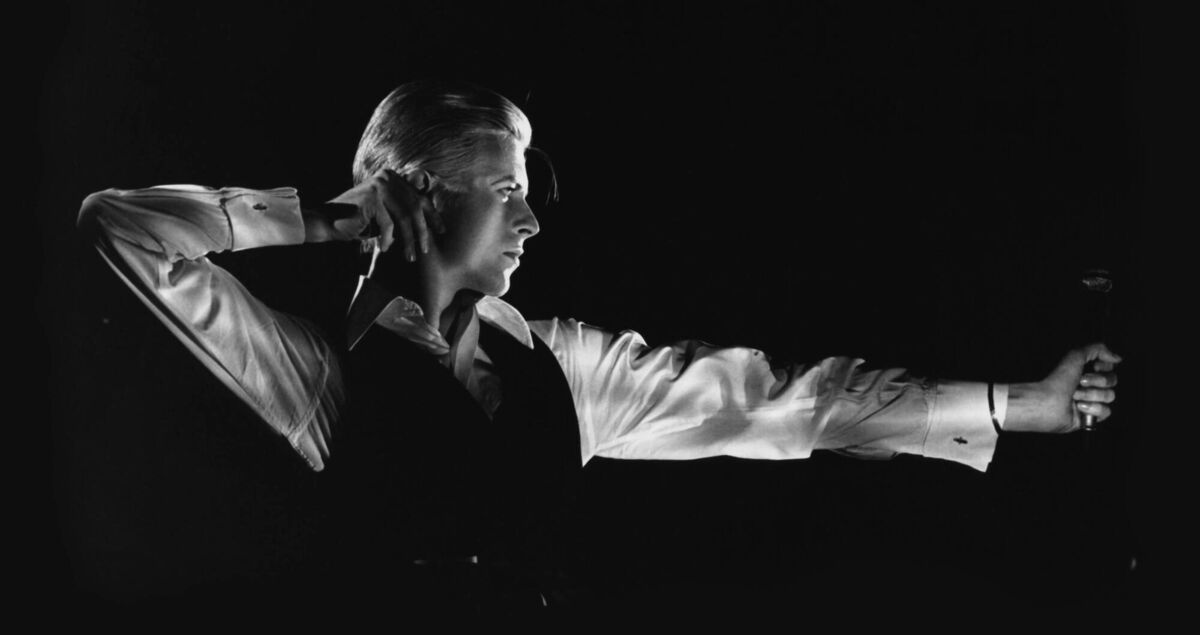
Of course he has. Bowie, a supreme controller of his own narrative, never left anything to chance. His wife Iman recently donated his vast archive — 80,000 items spanning six decades — to the V&A East at London’s former Olympic site, to go on public display in 2025, along with founding the David Bowie Centre for the Study of Performing Arts. An inveterate hoarder, it was as though Bowie knew from the very start, from those early days in Beckenham in the late 1960s, that one day his writing, photos, clothes, shoes, scraps of paper, Bowie bits and bobs, would be placed in glass cases somewhere important like the V&A, and that people would queue up to see it.
If you were not one of the 2m people who visited David Bowie Is, the record-breaking V&A show which began in London in 2013 and travelled to 12 museums around the world, every meticulously preserved piece of Bowiebilia — from iconic costumes to scraps of song lyrics — will now be permanently housed in East London, courtesy of Bowie’s estate. Plus lots more beyond the original exhibition, much of it previously unseen.

The donation includes 70,000 photographs, prints, negatives, slides, and contact sheets from photographers including Terry O’Neill and Helmut Newton. There’s the synth played by Brian Eno on the Berlin albums Low and Heroes, and the stylophone given to Bowie by Marc Bolan, which features on ‘Space Oddity’.
Pages of cut-up lyrics, employing the method used by Beat writers Brion Gyson and William Burroughs; starting in 1974, Bowie would cut up diaries and pages of literature, describing the randomly re-arranged words as ‘Western tarot’, which he used for song lyrics and also to gain insight into the past and future. (Admittedly, he was on a lot of cocaine at the time.)
“David Bowie was one of the greatest musicians and performers of all time,” says Tristram Hunt, director of the V&A. “Bowie’s radical innovations across music, theatre, film, fashion, and style — from Berlin to Tokyo to London — continue to inspire visual design and culture, and inspire creatives from Janelle Monae to Lady Gaga to Tilda Swinton to Raf Simons.” It is, he says, “a new sourcebook for the Bowies of tomorrow”.
THE VISUAL BOWIE
A major part of the archive is visual. The costumes, outfits, the iconic, era-defining silhouettes; the imagery Bowie created with his physical self is now so much part of our visual culture there are Aladdin Sane emojis on our phones.
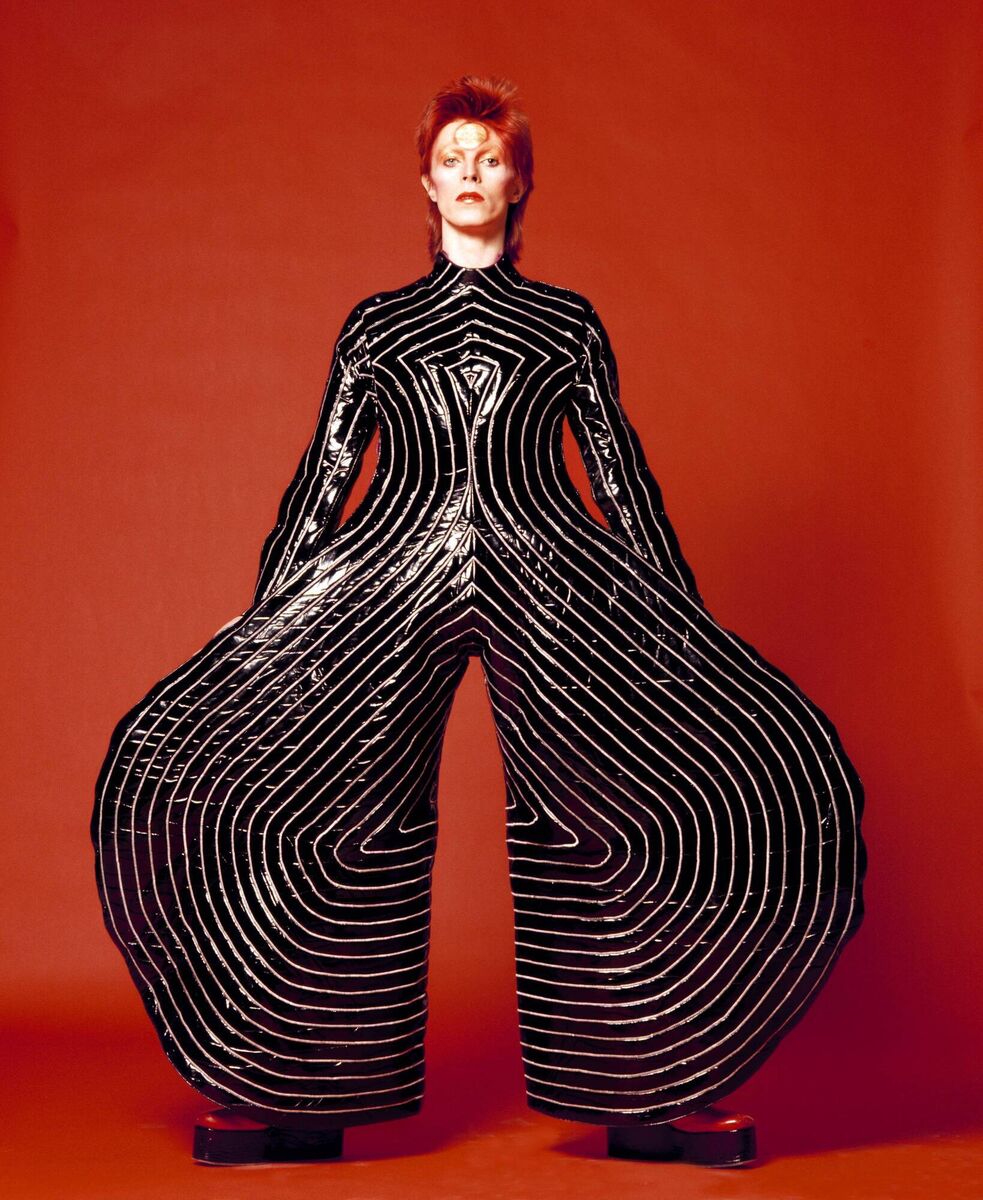
When singer Sam Smith appeared recently at the Brit Awards in an inflated PVC costume, looking mildly awkward and causing predictable gammon outrage, Bowie fans posted that most fabulous outfit from 1973, designed by Kansai Kamamoto. The Tokyo Pop black-and-white-striped vinyl one-piece, worn with red kabuki boots, was featured on the cover of Time magazine after his death. “Bowie had the charisma to carry it off,” says music writer John Robb. “He looked amazing in everything.”

Kamamoto created some of Bowie’s most memorable costumes as he emerged from his fey, androgynous singer-songwriter incarnation at the start of the 1970s. Before inhabiting Ziggy and Aladdin Sane, Bowie was already playing with ideas of gender. He wore a blue wide-skirted man-dress, designed by Mr Fish, while reclining on a chaise for the cover of his 1970 album The Man Who Sold The World (in 1993, Kurt Cobain cited his influence when performing with Nirvana in various frocks in front of a lumber-shirted grunge crowd, decades before current norms around gender fluidity).
As well as saying he was gay at a time when being gay was still ‘deviant’, there was that famous 1971 photo of Bowie pushing his three-week-old son Duncan (then named Zowie, for whom the song ‘Kooks’ was written) in a pram while wearing a floaty feminine blouse, floaty culottes, flowing hair, and a wide-brimmed lady hat, accompanied by his then-wife Angie looking quite butch in short hair, jeans, and boots. Men didn’t push prams back then, never mind wear dresses in public unless they were Danny La Rue.
“I found David’s aesthetic and interest in transcending gender boundaries shockingly beautiful,” the late Kansai Kamamoto told The Cut magazine in 2018. As well as the black-and-white one-piece, he created much of the Ziggy Stardust wardrobe — the floor-length white cape, the knitted one-leg leotard, the gold lamé cloak, the famous white silky tunic. By now Bowie had replaced flowing fair hair with a flame-red spiky mullet, shaved off his eyebrows, and painted a gold circle on his forehead (or rather his hairdresser Suzi Fussey and make-up artist Pierre LaRoche had).

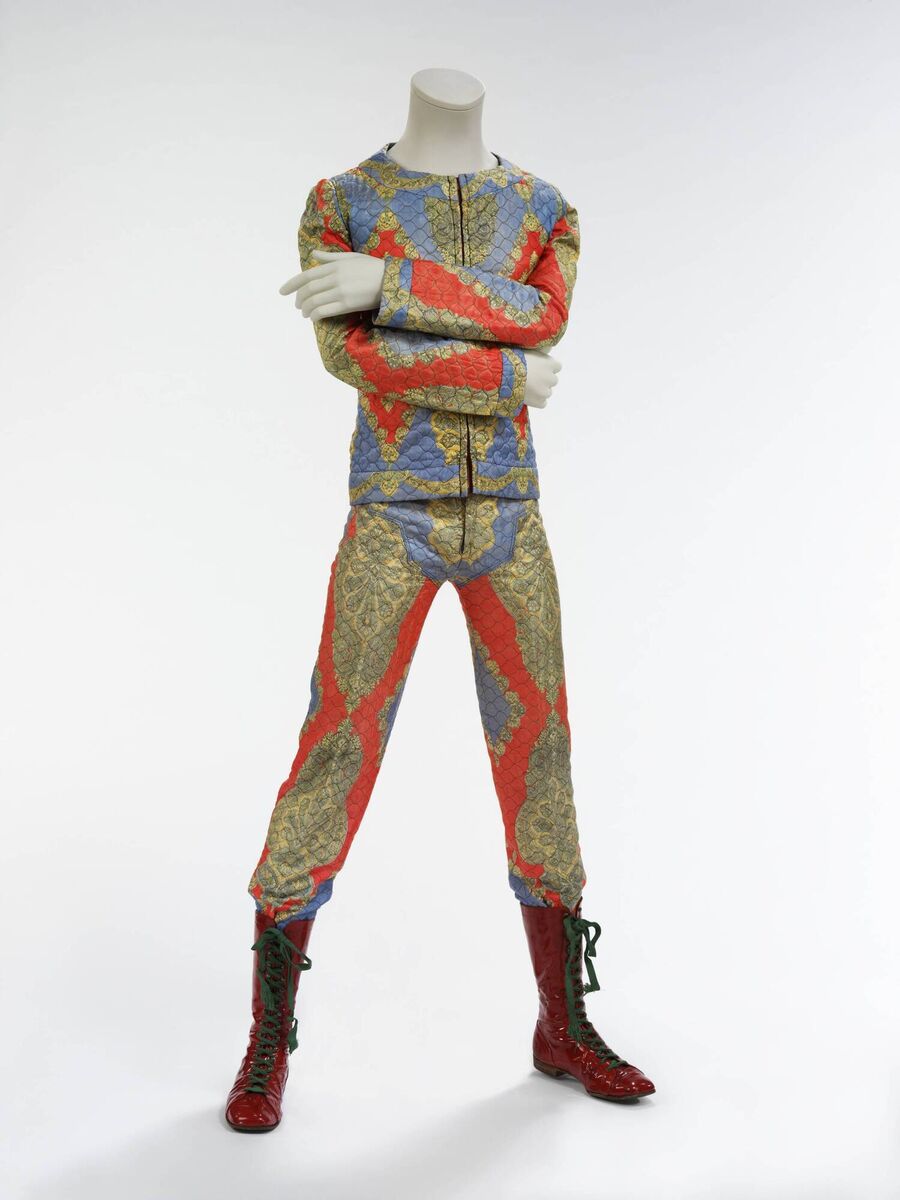
The brightly-coloured quilted suit he wore on Top of the Pops while performing ‘Starman’ in July 1972 — where he famously draped an arm around guitarist Mick Ronson, and sang directly to camera, a key moment in the lives of closeted youth transfixed in front of the telly — was designed by a young East End tailor, Fred Burrett.
Bowie and Angie had met him in El Sombrero, a fashionable gay club; they encouraged him to change his name to Freddie Burretti, and along with seamstress Sue Frost, Burretti made some of Bowie’s most iconic suits.
The ice-blue one, the mustard yellow one. The one with the lightning flash down its back.

THE BERLIN TRILOGY
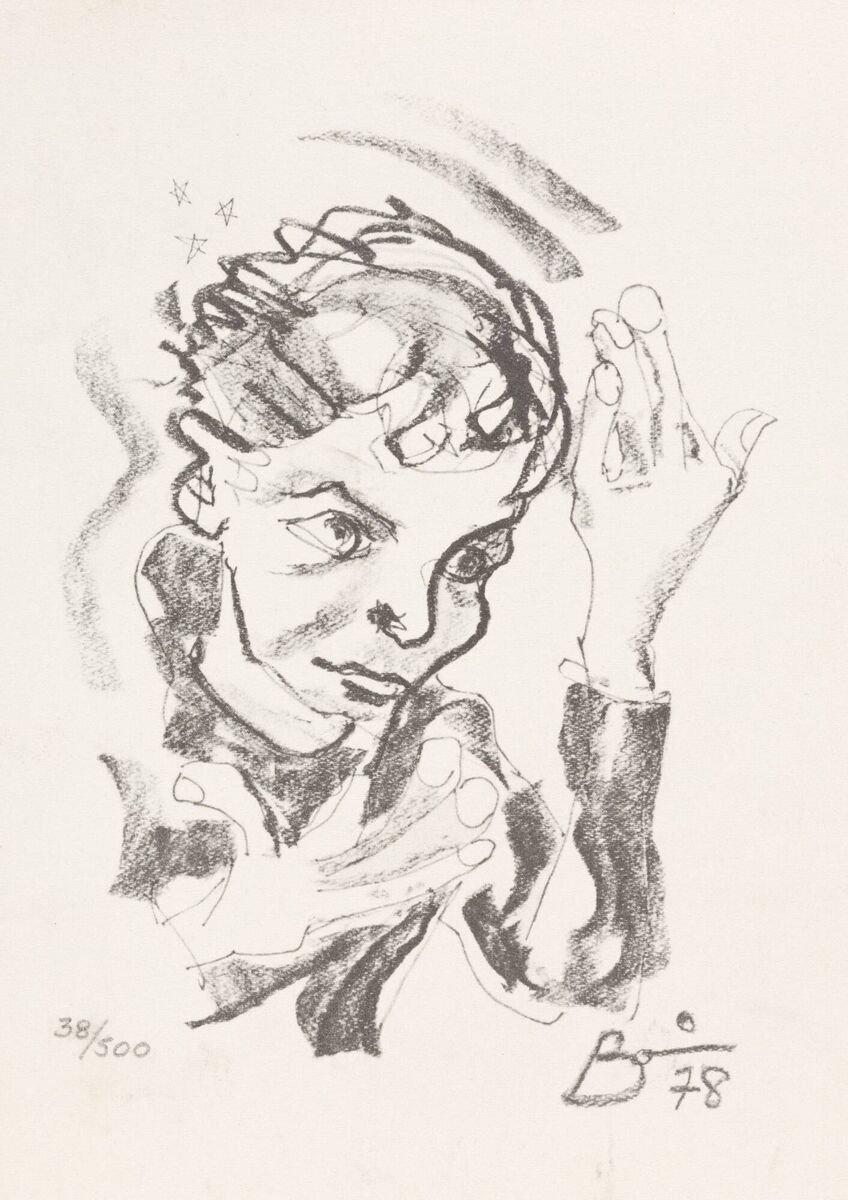
His Berlin period with Iggy Pop, which produced the Berlin Trilogy of albums Low, Heroes, and Lodger between 1977 and 1979, as well as Iggy’s The Idiot, was a low-key interlude of intense creativity stripped of showbiz and fame.
Nobody bothered him in Berlin, and he was able to recover undisturbed from his cocaine addiction. His assistant Coco Schwab supported his recovery, finding him a modest rental flat, encouraging him to paint and compose, and to read. His marriage to Angie was over.
In 1980, Bowie reappeared again, this time as a Pierrot. An ashen one, mournfully walking along a wintry Sussex beach accompanied by a few members of the burgeoning New Romantic scene including Steve Strange, and followed by a bulldozer. It was that seminal ‘Ashes To Ashes’ video.
Always ahead when it came to tech, Bowie embraced the music video as art installation enthusiastically; a decade later, he would become the first major artist to release music online, before launching a 1997 cybercast of Earthling, and the BowieNet platform in 1998. His Union Jack coat for the Earthling tour, designed by the late Alexander McQueen, is part of the V&A archive.
Three years after ‘Ashes to Ashes’ — and once again unrecognisable from his previous persona — a sharp-suited, sun-tanned Bowie, his hair bleached white-gold, was once again topping the charts.
Suddenly everyone was wearing ‘Bowie suits’ — baggy tapered trousers, box-shouldered jackets.
The global pop hit ‘Let’s Dance’ was a radical departure from the atmospheric proto-Goth gloom of ‘Ashes to Ashes’, and was produced by Chic’s Nile Rodgers. “When I look back at the last 60 years of post-Beatles music, if only one artist could be in the V&A, it should be David Bowie,” says Rodgers. “He didn’t just make art, he was art.”
His second last album, The Next Day, was released in 2013; nobody knew it was coming. He’d managed to record it in complete secrecy, people assuming he’d retired after a heart attack in 2004. Actors Tilda Swinton, Marion Cotillard, and Gary Oldman were in the videos for two tracks.
Says Swinton of her old friend: “In 2013, the V&A’s David Bowie Is… exhibition gave us unquestionable evidence that Bowie is a spectacular example of an artist, who not only made unique and phenomenal work, but who has an influence and inspiration far beyond that work itself. Ten years later, the continuing regenerative nature of his spirit grows ever further in popular resonance and cultural reach down through younger generations.”
The archive, to be permanently housed in London, is sure to become a sacred site for the millions whose lives he inspired and enriched. Thanks, Iman. We’ll be queueing up around the block.