Book interview: Bridgets breaking bad in this look at disappointed emigrée women
"It is a side of the emigration story that might have been lost to us had it not been for Elaine Farrell and Leanne McCormick"
Book interview: Bridgets breaking bad in this look at disappointed emigrée women

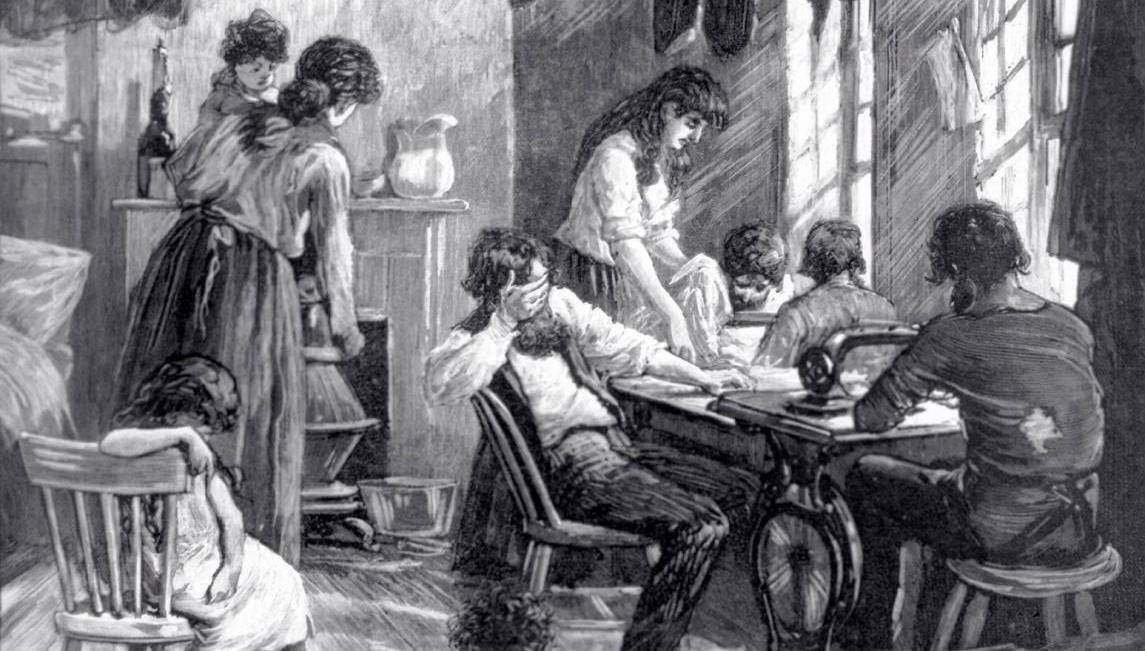
Many Irish women did not find the American dream when they emigrated to the US and ended up living on poverty in New York City tenement houses in rooms crowded with men, women, and children.

  • Bad Bridget: Crime, Mayhem and the Lives of Irish Emigrant Women
  • Elaine Farrell and Leanne McCormick
  • Penguin Sandycove, €15.99

Oh, to have been a fly on the wall when “spasmodic fits of laughter” and uncontrollable giggling rang through Toronto police court in May 1865 as 11 women, seven of them Irish, faced charges of drunkenness.

Margaret McCormack, aged 80, thought her “elevation to the dock” so hilarious that she could not stop laughing, while Elizabeth Stamford added to the chaos and confusion by repeatedly shouting what was on the menu in jail that day.

When Eleanor David, another woman before the court, was arrested, the police needed reinforcements to bring her to the police station.

“As long as there was a drop of Irish blood left in her body she would drink it [alcohol],” the Toronto Globe reported. She wouldn’t stop until the sods of the valley covered her, the paper said.

Many of the women also faced charges of ‘stargazing’, a euphemistic term for sex workers who operated in the open air.

There was little understanding and less sympathy for this “uncivilised and depraved looking set of abandoned women”.

One journalist wrote: “Sin and whiskey were written in the faces of every one of them.”

Magistrate George Denison, however, did say in his recollections that the Irish “added very much to the humour of the proceedings in the Court”.

If it is entertaining to read of the outbursts of these unfortunate women, who were all sentenced to 60 days in prison, their fate also offers a glimpse into their difficult lives. It is a side of the emigration story that might have been lost to us had it not been for Elaine Farrell and Leanne McCormick.

Over six years, the academics meticulously — and sensitively — retrieved the untold stories of some of the millions of Irish women who did not find the American dream when they emigrated to the US.

Their book, Bad Bridget: Crime, Mayhem and the Lives of Irish Emigrant Women, offers a rare social history; that of the women who became sex workers, thieves, barflys, kidnappers, and even serial killers.

The book follows the huge popularity of Farrell and McCormick’s podcast of the same name. If some newspapers described its run-away success as unlikely, the people most taken by surprise were its creators.

McCormick, senior lecturer in the School of Arts and Humanities at Ulster University, says she thought her mother might listen to it, while Farrell says she saw it as an extra resource for her students in lockdown; something that would give them a break from their screens.

The catchy name ‘Bad Bridget’ was McCormick’s invention. She did a quick Google search to ensure there was no porn star with the same name — “though a darker alter ego may yet emerge”, she laughs — and then the duo got to work showcasing the results of six years of research.

What they found about the lives of women who emigrated to New York, Boston, and Canada in the 19th and early 20th century was entirely unexpected.

McCormick explains: “We were sure we were going to find lots of women, but we weren’t prepared for the sheer numbers we did find. In New York in the 1860s, you have Irish women making up over 80% of the prison population and numerically outnumbering Irish men.”

In the 19th century, Irishwomen outnumbered every other nationality in prison.

It’s a stark and shocking picture and one that explains why the Irish drunk — “criminal yet often comical” — became something of a stock character in North America.

There were many reasons for the high number of arrests of drunken women and girls, some as young as 10. When 10-year-old Mary Watson was jailed in Toronto in 1868 for being drunk, it was her tenth arrest. Alcohol was cheaper, to start, and often women drank outside, which meant they were visible and easy pickings for arrest, the authors explain.

Behind that caricature, however, lies the unsettling truth that many Irish female emigrants drank because of separation, grief, and personal tragedy.

As historian Gunja SenGupta noted, “some variation of the phrase ‘Trouble drove her to the first glass’ ran like a refrain through New York WPA [Women’s Prison Association] case records.”

Elaine Farrell and Leanne McCormick: The catchy name ‘Bad Bridget’ was McCormick’s invention.  Picture: Lauren Martin

In Bad Bridget all of the featured women in the book come under the title ‘bad’ but, in many cases, they were simply sad, or sometimes mad, Bridgets.

The authors are at pains to point that out. Farrell, of Queen’s University Belfast, explains: “We wanted to make it clear that Irish women who emigrated from the island of Ireland had a variety of experiences. Looking at crime and deviance is a way of looking at what their lived realities and their daily lives were like.”

Some women were victims who were abandoned by their families in Ireland. They went to the US hoping for a better life only to find one marked by desperation and poverty.

“Others,” continues Farrell, “are active agents who are making a deliberate decision to be violent, to commit crimes. There are career criminals.”

Whatever their stories, the authors draw the threads of these forgotten women’s lives together expertly and sensitively. There is nothing of the sensationalism of the true crime genre about this book, although sometimes the facts it unearths are truly sensational.

Coverage of the 1894 trial of serial killer Lizzie Halliday, for instance, was indeed sensational. The Antrim woman was described as “the wolf woman” with a singular desire for “satiating her lust for blood”. In other cases, newspapers assessed the guilt of women by their physical appearance, their behaviour in court, and how they reacted when, or if, they were sentenced.

That is one of the many strengths of Bad Bridget. As well as charting the stories of the Irish women who ended up in police stations, in court, and in prison, it locates their experiences in the broader context of changing social attitudes and, indeed, police methods.

At the same time as Irish women (and men) were appearing in the crime statistics, the Irish were also climbing up the ranks of the police force. One of them, Thomas Byrnes from Wicklow, became head of New York’s detective bureau in 1880 and set about modernising the force.

He popularised the use of photography and used it to fill what became known as the rogues’ gallery, a collection of offender mugshots which was distributed to police stations and later the public.

One of the women in it was Irishwoman Margaret Brown who, despite being in her 80s, was described as “one of the most successful and notorious pickpockets and shoplifters in the country”.

Elizabeth Dillon, known as “queen of the dips” because of her pickpocketing skill, also featured in Byrnes’ gallery. When she was arrested in 1884, she gave the false name of Bridget Rafferty at the police station, but was undone by the ‘excellent picture’ of her in the rogues’ gallery and was sentenced to two years in prison.

It is a fascinating vignette showing how an Irish-born detective rumbled an Irish-born thief in a country thousands of miles from home.

Bad Bridget is full of such insights into the unexplored underbelly of Irish emigration. It is an important, impeccably researched though eminently readable book that charts new territory.

It might be only February, but this could yet be the book of 2023.

x

More in this section

Scene & Heard

Newsletter

From music and film to books and visual art, explore the best of culture in Munster and beyond. Selected by our Arts Editor and delivered weekly.

Cookie Policy Privacy Policy Brand Safety FAQ Help Contact Us Terms and Conditions

© Examiner Echo Group Limited