Peter Nash’s talking heads: Where art meets puppetry
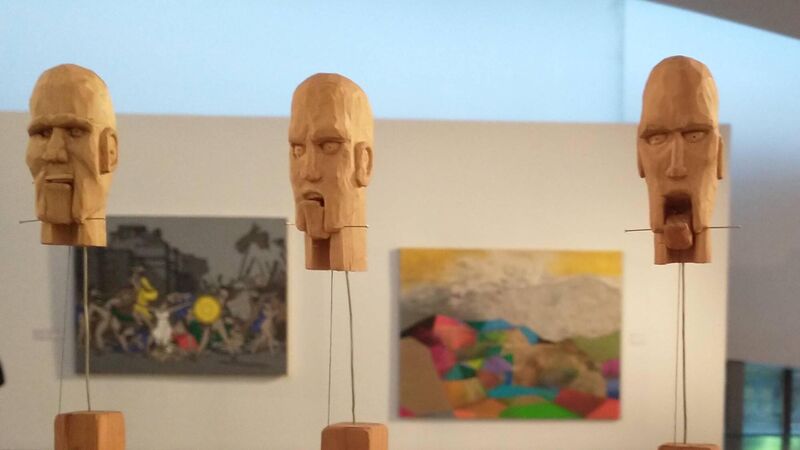
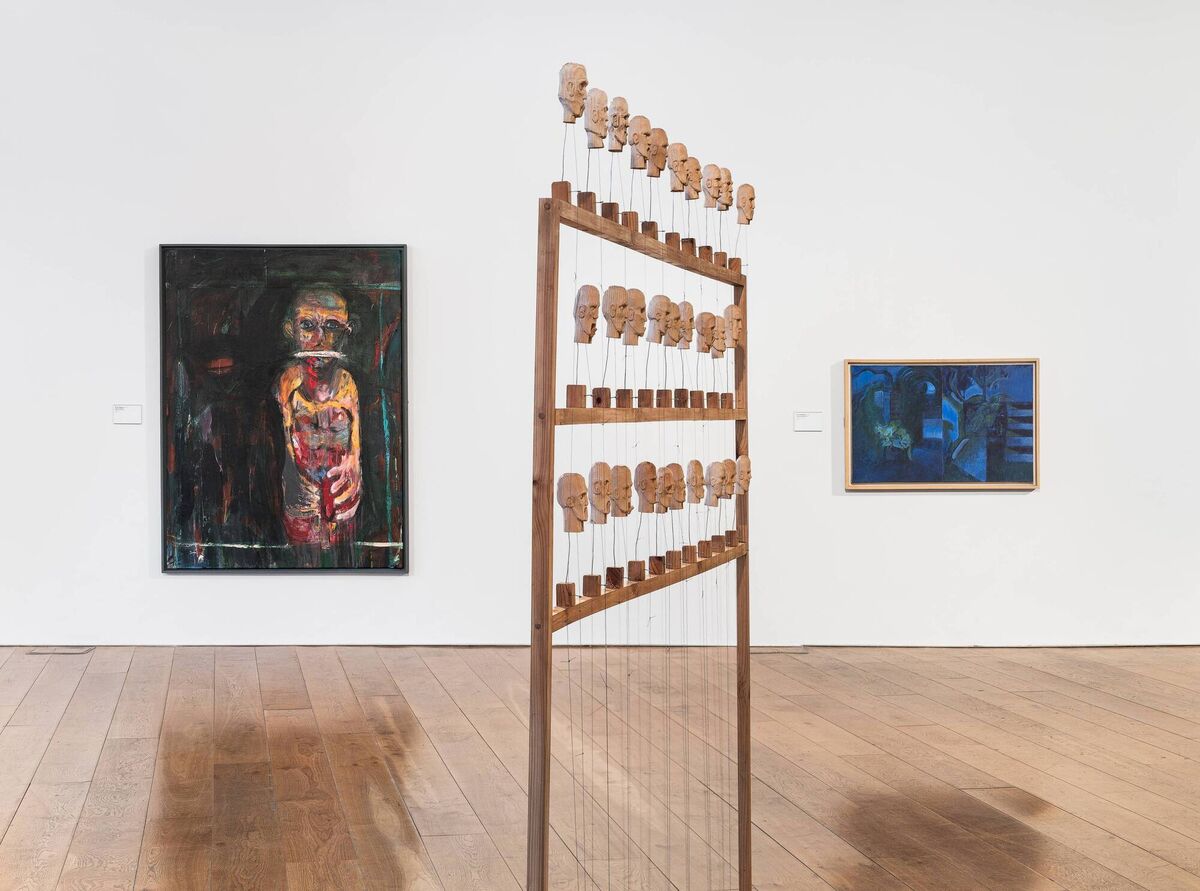
Some of the work by Peter Nash at the Crawford in Cork.
There is no avoiding Peter Nash’s sculpture Doubt Ensemble, currently showing in the Behind the Scenes group exhibition at the Crawford Art Gallery in Cork. It stands in the middle of the floor, an extraordinary mechanical contraption that causes the mouths on a collection of carved wooden heads to open and shut repeatedly. Move closer and the heads seem all the more remarkable, each possessed of its own personality and range of facial expressions.
Nash, who graduated from Sheffield Hallam University with a BA in Fine Art in 2003, moved to Cork in 2015 to study for an MA in Art and Process at the Crawford College of Art, an experience he credits with helping him commit to making art full-time.
“After I finished my BA, I was drawing and making things,” he says, “but I found it very hard to get involved beyond that. But the Masters was fantastic, just in terms of learning what it is to be a professional artist. I found it such a supportive environment. I did my Masters in the old FÁS building; I loved how there was so much else going on there at the time.”
He traces his interest in kinetic art to his school days in his native Carlisle in northern England. “I had a very supportive art teacher,” he says. “I got to see all kinds of art, but I took a great interest in things that move. There’s an artist named Jean Tinguely whose sculptural machines I always really liked. And then there’s the work of Cabaret Mechanical Theatre; they’re a group from the UK who make a lot of automata. And then more recently I’ve discovered Irish artists like Aideen Barry and Alice Maher, who do a lot of animation.”
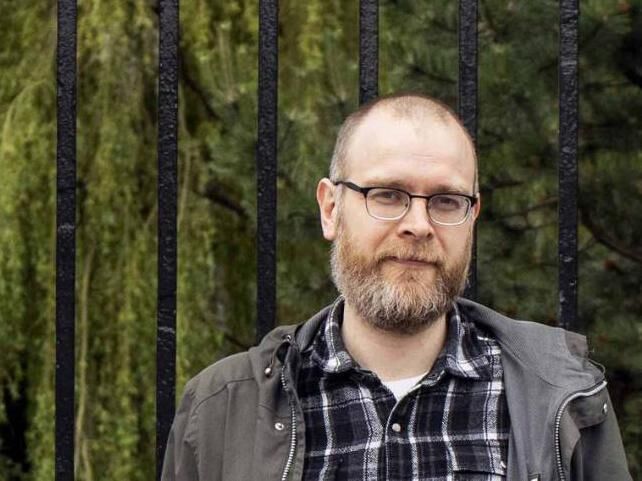
Nash began looking more closely at kinetic art and automata while researching his masters. “I found this one piece, a 16th century robot of a monk. It could be wound up, and it would walk around beating its chest and mouthing a prayer. Initially, I was just drawn to the monk’s expression. That was the start of it really. I did some research, and found some diagrams for it online, and I tried to replicate its movements.
“Then I went in deeper, looking at how the eyes move in puppetry. There’s ideas like duende and complicity of deceit. Even when it’s a toy, a doll, we project this life onto it. We know it’s not alive, but you can see something behind the eyes, even when you know there should be nothing there. Eventually, my tutors advised me to rein things back and keep the movements simple. So I did, and I concentrated on one piece, just getting the mouth to move.”
Doubt Ensemble evolved over the next few years. “Once I’d finished the first head, I started carving all these others, with different points of view, and I got them to run off a motor. Initially the heads were all going in unison, but now it’s more random. As I remade the piece and developed it, I think it became about the voices in your head, that sort of doubt you have to work through and overcome.”
Carving the heads was a painstaking process, but Nash enjoys working with his hands; Domestic Animal, another of his pieces in the Crawford Collection, is the skeleton of a cat he carved out of beechwood.
“Handcraft is what works best for me,” he says. “When I look at pieces of art, I like to see a trace of the person in it. For myself, when I first started carving and making things it was because I didn’t have any other facilities. I didn’t have a computer back then. I just had some old bits of timber and a couple of knives and chisels, and I started like that.
"But I think when it comes to making, it’s a personal choice. There are digital ways of doing things that are useful too. I use computers, and programmes like Photoshop, all the time now. I make animations and edit them on the computer.”
Nash is happy to have stayed on in Cork after completing his masters. “There’s so much going on around the city,” he says. “Between Sample Studios and the Backwater and Cork Printmakers and the National Sculpture Factory, there’s such a busy arts scene. And then you’ve got the Crawford Art Gallery, right there in the centre of town.”
In 2022, he was commissioned to produce work for an exhibition called Parklife: Biodiversity in Contemporary Irish Art at the Glucksman Gallery, UCC. “That was fantastic to be involved in,” he says. “I was working with first year Business students over a period of five or six weeks. We did a series of workshops on climate change and the environment, and then I took on board their thoughts and anxieties and developed that into the work.”
The result, I Always Thought We’d Have More Time, is a series of pencil drawings of wildlife, each with a line of text; a bird with a grub in its beak, for instance, is accompanied by the words ‘letting the market decide.’ Nash is working on a new commission at the moment, and then is heading back into the studio to develop a new body of work.
"I was on a residency at Uillinn: West Cork Arts Centre for a month last September, and I did a lot of experimentation with drawn animation while I was there. I’ve gone back and looked at the early days of animation, and how it developed from drawing. Disney used a system called cell animation, which was all hand-drawn, but there’s actually a way of doing that now where you don’t need this massive studio full of lights and technicians, you draw with a stylus on a tablet."
- Behind the Scenes is curated by Dr Michael Waldron and runs at the Crawford Art Gallery, Cork until April 10.
- crawfordartgallery.ie
- peternash.org