Book review: This history of pre-WWI Britain shows why some problems never seem solved
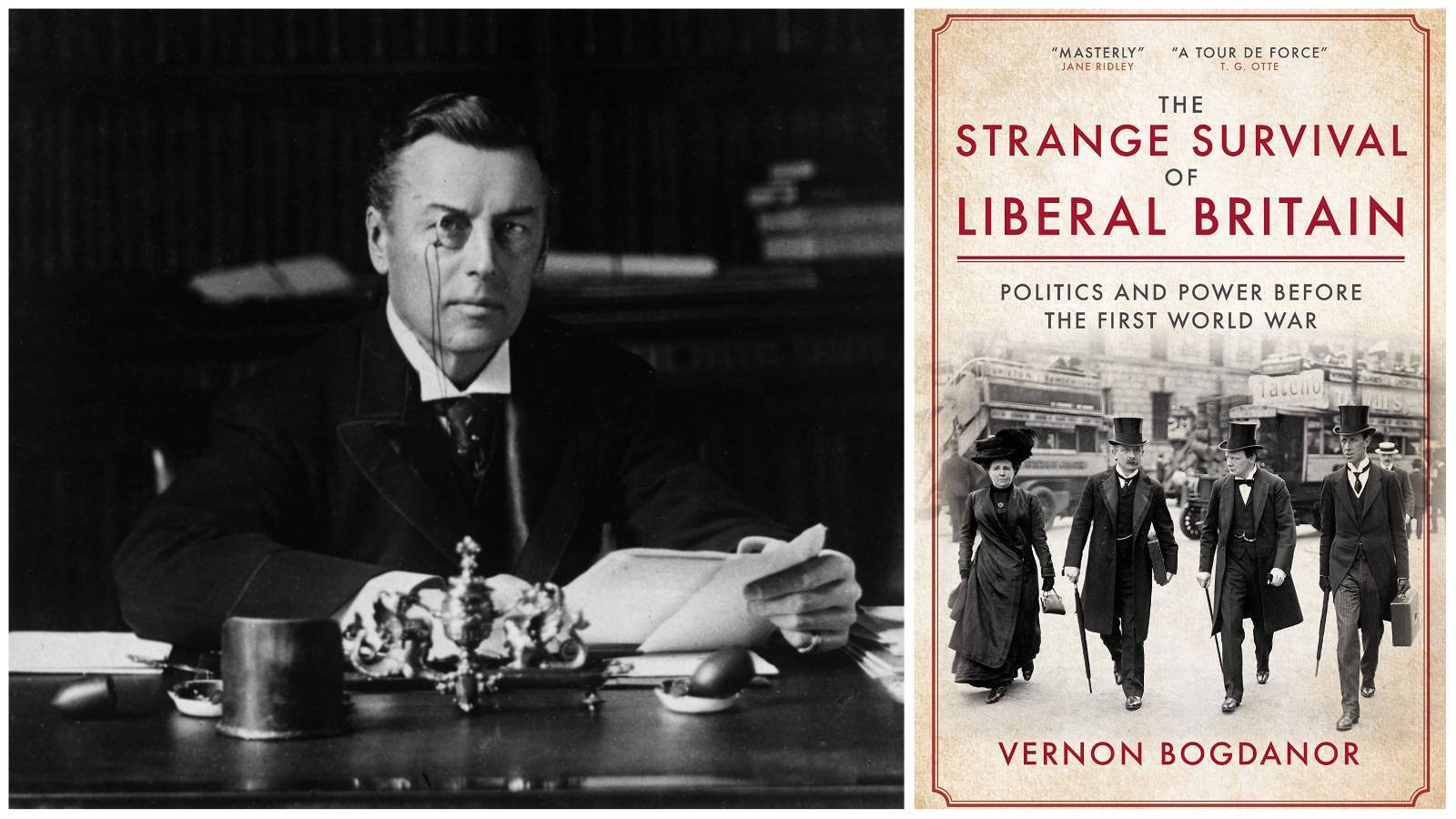
English statesman Joseph Chamberlain began as a successful businessman before moving into politics.
In the 1890s, a leading figure in the Conservative and Unionist Party, Joseph Chamberlain, committed his party to the harmless sounding idea of “tariff reform”.
But what he had in mind was quite radical, turning the British Empire, which spanned every continent on the globe, into an economic union, like the EU is today.
As with the founders of the EU in the 1950s, Chamberlain envisaged giving trade preference to goods produced within the British Empire, over imports from elsewhere (like continental Europe and the US), and thereby strengthening the political unity of the Empire.
In contrast with the present, empires, in the 1890s, were regarded as progressive concepts. They were seen as vehicles for the promulgation of civilised ideas, such as the rule of law.
Other powers, like France, the Netherlands, and the US, were also seeking to build their own empires. Empires were seen as efficient, enjoying economies of scale that smaller powers could not match. ‘The Empire’ was something that helped keep England, Scotland, and Wales united in a shared endeavour.
So Chamberlain’s proposal for imperial trade preference was seen, at least superficially, to be going with, rather than against, the grain of history.
As a result of Chamberlain’s advocacy, the Conservatives were to promote tariff reform, on an on-and-off basis, for almost 30 years.
But it proved to be a vote loser.
This was because the British Empire could not produce all the food that Britons wanted to eat, and tariff reform would have required a tax on food coming from outside the Empire.
High food prices, then as now, were politically lethal for the Conservatives. Chamberlain’s protectionist ideas also ran against the free trade and the laissez faire ideology that had dominated economic thinking in Britain for much of the 19th century.
Winston Churchill, a young Conservative MP, left the party and became a Liberal in 1904, because he believed in free trade.
Joseph Chamberlain’s son, Neville, would put some of his father’s protectionist ideas into practice, as Chancellor of the Exchequer in the 1930s.
Joseph Chamberlain was a dynamic force. A successful businessman, then Mayor of Birmingham, he was non conformist by religion, and was an early advocate of old age pensions and anti poverty programmes. He was originally a Liberal MP, but left the party because of its support for Home Rule for Ireland. He was never really a Conservative.
Tariff Reform is just one of the many themes explored in Vernon Bogdanor’s comprehensive history of the 30 years preceding the First World War. It is a history of policy making, rather just of politics.
The drama is there, but so also is the solid content.
The book covers developments affecting Ireland, just as much as it covers England, Wales, and Scotland.
Ireland was run by 29 different government departments, each with its own board, and all supervised by a single Chief Secretary for Ireland, usually an English or Scottish MP from the governing party in Westminster.
By some measures, Ireland did well during this final period of British rule.
The amount spent by the UK central exchequer in Ireland increased more quickly than the amount of tax raised here.
In 1893, there was a surplus on the budget of the Irish Administration of £2m and Ireland was making a net contribution to the overall UK budget.
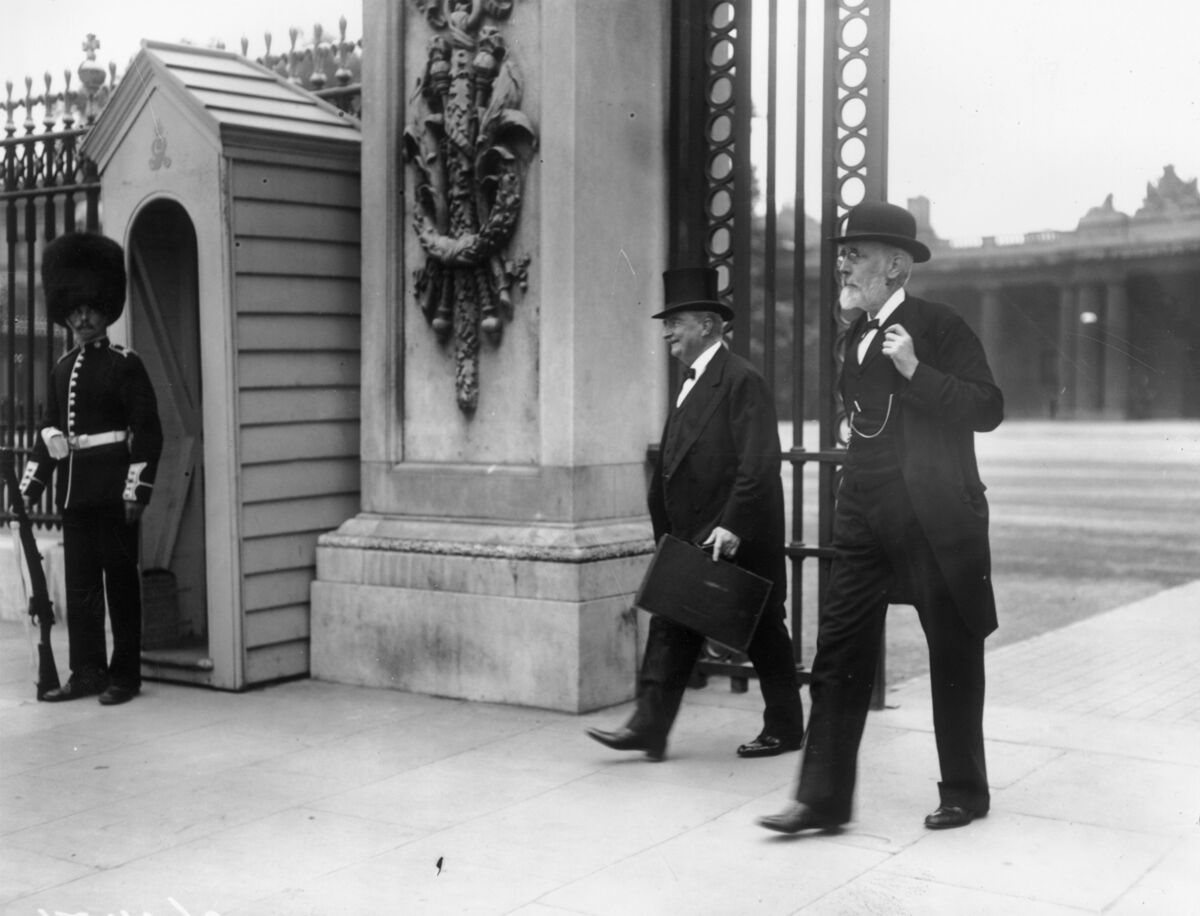
In contrast, by 1912, the surplus was turned into a deficit of £1.5m. The was for two reasons: Firstly, the cost of old age pensions (introduced in 1909) for which a lot of Irish people qualified, and secondly, the UK exchequer’s subsidies to the transfer of Irish land from landlords to tenants under legislation passed in 1903.
Ireland was actually over represented in the House of Commons, with one MP for every 44,000 voters compared to one for every 66,000 in England
But that was not worth much. The only input anyone elected in Ireland had to the process by which Ireland was actually governed, was through the Irish MPs in the House of Commons. But Irish MPs, other than a few Unionists, rarely became ministers.
This was totally insufficient, and it explained the growing demand here for a Home Rule Parliament in Dublin, with its own elected ministers, to take over the powers of the over stretched Chief Secretary for Ireland.
The idea of Home Rule was re
sisted in Britain. It was seen as heralding the beginning of the disintegration of the Empire. As Lord Salisbury, prime minister at the beginning of the period, put it.
“If Ireland goes, India will go 50 years later.”
The forces in Britain ranged against Home Rule were substantial and serious.
This is why it is truly remarkable that Home Rule for Ireland passed into law, without a shot being fired, in September 1914.
This peaceful achievement by Irish politicians in Westminster, such as John Redmond, John Dillon, and Joe Devlin, was largely ignored by the government at the beginning of our decade of centenary commemorations in 2014.
Bogdanor deals with how Home Rule became law in 1914.
The Liberal government depended on the Irish Party and the Labour Party to stay in office.
The Liberal chancellor of the exchequer, David Lloyd George introduced a radical budget. This budget was rejected in the House of Lords, creating a constitutional crisis.
In response the Liberal government introduced a parliament bill to curb the power of the Lords to veto legislation passed in the Commons.
The Irish Party then told the government that they in turn would oppose the budget, unless the parliament bill removed the Lords’ indefinite veto on Home Rule.
It was brinkmanship, but it worked.
If the Lords had not rejected the budget, in the first place, Home Rule might have been postponed by a Liberal government, who had only a half hearted commitment to it.
The book also deals with the lead up to the First World War.
Joe Chamberlain in the 1890s had favoured a Teutonic (Protestant) alliance between the UK, the US, and Germany. But majority opinion preferred closeness with France and Russia.
The British Cabinet seems to have had little discussion of foreign and defence policy in the years before the war. Exaggerated reliance was placed on the Royal Navy, and the Army was neglected. In general, the Cabinet had no agenda, no regular meetings, and no minutes in this period.
It was the German invasion of Belgium, in August 1914, that enabled the UK to enter the war, as a united country on the allied side.
If Germany had avoided Belgium, the UK would have been deeply split on whether to support France militarily, or stay out.
As far as war guilt is concerned, it was the belligerent and irresponsible demands of Austria on Serbia, that dragged Russia and Germany into war with one another.
The book also gives good accounts of the Boer War, votes for women, the rise of the Labour Party, and of the introduction of unemployment and sickness insurance. This is, in every sense, a big book, and rewards the reader who wants to understand why some problems never seem to be fully solved.
- The Strange Survival of Liberal Britain: Politics and Power Before the First World War
- Vernon Bogdanor
- Biteback Publishing, £35